Here’s A Book to Add to Your Kids’ Summer Reading List (One Big Project Done!)

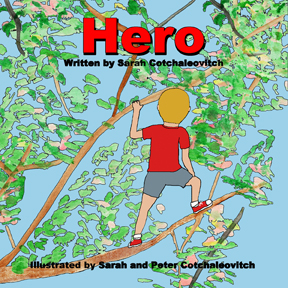
Hero

Hero

Let me tell you the story of a young woman who signed onto a children’s book project.

Yes, I’m talking about me, and although I’ve always been a novel-writing kind of girl, when this project landed in my lap, I thought it was the perfect way to get my foot in the publishing world’s door.

About a year after I graduated from college, I was one of several writers contracted to write a series of children’s picture books. The first step was to provide a sample children’s story of my own creation. It didn’t need to have illustrations, so I figured it would be a piece of cake. I soon came up with a story called Hero about a boy who had to face a challenge to live up to this nickname. My job done, I promptly forgot it.

It turns out the reason I was contracted to begin with was because the creator of this series had no business in the writing world. This soon became obvious, and the project fell flat. I hadn’t particularly enjoyed the storyline and characters, so I shrugged it off and moved on.

Fast forward seven years, and a friend introduced me to a local author, figuring this might help me get one step closer to publishing my novel. The author I met was an absolute delight. She told me all about her books and the work that went into them, from getting them illustrated to collaborating with other writers to printing and selling them. (Check out her website Bluejean Books in the sidebar or here.)

While I still wanted to go the traditional route of finding an agent and a publisher for my novel, this conversation reminded me that I had a children’s book already written – and my parents’ business had a new digital press that would be perfect for printing books on demand.

Wedding Shoes by Saundra Howard

Wedding Shoes by Saundra Howard

There still was a problem, though – that of finding an illustrator. My number one choice was my mother. The image on the right is an example of one of her pencil drawings. She was an art major, and one of her many hats is that of a graphic artist. But when it comes to illustrating children’s books, she didn’t feel qualified, not to mention that she just didn’t have the time. (But I think I’ve convinced her to help me with the cover art for my NaNo novel.)

The book idea went on the back burner, where it simmered for well over a year. I learned a lot as I began to substitute teach and work with kids of all ages and reading levels. My elder son was diagnosed with several learning disabilities. I gained an appreciation for books that are easy readers versus the ones that are content-appropriate but still have to be read by parents. All of this percolated in my mind, stored up for when I would need it.

Then one day when substituting in kindergarten, I had an interesting opportunity. The kids were learning about authors and illustrators and how to create a book. The teacher, knowing I’m a writer, asked if I would mind talking to them about the process. The kids hung on my every word – it was crazy! Afterward, they asked if I had a book of my own.

That’s when the lightbulb went off. I realized I could illustrate my book myself. I’m not my mother, but I am capable of creating more than stick figures. And my six-year-old has an artistic bent, so I thought we could illustrate together. I started with a simple watercolor painting of a tree and a few sketches. Peter joined in, and we soon had enough to get started. That was in late January. I figured I would be done within a month. Ha.

So creating a children’s book is harder than I thought. Revising the copy was just one thing I had to tackle. On top of that, there’s the business end of getting an ISBN and marketing. And then those pesky illustrations pulled me right out of my element and into the realm of What in the world am I doing?

February came and went. March was busy; I worked on the illustrations on our vacation, but I was nowhere near finished. There was still hope, though. As long as I could share it with the kindergarteners before the end of the year, all would be well.

I probably wasted about a month of trial and error figuring out how to illustrate in Photoshop (yes, Photoshop, not InDesign). I would challenge myself to finish three illustrations in a week, and I’d only get halfway through one. Memorial Day weekend arrived, and I worked all day every day, staying up four hours past my bedtime into Monday morning. I thought I was done, then realized I still had several hours’ worth of work still ahead of me after I woke up.

But I finished – finally! (If you read my post last week, this was the third big project I’ve taken on in the past year.) I had my first copies ready so that Peter was able to share the book with his class on the second-to-last day of school. Kids that knew I’d been working on the book for months were excited to see it. My friends and family have been so supportive, and I cannot explain how wonderful it feels to have something in print, even if it’s not with some big-name publishing house.

Now that Hero is done, I have my work cutout for me, from getting it into bookstores to getting it online through CreateSpace. (Check the My Fiction page for when it goes live.) Until then, you’re welcome to message me for a copy – Peter and I will even sign it!

I can cross one big project off my list. It was a challenge, something I never would have considered doing over nine years ago when I first wrote the text. Finishing the book with my son has been a joy, and I finally have a real book to show for a small portion of my hard work.
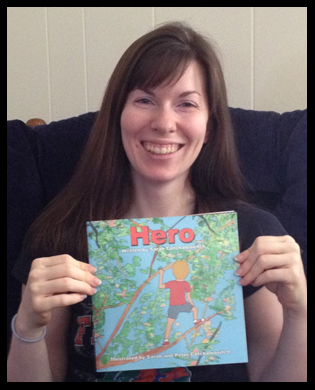
Sarah and Hero

Sarah and Hero

Enhanced by Zemanta

Free Time? Not on My Watch

Keep up and blog on

Keep Up and Blog On (Photo credit: futureshape)

A couple months ago, I blogged about time management, and a friend joked with me that he would read it when he learned how to manage his time.

I know the feeling, and I’m the one who was giving advice.

My problem isn’t procrastination but, rather, taking on too many projects at once. (My husband is probably applauding me for admitting this.) I have no idea what boredom is because as soon as I check one item off my to-do list, something else takes its place. Currently, I think of them as “The Big Three” looming projects.

First, in September I took on a job with a client that doesn’t quite fall in my area of expertise, but she was desperate, and I knew I could handle it. It’s the end of May now, and I’m just grateful that she’s patient.

Second, in November I participated in NaNoWriMo – a huge time hog but the most fun I’ve ever had writing – and I’m still editing my manuscript, getting ready to claim my two free paper copies from CreateSpace.

Third, in January I decided to pull an old writing project off the back burner, figuring I would finish it within a month. That didn’t happen. In fact, it’s this project that is making me so tardy with this post.

And a bonus – my dad started a blog for the family business. I’ve contributed one article so far (and thanks to my patient readers for reading it a couple weekends ago instead of my usual post). I edit each blog, even when I’m not the writer, and I’ve posted most of them, too.

These are in addition to substitute teaching, reading and editing for Fiction Fix, bookkeeping part-time, and being a mom. I’m sure I’m forgetting something. The wonderful news, however, is that The Big Three are finally wrapping up. I can see the proverbial light at the end of the tunnel – and I think I’ll get there in time to have a breather before school gets back in session. And then I’ll be in for it because this mama hopes to go back to school some time in the next year. I mean, what else am I supposed to do with my free time?

Now it’s time to get back to it, so the next post you read can actually include an announcement about finishing something for once. Until then, back to work…

Enhanced by Zemanta

Don’t Judge a Book by Its Author

You can’t blame a writer for what the characters say.

                                                                                                                                             –Truman Capote


The Casual Vacancy

The Casual Vacancy (Photo credit: Darlene Acero)


Avid readers, do you remember a time when you discovered a new writer, fell in love with one book, then went crazy looking for all of his or her other publications?

This has happened a number of times with me, from my early days of reading with authors like Beverly Cleary and Louisa May Alcott, then ramping up to Agatha Christie, J.R.R. Tolkien, Michael Crichton, and then Stephen King. In every case, I devoured their books, as many as I could get my hands on.

But sometimes… sometimes this doesn’t happen. Sure, every prolific author has an off-book or two. Even in the middle of bestseller series, it’s not uncommon to have a middle-of-the-road slump. (Harry Potter And The Order Of The Phoenix comes to mind.)

Sometimes, it’s no fault of the author’s, though, because they get pigeonholed. They commit the unforgivable sin of writing outside of one particular genre and so get panned by masses of once-adoring fans.

This often happens with actors. Think about how many of them, in the effort to avoid being typecast, take on just about any role they’re offered to prove they can do something other than what originally made them famous. You might be disillusioned when your favorite child actor tries to show she’s all grown up by portraying a risqué character.

Now, authors aren’t going around in the nude to prove that they’re all grown up. But sometimes we treat them as if they’re doing just that. If you find out that your favorite children’s author has an adult title coming out soon, don’t be shocked that it’s not all “See Dick and Jane” anymore. Dick and Jane might be doing something that you don’t want your children to read about. And that’s fine. Writing for children doesn’t mean they have nothing else to offer the writing world.

The opposite it true for authors such as Stephen King. Many people shy away from him because he’s known primarily as an author of “horror” stories. But I’ve found that he actually writes much more fantasy and suspense than horror, not to mention moving love stories, at least one hard-boiled mystery, and one of the best non-fiction books on the craft of writing that I’ve ever read. (Check it out here.)

Truman Capote was right: we can’t blame writers for what their characters say and do. There is a certain amount of censoring that automatically happens if your story is meant for younger audiences, but the truth must always prevail. As Stephen R. Donaldson writes about the creative process:

[N]one of us can explain how it works. In a sense, writers don’t get ideas: ideas get writers. They happen to us. If we don’t submit to their power, we lose them; so by trying to control or censor them we can make the negative choice of encouraging them to leave us alone.

I don’t know about you, but it sounds very unattractive to tick off my muse by not letting the story be the story. I recently posted about striking gold with a story idea for this year’s NaNoWriMo. When this idea first occurred, I assumed that it would be another young adult novel. After all, the main characters are teenagers, and most of my stories end up going the middle grade or young adult route.

Yet the more I’ve thought about this new premise, I’ve realized that my novel might actually be for adults. That’s not to say that young adults wouldn’t ever read it – after all, I started reading Stephen King when I was 14 – but the amount of censoring I’d have to do to make it appropriate would change the intent and tone of the story. I suppose I could make it work, but would that be right?

This reminds me of a book I read recently, The Casual Vacancy by J.K. Rowling. Oh, you’ve heard of her? Yeah, she wrote that itty bitty Harry Potter series that a few people around the world seem to like.

Okay, if you know me, you know that I’m a Harry Potter nut. I bought The Casual Vacancy, which Rowling published as an adult novel, with no illusions of it containing wand-wielding teenage wizards. In the early pages, I sometimes scratched my head over this being the same author of the seven books I so dearly love. True, there are teenagers in her new book, but they’re facing very real temptations and demons, not the fantastical kind. The language, the grittiness was sometimes hard to reconcile with my previous experience of this author.

But knowing how hard it is to force a story into a genre that it’s not, I had an easier time – making my preconceived notions of Rowling disappear into the background – than many other readers who gave up on the book when they discovered it’s not about adult wizards. Rowling still has her fingerprints all over it, but in the form of turns of phrase, descriptions, and little gems that claim her no matter what the genre.

As much as I love most things young adult and fantasy, what I love above all are characters that come to life on the page and stories that pull me in. When I allowed the story to take over, it both compelled and moved me. It took a lot of courage for Rowling to put herself out there and publish something so different than the series that made her a household name. I know of people she’s upset because they expected more of the same, but I admire her for letting the story take the lead.

If you’re an author wrestling with a story unlike anything you’ve ever written, here’s some great advice from Anne Lamott’s Bird by Bird: “[S]ome days it feels like you just have to keep getting out of your own way so that whatever it is that wants to be written can use you to write it.”

Getting out of your own way means ditching those preconceived notions about what you can and should write. Let the story tell itself – at least in the first draft – and you can figure out what’s still appropriate to keep in the revision process.

And if you’re a reader who tends to pigeonhole, open your mind a little bit. Realize that the best authors, the ones that convey the truth through pages and pages of lies, are simply doing what Stephen R. Donaldson wrote about: they’re allowing the creative process to work as it should. To censor it, to hold back, would be to lie in the worst possible way.

For writers to deny themselves the chance to branch out into other genres and interests is to deny growth within the craft, to deny them doing what they’re meant to do.

Writers don’t just love to write – they must. Lamott also says:

We write to expose the unexposed. If there is one door in the castle you have been told not to go through, you must. Otherwise, you’ll just be rearranging furniture in rooms you’ve already been in. Most human beings are dedicated to keeping that one door shut. But the writer’s job is to see what’s behind it, to see the bleak unspeakable stuff, and to turn the unspeakable into words—not just any words but if we can, into rhythm and blues.

Amen? Amen.

Enhanced by Zemanta

The NaNoWriMo Loophole that Could Solve Your Early Inspiration Problem

Gearing up for NaNoWriMo.

Gearing up for NaNoWriMo (Photo credit: This Year’s Love)

Okay, I know I said “loophole,” but the solution I’m about to address isn’t really in the fine print. Anyone who cares to know what it is can just go to NaNoWriMo.org and read their FAQ. (Thank goodness for an organization that gives clear and concise answers.)

So what is this “loophole” that I’ve discovered, and what does it address? Well, excuse me if I digress by way of explaining…

Readers who have stuck with me since the beginning know that in 2012, I thought people were crazy to participate in NaNoWriMo (writing a 50,000-word novel from scratch, all in the month of November). Then in 2013, I had a change of heart. Or, that is, mere days (like two) before November, a story idea popped into my head, and I realized that I could wait a couple days to write and hope that magic would follow.

It did, and I am glad to say that it’s been the most fun I’ve ever had writing. Not only did I finish my novel, but I’ve edited it once and am currently putting the finishing touches on it, so I can send off to CreateSpace for my two free print versions, which I will then distribute to beta readers.

After participating once, I sometimes wonder what this November will bring. Will another idea come out of nowhere in the nick of time and make it possible for me to enjoy the same success as last year? Or could I possibly write a sequel to one of the other novels I’ve written, waiting until November to start? (This is what I consider a fallback option – but at least I do have a sequel that I’ve considered writing.)

I received an unexpected answer to these ponderings this past week. It hit me as inspiration almost always does – unexpected, uninvited. It’s not that I don’t like inspiration, but why can’t I be inspired at times when it’s a little more convenient?

I was driving across town when an image popped into my head. Two characters. And then a scene began to form. From there, it was a novel-size idea. And I was on my way to teach four- and five-year-olds in Sunday school, with no time to even jot down my idea.

I realized that this could be the idea I’d hoped for, except that it had arrived six months too early. I didn’t dare write anything except notes – character’s names and ages and little bits of backstory. If I wrote an actual scene or dialogue, that was it; I could forget using it for NaNo and would have to hope that either I could make the sequel idea work or that another novel-size idea would be born in the intervening months.

As it happens, I have several big projects in the works, and a new novel does not fit into my busy schedule. I barely had time to capture the scope of my idea in writing, much less sit down and let the prose flow. I figured that if I could stall long enough to finish these projects, maybe I could endure until November.

Being extremely busy, however, does not mean that I’ve quit thinking about this new, unwritten story. I’ve been walking around in a daze of possible scenes, sometimes whispering lines – maybe if I do this, I can make them stick. I’m sure anyone who catches me at it will think I’m nuts.

And in stolen moments, I’ve written loose descriptions of these scenes, where and when they happen in the flow of the story, creating – ugh – a sort of outline. Despite being a planner, I like to outline as little as possible when writing fiction. Yes, it’s great to know where a story is going and even some destinations along the way, but during the writing, the adventure is letting the story and characters dictate, day by day and scene by scene, what happens next. So waiting until November to write, allowing myself to put down bullet points and thus possibly boxing my story into a particular shape, isn’t sitting too well.

It’s gotten to the point that I’ve realized I can’t let this go on much longer. Once these projects are no longer occupying my time, and especially once school is out and the kids and I are spending a lot less time commuting and a lot more time at home, it’s going to be hard not to write.

I decided to check out the NaNoWriMo FAQ again, thinking that I would have to use the sequel idea if I wanted to be able to participate this year. I was sure that was one of the questions I saw listed before, but I wasn’t worried about it at the time and didn’t read the answer. Upon checking the site, I didn’t see the sequel question after all, but I did find something else. From their website:

We think NaNoWriMo works best when you start a brand-new project. However, what’s most important is being excited about what you’re writing. If you want to work on a pre-existing project, you have our full support!

Outlines, character sketches, and other planning steps are encouraged. Just be sure to only count words written during the month.

Here’s the loophole, people! Not only are sequels okay, but I could pull out something I started five years ago and pick up where I left off. The only words that count, however, are the ones I write in November, of which there must be a minimum of 50,000.

Hmm… This is very tempting. I can go ahead and write the scene that keeps popping in my head and won’t leave me alone – that way I don’t have to continue whispering it to myself like a crazy person. What I’m afraid of, though, is that once a little fissure opens in the dam, I’m going to invite the whole flood, and I won’t have 50,000 words left to write, come November.

It’s a risk I’m willing to take. After all, I have that sequel that could still work if this new idea takes off. And I think the NaNo people would agree that it’s wonderful that new ideas are still occurring to me and begging to be written. So I’ll hold off as long as I can, but when I can’t keep the creativity in any longer, watch out.

Related articles

Enhanced by Zemanta