Dyslexia – A Mere Stumbling Block on the Path to Book Creation

“Peter is still getting his M’s and W’s mixed up.”

This was Peter’s kindergarten teacher four months ago. Peter is six. He should have known all of his letters a year ago. In fact, he did. So why the sudden trouble with these two? I was a bit disappointed when she told me, but I wasn’t surprised.

Peter has dyslexia. On top of that, his working memory does not function at 100%, making it difficult for him to retain everything we do to help him overcome his learning hurdles. It’s better than it was. This time last year, his working memory only functioned at about 20%, and he’s in an intensive program that’s helping, but it’s still a struggle.

So Peter and I practiced with M and W flashcards, and right about the time he got those two letters down, he slid back again and started having trouble with B and D. Peter is aware that he has a hard time reading. He knows his friends read books a couple levels beyond his capabilities. He groans whenever I make him read or do flashcards. Sometimes I’ll give him a night off and just read a book to him. The poor kid. Up until he had to start reading them himself, he had a love-love relationship with books.

I focus on Peter’s strengths. He’s good at math. He’s athletic. He can build anything, loves making inventions, and is very creative. But at the same time, I don’t want him to give up on reading, to think that it’s something a lot of people can do but is unattainable for him.

Then he happened to be watching the Disney Channel when Bella Thorne’s TTI came on. TTI’s (or “The Time I…”) are clips about some of the actors in Disney’s shows. I hadn’t seen Bella Thorne’s TTI since Peter was diagnosed.

Why does Bella Thorne’s particular TTI matter? Well, because she has dyslexia. She started talking about why reading was a challenge, and how she mixed up B and D and M and W. Peter turned to me, eyes alight, and said, “Hey! That’s just like me!”

It couldn’t have been more perfect.

I made sure to point out to him that she can read now, even though it’s a challenge.

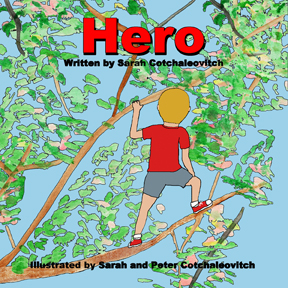
I know it boggles Peter’s mind that I write. When I pulled my children’s book Hero out of mothballs earlier this year, I decided to involve Peter by using him as a first reader. I read it to him while he sat with me at my computer, looking at a screen with a bunch of symbols that he struggled to make sense of. With no illustrations to guide him, he didn’t connect with the story. I had to read passages twice and ask him questions about them to make them stick.

And then it hit me: Peter can draw. He may struggle to read Hero, but I knew if he helped illustrate it, he’d have some ownership. Even with dyslexia, he could still be a part of the book creation process.

Peter learning cursive

Peter learning cursive

If you’re a regular reader, you know that we did it (and you can read about it here). Peter is half-shy, half-proud when he helps me deliver a book. Even though he’s quick to say that it’s too tough for him to read (yet), he loves that his name is on the cover, that it’s our book. He even asked me to teach him cursive, so he can sign the inside cover.

Starting in the fall, I’m going to talk to elementary school students about writing and illustrating a picture book. I’m excited for them to know that a regular mom can make children’s books, but I’m even more excited to encourage them by telling Peter’s story. Books are for everyone – for bookworms like me, those who struggle like Peter, and everyone in between.

Don’t forget, through July 26th, all of my proceeds from Hero are going to WSB’s Care-a-Thon to benefit the Aflac Cancer and Blood Disorders Center of Children’s Healthcare of Atlanta. Click here for all the details, including where you can buy Hero in Northeast Florida. You can also get yours from Amazon.com, or message me for a signed copy.

Another Project Bites the Dust


The setup for NaNoWriMo at home, if I need to ...

Getting ready for NaNoWriMo (Photo credit: Wikipedia)

This past week was the big deadline: after June 30th, the CreateSpace coupon code for two free copies of my NaNoWriMo novel would expire. As a perfectionist, I found it difficult to call my novel good enough. But then I realized that not only had a written a novel – from scratch – in just a few months, but I had also fully revised it a couple times. That’s a record for me – and quite an accomplishment, considering I’m so picky.

Now, if you’re reading this and wondering, What in the world is she talking about? What is NaNoWriMo?, I will tell you. NaNoWriMo (National Novel Writing Month) comes around every November. Why November? I don’t know. You can read more at nanowrimo.org. All I know is that it’s awesome. And it’s also for crazy people. Like me. Even some really successful novelists participate in NaNoWriMo. Like Sara Gruen, who wrote Water for Elephants, and Erin Morgenstern, author of The Night Circus.

While brainstorming my last blog of October – the one in which I would list all the reasons why my sorry butt wouldn’t participate in NaNoWriMo, yet again – I had an idea of novel-sized proportions. So I figured, What the heck? I just had a couple days to wait, so I held off until November first, then started writing like… what did I say earlier? Oh yeah – a crazy person.

A novel, as defined by NaNoWriMo, is 50,000 words. I wrote over 80,000 in November, so I “won,” but I wasn’t finished with the book. I kept at it until I finally finished in early February. Then I sat back and let it rest for a month – something Stephen King recommends (maybe I read it in On Writing – can’t remember).

When the month-long waiting period was over, it was time to start editing. I usually enjoy editing just as much as writing. Sometimes it’s the joy of discovering a detail I forgot I wrote. Sometimes I realize I really screwed something up, and I feel liked I’ve accomplished something after I fix it. And I always, always try to cut extraneous words and make the manuscript as clean as possible.

Now, I know this will sound gross, but the first draft is kind of like diarrhea of the pen (or keyboard, whatever). Many – way too many – writers leave their first drafts pretty much alone, so consider how awful it is for editors to read diarrhea-on-the-page. One of the goals of NaNoWriMo is to just plow straight through, so there’s going to be lots of crap. It’s necessary if you’re going to write so much in such a short time. But if you want to have a chance of the success that Sara Gruen, Erin Morgenstern, and authors like them have enjoyed, you have to return to that original draft and pull out your ax. After all the useless words are cut, you pull out your chisel and try to make the story as close to its intended shape as possible.

One great goal to help achieve this is another that Stephen King recommends (which I read in the same place as “wait  a month”): he says to cut the manuscript by 10%. I have tried this with other novels and short stories – always to no avail. If you haven’t figured out by now, I’m wordy. I mean, I almost always break the blogs-should-only-be-500-words rule. And I had new scenes that I wanted to add to my book. How in the world would I cut a 148,000-word book down to a little over 133,000? (A double-spaced page in a word processing program has 250 to 300 words, so that’s like cutting 50 to 60 pages.)

My mom's amazing cover art.

My mom’s amazing cover art.

But I did. And for once in my writing life, I surpassed my goal. A couple days before the deadline, I trimmed it to just over 129,000. I even managed to design a cover. I got the basic outline done, told my mom (who is an amazing artist) what I really wanted, and then she waved her magic wand, and BOOM! Cover, done. It’s wonderful having a talented mom.

I sell my children’s book through CreateSpace (shameless plug – buy it here!), so I knew I needed to submit my story one day early to make it through the reviewing process. Hero is an illustrated book, so I had to submit it as a PDF. Like a dummy, I assumed my novel needed to be a PDF, as well. It was only after I submitted it that I saw they would also accept .doc or .docx.

Sure enough, the morning of the 30th, I saw that they had rejected the PDF – it cut off all my pages numbers. So I resubmitted it as a .doc, then waited. And waited. I went to sleep and set my alarm to wake me a few minutes before midnight, so I could still order my copies before my coupon code expired. But at midnight, July first, my book still wasn’t approved.

Grr. By the time I woke up the next morning, the book was approved. Isn’t that how it always goes? Part of me felt like giving up and continuing to edit my book to supposed perfection. But I’m enough of a realist to know that that will never happen. The whole reason I even considered sending it to CreateSpace to begin with was because of the two free copies, but I was already planning on buying a few more. They’re not expensive, and I wanted to have something nice to give my beta readers. So I went ahead and ordered them anyway.

My books should arrive early next week. I am both excited and nervous. If you had told me this time last year that I would have a sudden brainwave and write an entire novel in just over three months – and edit it and print it for its first critique-ers within eight months – I would have thought you were nuts. I had no idea that I would love NaNoWriMo. Even though I had to write ridiculous amounts every day, it wasn’t a chore. Maybe it’s just that serendipitous magic of the right story coming to me at the right time. As is my goal every time I write fiction, I created the story that I wanted to read. My only hope that my beta readers agree and won’t give a unanimous, What was she thinking? This is terrible!

Either way, my third big project of this year is done. I’m currently living in a bit of a fiction-writing vacuum. Yes, I still have plenty to do. But at night, when the kids are in bed and I’d usually be revising, I sit around and think, What do I do now? It’s hard to adjust back to a normal life, whatever that is.

There is, however, one consolation. I know that when my beta readers get done – even if their comments are miraculously positive – I’ll have my work cut out for me again. And I look forward to that day.

Bread and Circuses and Why I Write

The chase

The chase (Photo credit: focusshoot)

I grew up on all kinds of nature shows. My dad has always been fascinated with all things wild, and since he was in charge of the remote, I saw quite a bit of PBS and Discovery Channel back in the day. Later add channels like Animal Planet, TLC, and NatGeo, and I was in nature heaven. Was.

Steve Irwin 1962 - 2006

Steve Irwin 1962 – 2006 (Photo credit: pauliepaul)

My kids love these kinds of shows, too. When we can find them. My elder son recently took an interest in reptiles, and so my husband told him about Steve Irwin, the Crocodile Hunter, and looked for some of his old shows on the web. I’m glad for this resource because good luck finding anything like that on TV. We finally found a different reptile guy with some shows on Netflix, but it’s rare to find a good nature show on TV anymore.

Then this week I just happened to see this article about Animal Planet’s Call of the Wildman: “Animals Are Injured in This ‘100 Percent Fake’ Reality Show.” Not only is it bothersome that apparently animals were drugged for a good number of these shows, but the attitude behind it all is what drove this deception to begin with. In 2008, Animal Planet’s president Marjorie Kaplan said, “We’re looking to be an entertainment destination, not a natural history channel.”

I suppose this makes sense, considering that I can never find the good old lioness-chasing-a-hyena type show anymore. Still, it sickens me how so-called reality TV (or what the article calls “guided reality”) has taken over.

Think about TLC – The Learning Channel, for goodness’ sake! What do you learn there? I’ll tell you: what not to wear, how to make a cake that looks like a person, and how bratty, four-year-old beauty pageant contestants behave at home (and worse).

Who came up with the idea that we need to watch how people supposedly live in order to be entertained, anyway? Hey, I’ve got an idea: follow me around with a camera all day. I’ve got two young boys. It should be entertaining, right? Well, maybe not. I know! You can jazz it up by putting us into some kind of controversial situation. Or rile my kids up, and make them drive me crazy.

Someone please tell me when reality became so fake.

As my mother pointed out when I mentioned the Animal Planet article, human nature hasn’t changed much over the millennia. As we did in Ancient Rome, we continue to do now: give us bread and circuses (food and entertainment), and we’re pacified. Just because we’re not watching slaves-turned-gladiators slaughter each other anymore doesn’t make us more sophisticated. Instead, we exploit people who are too ignorant to know that the world is making fun of them (or worse yet – they don’t care and just want the money); we turn ludicrous contests into “must-see” TV; and we stage all kinds of nonsense in order to make people think that the so-called “Wildman” is a hero.

I’m not saying that all TV shows are worthless or that tuning in upon occasion is bad. Hey, my husband and I used to love watching Top Shot and cooking competitions on the Food Network. But at some point, enough is enough. Nowadays, people think that the only way you can break into the music or cooking or fashion industry is to win a competition on one of these shows. And if you don’t, you’re worthless. Whatever happened to trying to break into your industry of choice the old-fashioned way – by forging out there and proving yourself without all the attention and sensationalism? And whatever happened to being entertained by, I don’t know, a professional entertainer instead of a “real” person’s stupidity?

All of this got me thinking. As my regular readers know, I am an avid reader, and my dream is to be a published novelist. Years ago, I was forced to consider both why I read and why I write, which goes right back to bread and circuses, right? No, I’m not talking about reading The Hunger Games. I’m talking about reading and writing indiscriminately.

Back in the days when I attended my friend and mentor Ari’s fiction workshops, he sometimes cornered the class by making us think about things we often take for granted. We knew that, according to the Gospel of Ari, we always had to read something, but he also wanted us to consider why we were reading. And we went around the room, each of us saying why we read. On another occasion, we had to say why we write.

Here are the answers that Ari did not want to hear: “I read to escape” and “I write for the money.”

I can’t remember what I said, but if Ari were to ask me now after years (okay, over a decade) to think about it, I have plenty of answers. I don’t read fiction to escape but rather to augment my life. I read to find out what could happen if. I love it when an author creates a setting (dystopian America) or a character (vampire) that is obviously not real, but I believe anyway. I love it when a story transports me to a new place, and I don’t even have to leave my couch. And as an introvert, I can meet all kinds of new people without ever having to introduce myself.

As for why I write, if I’d had the guts, here is what I would have said:

Of course I want to make money writing fiction. That’s why I’m not getting a useful degree that will get me some high-paying job. I’m young enough to still have the hope to make a living writing novels.

But that doesn’t mean writing any old novel. Unlike Animal Planet, I’m not going to change my M.O. mid-course to make a buck. I sometimes joke that if I decided to write Forty Shades of Pink or something raunchy like that, I would make it big. But at what cost? And besides, I can’t write that kind of garbage, anyway. At the end of the day, I can only write what brings me joy – which is what I want to read but simply hasn’t been written yet.

So I continue to be a starving artist (or nearly so).

There are writers out there who can memorize a formula and whip up a story that fits the mold. And people will continue to read them. People who maybe haven’t stopped to think why they read. People who have never considered that fiction can be more than an escape or sensationalism.

But I am not one of those readers or writers, so I’ll keep writing what moves me. I’ll go against popular culture and do something really real for a change. I’m happy with who I am and what I do – with not a single camera in sight to document how I go about my life – and I’m trying to raise my kids to find that same satisfaction. It’s going to be tougher for them than it was for me, but thank goodness for parental controls, archived TV shows, and zoos. We can keep it real just fine on our own.

Pacing Is Everything

Unscheduled meeting

Unscheduled meeting (Photo credit: Roger Smith)

Have you ever read a book that has such a slow pace that it puts you to sleep? You feel like you should get a medal for reading one page. Maybe you save it for nights when you have insomnia. I can certainly appreciate a slow pace if it makes a scene feel just as excruciatingly slow to the reader as the characters involved, but it’s hard to read an entire book like that.

On the other hand, have you ever read a book where you feel like you’re panting with exertion after a few pages? Just like the slow pace, there are places where this is appropriate, but it’s hard to sustain for the duration of a novel. And I have to admit, I often keep myself so busy that I feel like I’m living a fast-paced novel kind of life. There’s a reason my workout program and even the Bible prescribe a day of  rest. You can certainly go too far with this concept, but the original idea is a good one. It helps us recharge and keep from burning out – or running head-long into a brick wall.

Can you tell what I’m working up to? This week, I started getting a cold, something that happens to me when I’m entering burn out-mode. It was my cue that if I didn’t slow down from my break-neck pace, I would crash soon.

I go through cycles of taking on so much that I drive myself and others around me crazy. Then I regroup and work at a slower pace for a while before ramping up again. One time years ago, I had so many things on my plate that I worked my body into stress-induced acid reflux disease. I took a pill for a while, but I didn’t want to live like that. Something had to go.

Usually, I find a rhythm, a happy place. But adding first one and then a second child complicated things. I don’t work full-time outside the home any more, but that doesn’t make me any less busy. In fact, I think that many stay-at-home parents would agree that we tend to get dumped on because full-time workers assume that we have all this unused time on our hands. I wish that were true.

I have gotten better, though. Several times recently, I’ve said “no” when I might have given a “yes” without a second thought – like turning down several volunteer opportunities. It’s a hard thing to do when people who know I’m dependable ask me to do something. The last one I turned down – and it was a biggie – was met with: “I had to give you the chance to say no. But I think you’re making the right decision.” This person knows how busy I am and gave me a gift – the honor of offering a position with lots of responsibility, yet understanding from a fellow parent who also had two young kids once upon a time.

It’s really hard to say no to work, though. My husband and I both have this problem. We’re penny-pinchers, and if we turn down paying work, we feel guilty. That could be an extra car payment, money for a future vacation, or savings for our emergency fund.

I recently received a query regarding proofreading. I can proofread in my sleep; it’s my favorite kind of work. It was a good-size project, too. The only problem was that I was getting ready to launch a client’s website (see last week’s post) and knew that I needed to devote all my work time to that project. I didn’t turn down the potential client, but I was honest about how long it would take me to complete the job – a week longer than usual. My turnaround wasn’t quick enough, and the client took the work elsewhere.

I missed out on a nice paycheck, but if I’d taken on that project, I would have missed out on more time with my family. My elder son is already used to me taking a couple good chunks of time out for work every day, and I didn’t want to sacrifice any more of my time with him just to get ahead on the budget. If our electricity were at stake, sure, I would have. But it wasn’t. I stuck to my work-at-home covenant as best I could.

But it also sometimes means a sacrifice on my kids’ part. This is where I feel most guilty. Vacation Bible school was coming up, and this is one volunteer job for which I will always rearrange my schedule. It was a full week right on top of two big projects, a weekend full of birthday parties, a grand opening for a bookstore where my children’s book Hero is being sold, and all the usual mom stuff. Then Peter got an invitation for a play date.

“Just email me,” the mom said. I’m glad she gave me that option instead of asking for an answer on the spot. I knew Peter would have fun, but the timing was all wrong. It was a swimming play date, and I would have my toddler with me (always a challenge). It turned out that it was also my ten-year wedding anniversary. Whoops. I sent a quick email turning down the offer, and I’m glad I did. It was a busy day, and even though I know we could have squeezed the play date in, I saved myself a lot of stress. And when Mama’s not stressed, everyone’s a lot happier.

So how do you know when enough is enough? How can you achieve that perfect pace?

Well, if you’re writing, start by avoiding passive voice and past perfect tense.

Unfortunately, real life is not quite as easy. But I will say this: if you say yes because you’re worried that someone will think you’re lazy or a bad parent or will judge you in any way, you’re likely saying yes for the wrong reason.

And if it’s going to cause unwanted stress (like signing your kid up for yet another sport because all his friends are doing it – or taking a job that will make you hell to live with for a week or two), you need to give it some serious thought first.

Now does this mean that my summer is going to be full of relaxation and stress-free days? Not hardly. I’m still plenty busy. And quite honestly, I like it that way. But I’m going to make sure I enjoy my kids and live at a pace that the whole family can manage. I’m picking up two new projects to replace the ones I’ve just wrapped up, but the people I’m working with know that we’re making long-term plans with no firm deadlines. There’s even the chance we’ll still like each other when all is said and done. winky emoticon


Here’s A Book to Add to Your Kids’ Summer Reading List (One Big Project Done!)

Hero

Hero

Let me tell you the story of a young woman who signed onto a children’s book project.

Yes, I’m talking about me, and although I’ve always been a novel-writing kind of girl, when this project landed in my lap, I thought it was the perfect way to get my foot in the publishing world’s door.

About a year after I graduated from college, I was one of several writers contracted to write a series of children’s picture books. The first step was to provide a sample children’s story of my own creation. It didn’t need to have illustrations, so I figured it would be a piece of cake. I soon came up with a story called Hero about a boy who had to face a challenge to live up to this nickname. My job done, I promptly forgot it.

It turns out the reason I was contracted to begin with was because the creator of this series had no business in the writing world. This soon became obvious, and the project fell flat. I hadn’t particularly enjoyed the storyline and characters, so I shrugged it off and moved on.

Fast forward seven years, and a friend introduced me to a local author, figuring this might help me get one step closer to publishing my novel. The author I met was an absolute delight. She told me all about her books and the work that went into them, from getting them illustrated to collaborating with other writers to printing and selling them. (Check out her website Bluejean Books in the sidebar or here.)

While I still wanted to go the traditional route of finding an agent and a publisher for my novel, this conversation reminded me that I had a children’s book already written – and my parents’ business had a new digital press that would be perfect for printing books on demand.

Wedding Shoes by Saundra Howard

Wedding Shoes by Saundra Howard

There still was a problem, though – that of finding an illustrator. My number one choice was my mother. The image on the right is an example of one of her pencil drawings. She was an art major, and one of her many hats is that of a graphic artist. But when it comes to illustrating children’s books, she didn’t feel qualified, not to mention that she just didn’t have the time. (But I think I’ve convinced her to help me with the cover art for my NaNo novel.)

The book idea went on the back burner, where it simmered for well over a year. I learned a lot as I began to substitute teach and work with kids of all ages and reading levels. My elder son was diagnosed with several learning disabilities. I gained an appreciation for books that are easy readers versus the ones that are content-appropriate but still have to be read by parents. All of this percolated in my mind, stored up for when I would need it.

Then one day when substituting in kindergarten, I had an interesting opportunity. The kids were learning about authors and illustrators and how to create a book. The teacher, knowing I’m a writer, asked if I would mind talking to them about the process. The kids hung on my every word – it was crazy! Afterward, they asked if I had a book of my own.

That’s when the lightbulb went off. I realized I could illustrate my book myself. I’m not my mother, but I am capable of creating more than stick figures. And my six-year-old has an artistic bent, so I thought we could illustrate together. I started with a simple watercolor painting of a tree and a few sketches. Peter joined in, and we soon had enough to get started. That was in late January. I figured I would be done within a month. Ha.

So creating a children’s book is harder than I thought. Revising the copy was just one thing I had to tackle. On top of that, there’s the business end of getting an ISBN and marketing. And then those pesky illustrations pulled me right out of my element and into the realm of What in the world am I doing?

February came and went. March was busy; I worked on the illustrations on our vacation, but I was nowhere near finished. There was still hope, though. As long as I could share it with the kindergarteners before the end of the year, all would be well.

I probably wasted about a month of trial and error figuring out how to illustrate in Photoshop (yes, Photoshop, not InDesign). I would challenge myself to finish three illustrations in a week, and I’d only get halfway through one. Memorial Day weekend arrived, and I worked all day every day, staying up four hours past my bedtime into Monday morning. I thought I was done, then realized I still had several hours’ worth of work still ahead of me after I woke up.

But I finished – finally! (If you read my post last week, this was the third big project I’ve taken on in the past year.) I had my first copies ready so that Peter was able to share the book with his class on the second-to-last day of school. Kids that knew I’d been working on the book for months were excited to see it. My friends and family have been so supportive, and I cannot explain how wonderful it feels to have something in print, even if it’s not with some big-name publishing house.

Now that Hero is done, I have my work cutout for me, from getting it into bookstores to getting it online through CreateSpace. (Check the My Fiction page for when it goes live.) Until then, you’re welcome to message me for a copy – Peter and I will even sign it!

I can cross one big project off my list. It was a challenge, something I never would have considered doing over nine years ago when I first wrote the text. Finishing the book with my son has been a joy, and I finally have a real book to show for a small portion of my hard work.

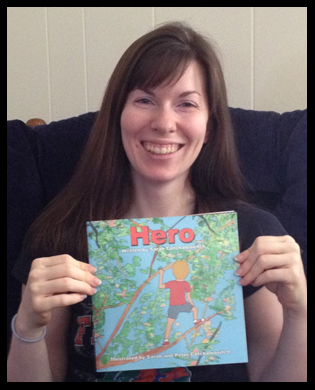
Sarah and Hero

Sarah and Hero

Enhanced by Zemanta

Free Time? Not on My Watch

Keep up and blog on

Keep Up and Blog On (Photo credit: futureshape)

A couple months ago, I blogged about time management, and a friend joked with me that he would read it when he learned how to manage his time.

I know the feeling, and I’m the one who was giving advice.

My problem isn’t procrastination but, rather, taking on too many projects at once. (My husband is probably applauding me for admitting this.) I have no idea what boredom is because as soon as I check one item off my to-do list, something else takes its place. Currently, I think of them as “The Big Three” looming projects.

First, in September I took on a job with a client that doesn’t quite fall in my area of expertise, but she was desperate, and I knew I could handle it. It’s the end of May now, and I’m just grateful that she’s patient.

Second, in November I participated in NaNoWriMo – a huge time hog but the most fun I’ve ever had writing – and I’m still editing my manuscript, getting ready to claim my two free paper copies from CreateSpace.

Third, in January I decided to pull an old writing project off the back burner, figuring I would finish it within a month. That didn’t happen. In fact, it’s this project that is making me so tardy with this post.

And a bonus – my dad started a blog for the family business. I’ve contributed one article so far (and thanks to my patient readers for reading it a couple weekends ago instead of my usual post). I edit each blog, even when I’m not the writer, and I’ve posted most of them, too.

These are in addition to substitute teaching, reading and editing for Fiction Fix, bookkeeping part-time, and being a mom. I’m sure I’m forgetting something. The wonderful news, however, is that The Big Three are finally wrapping up. I can see the proverbial light at the end of the tunnel – and I think I’ll get there in time to have a breather before school gets back in session. And then I’ll be in for it because this mama hopes to go back to school some time in the next year. I mean, what else am I supposed to do with my free time?

Now it’s time to get back to it, so the next post you read can actually include an announcement about finishing something for once. Until then, back to work…

Enhanced by Zemanta

Don’t Judge a Book by Its Author

You can’t blame a writer for what the characters say.

                                                                                                                                             –Truman Capote


The Casual Vacancy

The Casual Vacancy (Photo credit: Darlene Acero)


Avid readers, do you remember a time when you discovered a new writer, fell in love with one book, then went crazy looking for all of his or her other publications?

This has happened a number of times with me, from my early days of reading with authors like Beverly Cleary and Louisa May Alcott, then ramping up to Agatha Christie, J.R.R. Tolkien, Michael Crichton, and then Stephen King. In every case, I devoured their books, as many as I could get my hands on.

But sometimes… sometimes this doesn’t happen. Sure, every prolific author has an off-book or two. Even in the middle of bestseller series, it’s not uncommon to have a middle-of-the-road slump. (Harry Potter And The Order Of The Phoenix comes to mind.)

Sometimes, it’s no fault of the author’s, though, because they get pigeonholed. They commit the unforgivable sin of writing outside of one particular genre and so get panned by masses of once-adoring fans.

This often happens with actors. Think about how many of them, in the effort to avoid being typecast, take on just about any role they’re offered to prove they can do something other than what originally made them famous. You might be disillusioned when your favorite child actor tries to show she’s all grown up by portraying a risqué character.

Now, authors aren’t going around in the nude to prove that they’re all grown up. But sometimes we treat them as if they’re doing just that. If you find out that your favorite children’s author has an adult title coming out soon, don’t be shocked that it’s not all “See Dick and Jane” anymore. Dick and Jane might be doing something that you don’t want your children to read about. And that’s fine. Writing for children doesn’t mean they have nothing else to offer the writing world.

The opposite it true for authors such as Stephen King. Many people shy away from him because he’s known primarily as an author of “horror” stories. But I’ve found that he actually writes much more fantasy and suspense than horror, not to mention moving love stories, at least one hard-boiled mystery, and one of the best non-fiction books on the craft of writing that I’ve ever read. (Check it out here.)

Truman Capote was right: we can’t blame writers for what their characters say and do. There is a certain amount of censoring that automatically happens if your story is meant for younger audiences, but the truth must always prevail. As Stephen R. Donaldson writes about the creative process:

[N]one of us can explain how it works. In a sense, writers don’t get ideas: ideas get writers. They happen to us. If we don’t submit to their power, we lose them; so by trying to control or censor them we can make the negative choice of encouraging them to leave us alone.

I don’t know about you, but it sounds very unattractive to tick off my muse by not letting the story be the story. I recently posted about striking gold with a story idea for this year’s NaNoWriMo. When this idea first occurred, I assumed that it would be another young adult novel. After all, the main characters are teenagers, and most of my stories end up going the middle grade or young adult route.

Yet the more I’ve thought about this new premise, I’ve realized that my novel might actually be for adults. That’s not to say that young adults wouldn’t ever read it – after all, I started reading Stephen King when I was 14 – but the amount of censoring I’d have to do to make it appropriate would change the intent and tone of the story. I suppose I could make it work, but would that be right?

This reminds me of a book I read recently, The Casual Vacancy by J.K. Rowling. Oh, you’ve heard of her? Yeah, she wrote that itty bitty Harry Potter series that a few people around the world seem to like.

Okay, if you know me, you know that I’m a Harry Potter nut. I bought The Casual Vacancy, which Rowling published as an adult novel, with no illusions of it containing wand-wielding teenage wizards. In the early pages, I sometimes scratched my head over this being the same author of the seven books I so dearly love. True, there are teenagers in her new book, but they’re facing very real temptations and demons, not the fantastical kind. The language, the grittiness was sometimes hard to reconcile with my previous experience of this author.

But knowing how hard it is to force a story into a genre that it’s not, I had an easier time – making my preconceived notions of Rowling disappear into the background – than many other readers who gave up on the book when they discovered it’s not about adult wizards. Rowling still has her fingerprints all over it, but in the form of turns of phrase, descriptions, and little gems that claim her no matter what the genre.

As much as I love most things young adult and fantasy, what I love above all are characters that come to life on the page and stories that pull me in. When I allowed the story to take over, it both compelled and moved me. It took a lot of courage for Rowling to put herself out there and publish something so different than the series that made her a household name. I know of people she’s upset because they expected more of the same, but I admire her for letting the story take the lead.

If you’re an author wrestling with a story unlike anything you’ve ever written, here’s some great advice from Anne Lamott’s Bird by Bird: “[S]ome days it feels like you just have to keep getting out of your own way so that whatever it is that wants to be written can use you to write it.”

Getting out of your own way means ditching those preconceived notions about what you can and should write. Let the story tell itself – at least in the first draft – and you can figure out what’s still appropriate to keep in the revision process.

And if you’re a reader who tends to pigeonhole, open your mind a little bit. Realize that the best authors, the ones that convey the truth through pages and pages of lies, are simply doing what Stephen R. Donaldson wrote about: they’re allowing the creative process to work as it should. To censor it, to hold back, would be to lie in the worst possible way.

For writers to deny themselves the chance to branch out into other genres and interests is to deny growth within the craft, to deny them doing what they’re meant to do.

Writers don’t just love to write – they must. Lamott also says:

We write to expose the unexposed. If there is one door in the castle you have been told not to go through, you must. Otherwise, you’ll just be rearranging furniture in rooms you’ve already been in. Most human beings are dedicated to keeping that one door shut. But the writer’s job is to see what’s behind it, to see the bleak unspeakable stuff, and to turn the unspeakable into words—not just any words but if we can, into rhythm and blues.

Amen? Amen.

Enhanced by Zemanta

The NaNoWriMo Loophole that Could Solve Your Early Inspiration Problem

Gearing up for NaNoWriMo.

Gearing up for NaNoWriMo (Photo credit: This Year’s Love)

Okay, I know I said “loophole,” but the solution I’m about to address isn’t really in the fine print. Anyone who cares to know what it is can just go to NaNoWriMo.org and read their FAQ. (Thank goodness for an organization that gives clear and concise answers.)

So what is this “loophole” that I’ve discovered, and what does it address? Well, excuse me if I digress by way of explaining…

Readers who have stuck with me since the beginning know that in 2012, I thought people were crazy to participate in NaNoWriMo (writing a 50,000-word novel from scratch, all in the month of November). Then in 2013, I had a change of heart. Or, that is, mere days (like two) before November, a story idea popped into my head, and I realized that I could wait a couple days to write and hope that magic would follow.

It did, and I am glad to say that it’s been the most fun I’ve ever had writing. Not only did I finish my novel, but I’ve edited it once and am currently putting the finishing touches on it, so I can send off to CreateSpace for my two free print versions, which I will then distribute to beta readers.

After participating once, I sometimes wonder what this November will bring. Will another idea come out of nowhere in the nick of time and make it possible for me to enjoy the same success as last year? Or could I possibly write a sequel to one of the other novels I’ve written, waiting until November to start? (This is what I consider a fallback option – but at least I do have a sequel that I’ve considered writing.)

I received an unexpected answer to these ponderings this past week. It hit me as inspiration almost always does – unexpected, uninvited. It’s not that I don’t like inspiration, but why can’t I be inspired at times when it’s a little more convenient?

I was driving across town when an image popped into my head. Two characters. And then a scene began to form. From there, it was a novel-size idea. And I was on my way to teach four- and five-year-olds in Sunday school, with no time to even jot down my idea.

I realized that this could be the idea I’d hoped for, except that it had arrived six months too early. I didn’t dare write anything except notes – character’s names and ages and little bits of backstory. If I wrote an actual scene or dialogue, that was it; I could forget using it for NaNo and would have to hope that either I could make the sequel idea work or that another novel-size idea would be born in the intervening months.

As it happens, I have several big projects in the works, and a new novel does not fit into my busy schedule. I barely had time to capture the scope of my idea in writing, much less sit down and let the prose flow. I figured that if I could stall long enough to finish these projects, maybe I could endure until November.

Being extremely busy, however, does not mean that I’ve quit thinking about this new, unwritten story. I’ve been walking around in a daze of possible scenes, sometimes whispering lines – maybe if I do this, I can make them stick. I’m sure anyone who catches me at it will think I’m nuts.

And in stolen moments, I’ve written loose descriptions of these scenes, where and when they happen in the flow of the story, creating – ugh – a sort of outline. Despite being a planner, I like to outline as little as possible when writing fiction. Yes, it’s great to know where a story is going and even some destinations along the way, but during the writing, the adventure is letting the story and characters dictate, day by day and scene by scene, what happens next. So waiting until November to write, allowing myself to put down bullet points and thus possibly boxing my story into a particular shape, isn’t sitting too well.

It’s gotten to the point that I’ve realized I can’t let this go on much longer. Once these projects are no longer occupying my time, and especially once school is out and the kids and I are spending a lot less time commuting and a lot more time at home, it’s going to be hard not to write.

I decided to check out the NaNoWriMo FAQ again, thinking that I would have to use the sequel idea if I wanted to be able to participate this year. I was sure that was one of the questions I saw listed before, but I wasn’t worried about it at the time and didn’t read the answer. Upon checking the site, I didn’t see the sequel question after all, but I did find something else. From their website:

We think NaNoWriMo works best when you start a brand-new project. However, what’s most important is being excited about what you’re writing. If you want to work on a pre-existing project, you have our full support!

Outlines, character sketches, and other planning steps are encouraged. Just be sure to only count words written during the month.

Here’s the loophole, people! Not only are sequels okay, but I could pull out something I started five years ago and pick up where I left off. The only words that count, however, are the ones I write in November, of which there must be a minimum of 50,000.

Hmm… This is very tempting. I can go ahead and write the scene that keeps popping in my head and won’t leave me alone – that way I don’t have to continue whispering it to myself like a crazy person. What I’m afraid of, though, is that once a little fissure opens in the dam, I’m going to invite the whole flood, and I won’t have 50,000 words left to write, come November.

It’s a risk I’m willing to take. After all, I have that sequel that could still work if this new idea takes off. And I think the NaNo people would agree that it’s wonderful that new ideas are still occurring to me and begging to be written. So I’ll hold off as long as I can, but when I can’t keep the creativity in any longer, watch out.

Related articles

Enhanced by Zemanta

5 Reasons You Should Join a Writers’ Workshop (and One Reason You Shouldn’t)

English: Tessa Laird writing workshop

Writing Workshop (Photo credit: Wikipedia)

A common flaw among many new writers is the idea that criticism is bad, and any corrections made to their golden prose mars the original genius.

With the right attitude, however, this can be overcome in the workshop setting.

Yes, I was a new writer at one time – or at least new on the workshop scene. I was in my late teens and had been writing for years, but as for my serious attempts at fiction, the only people who had read it were teachers or family members, none of them writers. My mother can proofread like a fiend, and my teachers could tell me all day long what was wrong with my grammar, but as far as improving my stories, I was kind of on my own.

So I wrote grammatically correct, typo-free stories that just weren’t all that easy or fun to read.

I thought I knew how to write a bestseller. After all, I’d subscribed to Writer’s Digest from the time I was old enough to afford a subscription, and I read anything about the craft that I could get my hands on.

After visiting one fiction workshop, just to test the waters, I realized how much I could benefit from not just knowing how I should write but receiving critiques and criticism from other writers.


The Workshop Format

Not all fiction workshops are created equal. I’ve attended anywhere between 120 and 150 individual sessions, the majority in person (usually in a classroom setting) but a few online. Anyone who tells you online is preferable either has only experienced this version and doesn’t know better or hasn’t attended a live workshop with a successful format. Dialogue between the critique-ers is such an important element, and in my opinion, it’s hard to capture that online.

There are workshops for creative non-fiction and fiction alike. Choose whichever best fits your needs. I chose fiction, and I took my friend Ari’s semester-long workshop seven times, four for credit and three post baccalaureate. Workshops are available at colleges at the undergrad and grad levels, but I’ve attended others put on by small groups of writers who couldn’t commit to an entire semester or weekly meeting. The Internet is a great resource for finding one in your area.

Ari’s format was pretty straight forward. We almost always received stories a week in advance, read them and marked them with edits and critiques, and when we met for the workshop itself, we sat in a circle, and he read the story aloud. Then we started in with our comments and critiques, in no particular order, and we kept going until Ari felt we were done. The author sat among us the whole time but was not allowed to say one word or make any kind of gesture or facial expression to “help” the conversation. Authors were merely flies on the wall.

It’s tough being the author in this situation, especially those times when it’s obvious that no one gets it. But as Ari pointed out, the majority is often – although not always – right. If an entire room of people can’t make sense of the story, chances are that changes need to be made. How to implement those changes is up to the author, often based on suggestions from the other participants.

I’ve heard of other workshops in which the author is allowed to respond or engage in the dialogue, but as hard as it is to just sit there and take it, it really is beneficial to be silent. For one, the workshop is full of other writers who will all be in the hot seat at some point, and if you can’t respect one another, you don’t need to be there. The workshop is not a place for personal attacks but a place of learning and growth. It’s a place of safety, although not necessarily comfort. By not being able to respond, the author can learn where the story falls short because other readers are allowed to express their own perspective without the author’s bias.

I also know of workshops that allow the author to read the story, instead of the instructor or another writer. The problem with this is that the author will read it how he or she intends it to sound – whether it’s truly written that way. Another reader may not get the inflection right, may not get the exact cadence, but this will highlight for the author problems within the text. This is how, after all, the general public will likely read it – something the author needs to know.


5 Benefits of Joining a Writers’ Workshop

1. Meet other writers.

Many of us are introverts, and the idea of venturing out to meet new people is frightening. My writing meant enough to me that it was worth the discomfort of meeting a roomful of new people. I never intended to make life-long friends, never intended to spend time with these people or become involved in their lives. And that didn’t happen at first. But the wonderful thing about workshops is that if they’re effective, the same people will attend again and again. My second semester, a group of us bonded and created Fiction Fix, and it’s still going strong today, well over a decade later. My instructor and friend Ari gained such respect for me that he agreed to workshop my first finished novel. A few of the friends I made in the workshop have even chosen me as their editor. One recently published her first novel. (Check out Brightleaf.) Don’t complain that you don’t have any connections – join a workshop and start making some!

2. Develop a thick skin.

The publishing world is harsh. I know this from both having my own fiction rejected numerous times and working for Fiction Fix, where we’ve rejected a lot of… refuse. If you’re serious about publishing but cry every time someone says something negative about your work, you won’t make it long in this industry. Sure, some of the comments you’ll get are unwarranted, but you need to learn to filter out the hurtful stuff from ignorant jerks and utilize the nuggets of pure wisdom.

The workshop environment is the perfect place to grow your alligator hide because, as I said, it’s a safe place. No one’s out to get you, just to help you. Criticism is merely a means to help you improve. Your first workshop will be tough, but it gets easier, I promise.

3. Sharpen your editing skills.

Even if you don’t plan to edit professionally, it’s handy to be able to self-correct. Spelling and grammar may not be your thing. They are for me, but there are amazing storytellers who can’t spell their way out of a paper bag – and that’s what the professionals are there for. But after you’ve attended enough workshops – and I’m talking about workshops that tackle others’ stories, not just your own – you’ll start to pick up on things by osmosis, and you will inevitably meet an author or two who has concrete editing advice that will stick. You’ll soon find yourself looking for the errors in your own work that you’ve found in others’ stories.

4. Discover your own style.

My earliest stories were formatted after Michael Crichton‘s style. A few years later, I moved on to Stephen King. If you’re not careful, you can easily fall into the pattern of imitating whatever author you’re reading at the time. While imitation may be the sincerest form of flattery, it’s not good to let it dictate how you write.

What you want is a consistent style that is yours and yours alone. Just as you may be able to hear a song on the radio and immediately know who it is because of the distinct sound, you want someone to pick up your story and say, “Yep, this is Bob through and through.” (And I mean that in a good way, of course – not “Oh great, it’s him again.”) Sure, you may borrow different aspects from your favorite writers, but the end product should be all you.

In the workshop setting, I learned about POV (point of view), clichés that drive people nuts, and “rules” that may not be grammatical law but are certainly stylistic norms among seasoned writers. Yes, these issues are covered in any number of books and blogs and interviews, but it’s so much more informative to get this information in a practical setting. It took me a year of workshops to find my own particular style, my writer’s voice. And it sticks whether I’m writing children’s picture books, middle grade fantasy, young adult dystopian fiction, adult sci-fi, or even this blog.

5. Improve your writing.

This may be your ultimate goal, and it’s certainly a worthy one. If you come to the writing table with an open mind, the above four will automatically improve your writing. You’ll have friends who care enough to be honest about what does and does not work, who will support you in every literary endeavor (and then some); you’ll mature enough to be able to hear their criticisms without getting your feelings hurt; you’ll develop the tools necessary to not only fix what needs to be fixed but to not make those mistakes next time; and you’ll create a style that becomes your own literary hallmark. Sure, I still write garbage that’s not fit to print. But I’ve internalized so much valuable advice that I have an inner critic who says: You’re going to write that?! You know better! Many of my first drafts are better than what I thought of as “polished” in my pre-workshop days.


Why You Shouldn’t Sign up for a Writers’ Workshop

There are many other benefits of joining a writers’ workshop, but if you read #5 above and thought, I don’t need to improve my writing, then maybe you need to step back and do some soul searching.

I find it sad that some people are unable to improve because they simply use workshops as a venue to receive accolades for their writing. They are very disappointed when someone points out flaws. How dare they! these writers think – and sadly, a lot of them are not new to the writing game. They should know better. One older writer who attended my first workshop quit after his story was critiqued because we didn’t give the response he wanted, and he didn’t think he could get anything else out of our sessions. Another writer was so disillusioned when no one understood his story that he refused to go back and make changes. These are the  type people who most need the workshop and, sadly, get the least out of it because they refuse to think they need to improve.

I do admit that I expected praise for my brilliance when I workshopped my first story. Turns out it wasn’t quite as brilliant as I thought. I was taken aback, sure, but I learned a lot. So I guess I need to add, as a prerequisite, that you should leave as much of your ego as you can at the door – and then just leave it there for good.

If you can do this, your workshop experience will change your writing life in unexpected, life-changing, and lasting ways.

Enhanced by Zemanta

Why Can’t I Take a Vacation from Writing?

I love my vacations. I love the flurry of packing and cleaning and setting everything in order to be gone for a while… and then leaving. Then, while on vacation, people look at me like I’m crazy while I type away on my laptop. No, I’m not getting caught up on a client’s work. In fact, I’m not guaranteed to ever make one penny on what I’m writing. So why in the world am I doing it?

filedesc http://www.epa.gov/win/winnews/images...

Typing Away (Photo credit: Wikipedia)

For non-writers, understand that it’s not as simple as putting away the typewriter or laptop or fountain pen – whatever your writing implement of choice.

Remember when Stephen King said he was going to retire? This was well over ten years ago. I wondered how serious he was at the time: I certainly couldn’t imagine having a successful novel-publishing career and just giving it up.

In fact, King didn’t say he was going to quit writing at all, just that he thought he was almost done publishing. If you’ve read any Stephen King novels published since 2002, you’ll see that he’s apparently still not done. But even if he were to never publish another novel, I can’t imagine that he would quit writing. How many other professionals could do the same?

Consider people who have careers in the military or law enforcement, medical practitioners or pharmacists, teachers or professors – really, I could go on all day. Most professions are finis at retirement. You walk out the door, and you don’t come back. And until then, you take vacations, leaving all work behind for abbreviated periods of time.

But as with Stephen King, we writers have a somewhat different situation. While it’s absolutely appropriate to take a vacation from client work for a week or two, maybe even “retire” from the public scene, I never just leave my laptop at home or put my stories on the back burner.

My stories aren’t just going to take a vacation because I’m out of town. In fact, my NaNoWriMo novel, which I’m currently editing, woke me up early this morning, filling my head with new ideas. Sure, I could ignore them, try to recall them all in a couple weeks, but I’d likely forget them before then, not to mention that it would make me miserable to not work on my novel. In fact, I don’t even know if “work” is the appropriate word. Sure, I’ve spent a lot of time on it, but writing is a vacation in itself.

That’s not to say that I’m going to write to the exclusion of my family and our vacation plans. I’ll soak up the new experiences, laugh a lot, and sleep too little. But I will also take advantage of the time away to squeeze in as much extra writing as I can because I love it.

And, God willing, I hope to type away past retirement age and die with my fingers poised over the keyboard.

Enhanced by Zemanta