Three Ways to Manage Your Busy Schedule – Instead of Letting It Manage You

Laura's work desk 13/05/2008

Piles of Work (Photo credit: Laura Whitehead)

After substituting in kindergarten for the third time this week, I drove home with that relieved, TGIF feeling. I love teaching, especially the freedom of being a substitute, but it makes for a busy day, often with no breaks or time to think.

But the entire weekend stretched ahead of me, with plenty of time to decompress and do the things I wanted to do.

My little fantasy didn’t even survive the drive home. I knew there was a pile of laundry waiting to be washed, plants that needed to be watered, sippy cups to be washed and refilled, and I still had my daily bookkeeping duties for the family business that I’d put off in order to substitute.

When I walked in the door, I discovered more things to do: a book sitting on the kitchen table that I need to read for a class next week; a pair of pants that need to be re-hemmed; a looming trip to the store before my son’s t-ball game. Oh yes, and then the t-ball game itself.

I also took on a new project today that I have to finish before we go on our spring break vacation, plus a novella to read for Fiction Fix, not to mention my personal fiction projects. Sometimes it’s hard to figure out what to do first when there are so many tasks at hand. Better just to take a nap and ignore them all, right?

If your life follows a similar pattern, you may feel that you’re always behind and rarely or never get to do anything for yourself. And it’s all too easy to give in to a negative attitude.

When Peter started playing t-ball, I dreaded the practices and games. My time is already so limited that I didn’t know when I would ever get anything done.

I had two choices: succumb to despair and have a nervous breakdown, or adapt and make the most of my new schedule.

I chose the latter, and you know what? I’m still able to embrace all the new projects I’ve taken on, and I’m even finding that elusive “me” time. Here are three tips that have helped me, and I hope they’ll help you, too:

1. Use Technology to Your Advantage

I know of people who have gotten rid of their TVs and phones because of the distractions they cause. If this seems a little drastic to you, there are ways to turn your electronics into a boon rather than a procrastinator’s crutch.

Did you know that there are a plethora of apps and computer programs that can help you manage your time? Some, like SelfControl from Mac users or SelfRestraint for Windows, block the internet altogether for set amounts of time. Just search for “time management apps” to see lists of what’s available and which one best fits your needs and personality.

Some of you may be able to control your electronics use by sheer will power. I fall into this category. I used to check my email any time I woke in the middle of the night, and the result was that I always had a hard time getting back to sleep. I finally made a deal with myself: don’t check email at night. It was as simple as that. If someone texts me, I know it’s urgent. Otherwise, it can wait.

Another thing I love is my phone’s timer, which I use in conjunction with step number two.

2. Take Baby Steps

When I have enough projects to fill a mile-long to-do list, I tackle them a bit at a time, baby-step style, and there are two ways to do this. As mentioned above, you can use that handy timer on your phone and work in blocks of time, or you can set goals, like editing one chapter and then moving on to a different project.

I’m currently rotating five projects in this manner, employing whichever method makes sense for each project, whittling away until they’re done. At the end of a hard day, instead of feeling like I’ve fallen short by ignoring one project while spending all my time on another, I can see that each one is closer to completion, even if only by a little bit.

3. Schedule Recreational Activities

It is very discouraging to run into someone on a Monday and have to come up with an answer to the “What’d you do this weekend?” question. I often stand there in utter silence, knowing I was busy but not able to remember anything specific. “Oh yeah,” I might say after a few seconds, “I weeded the lawn all day Saturday.” Exciting stuff, right?

When piles of laundry, flowerbeds full of weeds, grad school projects, and your kids’ sports schedules hijack what could have been your spare time, you feel like you’re stuck in a rut. This is when you can get in trouble by either going off the deep-end and throwing all responsibility to the wind, or you can wallow in self-pity and start hating anyone who did manage to enjoy her weekend.

If, instead, you schedule regular periods of recreation, just as you would schedule all the work that you need to do, you will have something to look forward to every day.

This is easier said than done, I know. Part of my personal promise to myself was to leave work well enough alone after my kids were in bed every night. If I could just hold out until they were in bed, I could read or write whatever my heart desired. But sometimes there’s not enough time in the day to get all my work done, and there’s still quite a bit left to finish after the kiddos are down. But I still make sure that I read or write or watch the occasional movie because my brain craves that break. Afterward, it’s much easier to work.

You may have more time but feel guilty about using it. Don’t! Fit in the occasional golf game or fishing trip or cup of coffee with a friend, if that’s what floats your boat. If you ignore opportunities such as these in order to “save” your enjoyment for a blow-out, two-week vacation that eats up a quarter of your annual salary, think of all the misery you’re subjecting yourself to in the meantime. Wouldn’t it be a shame to turn something you used to love doing, such as being a freelance writer, into a task to which you feel enslaved? I would rather have a few minutes of rest or fun every day, and the vacations, although they aren’t many, are truly special.

However you choose to do it, find time to do something not work-related on a regular basis, and you will be able to attack your projects again with renewed vigor and enjoyment.

Oh, and by the way, your house is patient: it will wait for you to clean it. Wash you underwear, by all means, but I won’t look at your baseboards if you won’t look at mine.

Do you have too many things to do 24/7/365? How do you manage your own workload?

Enhanced by Zemanta

What Are You Reading?

Reading a book

Reading a book (Photo credit: Wikipedia)

That’s right: what are you reading? If you’re a writer, you better have an answer.

If you want to know why, check out this week’s blog here, care of Fiction Fix.

Speaking of reading, I’ve already read seven books from this year’s list. How are you doing?

And one more thing: if you don’t have anything new to read, check out the latest issue of Fiction Fix, volume 15. It just came out this week, it’s free, and there’s some great stuff in there. Enjoy!

Enhanced by Zemanta

Move Over and Let the Characters Drive

Dumbledore as portrayed by the late Richard Ha...

Dumbledore as portrayed by the late Richard Harris in Harry Potter and the Philosopher’s Stone. (Photo credit: Wikipedia)

I love reading books that are so good that you just have to talk to someone else about them. My husband and I have read a few of those lately. After finishing the latest trilogy, Thomas Googled the author to see if there were any interviews about the series’ ending. Sure enough, he found one in which she talked about how her characters continually surprised her.

“It’s just like so many authors say,” he told me, looking somewhat bemused.

“It’s true,” I confirmed.

As crazy as it sounds, we authors don’t have the total control over our characters that we wished we did. Yet some authors insist on absolutely smothering the life out of their characters to make them bend to their wills. You’ll know these characters when you meet them because they’re inconsistent, like someone is forcing them to do things they weren’t meant to do.

Since I think it’s safe to talk about the Harry Potter books without fear of spoiling the ending (and if you haven’t read them, shame on you), I’d like to bring up something author J.K. Rowling said back in the days when all the fans were itching for Harry Potter and the Deathly Hallows (Book 7). Thomas and I checked her website on a daily basis, theorized with friends, skimmed the news for any possible updates, and any time J.K. Rowling came out with something – anything – new, we were beside ourselves with glee. And no, I am not exaggerating (although Thomas can suppress his glee a lot more than I can).

And one day, she said that she was having a particularly hard time with Dumbledore. Well, first of all, that made everyone scratch their heads because he died at the end of Harry Potter and the Half-Blood Prince (Book 6) – or did he?

But more amusing to me, aside from this nugget, was the image of Jo Rowling fighting her characters to straighten up and fly right. Characters will be difficult, and although non-writers may think we authors crazy or schizophrenic or overly imaginative to say so, there is an element involved that defies explanation.

There are some people who feel compelled to write in order to create characters that fulfill unrequited wishes. These characters are forced into ill-fitting molds. The beautiful girl that said no to a date with the nerdy guy suddenly falls in love with him. The bully at school finally get his come-uppance. The evil boss sees the error of her ways and starts treating her employees like human beings. These characters feel flat. They don’t do much – except what the author designed them to do.

What is truly beautiful, however, is when these characters are allowed to take control of their existences, teaching the author a thing or two while living their stories. Harry was an absolute teenage brat in Harry Potter And The Order Of The Phoenix. Sirius Black died laughing, in the thick of battle. Dumbledore gave his life, leaving a mess and a number of unanswered questions. Dobby – well, I don’t even want to mention him because I know it will start my mom crying. But the point is that J.K. Rowling could have made Harry a sweet fifteen-year-old, leaving everyone wondering if she remembered at all what teenagers are like. She could have let all of her characters live, eliminating the very important sacrifices that they made. Everyone would have hugged and been happy, and the story would have stalled and rung false. It would have cheapened their dear, fictional lives.

So next time you read a book and can’t believe that the author did something that you feel is the deepest betrayal, consider how you would feel if the author had taken the easy way out instead. I don’t know about you, but I don’t read in order to feel all warm and fuzzy inside. I read to suspend disbelief for a time, to form a relationship with characters, to have an absolutely amazing experience – that may hurt at times but will also deliver a great deal of truth in a fictional package. The stories that I love the most are the ones that leave me conflicted, that keep me up at night, that sometimes break my heart. Maybe things didn’t turn out the way they could have, but often, they turn out exactly as they should have.

Enhanced by Zemanta

What Will You Read in 2014?

IMG_2164

All day long, I’ve done what I could only dream about doing this time last year: I’ve sat on the couch reading a good book. Last December, I yearned for some good fiction after a few months of reading a bunch of how-to and reference materials. So at the close of the year, I looked over the books in my personal library and made a list of titles I hoped to read in 2013. It was a pretty ambitious list, one that I knew I probably wouldn’t finish, but I took a good stab at it. I did read seven of the fourteen books from my list, plus an additional ten that I hadn’t planned on reading.

I have to add a quick note about one of these unplanned books: I edited a novel called Brightleaf this year, and it was published in September. The author is my friend Raleigh Rand, and although I didn’t read this book in the traditional sense of sitting down and reading it for pleasure, I enjoyed every moment of editing it and would highly recommend it. (There’s a story behind this book, but that’s for another blog.)

So when thinking about my book list for the upcoming year, I waited until after Christmas. I can always count on someone to come through with a great book or three, and I had a sneaking suspicion (mainly because he asked me right out what I wanted) that my husband would get me Veronica Roth’s Divergent. I wasn’t disappointed. I went ahead and bought the next two books – and it’s a good thing. I started reading it this morning and am already more than 140 pages in – I’ll be done before 2014.

In addition, an unexpected gift was a book of Mark Twain’s writings from my friend Georgene. I promised that I would quote it a bunch this year, so that’s on the list. Also, my aunt ordered Bess Streeter Aldrich’s The Rim of the Prairie for me, a book I’ve read before, but alas, it was borrowed. Also (and I’m bragging now), I received two books that are a writer’s best friend – hand-crafted, leather-bound blank books. My sister-in-law convinced my husband to splurge on one (thank you!), and my aunt bought the other – they know me so well. When I’m not reading, I’m usually writing, and I can’t wait to fill them.

This year’s list will be composed of three kinds of books – the ones I still have to read from the 2013 list, books that I want to re-read, and brand new ones. And, as happened this year, I am sure that other books will pop into my life and expand my literary horizons still further.

Click on the links below to read more about these books, and if you purchase one from one of my links, you’ll support my blog.

Books I read in 2013:

My 2014 Book List:

Do I really think I’ll finish all these books? Not a chance. (I still do have to feed my kids and clean the house, after all.) But it will be fun trying. What books do you plan to tackle in the new year? Happy reading!

My Favorite Kind of Problem

Novels in a Polish bookstore

Books (Photo credit: Wikipedia)

My kindergartener brought home Scholastic’s December 2013 book list this week, and oh my goodness, I’m in heaven. I love giving (and getting) books more than any other kind of gift. Does that make me a boring gift giver? Well, I’m afraid so. Unless, of course, you love books, too, and you’re on the receiving end.

I was excited when I spotted a set of books that follows the ones my son is reading right now, but I couldn’t stop there. With books for two and three dollars, how could I? I’m singling out all the kids in my family and seeing if anything on this book list is appropriate for them. My love for books runs so deep that I just have to share.

This, of course, led to me wonder what books I would like. While I feel guilty other times of the year when I add to my already seam-bursting collection, when it comes to Christmas, I might as well get something I really like.

Now, I know that I posted the list of books that I hoped to read this year, and I’ve fallen woefully short of my goal (read it here). But I had to make myself accountable, even though I knew it was nearly impossible. It’s kind of a wonderful problem, having more books than I can possibly finish in 365 days. The thing is, had I stuck to the plan, I might have come close to finishing, but then new books kept barging into my life, and here I am, with a fair few titles under my belt, just not all the ones I originally planned. (Anyhow, I still have a few more weeks, so maybe things won’t look so bleak at the end of December.)

I don’t know why I can’t give up this habit. It alternates between despair (Will I ever finish all these books?) to excitement (I have so many books to read! I can’t wait for the next one!). This week, when I’ve barely had time to read two pages every day, I’ve felt a lot of the former. Why do I keep torturing myself? Well, because someone will tell me I need to check out a book, and I will – and I’ll love it. If I keep sticking to the same authors and the same styles, I’ll miss out on so much. So in the spirit of egging myself on, I have to ask: what books should I get this year? If I’m going to further interrupt the list of books I originally planned to read, they have to be worth it. Any suggestions?

Why I Will Never Outgrow My Love for Physical Books

Books 2008

Books 2008 (Photo credit: // Denise //)

I recently recommended a book to a friend, then offered to let him borrow my copy. I half expected him to refuse, not because he wasn’t interested in the book but because he is a tech-savvy guy: I figured he would rather read it on an e-device. So I was surprised when he accepted my offer, saying, as if surprised himself, that he has read so many books on his Kindle lately that he was craving the experience of reading and feel of a paper book. I think he’ll be really pleased when he reads this one (the one on top picture below, Bess Streeter Aldrich‘s Miss Bishop). Just the texture of the cover puts me partly into the world of the story.
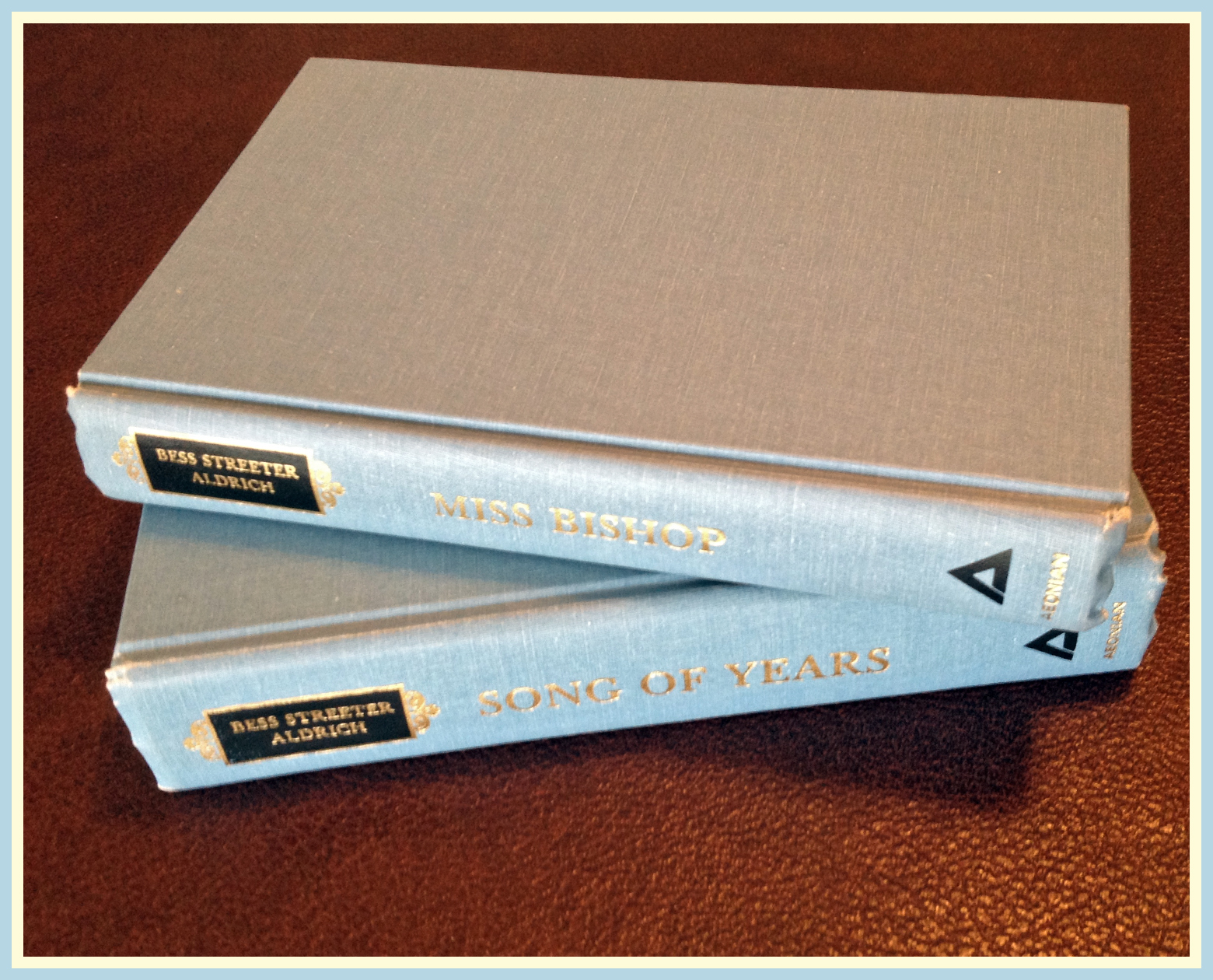
Books by Bess Streeter Aldrich

Books by Bess Streeter Aldrich

There is a giant push in the publishing industry, as well as a movement in modern readership, toward e-publication. And as someone who edits for an online literary journal and makes much of her living online (including one e-published short story at Smashwords.com), I am grateful for this technology.

At the same time, I still nurture that dream of some day walking into a bookstore and seeing my book on the shelf. (Or even better – seeing it purchased by an eager reader.) I cannot imagine any author not wanting this. But with the chances of landing an agent or publisher being so slim and the cost of self-publishing prohibitive for many, e-publishing is quite attractive.

When I was in the seventh grade, I was part of a small research group that researched and proposed a new kind of virtual book. It was the mid-1990s, and we didn’t even have the internet available for us to do our research, so this was quite a far-reaching idea for the time. We hoped that we would win an award – and maybe even enough grant money to create a prototype. But while I was honored to be chosen to work on such a project, the idea of the product really bothered me. Everyone else in the group was excited to create some virtual experience that would make people never want to go back to the traditional books again. I quietly kept my qualms to myself.

I doubt it was just my feelings about the project, but it never went anywhere. That doesn’t mean, of course, that the industry didn’t move forward without us. And there is a great use for e-books – don’t misread what may sound like a lack of enthusiasm on my part. I have a friend who travels all over the world and is also an avid reader. Her Kindle is her best friend. She can load eight or nine books on it for her trip and never have to worry about all that extra bulk in her luggage.

Tablets have so much going for them, and they only get more sophisticated as time goes on. Some books are only available via e-reader, and it’s much more convenient reading them on a tablet or a smartphone then having to sit at your desktop every time you want to read. I’ve purchased several books and read them this way, and what’s great is that I can read and fold laundry at the same time, not having to worry about the book flipping itself closed. If I ever end up some place with only my phone to keep me company, I have any number of public domain books available with one swipe.

So why would I ever need a physical book again? I mean, aside from wanting to publish one, of course. It would do me no good to see one on a bookstore’s shelf if people suddenly decided they didn’t want books anymore. But they still do. Even though they cost more. Even though they take up space.

I would have to argue that there is something viscerally satisfying – and I’m not talking about eating the pages. It’s something in the feel of a physical book that trumps the convenience of e-books. Especially if, like my friend, you haven’t read one in a while. It just feels good to run your fingers over the pages, to hear that rustle of paper. Sometimes the texture is fine. Sometimes the pages are thick. And when you’ve been with a book for a while, you wear it in like a good pair of shoes. You know the feel of it in your hands, and it’s not just the story you miss when it’s gone. I also like to see my progress, especially on a really thick book (my favorite kind). I feel like I’ve accomplished something as my bookmark moves from the front to the back.

Georgene's Bookmark

Georgene’s Bookmark

Oh, and bookmarks. How could I forget bookmarks? My friend Georgene, artist extraordinaire, made this one for me – isn’t it gorgeous? I confess that while some people have a shoe fetish or an obsession with jewelry, I have a thing for bookmarks. It’s best that I avoid the accessory section in general at bookstores because I’m liable to spend just as much on those little things as the books themselves. Oh wait – e-books come with bookmarks already in the program. Which is good because your kids can’t pull the bookmarks out and make you lose your spot. But then you also don’t have your friend’s art or Edward Cullen or Harry Potter looking at you every time you mark a page.

You might have many more reasons why you still keep books on your shelves – or why you continue to buy them. Or maybe you take issue with my whole argument. But if you do, I have one more thing I would like for you to consider: remember my friend and the book I’m lending him? Well, that wouldn’t be possible if another friend hadn’t bought the book for me to begin with. This, I think, has to be my favorite thing about owning actual, paper books. I love giving and receiving them as gifts. (There’s something so personal about giving a book you know will speak to someone.) I love lending them to others, and I’ve discovered so many wonderful books that I never would have known about if friends hadn’t lent them to me. My parents still have books that belonged to my dad when he was a kid, and the third generation is enjoying them now. We enjoy a person-to-person library system with no due dates, and as long as you’re careful about who you share with, it always pays off.

I am absolutely not advocating that we boycott e-books and e-readers. Just the opposite: I am grateful that we have the choice. What I am saying is that you don’t have to buy into the commercials that try to convince you that anything without an “e” in front of it is going the way of the T-Rex. After all, people still run outside, even though we have treadmills. And we bake cakes from scratch, even though we have cake mixes. We do what works for us, given our individual situations, and when a friend decides to share a book that might take up some space on your table or in your purse, it’s still an offer well-worth accepting.

A Book Affair

Books

Books (Photo credit: henry)

I’ve never been one to blow through my paycheck on a shopping spree. I do buy clothes more often than my husband but not nearly as often as most women. I never buy jewelry. I don’t have a lot of knickknacks or art, although, with a mother who is an artist, I certainly appreciate great artistic talent. I don’t care about TVs, home theatres, or electronics gadgets. I am only occasionally tempted by purses or things with multiple pockets and compartments (and the bigger the better). Really, the only item in existence that is a potential budget buster for this girl is a book.

This past week I helped set up the Scholastic book fair at my son’s school. Book lovers can imagine my agony as I unpacked and shelved all sorts of treasures. The few books whose covers were torn during transport went back into the original boxes, never to be displayed; every time I found one, I wanted to offer it a home, even if I’d never heard of it before. And every time I found one I had already read, I wanted to say, “Oh, oh! I read this—has anyone else? You have to read this!”

I often avoid bookstores if I don’t have extra spending money because the temptation to buy is so great. At the end of 2012, I wrote a post about the books I hoped to read this year. Of course, I haven’t yet been able to read nearly as much as I hoped, but I’ve already gone through several that I adore and can see myself going back to again and again (including one title that was at the book fair, Erin Morgenstern’s The Night Circus). But within days of publishing that list, what do you think I did? I went out and bought more books. Now, I know there’s no way in the world that I’ll be able to read all of those books this year. I suppose I could shut myself in my room with a box of tissues (just in case), but it’s not like I have a maid to take care of the house, a nanny to watch my kids, or a trust fund to pay for it all.

Why do I keep plaguing myself with these books? Why can’t I stop? There are much more harmful vices, I know, but even if I’m not destroying my relationships or running up credit card debt with my habit, I’m certainly running out of places to put each new purchase. I converted my china cabinet into a bookcase, and now I’ve taken over most of the top of my spinet piano, as well. Whenever I want to have fun and internet browse for my dream home, houses with built-in bookshelves automatically jump to the top of my list.

Part of me wonders why I never became a librarian. I didn’t want to spend any more time in college than I absolutely had to, however, so forget the master’s in library science. But I could still work in a school library somewhere. Whenever I volunteer in my son’s school’s media center, I bask in the atmosphere of so many well-loved published works. And since I went to school there, too, and received much joy browsing those shelves as a girl, it’s even more of a magical experience. I listen in wonder as kids come in, excited to find a new book, and the media specialist rattles off titles that she thinks will interest boys and girls of all different ages. She’s my hero.

My husband has always been a great gift giver. At birthdays and Christmas, he’ll ask what I want, and often I list a number of books that I’d like or say, “You know what I like to read. Just surprise me.” He’s responsible for many of the tomes that crowd our shelves and spill over into the rest of our house, including the Harry Potter, Artemis Fowl, and The Hunger Games series. He discovered early on that I couldn’t care less about jewelry, perfumes, flowers, spa days—in other words, things that would delight most other women. The first gift he ever bought for me (and the only piece of jewelry he’s given me, except for the wedding rings we exchanged) was a watch. I’d been going on for a while about how I needed a new one, and I still wear it today, almost fourteen years later. My mom jokes that it’s my engagement watch. But what she forgets is that Thomas followed the watch with a book, The Girl Who Loved Tom Gordon, by one of my favorite authors, Stephen King. I think I know which gift really won my heart.

It Shouldn’t Be a Popularity Contest

Eric Whitacre

Eric Whitacre (Photo credit: Wikipedia)

I don’t think anyone would ever call me a rebel. When I hear people talk about all the stupid stuff they did, writing it off as, “Well, I was just a teenager,” I wonder why I never did those same things. The whole balking against my upbringing thing never happened.

But when someone says, “pop culture,” I absolutely cringe. When Titantic was really big in high school (I had friends who had time and money to waste and saw it in the theatre more than ten times), I refused to see it. To this day, it remains one of those movies on my personal “banned” list. It could be a masterpiece, but it seemed popular for all the wrong reasons.

So maybe I’m a pop culture rebel. Well, not entirely. I mean, I did go nuts over the Harry Potter books, and I do have Facebook and Twitter accounts, as well as an iPhone, on which I can check my statuses. But take fashion, for instance. Skinny jeans are in, right? Kids, adults, male, female, skinny people, not-so-skinny people–they all wear skinny jeans. I watched kids getting off a school bus one day, twenty or so. Out of all of them, only one kid wasn’t wearing them. And I just prayed that I wouldn’t be forced into buying them because this girl does not have skinny legs. Yes, I’m small, but the brand jeans that I buy come in “curvy,” and they actually fit. (If you’ve ever been clothes shopping with me, you’ll know how monumental that is.) I’m not going to go out of my way to not buy trendy clothes, but if they don’t look good on me, forget it. If they do look good, however, I’ll continue wearing them long after they’ve gone out of style. (This is a trait I came by honestly. I used to cringe at the skirts that my mom wore, you know, the semi-A-line ones with huge pockets? Yeah, they’re back now. Who knew she was a fashion maven ahead of her time.)

But fashion is just a small part and not really the important part of how pop culture snakes its way into our lives. This popularity business is starting to make us kind of dumb, quite frankly.

Now, I know I’m about to sound old and preachy, but this issue is close to my heart. About twenty years ago, I fell in love with my school’s media center and checked out every book I could, from Ramona to Greek mythology to Little Women. Some of my best memories from that time center around those books or time in the library. Of the six guys I used to hang out with, the bigger the book you read, the cooler you were. And no, they weren’t nerds with pocket protectors (although all of them made the honor roll). They played baseball and football, took piano and violin lessons, sang in our choir, took Tae Kwon Do, drew amazing cartoon-like illustrations in the margins of their homework, had rock collections and pet reptiles. In other words, they were well-rounded guys, not pigeon-holed into one particular sport or other area of interest. And though I fit in well enough with them, I didn’t feel nearly as cool. I was not athletically-oriented at all, and although I started taking piano lessons younger than just about anyone else I knew, I was no good. So what could I do? Read. And the two-to-three hundred page books I routinely read just didn’t cut it anymore. That’s when I found Little Women, a five hundred-pager. To this day, the longer the book, the happier I am to read it. Series? Even better.

Today, my son goes to the same school, and I volunteer in the media center. There is now a computer program that assigns reading levels to books, and when kids read them, they receive a certain number of points, according to whichever level it is. One day, my job was to look up each book and find out the level and how many points each book was worth. The books were all new to me, either too advanced for my five-year-old to read yet or too young for me to read for my own pleasure. I asked the media specialist how high the reading levels went, and she said about the eighth grade. The next thing I asked: Did they still have Little Women? Yes, but kids don’t read it all that often (and it’s one of those eighth graders). I waxed eloquent about the books I used to read and asked if she’d noticed a decline in literacy. (She started working at the school my last year there, so she’s seen the entire progression.) Her answer saddened but did not surprise me. Kids these days are more interested in graphic novels, which are fine, but instead of just attracting kids who, otherwise, wouldn’t ever touch a book, they’ve lowered the standard for everyone else.

And then there’s music. My dad raised me on Styx, Alan Parsons, Blue Oyster Cult, Tchaikovsky, and Saint-Saens. I grew up singing in choirs and participated in a few musicals as a teenager. I still love all of the above, plus Sweeney Todd, Mumford and Sons, System of a Down (yes, I know), Metallica, and current British composer extraordinaire John Rutter. When people talk about Usher and Adele, I’m kind of lost because I don’t listen to any of that kind of thing, unless I catch it in a commercial or movie. And people my age look at me like I’m crazy. Just like I shouldn’t wear flare jeans (they were so ten years ago), I should get with the times, right? My poor kids won’t ever know what’s popular, unless they hear it with someone else. The music we listen to in the car is either from the above mentioned groups and composers, or one of Peter’s faves of late is the sixth movement from Brahms’s A German Requiem. I actually got the bug to write this particular post as I listened to him singing his heart out, going right along with the tenor line, then asking for me to play it again. Now, you can’t tell me that that “dead white guy’s” music didn’t connect with him.

I was moved and encouraged recently when my mom showed me Eric Whitacre on TED Talks. This is a long video, but if you’re familiar with TED, you know it’s worth it. If you need some arm-twisting, Eric is a tech-savvy, good-looking, youngish, self-proclaimed classical composer. And he created a virtual choir in 2011 that comprised over 2000 people from around the world—young, old, black, white, male, female, nerds, cool people—every kind of person imaginable. So that tells me that there’s hope after all, if only we can open enough minds to thinking outside the so-called popularity box. People will learn to connect with music like this if they’re taught that it’s okay, if they think they won’t be teased. And some people like me will love it anyway, not really caring what others think.

I’m not trying to create a new kind of popularity, just open people up to more possibilities than what typically top the charts and grace the covers of the magazines at the check-out lines. For parents or teachers who have already given up because their kids just don’t like to read, or who don’t like classical music themselves so never played it for their babies, what kind of message are we sending by this lack of effort? I think it’s unacceptable to give up and say that if we can’t beat them, we might as well join them. Progress isn’t worth it if it plows right over and buries the good along with the out-moded VHS tapes, legwarmers, and suitcase-size mobile phones. Don’t lose the things you love; share them, and watch the wonder and growth at these new-old discoveries.

Weeding

biltmore garden peace rose

Biltmore Garden Peace Rose (Photo credit: zen)

For the first time in our married lives, Thomas and I have a house, and we love it. I could write a blog just about all benefits of living in a house versus living in a condo, one of the biggest being that my kids now have a fenced yard where they can play in safety. But with that yard comes one drawback: yard work. Of course, Thomas says that’s why we have two boys, but since one of them still tries to cram dirt into his mouth every time he goes outside, it’ll be a while before we can turn that duty over to them.

My least favorite part about lawn upkeep is weeding. I did enough of that as a teenager to make me swear off the practice for the rest of my life. If ever I had a house, I promised myself that a yard man would be included in the budget. As I often do, I spoke too soon. And it seems that our lawn, more than any other, is mostly composed of weeds. My husband set aside an afternoon for working in the yard last week and said he filled two of those big, black garbage bags with weeds, and when he surveyed his handiwork, he didn’t know if anyone else would be able to tell he’d done anything. Part of me thinks, Just mow it. Mow those suckers down, and get it over with. This, however, is only a temporary solution. The roots are all still there, and they’ll pop up again in no time.

As I struggled with one of those nasty weeds—you know, the kind you have to dig down about seven feet to really get—it struck me that I actually weed all the time. It’s something I’ve been doing for years. I’m an editor.

This weekend I’m finishing weeding my own book. It’s almost ready for the presses! Ha. I know if I’m lucky enough to find an agent, the next step will be another thorough edit. It doesn’t matter how well I think I’ve done, there will always be something that can be tweaked just a little bit. I know the yard analogy isn’t one hundred percent accurate, but think about it this way: how many people plant a garden, stand back, and never lift a finger again? Same thing goes for writing. If someone had been foolish enough to publish my book after I finished the first draft, not only would my publishing career have died right there, but the book would have looked like a kindergartner’s half-tended bean sprout with a compost heap in the middle of it, not the Biltmore gardens. (Not saying that it’s reached Biltmore quality yet, either, but it’s a heck of a lot closer.)

And just as there are people who love to get outside and dig their fingers into the dirt, stir up earthworms, and toil the day away, there are those like me who would rather pay someone else to do it. I can say that I feel a sense of accomplishment and pride when the job is done, but I am also not brave enough to start a flower garden or do anything artistic, for that matter. We have grass. End of story.

With writing, however, I do like to get my hands dirty. I don’t mind mentally sweating. I love the initial outpouring of the story, too, don’t get me wrong. There’s nothing like having a brainwave, sitting down, and getting it on paper. But it’s a different kind of fun to go back through it, pruning and weeding and clipping a choice blossom to display in a prominent place, where others can see my accomplishments. Some people hate this part. They would rather mow. This scene isn’t working? Just get rid of it. But in the process, while many problems might be solved by such a drastic approach, some of the good stuff is lost, some really small but glaring mistakes are left to grow up between the cracks, and it’s obvious that the writer hasn’t learned much. The only growth is of the wrong kind: overused artistic license, misplaced apostrophes, passive voice popping up at the worst possible times.

Editing isn’t glamorous, whether you’re an editor by trade or just revising your own work. While authors often thank their editors, the readers don’t know who these people are. They’re largely invisible, but if they do their job right, the work is invisible, too. Or, I suppose a better way to say it is that their work is seamless. A badly edited piece is, on the other hand, painfully conspicuous. I’ve read many wonderful books that were full of some of the worst typos I’ve ever seen. Typos that would not be forgiven if I were to submit a manuscript in such a state. And these are big-name authors with bestselling books. I would be embarrassed to work for those publishing houses that put out books like that. (In fact, I’ve often thought, Note to self, don’t ever go with that publisher.)

Take the time to edit. Take the time to learn the rules before you submit, and then go back and make sure you followed them. Or, if you don’t have the time or really need help polishing your writing, we editors are waiting for you to call on us. Your name will still be on the cover of the book, and it really is your garden, anyway. We’ll just make sure that when others stop by to admire it, there aren’t any weeds choking your roses.

I Don’t Make New Year’s Resolutions

Books

Never have. But there is a certain goal that I have for the near future – let’s say 2013. You see, it’s been a while since I’ve lived in a novel. I’m talking about the kind of book that won’t let me go. The kind of book that I can’t set down if I walk from the couch to the kitchen. The kind of book that makes me forget to eat, that makes me stay up past my bedtime. I read several earlier this year, starting with Suzanne Collins‘s The Hunger Games trilogy. Not only did I let those three books consume me, but I made them consume my family as well. I waited with foot-tapping impatience for first my husband and then my parents to read them. I felt like I was betraying those books when I moved on to a completely different series, starting with Diana Gabaldan’s Outlander. And at first, I wasn’t excited, but I’d promised a friend I would read it. It was jarring to move from dystopian young adult lit to a very adult time travel-slash-love story, but I eventually got into it and had the same can’t-put-it-down kind of experience. I could not wait to get my hands on the next book, Dragonfly in Amber.

The problem was that, after I finished Outlander, my life changed in many ways. My elder son graduated from a two-day preschool to preschool five days a week. My infant son became mobile, and the more he moved around, the less freedom (and free time) I had. I rejoined the staff of the University of North Florida’s literary journal Fiction Fix after more than four years off. My responsibilities are lighter than when I left—reading submissions, commenting on them, and voting—but with seven submissions every week (and no guarantee that any of them will be short), I read a lot of fiction that I might not otherwise choose. Within a month of getting back on board with Fiction Fix, I started this blog. Then I took on a book review project for a publishing company. I thought I would have time to read those books alongside my own for-fun reading, but I eventually took my fiction in sips to meet the review deadline. A couple weeks later, I started a four-year Education for Ministry program through Sewanee’s School of Theology. Finally, I decided to try my hand at e-publication, which required much research, even more reading, and, of course, writing (check out my story “Stranded” at Smashwords.com).

And it wasn’t as if I was sitting around, wondering what to do before. I had a day job and a twenty-one mile, one-way commute; I volunteered at my church and my son’s school; I sang in a volunteer community chorus that rehearsed once a week. Oh, and the freelance writing thing. Can’t forget that. I didn’t stop doing any of those things. I just piled on the fun.

I choose how full my life is, and I love all its varied facets. Things could be easier if I lived a little closer to the action, but everything else is pretty much a constant. And my kids aren’t even into sports or other extracurricular activities yet. I can only imagine how much busier it will be then. Kiss sleep (what’s left of it) good-bye. But not my books—never that! I have to consciously choose not to make a book stretch over two (or more) months. So here I am, trying to make myself accountable.

With Fiction Fix, at least I read a constant stream of fiction. If nothing else, I’m aware of how I don’t want to write by reading an unfortunate number of bad submissions. But I really want to read things that inspire me. In fact, that’s a requirement for writing. I want–need–to read something that hurts to put down, something that makes me want to pick up my own pen (or laptop) and write.

In May 1996, I first heard about schools requiring students to read twenty-five books per year, so I decided to create a list of the books I read to see how I measured up. I’ve kept up with it in the sixteen-plus years since. Fiction to non-fiction, novella to super novel, self-help to founding documents of the United States—if it’s too long to be in a magazine, and it’s complete, I count it. Some years, I barely read more than twenty-five, while several others, I’ve read over one hundred. I squeaked by with thirty from May of 2011 to this past May. I’m already at sixteen for this twelve-month period, so I feel pretty good about reading another nine in the next five months. But I don’t just want to pick up nine quick reads to make my goal. There are books I own that I’ve wanted to read for more than a year, and you now know why I haven’t been able to so much as open them.

When I was pregnant in 2007, my goal was to read every book in the house, 1) because I didn’t need to spend money on new books when I already owned so many that I hadn’t read, and 2) because I didn’t know if I would ever have time to read again after having my baby. I finished all the books I had, then read all of my husband’s. If I did it then, I will find a way to do it now, and I’m even giving myself an extra three months to do so (although I hope I can read much more during that time).

Below is my list, including two books that people lent to me, so I need to read and return them in a timely manner. You can follow my progress on Goodreads (at the sidebar on the left), and get on my case if I’m not reading quickly enough. And if you have any recommendations, why not send them my way? I love a challenge.

Voyager (Outlander) and Drums of Autumn (Outlander) by Diana Gabaldon

11/22/63: A Novel and The Wind Through the Keyhole (Dark Tower Novels) by Stephen King

Bird by Bird: Some Instructions on Writing and Life by Anne Lamott

A Dash of Style: The Art and Mastery of Punctuation by Noah Lukeman

The Night Circus by Erin Morgenstern

Inheritance (The Inheritance Cycle) by Christopher Paolini (which basically means I need to re-read the preceding three books in the series, too)

The Lost Hero (Heroes of Olympus, Book 1), The Son of Neptune (Heroes of Olympus, Book 2), and The Mark of Athena (Heroes of Olympus, Book 3) by Rick Riordan

The Help Deluxe Edition by Kathryn Stockett