What Comes After NaNoWriMo? (2014 Version)

I won!

I won!

For the third year now, I’ve written a post entitled “What Comes After NaNoWriMo?”, so since we’re into December now, it’s time to post this year’s version. (Read the first two here and here.)

In case it’s your first time stumbling across my blog, and you’re like “NaNo-what?”, it’s short for National Novel Writing Month (which is November). Writers sign up through nanowrimo.org, and starting on November first, they each must write a 50,000-word novel from scratch by November 30th.

In 2012, I thought everyone who participated was crazy. Then last year, I turned into one of those crazy people and wrote 80,000 words by the end of November, and I finished the first draft of that novel in early February. I didn’t know whether I would participate again this year, although my first time was an amazing experience. It just wasn’t one I was sure I could replicate.

Then in the spring, I had an idea for a new novel, but the problem was: could I wait until November? I did discover a way around that problem (read about it here), but as the summer months came and went, I realized that what I really wanted to write this year was the sequel for last year’s NaNo novel. And so when November rolled around, I was ready. Sort of.

Actually, I was stressing over editing the first novel. There were some problems with the end that I had to resolve before being able to start book two. So November first found me making those final changes, and I started NaNoWriMo 2014 with a bang. I wrote over 4000 words, which put me ahead of the game (you need to write 1667 words per day to finish on time, but my personal goal was 2000).

Unfortunately, it was well before the dreaded second week slump that I had my own personal slump. This year, although I enjoyed the writing process, it was a completely different experience than last year. Many days, I struggled to achieve my word count goal, and a couple nights, I didn’t come anywhere close.

It was one day last week when I confided to my husband that I’d finally reached a scene with some action – about 38,000 words in. What that means is that when I go back to edit, I’m going to have to cut out a lot of deadwood. I joked that it would end up being a two chapter novel when I got done with it.

The wonderful thing is that, after that point, I had a much easier time writing this book. If I were able to average 2000 words a day, that would put me at 60,000 words at the end of the month. And as of November 30th, I actually had 61K. The last 20,000 words were the easiest for me to write; it only took me to the end of the month to find my stride.

As with last year, my goal now is to finish the novel. Last year’s novel ended up being 148,000 words, which I have now cut down to 99,000. Still long for a the young adult genre, but it’s a lot tighter than it was. As for this one, I will be surprised if it’s longer than 80,000 words. I hope to finish it by the end of December, if at all possible, and then start editing.

I’m not about to fool myself that this one will be any easier to edit. After having such a hard time finding my momentum, it’s going to need some serious work. But yet again, CreateSpace is offering two free copies to all NaNoWriMo winners who submit by June 30th (see all the winner goodies here). And unlike last year, when I submitted so late that I didn’t have time to fix a submission issue before the deadline, I plan to make it ahead of schedule and actually get those two books for free.

How about the rest of you? Did you struggle like me and keep plugging away? Did you realize your idea wasn’t what you thought and scrap it halfway through? Or did you surpass all your goals and end up with a monster novel on your hands at the end of the month?

And for those of you who still don’t know if you can handle a project of this magnitude, I encourage you to consider signing up next year. And there are a couple opportunities before November when you can sign up for Camp NaNoWriMo and warm up those writing muscles. Why not? You might discover you have some unexpected literary tricks up your sleeves.

This Tree Has a Story

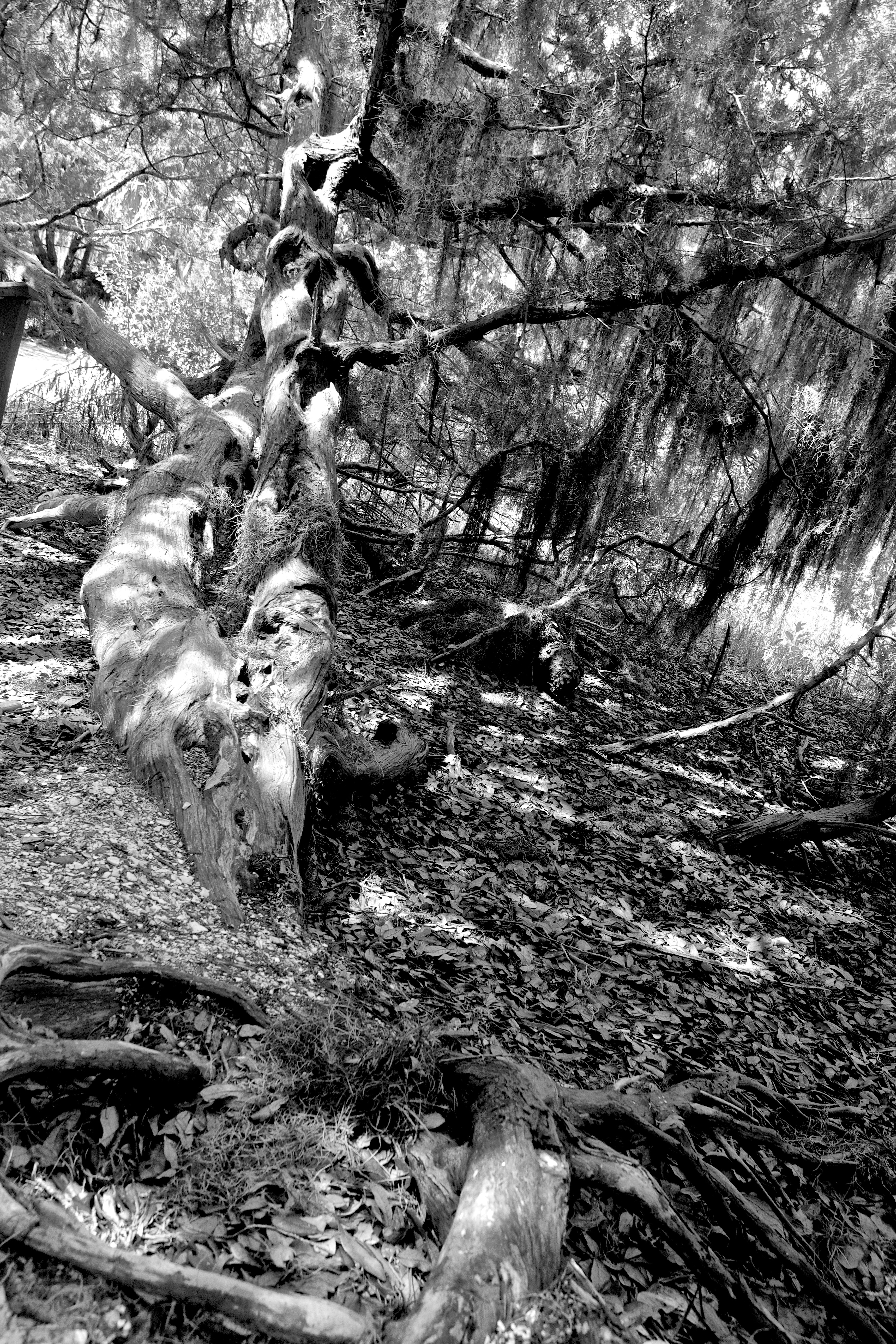
Tree #9 This Three Has a Story Photo by Sandy Malcolm

Tree #9, This Three Has a Story
Photo by Sandy Malcolm

When my friend, Karen Saltmarsh, told me that she wanted to write a book of creative writing prompts for kids, I said, “Let’s do it!” (You know that I can’t turn down a good book project.)

Karen has been an educator for 28 years, and she was one of my son Peter’s kindergarten teachers. Karen’s dream was to inspire children to tell creative stories, just as she taught her own children.

Amelia Island Plantation is where it started. First with her son and then two daughters, Karen immersed them in the wonder of nature on a daily basis. Any time they came across an unusual-looking tree, Karen prompted them to tell a story for how the tree came to be like that. “This tree has a story,” she would say.

This Tree Has a Story Cover Photo by Sandy Malcolm

This Tree Has a Story Cover
Photo by Sandy Malcolm

During her 28 years as a teacher, Karen has seen a number of changes, some welcome, others not as much. Twenty-eight  years ago, there wasn’t a TV in every classroom, much less a computer. And while technology has brought so many conveniences, so many benefits, there’s an enormous downside. Twenty-eight years ago, kids didn’t spend all afternoon sitting in front of their TVs playing video games. How many times have you heard someone reminisce (or reminisced, yourself) about the days when they came home from school and went right outside to play, only coming in reluctantly at suppertime?

A number of factors have contributed to this change, and while there still are many kids who do get to enjoy the outdoors, 21st century children are wired differently. As infants, they learn how to operate touch-screens. They understand texting and Facebook updates, even if they don’t have their own accounts. But here’s the thing: kids are still wired to love the simple act of playing. I’m talking about going outside and kicking a ball around. Or climbing a tree. Or looking for lizards. (Can you tell I’m a mom of boys?) When I was a kid, I pretended that azalea leaves were money. I learned how to suck the nectar from a honeysuckle. I ran laps around the backyard. I dug for roly polies. And even when I was bored, I went outside and whispered stories to myself.

There’s not enough of that going on anymore, and as a teacher, Karen has seen the negative results of this firsthand. In a time when brevity and instant gratification prevail, it seems that creativity and imagination are often shoved to the side. But when children have the opportunity to explore and create, amazing things happen.

When Karen first shared with me the dream that she’d been harboring for 25 years, she explained it as a book of writing prompts. But not just any prompts. She wanted to inspire children – children who are babysat by Nickelodeon or mom’s iPad, kids who live on the Xbox – to learn the art of storytelling in the same way that she taught her own children.

Our first step was to find interesting trees. At first, we collected photos from all over the country, but as we developed the book, the focus shifted from interesting or odd or unique trees in general to the trees of Amelia Island. It was the place where Karen received her original inspiration, so it seemed appropriate to start there. (But never fear, there is a short section with photos from other regions, too.)

We narrowed it down to 12 Amelia Island trees. As you can see from the cover photo, we included some really interesting ones. Karen chose one of these photos (the one at the top of this post, in fact) and decided to test her theory on kids in her own kindergarten class.

When I saw Karen that afternoon, she was practically bursting. “It works!” I think it was overwhelming for her to imagine her dream coming to fruition, but then to see it at work – it went beyond her expectations.

When Karen sat down with her kindergarteners, she simply showed them a photo and asked if they could tell a story about that particular tree. I did the same at home with Peter, who is a year older. Peter’s story, plus two from Karen’s students, are included in the introduction of our book.

Karen’s original vision was for the target age group to be from kindergarten to second grade, the years when students are really learning how to spell and write and structure. But after receiving some professional guidance from a child psychologist, we broadened the spectrum to K through 12 – and, of course, it doesn’t have to stop there.

If only we stop to look around, we can find a story in almost anything, and trees are a great place to start. There’s been quite a learning curve in structuring and formatting this book. We’ve searched, and as far as we can tell, there’s not another creative writing book like this on the market. This is wonderful and scary at the same time. Wonderful because we can do anything we want and not be expected to confine ourselves to some pre-existing convention. Scary because it was a challenge to figure out exactly what we wanted to do.

But we finally took This Tree Has a Story to print, and it’s now available. In addition to the trees, our photographer, Sandy Malcolm, took some wonderful photos of wildlife in the trees. These were too good to pass up, so there’s going to be a sequel. But first…

We’re going to conduct a pilot study, and we’re going to do it over the entire spectrum. We were wowed by the stories from the kindergarteners. I can only imagine what we might get from older kids. Kids who are going through adolescent trials. Kids who may never have tried to create a story before. Kids who don’t realize what kind of potential they harbor, that’s just waiting to be stimulated by, I don’t know, an interesting tree.

Karen and I are so excited, and we have lots of plans for our new book, not the least of which is that a portion of our proceeds will go to help preserve or plant trees in areas that have suffered from erosion and natural disasters.

I’m giving away 30 advanced reader copies, so you can conduct your own creative writing study with your students or children. If you’d like to throw your name into the hat, or if you have any other questions, please contact us via the contact form below.

← Back

Thank you for your response. ✨

The Proud Authors! Sarah Cotchaleovitch and Karen Saltmarsh

The Proud Authors!
Sarah Cotchaleovitch and Karen Saltmarsh

The Challenges of Parenting the Second Novel


Embed from Getty Images

When I had my second son, people warned me not to compare my children to each other – something that’s nearly impossible to do. And the same is true, I’ve found, with novels.

And so I come to NaNoWriMo again. (It’s November; get used to it.) The first two weeks have been rough this year, which blindsided me (and I can say the same of the early days of being a mom of two). If you followed me last year, you know that I “won” (which means that I reached the 50,000 word minimum) by the 14th of the month. (And if you didn’t follow me then, you can read about it here.) I had inspiration on my side with a brand new story that wouldn’t quit. I wrote well over 4700 words on the first day, and I didn’t slow down much from there. By the end of November, I was at 80,000 words and continued writing until February, when my first draft clocked in at 148K. From there, the challenge was to trim it down to under 100,000 (which I did two weeks ago, thank goodness).

Fast forward to this year: last week I wrote about middle-of-a-trilogy blues. I get stuck constantly. I carry my MacBook with me everywhere (just like last year), and any time I have a spare minute, it’s open to my novel. Whereas last year, scenes competed for my attention and I couldn’t get them down fast enough – bombarding me when I was in the shower or chauffeuring the kids or researching an article – this year, the computer sits open, the cursor flashing, waiting for me to type. Mind you, I am extremely busy, but still, the story isn’t constantly running in the background like last year. There’s no backlog of scenes waiting to be written at my earliest convenience.

Today is the 15th of the month, the halfway point. If you’re serious about finishing, you should have 25,000 words down, and I do, thank goodness. My goal is to type 2000 a day, just to give me a little cushion in case I have a rough day. November 1st I did pretty well with 4000 words. Not as much as last year, but it got me a day ahead of my goal. And I used up that 2000-word credit five days later when I only managed to get 200 words down. Determined to catch up, I pulled my average back up to 2000 words per day, but it’s been tight. I’m an over-achiever, and surpassing my goals is kind of my thing. I still have over 1000 words to type today to make it to 30,000, so forget last year’s astronomical word count.

It’s not the word count itself that bothers me as much as my difficulty in getting the words down. Again, I can see a parallel with my kids. The first baby was a breeze. Yes, we had some challenges early on, but looking back I realize what an easy kid he was and still is. Contrast him (I know, a no-no) with his little brother, and the story changes. That little dude was a challenge while still in the womb, and the challenges only escalated after he was born. Even the nurses at the hospital were perplexed by his inability to be consoled – and those maternity ward nurses have some sort of baby voo-doo that almost always works. We’ve tried to parent both kids the same way, so why are they so different?

The difficulties, the challenges, the things that make me want to scream and rip my hair out at times are also the beauties of these two very different people – if only I can take a deep breath and remind myself that no two people are exactly alike. It’s amazing to watch them grow into their personalities. Sometimes they’re predictable, and other times they take us by surprise. It’s the times that I try to force Ian (the younger one) to be more like Peter (big brother) that I frustrate him and unnecessarily disappoint myself.

So it is with my stories. I guess you could say that last year’s was the big brother: sometimes challenging but always a joy. There were so many new discoveries, each one a kind of adventure.

My NaNoWriMo 2014 novel is the second child. I’ve been there and done that – wait, wait, wait. It still has surprises, if only I can allow it to follow its own path. But in order to do that, I have to give it the freedom to do so.

One day last week, in the effort to plow through another 2000 words, I realized that I was going through the motions yet again.  I had allowed my so-called experience to make me complacent and fall into a predictable and not very fun routine. My novel has certain plot points, not unlike milestones for children. My characters have to travel in my story, and since I’m averse to writing outlines, I don’t know much of what happens on the journey from Point A to Point B. I just know that I somehow have to get them there. And that “getting there” part can be a real slog.

Last year, I had even less of an idea how I would move the story along, but I didn’t let that bother me. Scenes kept popping up in no particular order; I typed them, and when I had time to breathe, I tried to connect them. It was these bursts of inspiration that kept me on the edge of my seat, that made me excited to get up every day and write.

I was thrilled that my word count exceeded my expectations. It was great to not have to worry about it. This year, sometimes it seems that the word count is the end goal, but it shouldn’t be at all. The point is to write, to finish something that I otherwise might give up on halfway through. That’s what’s beautiful about NaNoWriMo to me.

I mentioned in a previous blog that I already know how my current novel will end (even if I don’t know all the in between stuff). Hard-pressed to finish a scene, I realized that I could give myself a break and jump ahead to the ending. Why not? Words count, after all, no matter where they fall sequentially.

While I was thinking through that scene, my fickle little muse stopped by for a visit. It was one of those moments when I realized that something I was already planning to write would make so much more sense if… well, I can’t tell you, but it was one of those brainwave-y moments that authors live for (or at least this author does).

It’s the kind of thing that happened all the time last November, when I was new at the whole writing a novel in a month thing, when it was exciting and much like embarking on a voyage into unknown waters. It was with a kind of joy that I realized new and surprising things can still happen with the second novel of a trilogy. Instead of coaxing it along and expecting it to be a good little novel that writes itself –surprise! – I need to be open to all the scenes that want to be written, even if they’re out of order or don’t seem to belong. After all, this is a different novel, and it deserves the same chance, the same attention, I gave its big brother.

Much like parenting my second child.

Here’s to second children, and here’s to second novels.

Here’s to writing first and counting my words second.

Here’s to another 15 days of creativity and exploration, and best of luck to all my fellow WriMos!

Sometimes You Have to Freeze Your Characters in Carbonite (Don’t Worry, It’s Temporary)


Embed from Getty Images

What a difference one week makes! If you read last week’s blog, I was gearing up for NaNoWriMo and nervous about starting. Not because of the whole 50,000 words in a month thing. I did it last year, so how hard could it be to do it again?

What I was worried about was finishing last year’s NaNo novel in time to move on to the sequel, which is this year’s NaNo novel. I was still deep in my last edit, and although I didn’t have many pages to go, I was at the crucial point where I needed to make the most drastic changes.

During the editing process, I cut almost 50,000 words (ironic – don’t you think? – since that’s the number I need to type this month). Cutting I can do all day. But the closer I got to the end, the more it became like slogging through verbal quicksand. It was the part of the editing process that I dreaded most. I had quite a bit of hard work ahead of me. On the one hand, I still needed to cut 3000 words, and on the other, I needed to add to the ending to improve it.

Then something wonderful happened, something that I hope happens many times this month (although it hasn’t yet): I had a brainwave. Whenever I read a novel with a plot twist or a really clever scene, I wonder if it was always a part of the plan or if it developed over time or maybe if it popped up out of nowhere, just in time to save the story. And while I’m not saying that I came up with something brilliant like the vanishing cabinet in Harry Potter and the Half-Blood Prince, this brainwave explained some of the points that I was afraid would never gel. This included making quite a few cuts and changing the ending even more than planned, and I just couldn’t stay up long enough to finish. Editing when you’re half asleep isn’t always in the best interest of the story, but on the plus side, I got to sleep on the brainwave.

November first, the first day of National Novel Writing Month, wasn’t much better. I had my weekly editing work for Fiction Fix and my son’s t-ball game. When the afternoon rolled around and I finally got a chance to edit, I would fix a scene, move on, add some more, realize that this affected an earlier scene, go back, rewrite again… and stare at the computer screen a lot as I tried to figure it all out.

I finally got it, finally realized exactly how it needed to end, and it dovetailed perfectly with the opening of the second book.

Half of my goals from last week were in the bag: I’d finished editing and gotten my word count under 100,000.

And as soon as I finished, I was supposed open up a brand new document and leave my editing hat at the proverbial door. Forget cutting! Now is the time for extraneous adverbs and adjectives. For people to ask sweetly and say quietly and walk quickly and wear elaborate gowns with one hundred buttons down the back, belled sleeves, and sweetheart necklines. Sometimes you have to break all your rules in order to get the job done – and tell your inner editor to shut up while you do it.

Typing that first page was painful. All I could think was, This isn’t a good opening line! No one will ever read beyond this.

And that’s how it’s been all week. My inspiration has just kind of fizzled. I’ve kept up with my word count, but the only reason I’ve been able to do so was because I typed over 4000 words that first day. I’ve seen a lot of things that need the axe. Even as I type, I think, This’ll get cut in the next draft.

But not in this one. Right now, I must plow on. It may be a tough slog the whole month. At least I’ve figured out why, not that it really helps. You see, I’m in the second book slump. This happens in trilogies. Okay, instant fix: don’t write a trilogy. It’s not that simple, though. My story needs to be told that way. And I’m not saying that all middle books should be thrown away, but often it’s necessary for the plot to slow or tough things to happen in order for better things to happen later in the trilogy. And so I think that the writing process naturally reflects some of the difficulties within the story. (And besides, it can happen in series with more than three books. Think about New Moon from the The Twilight Saga or Harry Potter and the Order of the Phoenix: necessary but often painful to read.)

The best example I can think of actually comes from the movie Star Wars: the Empire Strikes Back. First of all, what happened to Mark Hamill? Yeah, he’s still a stud, running around the swamps of Dagobah with Yoda on his back and all, but he’s not nearly as cute as in the first movie. Plus he loses an arm (Luke Skywalker, I mean, not Mark Hamill). And then Han Solo turns into a carbonite-cicle. It’s depressing stuff. If you’re a Star Wars fan, you still love it, but yikes. Thank goodness for Return of the Jedi, right?

And that’s what I have to keep in mind. There will be ups for every down. And the great light at the end of the tunnel is my book three, but I can’t get too distracted by that right now because, God-willing, I won’t start on it until NaNoWriMo 2015. What I need is to get through this book – not just get through but give it the attention it deserves, see it on its own terms rather than compared with its companions.

There is a time for choosing my words with great care, for analyzing and fine-tuning, but November is not one of those times. Editor, hop in the backseat. Writer, say whatever you want because you can always cut it out and make it pretty later. After all, the great thing about first drafts is that you can make all the mistakes you want and fix them before anyone finds out. My inner editor needs to take a forced month-long vacation, so I can get some work done.

Haunted by My Story


Embed from Getty Images

November is so close it’s almost scary.

It was just a few weeks ago that I was surprised by October’s arrival, so how could I let November sneak up on me, too? Lots of important things happen in November: Thanksgiving; Christmas shopping; several important birthdays, including my elder son’s; two clients’ book projects are due; a slew of writing assignments for a new client…

And the month-long time-gobbler that is both daunting and exciting, NaNoWriMo (National Novel Writing Month). Last year, I participated for the first time, and I will say again and keep on saying that it was the most fun I’ve ever had writing. In fact, I think it’s the best writing I’ve ever produced.

The goal this year is to at least match the enthusiasm and success of last year – or surpass it.

For the early part of this year, I wasn’t worried about NaNoWriMo 2014 because I was still finishing my 2013 novel. In early July, I produced 10 copies for beta readers. And then what typically happens when I’m busy with one project – I had a great idea for a new novel.

If you keep up with my blog, you’ll know that I decided to hold off writing, saving that new story for NaNoWriMo this year. But as my beta readers started giving me their critiques on my 2013 NaNo novel, I realized I wanted to edit it and write the sequel for NaNo this year. (And don’t worry about my new novel idea – I wrote a few important scenes and took plenty of notes for when I’m ready to start up with it again.)

I figured that it would be easy to edit last year’s book by October and even start querying literary agents again, saying, And if you like this, I’ll be working on the sequel in November.

Except that if today is the corner, then November is right around it, and I’m not done editing the first book yet.

Forget agents – I’ve got to finish this book in order to be able to properly start the next one. There’s nothing that says I absolutely have to start with the opening scene. If I feel like it, I can start with the last one (and yes, I already know what it will be – a cliffhanger leading up to book three, hee-hee). But I so want to start with confidence. That, and I don’t want a lot of editing to slow me down. 50,000 words in one month is a lot. Granted, I wrote 80,000 last November, but they say that lightning doesn’t strike the same place twice, so…

If only I’d written the first book perfectly to start with, right? But that would make me a magician or a novel goddess or something, which I am not. Or if I am, someone forgot to tell the big publishing houses because I’m still waiting for my million-dollar advance.

Instead of dreaming about gross improbabilities (or impossibilities if I don’t get myself in gear), I need to do both stories justice. The ending of book one was so hard to nail, but talking with several of my beta readers helped cement what I need to do to make it more satisfactory, yet leave readers hungry for the sequel. Now I’ve just got to make that happen, so I can pick right up where I left off on book two. By Saturday.

Picture me biting all my fingernails at once.

So I’m posting a tad earlier than usual in order to fully immerse myself in last year’s novel, and I hope that the next time I crawl out of my writer’s hole to blink at the sun, I will have nothing but positive results. And since sharing goals is a great way to stay on track, here they are:

  • Finish editing book one (soon!)
  • Get it under 100,000 words (I still have 3400 to cut – eek!)
  • Write seamless transition from the first to the second book
  • Write 14,000 words by the end of November 7th

Like I said, it’s daunting and exciting. And did I mention terrifying and exhilarating? Time to go to bed so I can indulge in a few NaNo nightmares.

Happy writing!

Show Me a Story

Author J.K. Rowling reads from Harry Potter an...

Author J.K. Rowling sharing a story at the White House. Screenshot taken from official White House video. (Photo credit: Wikipedia)

Last week, my son took some things to school for show and tell, except it’s not called “show and tell” anymore. I don’t know if this is a global change or just one at his school. For them, it’s “show and share” (and for younger kids, it’s just “share”). The cynic in me thought that it’s just another way to say the same old thing a different way.

But then I got thinking because that’s what I do. Is there a difference between show and tell and show and share? Certainly, people don’t like to be told what to do. Sharing seems a lot more friendly, and the change of one word could be a way to encourage children to take turns, etc., etc.

And for writers, of course, there’s something in that one poor word, “tell,” that just makes us cringe.

As an editor for a fiction journal, I throw that little four-letter word around all the time. It’s a great reason to reject a story. One part of the job description for readers and editors at Fiction Fix is to give notes on why we accept or reject each story. I try to pull quotes from stories, where applicable. If the dialogue is awful, I use an example. If the piece is full of malapropisms, I’ll list a couple. And if there’s too much telling, I include that in my notes, as well. Except one story this week… I couldn’t choose. There were too many examples, each worse than the last. In the end, I noted that the entire piece was one grand example of telling. Minor problems we can fix, but rewriting the whole story? That’s just a skill that the author needs to learn.

But what’s so wrong with telling, anyway? Isn’t at least some telling necessary? After all, they’re called storytellers, not storyshowers (well, and no wonder because you could easily read it as “showers” instead of “show-ers”).

Some telling is necessary, of course. But in this particular story this week, telling was in the form of: “And another nine years passed, and little Joey was suddenly in high school.” Yawn. I’ve read much more creative ways in which to show the passage of time.

One example of an author who I think did a great job with telling was J.K. Rowling in her Harry Potter series. The more fantastical the world, the more world-building is necessary, and that can easily turn into info-dumping, AKA telling. To create the wizarding world, not only did Rowling have to introduce new names and places and ideas to her readers, but she also had to introduce them to one very important character: Harry Potter, himself. What a great way to present much-needed information! As Harry was fascinated with his first owl post and trip to Diaogn Alley, so were we, and we got to see it through his eyes. We were shown.

But then, there were other times when we had to learn important information, and an author with less finesse could have completely blown it. Instead, Rowling had two characters in place, Hermione Granger and Albus Dumbledore, who were storehouses of knowledge. Hermione, being the bookworm that she was, knew more than most witches and wizards her age to begin with, and if she didn’t know, she went to the library to find out. And Dumbledore… well, he was full of all kinds of bizarre and useful bits of knowledge, although he was slow in divulging it all. Potter fans, do you remember the end of the first five books? With a sense of relief, you knew that Dumbledore would tie up quite a few loose ends… and leave you hanging just a little, which was where the next book would pick up.

Other means of imparting facts in unique ways that Rowling and other authors have utilized are by having the characters find facts and discover clues in books, e-mails, letters, diaries, newspapers. We’ve all read dictionaries and textbooks, right? That’s where we get our info, too, so it’s perfectly acceptable for characters to gain their insights in this way, as long as the author doesn’t rely on it too heavily. After all, the narrative does still have to move forward.

But then there are the ever-so-awkward dialogues, telephone conversations, and internal monologues that are meant to convey something important. For instance, a first person narrator will have a more difficult time describing him- or herself than if the book has a third person narrator. Say the female narrator needs to come across as humble. She’s beautiful, but she can’t tell you that herself. So instead, someone says it to her… but it gets overdone:

“Oh, Celeste,” Amanda gushed, “the way you’ve braided your hair is just so becoming! I love the way the light catches your golden highlights, and your blue dress just brings out the blue in your eyes perfectly!”

Okay, so we know that Celeste’s hair looks nice and that she has golden highlights. And her eyes are blue. But do people talk like this? (Admittedly, some do, but they are few and far between. And doesn’t that drive you nuts? Also, note the use of the word “gushed.” Ick. Please don’t write or talk like this because your average person doesn’t.)

Here’s a more natural way to convey similar information:

“Oh, Celeste,” Amanda said. “Look at you! Didn’t I say you would clean up well? And that blue is just the perfect color on you.”

Wait a minute. What happened to the braid, the hair color, the specific reference to the eyes? What happened to the gushing? Although most people don’t like relying on italics, that’s how I tend to hear people when they’re talking, and an italicized word here or there saves you from overused dialogue tags, such as “gushed.” And how important was the physical description, anyway? The more you write, the more you’ll discover that things like this don’t always matter. But, if you’re still not sure, here’s another way to get your point across:

I tried the braid that my mom had shown me, and although I would have preferred sweats over dressing up, the blue sheath she had picked out matched my eyes, at least. I smiled in the mirror, already imagining how Amanda would gush when she walked in the door.

Okay, so maybe it’s not a masterpiece, but you get a little bit of description, plus some character development. (See how she’s uncomfortable but pleased at the same time?)

Oh, and the telephone conversation. Listen to someone talking on the phone one day. From one side of a conversation, you can pick up a lot, but you usually have to fill in a lot of the blanks yourself (or sometimes let them remain a mystery). So in books (and movies, too), should the characters spell out everything for the readers’ sakes? Check out this one-sided conversation for what not to do:

“Hi, Mom. It’s Cindy… I know you expected me to call earlier, but there was a line at the phone… Yes, I guess a lot of other kids are homesick, too… I miss you a lot, but it’s been a great week here at Camp Sparkly Lake, where you’ve sent me for two weeks… Uh-huh, I’ve made a couple friends already. Jessica is a cheerleader just like me, and she can do a backflip, also just like me…”

It could go on and on. Why would Cindy say so much stuff that her mom already knows? People don’t talk like this! I know that you’re trying to minimize the telling, but this isn’t the way to do it. Try instead:

“Hi, Mom… I’m sorry, but there was a line at the phone… Yeah, probably, and I guess I am a little, too. I mean, I miss you a lot, but at least I’ve made a couple friends… Yeah, there’s another cheerleader here named Jessica, and she can match me backflip for backflip. Pretty cool, huh?”

Here, you can imagine what the mom’s saying, and Cindy’s responses are much more natural. As for the other information, like the name of the camp and how long Cindy’s staying, these can be told quickly, but in a way that won’t turn off your readers:

Although the line to the phone looked about a mile long, I supposed it was time to call home and give my mom an update on my first week at Camp Sparkly Lake.

Ta-da! A teensy bit of telling can go a long way.

Which is good advice for me to heed. As an editor, telling slaps me in the face and leaves me reeling. Yet as a writer, info-dumping is so seductive. And since I tend toward the fantastical (or at least magical realism), there’s usually quite a bit of world-building involved.

It’s so difficult to craft those opening pages, believe me. On the one hand, you have to capture the interest of Any Reader, that fickle person who will drop your book like a live grenade if you can’t seal the deal within a sentence or two. On the other hand, you have to create the rules and boundaries of your fictional world up front. If you do a bang-up job of painting your characters in the beginning, waiting until ten pages in to wallop the readers with a garbage load of information, you’re not doing anyone any favors. You have to impart info without hanging a flashing, neon sign over it that reads: WORLD-BUILDING GOING ON HERE! LOTS OF INFO TO DUMP! DON’T GET BORED! I PROMISE IT’S IMPORTANT TO THE STORY, AND YOU WON’T REGRET THIS IN 50 PAGES! Yeah, right. As I’ve said countless times, every word must count.

If you follow my blog, you know that I’m almost done editing last year’s NaNoWriMo novel. The first draft clocked in at 148,000 words. The second draft, which I distributed to beta readers, was 129,000. It took lot of editing on my part to cut those 19,000 words, but it wasn’t enough. I have to take some of my own medicine, and my goal by the end of this month is to not only be done editing it but to have it under 100,000 words. (Right now it stands at 107K.) My readers have asked me how I can cut so much. And they liked the book, so I must have done something right. But at the same time, I know that my first person present narrator needs to keep some things to herself. She doesn’t need to think of what she’s going to do, explain it, and then act. Yes, I’m in the storytelling business, but I would much rather show it.

I would much rather leave my readers wanting more.

With a good book, even picky writers and editors like me won’t notice the craft. It will melt away, and the story will shine through. That doesn’t mean that we won’t savor great lines or powerful scenes. But what it does mean is that the writing won’t get in the way. It will serve the story completely, as it’s meant to. And in the end, we won’t think, Well, a lot of years passed, and those characters sure did grow up – they must have because that’s what the narrator kept telling me. Instead, we’ll think, Has this author written anything else? I’ve got to have it now! I’ve got to read more books like this, and maybe one day, I’ll be able to write something this great, too.

Something worth sharing.

Did October Come out of Nowhere or What?


Embed from Getty Images

With so many big projects from late May through early July, I almost felt like the summer months didn’t happen. I was busy enough that I always felt like I was on the brink of falling behind. And although this has been a great school year for my first grader, I feel the press of responsibilities and obligations getting ready to pull me under again.

Whenever I see my grandmother, she asks how I’m doing, and the inevitable reply is, “Busy.” I recount to her my projects – currently, a memoir for one client, an eBook for another, and a book I’m co-writing with a friend – and she asks me how I’ve gotten myself into this. “Well, I’m getting paid,” I tell her. It’s not like I’m giving my time away.

Finishing my first set of three big projects at the end of June wasn’t good enough; I immediately picked up a bunch more. It was great for the summer because the number of paying projects I took on more than made up for the substitute teaching jobs that I only get during the school year. My days were full, but I didn’t have to get up hours before dawn, didn’t have as many pressing deadlines, and could block off time for myself and still get things done.

When school started back, though, the early alarm clock became part of my routine again, as well as lots of substitute teaching, karate and t-ball practices for my elder son, preschool Sunday school, my Education for Ministry class (which comes with a 1000-page history book this year), and my recent move to assistant editor for Fiction Fix. I warned all of my clients that, while I would have plenty of time during the summer, everything would slow down once school started again. “Does that mean that I need to find someone else?” one of these clients asked. Of course not! I need the work, and I can’t leave her with her project half-done.

Even so, I’ve had less time than I thought I would. Whole weeks have slipped by without me touching some of my work, and when it was August, it was all well and good, but somehow October snuck up on me.

It comes down to time management, as usual. There are only so many hours in a day, and sometimes I don’t have more than five or ten minutes to devote to one person, in order to give time to everyone. A few days ago, I started to feel the pressure when I realized that the book I’m co-writing needs to go to the printer the last week of the month, and I still don’t have all of the material. The memoir needs to be finished before Christmas, and the eBook is set to publish in mid-December, but we’re having all kinds of technical issues with the conversion for e-devices. To get all of these things done, the only solution that I can think of is to give up some of the weekend time that I’ve tried to set aside to read and edit for myself – you know, for my sanity.

And I made this decision on a weekend when we were going out of town for a mini vacation, naturally.

On Friday afternoon, I spent an hour hunched over my MacBook, bound and determined to finish the latest chunk of the memoir. My husband took care of all the last minute details, as well as our two-year-old. I finished and called my client from the car, promising to get the material to her next week.

One of the wonderful things about freelance work is that you can do things like this – type from your house right before leaving town – but if you don’t have the discipline to do it, you could easily get sucked into your favorite TV show or lose an hour on Facebook. There’s no boss looking over your shoulder to tell you off or remind you that October, in fact, started four days ago.

And if you’re married and working freelance, it also takes an understanding spouse. Sure, it looks like I’m having a great time, sitting in my comfy glider and typing away in my bedroom slippers, but I really am working, and there is a client who is counting on me to give my best. But that understanding only stretches so far. The free time that I afford myself on weekends needs to include my husband and kids.

Cinderella's Palace at Disney World

Cinderella’s Palace at Disney World

As I write, I'm out of town with my family. My in-laws offered to take us to Mickey's Not-So-Scary Halloween Party at Disney World. The kids knew we were going to visit their grandparents for the weekend, but Disney was a surprise. And so worth it. It's what I consider the last hurrah before I knuckle down and get serious.


And, of course, I have another motivating factor (aside from keeping my clients happy): NaNoWriMo starts in less than a month, and I can’t wait to write the sequel to last year’s NaNo book. I can’t do that with all these looming projects, so October, look out! There’s going to be a whole lot of productivity going on around here.

Words Count


Embed from Getty Images

Back in the fifth or sixth grade, I had the option of writing a story for a contest. Creative writing has been a love of mine since I was old enough to write my name, so I was in. Write a story – no problem. But there was a problem, and it was the word count. No more than 200 words. I think the only reason this has stuck with me is because of how ridiculous the word count seemed. My classmates groaned about the seeming impossibility of creating a story, no matter the length. To me, however, the limit of 200 words shot my dream of writing a winning story dead before I could even start.

In college, when I joined my first fiction workshop, I puzzled over how to write a story that was short enough. I struggled to shrink my first one to less than 20 pages, which I knew was problematic because the instructor read each story aloud during class. The day that a woman turned in a two-page story, I wondered how in the world it would amount to anything. Surely a two-page story would hardly be worth critiquing.

It was one of the best stories submitted that semester.

Eighteen years old, and I finally learned that longer is not necessarily better.

Of course, that’s not to say that I was unaware of being brevity-challenged. I’d heard about killing your darlings. I’d also heard of taking out the proverbial axe and chisel to finesse a piece of literary art. But my approach was always to write pell-mell on the first draft, then make sure the second draft was cut down by ten percent. The problem with this technique is that my first drafts are often much too long, and cutting ten percent is not enough. And when I started writing freelance, I had to learn how to hone my skills by writing articles with word limits.

It’s one thing to write a story and know that it needs to be around a certain length. It’s another to be assigned an article and know that you will be rejected if you go over 300 or 400 words. When I started writing articles for clients, I faced this challenge. And it turns out that I can write an article, prove a point, share an idea within a small space. A good thing, too, since many people will choose not to read an article if they see it runs onto a second page.

So, what then about novels? If you read my post last week, I complained (yes, I admit it) about my latest encounter with an agent. Her assignment was to help me fix problems with my novel’s opening, but when I submitted my excerpt to her with a note about how long my young adult manuscript was, I didn’t expect her to critique the novel’s length. But that’s just what she did. Cut it down by about 40,000 words, she said.

My first reaction was to be offended. Hadn’t she heard of Twilight, EragonHarry Potter And The Order Of The Phoenix, for crying out loud? These books blow average word counts out of the water. Granted, the first Harry Potter book was closer to what is considered normal, so by book five, J.K. Rowling could do whatever she wanted. But still, I thought, how do young adult authors break into the publishing world with longer-than-average novels?

Of course, my goal needs to be to make my novel the best it can be. Length isn’t the only factor, but it could be the one that consigns me to the slush pile yet again. While making my manuscript the best it can be, maybe I need to pull out the old axe again.

When I started editing my novel, although cutting words was a secondary goal, I was more concerned with making it clean and clarifying scenes that had confused my beta readers. But with my number one critique from the agent being the length (and after all, she does sell novels for a living, so I kind of have to lean toward her expertise on this one), I became hyper-aware of every word. I should have been making sure that each one counted from the beginning.

As of this post, I have cut almost 14,000 words – and I’ve added two scenes and am not even halfway through the book. There’s hope for me yet. If I can cut 30,000 words and make my prose shine, maybe there’s a chance that I’ll catch someone’s attention.

So, for those of you who don’t know where to start, here are some specifics:

  • Choose your adverbs with great prejudice. Sometimes you can’t cut the adverb out and get your message across. Sometimes it means rewording a section to avoid adverb usage (and adjectives, too, but adverbs are the bigger culprit). As a writing exercise, write a scene with no descriptors at all. Challenging? You bet. You’re welcome.
  • KISS (keep it simple, stupid). If you can make your point in three words, why use ten? Are you trying to impress someone with your use of words like “anthropomorphism” and “juxtaposition”? Give me a break. Likely, you’re only impressing yourself. Make your point, and move on.
  • Read your prose aloud. This is especially important for dialogue. It’s also a great technique for discovering when you’re using the same word or phrase too often.
  • Express yourself through punctuation. Need help? Check out Noah Lukeman’s A Dash of Style. You will be amazed by how much you can say without using words at all.
  • If you haven’t already, buy copies of The Elements of Style, On Writing, and Anne Lamott’s Bird by Bird. There are many, many others, but these will give you a great start.
  • Kill your darlings. I’m so sorry. It could be that the line you’re most proud of is the one that needs to go. Once you start, you’ll find that it’s easier to keep cutting. If you’re afraid that you’ll regret your cuts, save each revision of your work as a separate document, so you can go back and put a line back in later if you decide you’d rather keep it.
  • If you’re writing an article, make a rough outline. Although I like to be a free spirit when it comes to fiction, when writing articles, you need to have a clear direction for your key points. Then, if space allows, you can add flourishes later.
  • Give your piece a rest. If there’s no hard deadline, take a vacation and work on something else for four to six weeks. You may find that something you thought integral to your manuscript before is unnecessary.
  • Hire an editor. I’m not just trying to get more work for myself; if you are serious about making your manuscript publication-ready and feel you’re not up to the task yourself, that’s why we’re here.

These all come down to making sure that every word counts. If it doesn’t further your story or article, it’s got to go. Only then can you write a winning story in under 200 words – or cut thousands of words from your novel without compromising important scenes. I have confidence that you can, and I’m certainly going to try to do it, too.

Does the Genre Really Matter?

All seven books in the Harry Potter series in ...

All seven books in the Harry Potter series. (Photo credit: Wikipedia)

Wanted: Good fiction.

To be more specific, fiction that draws me in right from the start. Fiction in which the characters are believable, in which I can hear the dialogue in my mind. Fiction that makes me think, raises tough questions, makes me cry, makes me emote. Fiction that makes me want to talk to someone else about it. Fiction that saddens me when it’s over.

I like to think that if I were a literary agent, that’s what I would list under my “interests.” Because, try as I might, I can’t pin down a favorite style or genre. Now, there are certain things that I definitely don’t like. Mediocre writing, inconsistency, lack of craft. Like I said, I want the characters to be believable. If the debutante protagonist has never scrambled an egg in her life, I won’t believe it when she whips a six-course meal out of thin air. (Unless she’s magic, of course – and if she is, I better have a hint of it first.) I don’t want adverbs trying to tell me how desperately someone says something. Show me the desperation with a sweaty brow and shaking hands. I don’t want plots that are so insubstantial they can be knocked over by a sneeze.  I don’t want endings that are unrealistically happy or tragedies that are unnecessary, the only point being to make the reader cry.

I really just want a good story, one in which I can forget that I’m reading at all.

This is why labels kind of bother me. Romances, for instance. Label it like that, and I don’t want to read it. Why? Because all the romance novels I saw growing up had half-naked men massaging busty women’s shoulders on their front covers, and I really don’t want to read a novel that’s connected by one sex scene after another. So I was shocked to discover a truly excellent book that is sold in the romance section. Although the story revolves around a love story (or stories, really), it’s so much more than that. I’m speaking of Diana Gabaldon’s Outlander.

Or take the case of my friend who told me that he could not stand to read fantasy. Wouldn’t give Harry Potter the time of day because of how it’s categorized. I’ve known other people who won’t read these wonderful books, not because of the fantasy and magic, but because they’re so-called “kids’ stuff.” Well, if kids’ stuff comes with a side of good beating the crap out of evil, I’m on board with it.

How about Stephen King? He’s known as the king of horror, yet while he started that way, his more recent books (and my favorites) are much more sci-fi, fantasy, and I-don’t-know-what. They’re just good stories. Not to mention that the guy knows how to write and how to instruct writers how to write. Chances are, if you call him a hack, you haven’t read much beyond Cujo or Pet Sematary.

When I looked for beta readers for my novel RIP, I decided to go the vague route. People asked, “What’s it about?” or “What genre is it?” I told them that it was young adult, and fortunately, my beta readers were kind enough to read because they know me. One actually told me he wouldn’t have usually read that kind of book, but he was glad that he did. Good thing I kept my mouth shut, right?

But, as I posted a couple weeks ago, I was able to workshop a portion of my novel with an agent, and in my introduction, I told her it was young adult. It was almost as if, by giving that tiny bit of a description, it put blinders on her. My book was much too long. She was unwilling to consider almost anything about the content until I addressed the length. Young adult novels generally have a word count, and mine exceeded it by double. (Nevermind that books like Twilight are half again as long as mine.) Now, she is right: there are many thousands of words that I can cut, but shouldn’t she be trying to sell a story, not a word count? (That’s an issue for another blog.)

This whole issue has gotten me thinking: does labeling novels with a genre help or hinder? If I had just told the agent: here’s the beginning of my novel, would she have judged me for not nailing down a genre?

I don’t go through bookstores and read book jackets or first pages until I find something I think I want, but many other people find their books by following this practice. (Or if not in a bookstore, online.) What about someone who only picks books from the Christian lit shelves? This person might never consider reading Veronica Roth’s Divergent series because it’s sold as young adult and dystopian – would completely miss the way that Roth’s Christianity colors her novels.

While talking books with a friend recently, we got onto young adult lit, specifically John Green‘s books (which are awesome, by the way – do yourself a favor, and read them). My friend said, in a semi-surprised tone, that he’d gone on a young adult lit binge lately. And he’s in his forties with no kids. I find this wonderful – that a book written “for” an audience in their teens can speak to such a wider audience.

Of course, I totally get that if there were no classifications, I could very well mistakenly shop my novel with agents who are only interested in political thrillers or erotica. And marketing is another issue. No matter what, there are people who will refuse to read anything except X, even though they would really enjoy Y, if only they would give it a chance.

But it seems, in the effort to makes genres more attractive to more people, sub-genres have to be added. You ought to check out this list from Writer’s Digest. And it’s not even complete! I just heard of a new genre called New Adult. Each genre and sub-genre has its own little specifications, and if you hope to publish, you have to try to fit the mold. Well, what if I don’t want to? What if I just want to write or read a good book? What if I want to mull it over afterward and then say, “I think I just read a really good Western. Who knew? I never thought I would enjoy a book like that.”

All I’m asking for is a little bit more of an open mind. From agents, publishers, and readers, alike. Hey, I’ll try to have one, too.

I suppose this is why I’m not a big publishing executive. The bottom line is important, I know. Believe me, I want to make a living in this business, too. But at the end of the day, piles of money aren’t going to captivate me. But a great story will every time.

Step One: Write Without Barriers; Step Two: Cut, Cut, Cut!

The Editing Pen

The Editing Pen

Last week I mentioned that this week’s topic would be about “the last time you could write about whatever you wanted and not care a bit what anyone else thought about it.”

Now, unless you keep a diary that’s locked and hidden somewhere very secure – or, I suppose, if you do the same with a manuscript that you never plan to see the light of day – it is nearly impossible to write without worrying about anyone else’s opinion. I have to admit, it was a bit of a trick question.

Of course, I have attended workshops with so-called writers who were arrogant enough to think that they could write whatever and however they wanted, and any criticism from their fellow workshoppers was not worth heeding. Which made me wonder why these people signed up to begin with. To bestow their writerly beneficence on other, less gifted souls? Or to receive lots of praise and pats on the back?

As you can likely imagine, these writers got a rude awakening when they found out that their prose, in fact, was not a gift from God to the rest of us. And they had a very difficult time ever taking the well-meant critiques and applying them to the manuscripts that they thought were already perfect.

Most writers (or those of us who are realistic about our chances of publishing and actually being read) know that we have to quit thinking about ourselves at some point and consider the readers. Of course, these audiences are varied. Some may be very narrow, others broad, even all-encompassing. And though we may hate the idea of “selling out” or writing to be marketable, the fact is that if you write a young adult novel with a 60-year-old narrator – and a cast full of geriatrics with not an adolescent in sight – you likely won’t have many young adult readers. Sure, write that book if it floats your boat, but don’t expect it to find a publisher.

Now, there are always rule breakers, many of them quite famous. Elmore Leonard’s number one rule for good writing is to never open a book with the weather. So what did he do in his novel, Get Shorty? He opened with the weather (read that opening and others here.)

There are writers who break the rules because they know what they’re doing, and people applaud them for having the guts to do it – and do it well. There are others who don’t know the rules or ignore them, thinking that rules are for those unfortunate writers who don’t have “it” – you know, that mysterious something that puts some writers on bestseller lists.

These others – the ones who think that the golden prose that flows from their fingertips should never be sullied by an editor’s red pen – hamper themselves by not moving (or not moving very far, anyway) beyond the first draft. And if you read my post last November about first drafts, you know that they’re necessary, of course, in the writing process, but there is a reason they’re called “first” – you’re supposed to move on to a second and a third and however many it takes to get the job done right.

When I wrote my first drafts post, I was a little over a week into NaNoWriMo. (And if you don’t know what that is, read all about it at www.nanowrimo.org – and then participate this November!) During November, I wrote over 80,000 words and edited very little, except for those few times when I needed to go back and re-read something, and I caught an error.

I continued writing through December and January and into the first part of February, when I finally wrapped up my novel – at about 148,000 words. I knew it was on the wordy side. With a first draft, you write without barriers; it’s just you and the manuscript. I liken it to writing an email that you never plan to send. If you want to let someone know a piece of your mind, compose an email full of all the vitriol it will hold, but instead of sending it, sleep on it, and you will often find that your original email doesn’t need to be sent at all or can be toned down. The same goes for manuscripts. Much of what authors include in a first draft is backstory or info-dumping that is more for the author’s benefit than any use to the readers. When you start to edit, save your first draft in case you need to go and use some of that info later, but likely, a good portion of it will get cut.

In my first draft, my first person narrator contributed all kinds of thoughts and snarky asides that do not belong in the final version. Since the style is largely conversational, I let quite a bit of it pass, even after a couple rounds of edits. I did cut almost 20,000 words, after all, so I felt like my novel was ready to move to the next stage and be dispersed to some beta readers.

Then, last weekend, I had an unexpected opportunity. Writer’s Digest was offering what they called a bootcamp with a literary agency, focusing on the first 10 pages of a novel. All I had to do was really polish those first 10 pages and get some professional advice on how to make them even better.

When I posted my excuse of a blog last week, I had just sent off the final, revised-again 10 pages to the agent I was working with, and I felt like I had been somewhat mentally flogged. Her first assessment had been short, with one positive: I had a good handle on the language. The negatives: too much dialogue, too long (I had given her the word count for the whole novel), and too much telling instead of showing.

Well, crap, I thought. My beta readers haven’t give me any complaints like that (yet). They helped me with pacing and big content issues, but then again, they weren’t pulling a magnifying glass out on the first 10 pages only. My beta readers went in knowing that they were going to finish the book. While I can tell agents all day long that they’ll like it if they just read to the end, they know that prospective readers will likely only read a page or a paragraph or even just the opening line before they decide to buy the book – or not.

I won’t say the agent’s comments were a blow, but they were a wake up call. After getting clarification on the negatives, I saw my book through new eyes – someone’s else’s – and realized that there is a lot more work to be done. And since I love a challenge, I’m having a fun time editing – again.

So to address my own topic that I presented last week and again at the beginning of this post, the last time I wrote something without caring about what anyone else thinks was when I wrote that first draft – and every time I write a first draft. What a relief to get it all off my chest (or out of my head, as the case may be).

And, yes, I need to be true to myself and write the book that I want to write, but sometimes the book that wants to be written needs me to move out of the way a little. I need to quit thinking about what an impact the end of Part One will make and weigh every word up to that point. Maybe some (or a few thousand) of those words need to go.

And to paraphrase another agent who was so right (although it’s hard advice to swallow): sometimes that line you keep coming back to – you know, your favorite – is the line that you absolutely must cut.