It’s Query Time


Embed from Getty Images

Sometime between 2004 (when I first started querying literary agents) and now, there have been drastic changes in the publishing industry. When I first started, e-queries were a no-no. In fact, they were hardly mentioned on agents’ websites (if they had websites). I snail mailed every query with an SASE, which I wasn’t guaranteed to see for months, if at all (which always drove me nuts – I paid for the stamp, so please send it back). Very few agents accepted simultaneous submissions, and every query how-to that I read stressed the author bio part. Like the more creditability you have, the better your chance of landing an agent. So if you’re unpublished, good luck.

For a while, I didn’t change anything about the way I queried. I took time off to have a baby. Then I wasted almost two years with a scam artist for an agent (read about that here). After that, I didn’t much care for agents for a while and quit looking.

Then I immersed myself in the world of e-publishing – writing articles online for people I’ll never meet in person, publishing e-books that will never be printed. I felt up to braving the sea of rejections again and began researching query letters, figuring that I had to do something different than before.

Lo and behold, many of the “standards” of query submission from ten-plus years ago are now the exception rather than the rule. Most agents prefer e-mail submissions, and only a handful ask for exclusive submissions. In fact, more than one agent I’ve read about has said exclusive submissions are ridiculous because you could easily spend years and never get anywhere. Well, I’ve been there and done that.

With all this talk about querying, you can guess what I’ve been up to lately. Yep, I finished editing my 2013 NaNoWriMo novel (again), and I began looking into agents this week. Querying is one of the most challenging aspects of the writing process. Don’t get me wrong, I love reading about the agents and imagining how great it would be to work with this or that one. Except that imagining is as far as it’s ever gone. (The scammer that I had met exactly zero of my expectations, but I was so enthralled with the idea that I HAVE AN AGENT that I kind of pushed all that aside.)

As I’ve heard various agents say numerous times, it’s not the query that wins the contract but the book. The problem is, of course, that if you bomb on the query, your book may never even get a cursory glance. So I’ve always felt that pressure to write the perfect query letter. I’ve done my best to make them personal. But not only did I have exactly zero positive responses last time I queried (no surprise), I didn’t even get responses from the majority of them. One was an agent with whom I’d worked before. I queried her twice. Nada.

So this time, after stressing more than I should have about what to write and how to write it (and coming up with a great hook but forgetting to write it down), I went online to brush up on Query Writing 101. There are more good resources out there than I can count. Many of them agree on the basics (like the order of the paragraphs doesn’t matter, but when you do talk about your story, it better have a great hook), and they usually give examples of both good and bad queries. The bad ones are great (read one here). Not only will you laugh at the sheer stupidity of some writers, but the number of real, terrible queries gives me hope that one of these days, I may stand out from the masses.

The problem is that it doesn’t matter how many good queries you read, you can’t just switch out the words that apply to your book and call it good. Every writer and every story is different. I remember feeling hopeful when I read Stephen King’s On Writing because he uses a great query example, but I could never make that format work for me.

The absolute best resource I have found for writing queries is in literary agent Mary Kole’s book Writing Irresistible Kidlit. As the title suggests, it’s mostly about the writing process for middle grade and young adult writers. But as an agent herself, Kole does her readers a favor and devotes an entire chapter to query do’s and don’t’s. She also gives an example of a real query letter that worked, with lots of commentary about why.

The part that helped me the most is the section in which she boils down how to write the novel summary by answering five questions. I’ve done this exercise with two novels now, and not only does it show where your story has holes (if you can’t answer the questions easily), but it also gives you an easy way to summarize and not go on for pages and pages. Even if you don’t write kidlit, I would recommend this book just for the query chapter.

So I wrote a basic query for my novel that I will customize according to the agents I choose. I cannot stress enough that reading submission guidelines is an absolute must. Not only do you want to make sure you send exactly what the agent wants, but sometimes one agency may want you to include something in your query that you haven’t used before. This happened on my latest query. The agency wants to know why I’m the best writer for this book. It gave me the opportunity (although a very brief one) to explain how my story came to me.

It also seems that literary agents are less concerned with your credentials (for instance, some say that you should minimize publications that aren’t related to what you’re querying). Of course, if you’ve won an award, that’s always good information to have on your side. What they would rather hear is that you have a good grasp of your market. Although they don’t come out and say it, I believe this is because writers are expected to do more marketing than ever before. And if you don’t know your audience and what they like to read, you have little chance of selling your novel.

At the same time, it’s an absolute no-no to write a wizard book and then send a query saying you’re the J.K. Rowling of the next generation. I scanned my bookshelves and was surprised to find a number of non-Harry Potter books that had elements similar to my own story. My husband even made a great suggestion about a book with a character who shares some of my protagonist’s strengths. More than ever, the idea that you need to read voraciously in order to write is very important.

So that’s what I’m going to do: read, write, edit… and query. Wish me luck!
Maybe I Am Meant for This Line of Work

My Books!

My Books!

This week I had two wonderful opportunities to talk to kids about my books and being an author. In all my dreams of making it big and whatnot (ha), I have never really thought much about interacting with my audiences. If I ever think about it at all, it’s usually about book signings and how miserable they are if no one shows up to buy the books.

Despite not having a household name or a bestseller under my belt, I was chosen to speak at two schools. One was a preschool, the other a junior high school – quite a difference. It just so happens that I write for both age groups.

Pre-school, I figured, would be easy. I’m most comfortable with this age because 1. they’re a lot smaller than me; 2. they’re still huggable; and 3. I teach that age all the time. I knew pretty much what to expect when walking in. They might be unruly, and I may not be able to understand everything they say, but at the end of the day, they think people who write books are cool. Plus, I did this event with my co-author and friend Karen Saltmarsh, and we ad-libbed a very over-the-top version of the moment we decided to write a book together. Even the adults loved it.

Karen and I wrote a non-fiction book for ages K through 12. It’s not a sit-down-and-read-it-during-circle-time kind of book; it’s all about encouraging the creative writing spark to thrive and spread. And even though I wasn’t sure if the older preschoolers would get it, the four- and five-year-olds we visited wanted to write their own books right then and there. Then I read my book to them, and they were the perfect audience. Even the little three-year-olds listened and interacted with me. I left feeling energized and wondering why I don’t do more of this kind of thing.

OPJH literacy week cardAs for the junior high, it was their literacy week. They had a book fair and everything, and I was the guest author. Kids who were interested in talking to me spent their lunch period in the library, listening to this nothing author talk about books and the writing/publishing process. I’d had it on my calendar for a couple months, and every time I thought about it, I reminded myself that there was no reason to worry yet. Just save that for the night before, and go about life as normal.

Of course, I was still nervous. Not incapacitated or sick to my stomach, but it was the kind of thing I couldn’t dwell on much because then it would make me sick. Despite writing for this age, I don’t spend all that much time with 12- to 14-year-olds. To be honest, when I was that age, I didn’t want to be that age. I interact with them from afar, usually from the pages of adolescent fiction.

I couldn’t have been more pleasantly surprised when the kids were very receptive to what I had to say. They loved it when I talked to them about how they can publish books on-demand (and without waiting for a major publishing house to discover them). And when we talked about the books (and books-made-movies) that we like to read, I had a wonderful moment of wow-we-actually-get-each-other. They were even polite enough to listen to me read my children’s book, although the reactions (as expected) were much different than what I get from little kids.

There weren’t many silences at all – and when there were, it was because the kids were nervous about talking to me. Afterward, when we had some one-on-one time, several kids hung around long enough that they were late to their next class; we could’ve talked all day. In fact, I wished that they didn’t have to go so soon.

Two completely different groups of kids, two completely different situations, two great experiences. I still don’t know if my books will ever attract the interest of a so-called “real” publisher or any of those lists that seem to matter so much. And I would be lying if I said I didn’t care. But still, what I found was respect and joy – and gratitude for myself that I haven’t given up, that I keep writing when publishing and promotion are so difficult. I’m doing what I love, and it turns out that part of what this introverted author loves is spending time with her audiences.

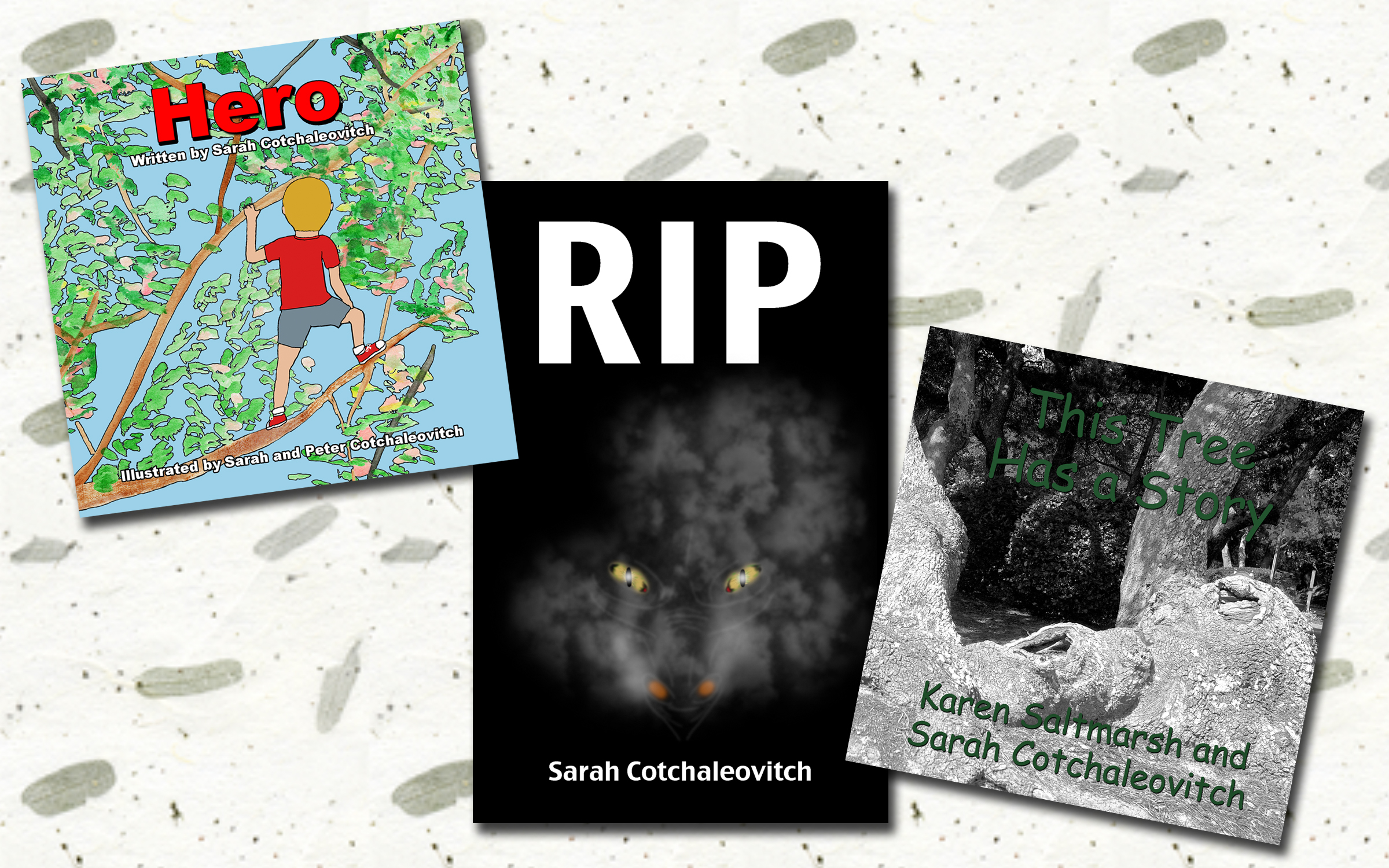
Check out my children’s book Hero here.

Done!

The setup for NaNoWriMo at home, if I need to ...

Ready to Write (Photo credit: Wikipedia)

Have you ever had a goal that seems to hover just out of reach? I’m talking about those last five pounds that you can’t shed, that last $1000 of debt that hangs over your head, that last month of pregnancy when everyone assumes you should’ve had the baby, yet you feel like it’s never going to happen.

I’ve been through all of those and more, but that’s not what I’m talking about this time. Nope, I’m talking about a writing goal.

That’s right, it’s the end of NaNoWriMo for Sarah!

If you happen to know what NaNoWriMo (National Novel Writing Month) is, you’re likely thinking, Aren’t you a couple months late, Sarah?

Yeah, yeah. I know that NaNoWriMo was officially over when the clock struck midnight, marking the end of November and the beginning of December. And I’d already “won,” which means that I wrote a 50,000-word novel in the month of November. (Actually, I wrote just over 61K.) But that didn’t mean I was done telling the story.

Last year, I also didn’t “finish” in November. I was certainly on a roll, writing 80,000 words in 30 days, but it took me 10 days into February to finish the first draft. I never slowed down the whole time; there was just so much story to tell.

This year’s NaNo was the sequel to last year’s. For months, I looked forward to continuing the story, but when it came to November, I struggled. I had the initial outpouring, which lasted for several thousand words, but after that, it was as if my muse had gone on vacation and at precisely the worst time.

So I “won” because I won’t sign up for something and then give up. But it was hard. I felt like the majority of what I wrote was just crap that would end up on the cutting room floor. I knew that if this were just any old novel, I would let it sit on the back burner and wait for my inspiration to return. I’m the queen of unfinished novels; I have more half-done manuscripts than I care to think about, and although I hate to admit it, I know that many of them will remain incomplete.

The difference with NaNoWriMo is that, after working so hard to get 50,000 words out, it seems like such a waste to just let the manuscript sit, unfinished. Even though it took two-plus extra months last year, I finished, and I think it’s the best novel I’ve ever written. And since this year’s novel was the sequel, I had to keep going.

Since it was such a tough book to write, I figured it would wrap up quickly and likely well under 100,000 words. Then I could sit back for a month, let it percolate a little, then return and make it worth reading after a hefty revision. To my surprise, a number of brainwaves hijacked my story when I thought I should be long done. The muse was back, although a month late. I continued writing and could see the end, but I couldn’t seem to reach it.

This past week, I had a couple 3000-word nights. My word count raced past 100,000 and didn’t look back. But still, I wasn’t done. I’d already told myself that I would absolutely finish this week. January is the month I had set aside to finish editing 2013’s novel and start querying agents, and here it is the 24th. I couldn’t let the 2014 novel hang over my head any longer. (Plus, I needed something to blog about.)

So last night, after the kids got to bed, I sat down and did some serious writing – 7000 words, to be exact. I’d joked with my husband that it would likely be a 2:00 A.M. bedtime. In reality, it was after 3:30. But I finished! I am worn out but feel so accomplished. I finally caught up to my goal, and I haven’t quite wrapped my head around it yet.

Now I get a month off from that book. And at the end of that month, I’ll go back and do a lot of cringing and cutting, and hopefully I’ll end up with a manuscript that’s at least 20,000 words shorter and worth sharing.

And in the meantime… I need a nap.

My Gift

Embed from Getty Images

Have you ever had a dream that seems a little silly, but you can’t help but hold onto it anyway? Like driving by a beautiful house every day that you know you’ll never be able to afford but imagining yourself living there anyway?

Well… but who says you won’t live ever there? So many people give up on dreams that aren’t necessarily impossible, just difficult to attain. Sometimes life makes it very difficult to hold onto our dreams. Sometimes we get bitter, assuming that those who do achieve their dreams have some secret inner track that is unavailable for the rest of us “normal” people. Sometimes we give up.

Probably my longest-held unfulfilled dream is that of becoming a published author. Well, let me rephrase: an author who is published in the traditional sense. I do have books under my belt, and I do make a (tiny) income freelance writing, but back in high school, I thought that I could go to college, major in English, improve my writing skills, and somehow earn an annual income as a novelist equal to (or more than) what my husband makes.

Not only did majoring in English do absolutely nothing to further my writing career, but the idea that becoming a novelist can bring a steady income is one that seems less likely every day. It’s harder than ever to find a literary agent and then a publisher, and even they can’t promise positive or lasting results. Books get remaindered all the time, and there go the hopes of more starving artists.

In the face of this and many more discouraging statistics, it would be logical to give up on my dream. And to be honest, this dream does come and go. When my first son was a baby, I wrote very little. It suddenly wasn’t very important to me, both because I was tired and focused on new motherhood. I wrote when I wanted to, and I wrote what moved me, but as far as a career, I almost let go of the dream completely, unless someone reminded me by asking how my writing was going.

Other times, I’ve wanted my dream so much that it almost caused physical pain – and I guess that is possible, if you consider the toll anxiety can take. It’s not fun trying so hard and being rejected over and over and over and over… need I go on?

But most of the time, I live in a cycle of writing with pure joy and energy and plowing on because I know that joy is just around the corner, if only I can stick with it. That’s how this last year has been, starting with my first NaNoWriMo experience in November 2013.

If you follow my blog, you know that last year’s NaNoWriMo was the joy and energy, and this year’s I just had to plow through. Although I won (by writing more than 50,000 words in the month of November), I’m still chipping away at my novel. I would love to finish the first draft by the end of the month, but things really have to change if I want that to happen: I don’t think I’ve ever procrastinated so much when it comes to writing.

This isn’t writer’s block. I’ve had that before, don’t care for it much, but understand that it’s a normal part of the writing process. What this is is writer’s exhaustion. Three days in the past week, I neglected to write at all. I was so busy that I forgot, and I was too tired to even care all that much.

Except.

Except that I realized that I missed it. I make time for all kinds of other things during the day, all of which are important, but why is it that my novel gets shoved to the side? No, it’s not paying the bills, but since when did that become the sole criteria of what’s important to me? If I have to dedicate five minutes at a time to get it done, at least I can go to sleep at night feeling like I haven’t let myself – and my dream – down.

My dream will never have the chance of becoming reality if I don’t do my part. Which means I have to start querying again. Which means editing last year’s novel and finishing this year’s. After all, my books won’t write themselves, and I can’t expect an agent to just stumble across my blog and send me an email – “Hey, Sarah. You sound talented. Do you happen to have a novel I could represent?” Yeah right.

Stranger things have happened, I suppose, but this girl isn’t going to sit around and wait for a miracle to happen. Writing may present a challenge, but it can also fill my tank when it’s empty. I owe myself this gift. The gift of five minutes a day, the gift of keeping my dream alive, the gift of trying to make it become reality.

And if it doesn’t work… well, I’ve always loved dreaming.

Could You Use 20 Minutes of Stillness?

Man thinking on a train journey.

Man thinking on a train journey. (Photo credit: Wikipedia)

I probably use this blog to harp on about my busy life a little too much. We’re all busy, right? You don’t have time to read about someone else’s busy-ness. But that’s my life, which I’ve had to accept. At least I can say that I never get bored. December seems even more crammed with obligations than November – or maybe that’s how it always feels when you’re living in the middle of it.

There are times when I am so busy that I don’t realize how much my kids are growing. Then someone points it out, and I realize that they are big. What happened? How did I miss it? I have to remind myself that I need to slow down and be with them. No, I don’t really want to line up all of our toy cars and count them, but my three-year-old does, and as long as he still wants me to sit with him, I should take advantage of it instead of throwing this opportunity away.

Still, there are many nights when I have the best intentions only to realize that it’s past their bedtimes, and we still haven’t read or done something fun together. If only I could just slow down and be present for a while, then maybe it wouldn’t feel like I’m living with they’re-growing-up-too-fast-itis.

This past week, I was forced to slow down when I had my first acupuncture session. My doctor kept up a steady dialogue while she was placing the needles, I suppose to keep me from focusing on what she was doing. She asked for advice on finding the perfect home-baked something to give to her two very different neighbors. We talked a lot about our dietary lifestyles, which have a lot to do with treating the hypothyroidism from which we both suffer. I was settling in to enjoy a nice conversation.

But with all the needles in place, she turned off the lights, gave me a bell to ring if I needed anything, and told me she would be back in 20 minutes or so.

My first reaction was to wonder what in the world I would do for 20-or-so minutes. And I had no way to track the time; I wasn’t wearing my watch because there were needles in my wrist, nor did I have my phone. All I had was me and some needles on this cushioned table in a little room. What in the world was I supposed to do?

If I had been at home instead of on that table, there’s no way I would have just lain down with no stimulation except for the darkened room around me and outside noises. I would have gotten up every couple of minutes to do something or other. My parents should have named me Martha.

Instead, when I had no choice but to be still, my body grew calm and comfortable – a gift that I very much needed in the middle of a very hectic month.

There are so many people I know who push themselves past the limit, especially this time of year. On the one hand, many of them have to because of their particular jobs, but on the other, staying so busy and so stressed eventually takes its toll. Last year, my mother’s body succumbed to a vicious virus right after Christmas because her body gave up when it finally had the chance to slow down.

Sometimes, the only way our bodies can grab our attentions is to force us to stop. The busy-ness… well, it can wait.

And I guess waiting is hard for people like me because we want to stay active. We always want to move forward, to do something. Slowing down isn’t just a luxury but almost a sin.

Except that the stillness is healing, reinvigorating. As painful as it may seem at the time (especially if you’ve never tried to do anything like meditation or even failed miserably at it), the results are positive.

That day on the table was still busy; I had no time to write. But I spent a long time thinking about my novel and what should come next. I prayed for several dear friends, finally with the time to reflect on their particular situations. And I just laid there doing nothing. Imagine that.

My challenge – which I extend to myself, as well – is to choose to be still from time to time, to choose to watch and listen. To relax at what seems an inconvenient time and recharge. To be present. I can’t slow time or my boys’ growth spurts, but I can use that time to its fullest.

Which sometimes means leaving it empty.

What Comes After NaNoWriMo? (2014 Version)

I won!

I won!

For the third year now, I’ve written a post entitled “What Comes After NaNoWriMo?”, so since we’re into December now, it’s time to post this year’s version. (Read the first two here and here.)

In case it’s your first time stumbling across my blog, and you’re like “NaNo-what?”, it’s short for National Novel Writing Month (which is November). Writers sign up through nanowrimo.org, and starting on November first, they each must write a 50,000-word novel from scratch by November 30th.

In 2012, I thought everyone who participated was crazy. Then last year, I turned into one of those crazy people and wrote 80,000 words by the end of November, and I finished the first draft of that novel in early February. I didn’t know whether I would participate again this year, although my first time was an amazing experience. It just wasn’t one I was sure I could replicate.

Then in the spring, I had an idea for a new novel, but the problem was: could I wait until November? I did discover a way around that problem (read about it here), but as the summer months came and went, I realized that what I really wanted to write this year was the sequel for last year’s NaNo novel. And so when November rolled around, I was ready. Sort of.

Actually, I was stressing over editing the first novel. There were some problems with the end that I had to resolve before being able to start book two. So November first found me making those final changes, and I started NaNoWriMo 2014 with a bang. I wrote over 4000 words, which put me ahead of the game (you need to write 1667 words per day to finish on time, but my personal goal was 2000).

Unfortunately, it was well before the dreaded second week slump that I had my own personal slump. This year, although I enjoyed the writing process, it was a completely different experience than last year. Many days, I struggled to achieve my word count goal, and a couple nights, I didn’t come anywhere close.

It was one day last week when I confided to my husband that I’d finally reached a scene with some action – about 38,000 words in. What that means is that when I go back to edit, I’m going to have to cut out a lot of deadwood. I joked that it would end up being a two chapter novel when I got done with it.

The wonderful thing is that, after that point, I had a much easier time writing this book. If I were able to average 2000 words a day, that would put me at 60,000 words at the end of the month. And as of November 30th, I actually had 61K. The last 20,000 words were the easiest for me to write; it only took me to the end of the month to find my stride.

As with last year, my goal now is to finish the novel. Last year’s novel ended up being 148,000 words, which I have now cut down to 99,000. Still long for a the young adult genre, but it’s a lot tighter than it was. As for this one, I will be surprised if it’s longer than 80,000 words. I hope to finish it by the end of December, if at all possible, and then start editing.

I’m not about to fool myself that this one will be any easier to edit. After having such a hard time finding my momentum, it’s going to need some serious work. But yet again, CreateSpace is offering two free copies to all NaNoWriMo winners who submit by June 30th (see all the winner goodies here). And unlike last year, when I submitted so late that I didn’t have time to fix a submission issue before the deadline, I plan to make it ahead of schedule and actually get those two books for free.

How about the rest of you? Did you struggle like me and keep plugging away? Did you realize your idea wasn’t what you thought and scrap it halfway through? Or did you surpass all your goals and end up with a monster novel on your hands at the end of the month?

And for those of you who still don’t know if you can handle a project of this magnitude, I encourage you to consider signing up next year. And there are a couple opportunities before November when you can sign up for Camp NaNoWriMo and warm up those writing muscles. Why not? You might discover you have some unexpected literary tricks up your sleeves.

Why Do Authors Write Such Depressing Books for Adolescents?

It’s Thanksgiving, and I am actually ahead on my blog for the week – and that’s something to be very thankful for.

Thanks to Scarlett Van Dijk for hosting my post on her blog this week. I had a lot of fun writing it. It’s my answer (or at least a part of the answer) to the question of why authors seem to write so much depressing material for adolescents. Check it out here, and then spend some more time with Scarlett’s blog; I think you’ll enjoy it.

Happy Thanksgiving!

Sarah


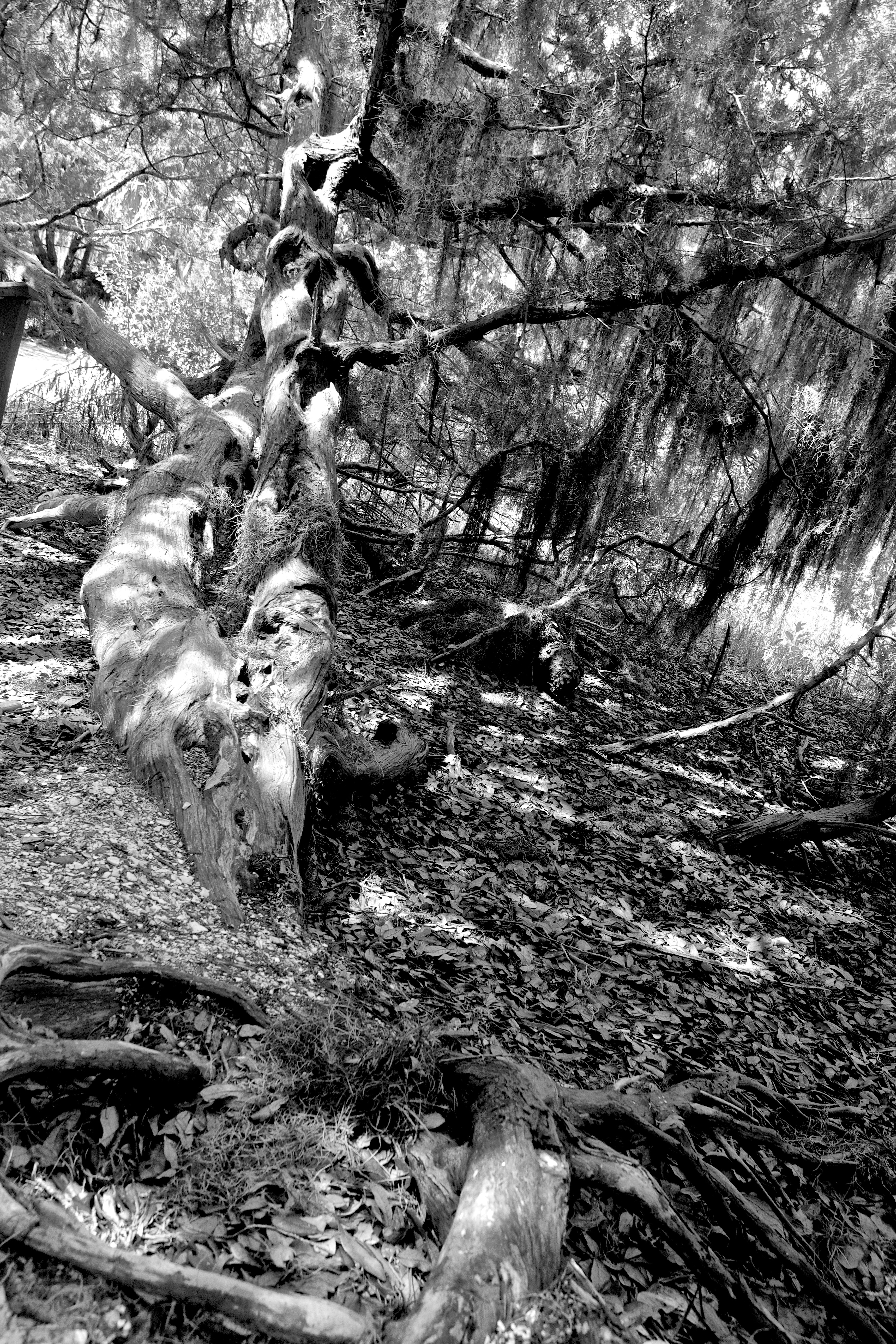
This Tree Has a Story

Tree #9 This Three Has a Story Photo by Sandy Malcolm

Tree #9, This Three Has a Story
Photo by Sandy Malcolm

When my friend, Karen Saltmarsh, told me that she wanted to write a book of creative writing prompts for kids, I said, “Let’s do it!” (You know that I can’t turn down a good book project.)

Karen has been an educator for 28 years, and she was one of my son Peter’s kindergarten teachers. Karen’s dream was to inspire children to tell creative stories, just as she taught her own children.

Amelia Island Plantation is where it started. First with her son and then two daughters, Karen immersed them in the wonder of nature on a daily basis. Any time they came across an unusual-looking tree, Karen prompted them to tell a story for how the tree came to be like that. “This tree has a story,” she would say.

This Tree Has a Story Cover Photo by Sandy Malcolm

This Tree Has a Story Cover
Photo by Sandy Malcolm

During her 28 years as a teacher, Karen has seen a number of changes, some welcome, others not as much. Twenty-eight  years ago, there wasn’t a TV in every classroom, much less a computer. And while technology has brought so many conveniences, so many benefits, there’s an enormous downside. Twenty-eight years ago, kids didn’t spend all afternoon sitting in front of their TVs playing video games. How many times have you heard someone reminisce (or reminisced, yourself) about the days when they came home from school and went right outside to play, only coming in reluctantly at suppertime?

A number of factors have contributed to this change, and while there still are many kids who do get to enjoy the outdoors, 21st century children are wired differently. As infants, they learn how to operate touch-screens. They understand texting and Facebook updates, even if they don’t have their own accounts. But here’s the thing: kids are still wired to love the simple act of playing. I’m talking about going outside and kicking a ball around. Or climbing a tree. Or looking for lizards. (Can you tell I’m a mom of boys?) When I was a kid, I pretended that azalea leaves were money. I learned how to suck the nectar from a honeysuckle. I ran laps around the backyard. I dug for roly polies. And even when I was bored, I went outside and whispered stories to myself.

There’s not enough of that going on anymore, and as a teacher, Karen has seen the negative results of this firsthand. In a time when brevity and instant gratification prevail, it seems that creativity and imagination are often shoved to the side. But when children have the opportunity to explore and create, amazing things happen.

When Karen first shared with me the dream that she’d been harboring for 25 years, she explained it as a book of writing prompts. But not just any prompts. She wanted to inspire children – children who are babysat by Nickelodeon or mom’s iPad, kids who live on the Xbox – to learn the art of storytelling in the same way that she taught her own children.

Our first step was to find interesting trees. At first, we collected photos from all over the country, but as we developed the book, the focus shifted from interesting or odd or unique trees in general to the trees of Amelia Island. It was the place where Karen received her original inspiration, so it seemed appropriate to start there. (But never fear, there is a short section with photos from other regions, too.)

We narrowed it down to 12 Amelia Island trees. As you can see from the cover photo, we included some really interesting ones. Karen chose one of these photos (the one at the top of this post, in fact) and decided to test her theory on kids in her own kindergarten class.

When I saw Karen that afternoon, she was practically bursting. “It works!” I think it was overwhelming for her to imagine her dream coming to fruition, but then to see it at work – it went beyond her expectations.

When Karen sat down with her kindergarteners, she simply showed them a photo and asked if they could tell a story about that particular tree. I did the same at home with Peter, who is a year older. Peter’s story, plus two from Karen’s students, are included in the introduction of our book.

Karen’s original vision was for the target age group to be from kindergarten to second grade, the years when students are really learning how to spell and write and structure. But after receiving some professional guidance from a child psychologist, we broadened the spectrum to K through 12 – and, of course, it doesn’t have to stop there.

If only we stop to look around, we can find a story in almost anything, and trees are a great place to start. There’s been quite a learning curve in structuring and formatting this book. We’ve searched, and as far as we can tell, there’s not another creative writing book like this on the market. This is wonderful and scary at the same time. Wonderful because we can do anything we want and not be expected to confine ourselves to some pre-existing convention. Scary because it was a challenge to figure out exactly what we wanted to do.

But we finally took This Tree Has a Story to print, and it’s now available. In addition to the trees, our photographer, Sandy Malcolm, took some wonderful photos of wildlife in the trees. These were too good to pass up, so there’s going to be a sequel. But first…

We’re going to conduct a pilot study, and we’re going to do it over the entire spectrum. We were wowed by the stories from the kindergarteners. I can only imagine what we might get from older kids. Kids who are going through adolescent trials. Kids who may never have tried to create a story before. Kids who don’t realize what kind of potential they harbor, that’s just waiting to be stimulated by, I don’t know, an interesting tree.

Karen and I are so excited, and we have lots of plans for our new book, not the least of which is that a portion of our proceeds will go to help preserve or plant trees in areas that have suffered from erosion and natural disasters.

I’m giving away 30 advanced reader copies, so you can conduct your own creative writing study with your students or children. If you’d like to throw your name into the hat, or if you have any other questions, please contact us via the contact form below.

Go back

Your message has been sent

Warning
Warning
Warning
Warning

Warning.

The Proud Authors! Sarah Cotchaleovitch and Karen Saltmarsh

The Proud Authors!
Sarah Cotchaleovitch and Karen Saltmarsh

The Challenges of Parenting the Second Novel


Embed from Getty Images

When I had my second son, people warned me not to compare my children to each other – something that’s nearly impossible to do. And the same is true, I’ve found, with novels.

And so I come to NaNoWriMo again. (It’s November; get used to it.) The first two weeks have been rough this year, which blindsided me (and I can say the same of the early days of being a mom of two). If you followed me last year, you know that I “won” (which means that I reached the 50,000 word minimum) by the 14th of the month. (And if you didn’t follow me then, you can read about it here.) I had inspiration on my side with a brand new story that wouldn’t quit. I wrote well over 4700 words on the first day, and I didn’t slow down much from there. By the end of November, I was at 80,000 words and continued writing until February, when my first draft clocked in at 148K. From there, the challenge was to trim it down to under 100,000 (which I did two weeks ago, thank goodness).

Fast forward to this year: last week I wrote about middle-of-a-trilogy blues. I get stuck constantly. I carry my MacBook with me everywhere (just like last year), and any time I have a spare minute, it’s open to my novel. Whereas last year, scenes competed for my attention and I couldn’t get them down fast enough – bombarding me when I was in the shower or chauffeuring the kids or researching an article – this year, the computer sits open, the cursor flashing, waiting for me to type. Mind you, I am extremely busy, but still, the story isn’t constantly running in the background like last year. There’s no backlog of scenes waiting to be written at my earliest convenience.

Today is the 15th of the month, the halfway point. If you’re serious about finishing, you should have 25,000 words down, and I do, thank goodness. My goal is to type 2000 a day, just to give me a little cushion in case I have a rough day. November 1st I did pretty well with 4000 words. Not as much as last year, but it got me a day ahead of my goal. And I used up that 2000-word credit five days later when I only managed to get 200 words down. Determined to catch up, I pulled my average back up to 2000 words per day, but it’s been tight. I’m an over-achiever, and surpassing my goals is kind of my thing. I still have over 1000 words to type today to make it to 30,000, so forget last year’s astronomical word count.

It’s not the word count itself that bothers me as much as my difficulty in getting the words down. Again, I can see a parallel with my kids. The first baby was a breeze. Yes, we had some challenges early on, but looking back I realize what an easy kid he was and still is. Contrast him (I know, a no-no) with his little brother, and the story changes. That little dude was a challenge while still in the womb, and the challenges only escalated after he was born. Even the nurses at the hospital were perplexed by his inability to be consoled – and those maternity ward nurses have some sort of baby voo-doo that almost always works. We’ve tried to parent both kids the same way, so why are they so different?

The difficulties, the challenges, the things that make me want to scream and rip my hair out at times are also the beauties of these two very different people – if only I can take a deep breath and remind myself that no two people are exactly alike. It’s amazing to watch them grow into their personalities. Sometimes they’re predictable, and other times they take us by surprise. It’s the times that I try to force Ian (the younger one) to be more like Peter (big brother) that I frustrate him and unnecessarily disappoint myself.

So it is with my stories. I guess you could say that last year’s was the big brother: sometimes challenging but always a joy. There were so many new discoveries, each one a kind of adventure.

My NaNoWriMo 2014 novel is the second child. I’ve been there and done that – wait, wait, wait. It still has surprises, if only I can allow it to follow its own path. But in order to do that, I have to give it the freedom to do so.

One day last week, in the effort to plow through another 2000 words, I realized that I was going through the motions yet again.  I had allowed my so-called experience to make me complacent and fall into a predictable and not very fun routine. My novel has certain plot points, not unlike milestones for children. My characters have to travel in my story, and since I’m averse to writing outlines, I don’t know much of what happens on the journey from Point A to Point B. I just know that I somehow have to get them there. And that “getting there” part can be a real slog.

Last year, I had even less of an idea how I would move the story along, but I didn’t let that bother me. Scenes kept popping up in no particular order; I typed them, and when I had time to breathe, I tried to connect them. It was these bursts of inspiration that kept me on the edge of my seat, that made me excited to get up every day and write.

I was thrilled that my word count exceeded my expectations. It was great to not have to worry about it. This year, sometimes it seems that the word count is the end goal, but it shouldn’t be at all. The point is to write, to finish something that I otherwise might give up on halfway through. That’s what’s beautiful about NaNoWriMo to me.

I mentioned in a previous blog that I already know how my current novel will end (even if I don’t know all the in between stuff). Hard-pressed to finish a scene, I realized that I could give myself a break and jump ahead to the ending. Why not? Words count, after all, no matter where they fall sequentially.

While I was thinking through that scene, my fickle little muse stopped by for a visit. It was one of those moments when I realized that something I was already planning to write would make so much more sense if… well, I can’t tell you, but it was one of those brainwave-y moments that authors live for (or at least this author does).

It’s the kind of thing that happened all the time last November, when I was new at the whole writing a novel in a month thing, when it was exciting and much like embarking on a voyage into unknown waters. It was with a kind of joy that I realized new and surprising things can still happen with the second novel of a trilogy. Instead of coaxing it along and expecting it to be a good little novel that writes itself –surprise! – I need to be open to all the scenes that want to be written, even if they’re out of order or don’t seem to belong. After all, this is a different novel, and it deserves the same chance, the same attention, I gave its big brother.

Much like parenting my second child.

Here’s to second children, and here’s to second novels.

Here’s to writing first and counting my words second.

Here’s to another 15 days of creativity and exploration, and best of luck to all my fellow WriMos!

Sometimes You Have to Freeze Your Characters in Carbonite (Don’t Worry, It’s Temporary)


Embed from Getty Images

What a difference one week makes! If you read last week’s blog, I was gearing up for NaNoWriMo and nervous about starting. Not because of the whole 50,000 words in a month thing. I did it last year, so how hard could it be to do it again?

What I was worried about was finishing last year’s NaNo novel in time to move on to the sequel, which is this year’s NaNo novel. I was still deep in my last edit, and although I didn’t have many pages to go, I was at the crucial point where I needed to make the most drastic changes.

During the editing process, I cut almost 50,000 words (ironic – don’t you think? – since that’s the number I need to type this month). Cutting I can do all day. But the closer I got to the end, the more it became like slogging through verbal quicksand. It was the part of the editing process that I dreaded most. I had quite a bit of hard work ahead of me. On the one hand, I still needed to cut 3000 words, and on the other, I needed to add to the ending to improve it.

Then something wonderful happened, something that I hope happens many times this month (although it hasn’t yet): I had a brainwave. Whenever I read a novel with a plot twist or a really clever scene, I wonder if it was always a part of the plan or if it developed over time or maybe if it popped up out of nowhere, just in time to save the story. And while I’m not saying that I came up with something brilliant like the vanishing cabinet in Harry Potter and the Half-Blood Prince, this brainwave explained some of the points that I was afraid would never gel. This included making quite a few cuts and changing the ending even more than planned, and I just couldn’t stay up long enough to finish. Editing when you’re half asleep isn’t always in the best interest of the story, but on the plus side, I got to sleep on the brainwave.

November first, the first day of National Novel Writing Month, wasn’t much better. I had my weekly editing work for Fiction Fix and my son’s t-ball game. When the afternoon rolled around and I finally got a chance to edit, I would fix a scene, move on, add some more, realize that this affected an earlier scene, go back, rewrite again… and stare at the computer screen a lot as I tried to figure it all out.

I finally got it, finally realized exactly how it needed to end, and it dovetailed perfectly with the opening of the second book.

Half of my goals from last week were in the bag: I’d finished editing and gotten my word count under 100,000.

And as soon as I finished, I was supposed open up a brand new document and leave my editing hat at the proverbial door. Forget cutting! Now is the time for extraneous adverbs and adjectives. For people to ask sweetly and say quietly and walk quickly and wear elaborate gowns with one hundred buttons down the back, belled sleeves, and sweetheart necklines. Sometimes you have to break all your rules in order to get the job done – and tell your inner editor to shut up while you do it.

Typing that first page was painful. All I could think was, This isn’t a good opening line! No one will ever read beyond this.

And that’s how it’s been all week. My inspiration has just kind of fizzled. I’ve kept up with my word count, but the only reason I’ve been able to do so was because I typed over 4000 words that first day. I’ve seen a lot of things that need the axe. Even as I type, I think, This’ll get cut in the next draft.

But not in this one. Right now, I must plow on. It may be a tough slog the whole month. At least I’ve figured out why, not that it really helps. You see, I’m in the second book slump. This happens in trilogies. Okay, instant fix: don’t write a trilogy. It’s not that simple, though. My story needs to be told that way. And I’m not saying that all middle books should be thrown away, but often it’s necessary for the plot to slow or tough things to happen in order for better things to happen later in the trilogy. And so I think that the writing process naturally reflects some of the difficulties within the story. (And besides, it can happen in series with more than three books. Think about New Moon from the The Twilight Saga or Harry Potter and the Order of the Phoenix: necessary but often painful to read.)

The best example I can think of actually comes from the movie Star Wars: the Empire Strikes Back. First of all, what happened to Mark Hamill? Yeah, he’s still a stud, running around the swamps of Dagobah with Yoda on his back and all, but he’s not nearly as cute as in the first movie. Plus he loses an arm (Luke Skywalker, I mean, not Mark Hamill). And then Han Solo turns into a carbonite-cicle. It’s depressing stuff. If you’re a Star Wars fan, you still love it, but yikes. Thank goodness for Return of the Jedi, right?

And that’s what I have to keep in mind. There will be ups for every down. And the great light at the end of the tunnel is my book three, but I can’t get too distracted by that right now because, God-willing, I won’t start on it until NaNoWriMo 2015. What I need is to get through this book – not just get through but give it the attention it deserves, see it on its own terms rather than compared with its companions.

There is a time for choosing my words with great care, for analyzing and fine-tuning, but November is not one of those times. Editor, hop in the backseat. Writer, say whatever you want because you can always cut it out and make it pretty later. After all, the great thing about first drafts is that you can make all the mistakes you want and fix them before anyone finds out. My inner editor needs to take a forced month-long vacation, so I can get some work done.