So You Want to Write a Book – Well, Now What?

William Faulkner's Underwood Universal Portabl...

William Faulkner’s Underwood Universal Portable (Photo credit: Wikipedia)


Has this ever happened to you? You’re with a group of people – let’s say a moms’ group, with everyone exchanging tips and anecdotes – and someone says, “We could write a book.”

“We really could!” someone else chimes in.

Another mom even throws in a title: “Temper Tantrum on Aisle Four – How to Survive the Toddler Years!”

Everyone laughs, and they go about their lives and forget about it. But you linger on the thought that maybe you could write a book. Then again, the idea that you don’t know how to start – and what would make your book any more special than any other, any more worthy of the New York Times Bestseller List? – is intimidating, so your idea stays an idea and no more.

On the one hand, you might be right. Everyone does have a story (or three), and some of them aren’t worth telling (and those are the ones that seem to be repeated the most). But any time you impart a nugget of knowledge to someone else who seems to get something out of it, you feel that I-should-really-write-this tug.

Nowadays, blogs (much like this one) pick up the slack. A mom blogs about potty-training her strong-willed toddler, and other moms unite behind her or take comfort that they aren’t alone in the struggle. A man loses his job but figures out how to make a living from home – and writes a great how-to post. Someone with an incredible weight-loss story posts a menu and workout routine online to help others in the same situation. Blogs are great resources, and the topics they cover are endless.

But still, there are those for whom blogging and swapping stories around the water cooler aren’t enough. The problem is that they aren’t necessarily writers and don’t know what to do. The idea persists, won’t let them go.

Sometimes for decades.

I get all kinds of mixed reactions when people find out that I’m a writer. They want to know what I write. (“Novels? How can you write so much?”) They want to know how much freelance work I can handle. (“How do you manage it with two kids?”) They marvel that I’ve actually made an occupation out of this – you know, it’s not just a cute hobby. (“You mean you edit and write for a living?”)

And sometimes they ask me, kind of sheepishly, if I can help them with something they’ve been wanting to do for years.

One such person is a client of my parents’ business and happened to mention to my mom that she had a writing project. My mother said that I’m a writer, and the next time the woman came in, I was there. I gave her my business card and promptly forgot about it. I talk to a lot of people about my services, but that doesn’t necessarily mean they’re going to hire me.

A few weeks later, to my surprise, she called. She went into great detail about this project, one that she started over ten years ago. Her kids have been encouraging her to write a memoir because she’s led such an interesting life, but she doesn’t use computers, and the woman who helped her start it has been too busy to continue.

As I talked to this woman and learned her story, I realized that there are so many people who lead amazing lives, but some of the best details will die with them. They may not have a great command of the English language, but they have stories worth passing on. It would be a shame for this woman to never see her dream fulfilled just because she’s not a “writer.” I feel privileged to help her share her bit of history with her family.

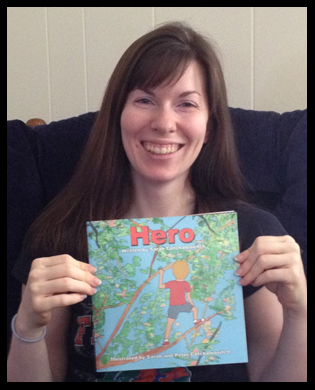
Another opportunity arose in late May. I had just published my children’s book Hero (shameless plug – buy it here!), and Peter shared it with his kindergarten class. Afterward, one of his teachers mentioned that she has always wanted to write a book but needs help.

“Sure, let’s do it,” I said before I even knew what she wanted. Hey, I had just illustrated and published my first children’s book – I was flying high and felt like I could do anything.

Her face lit up as she described her 20-year dream. She used to take her children for bike rides around Amelia Island. They would stop at interesting trees, and she would make them create stories about how those trees came to look like that. Combining her love of nature with her interest in developing writing skills in children, she wants to create a book with photos of interesting trees and writing prompts. As with her own children, kids will “Look at this tree” and be encouraged to write a story about it.

It’s right up my alley. Although I’ve never created a book like this, I must admit that I love writing prompts. I love anything that starts with a tiny seed and blossoms into a beautiful story.

I really feel that I could give her a push – much like with a child on a bike with the training wheels removed for the first time – and watch her go, but I also understand that I’ve been in the publishing world for a while now, and it’s no longer mysterious to me. If you’re not right in the middle of it, though, you might think writing a book is unattainable.

I was there once. I’ve talked about my college fiction workshop before, and the second time I signed up, our instructor Ari pulled a group of us together (the ones who were serious about getting published) and gave us the low-down on publishing. 1) It’s a competitive market that’s difficult to break into, and 2) it’s still not guaranteed to be everything you hoped and dreamed even if you do get published. What Ari suggested was that we pull our best stories together and create our own publication. And so Fiction Fix was born. With his direction, we figured out what we were supposed to do, and more than 11 years later, Fiction Fix is going strong as an online fiction journal. We’ve grown quite a bit from that group of desperate writers who just wanted to see our stories in print; now we receive submissions from all over the world.

We were lucky in that we had someone who saw our desire to write and be read and who knew just when to push us. But for those out there with the desire but no direction, no help, no idea except THE IDEA for a story or book, the task can seem daunting. But here’s the thing: if you have a book that you want to write, the only thing in your way is your own indecision. Instead of dreaming or joking about maybe writing a book some day, you need to take action.

Indie (self-published) authors are more prevalent than ever. The internet has done many wonderful things for writers, on-demand and e-publishing being two of them. And even if you don’t write, these tools and their practitioners have made publishing a much more attainable reality than it used to be.

An internet search can give you everything you need, from writers’ support groups and social networks to online book publishing to lists of freelance editors (like me!). Don’t ever assume that the person you’ve just looked up is the real deal until you’ve done some research. (I learned this the hard way, regarding literary agents – read my story here.) Also don’t assume that the big companies are your only choice. Everywhere you look, you will find writers and editors with different levels of expertise. You’ll even find local printing companies, graphic designers, and illustrators who can all help bring your book to life. These are real people with whom you can share a cup of coffee – and your dream.

But if you’d like some resources, here are some websites to check out:

  • Kindle Direct Publishing and CreateSpace (Amazon.com’s answers to e-publishing and on demand publishing)
  • Smashwords.com (distributor of eBooks to every conceivable e-format)
  • Writer’s Digest and Writer’s Market (tips for writing and publishing)
  • LinkedIn (where professionals go to network – Facebook and Twitter are great, but if you want to connect with writers who can help you get started, I can’t think of a better place)
  • NaNoWriMo.org (Ever wonder if you could write a novel in a month? If you’re serious about this, I promise that you will have the writing experience of a lifetime.

So… do you have a story to tell?

Want to help with the writing prompt book?

Look at This Tree

Look at This Tree

The writing prompt book I mentioned is the brain-child of my friend Karen Saltmarsh. We’re going to title it Look at This Tree, and we’re looking for high-quality photos of interesting trees that could tell a story. To the left is an example from a park that I visited in Washington State. (Don’t you think there could be a secret hideout for some mythical, woodland creature under the roots?) If you have something you’d like to submit, please fill out the contact form on my Writing Services page, and Karen and I will consider your photo for her book.

Adding to My Personal Soundtrack

Quarta gregoriano

Quarta gregoriano (Photo credit: Wikipedia)

I don’t talk enough about the musical influences in my life. I know it’s all books-this and writing-that, but I really wouldn’t be the well-rounded individual that I am (ha) without the music in my life.

There are times when music surprises me; a song that I’ve heard many times will suddenly awaken a creative something within me. Since I’m a writer, that “something” is usually a scene in a book I’m writing. Sometimes it’s the “aha!” moment I’ve been waiting for. Other times (like what I posted about most recently), a novel almost gets derailed by a new scene that I never would have imagined, were it not for hearing the right song at the right time.

Then there are other times that music doesn’t necessarily evoke a specific image or scene, yet it fulfills some emotional (and I would go as far as to say spiritual) hole and leaves me pleasantly full and happy, even energized.

What brings all this up? Well, I’m kind of riding a high from attending an evening of uplifting, choral music. A boring way to spend a Friday night, right? Well, not if I got chills during the first song (I did) and can’t stop thinking about the sound and the joy on the faces of the singers (I can’t).

You see, that’s how it is in this relationship I have with music. Many songs or musical events become a part of what I think of as the soundtrack of my life. (Don’t worry, as a writer, I sometimes narrate my life, too, but today it’s all about the music.)

Alanis Morissette

Cover of Alanis Morissette

For instance, any time I hear “The Sign” (Ace of Base), I’m overcome with nostalgia – it’s the title song of my first CD. The same goes for Alanis Morisette’s Jagged Little Pill; I bought that CD in the seventh grade, and so did my husband. It’s part of our middle school soundtrack.

And so it continues: musicals I participated in as a teenager, such as Annie and Fiddler on the Roof; Metallica’s S&M CD (one of the best Christmas presents Thomas ever bought); our first System of a Down CD, which we bought and listened to when we drove to a Gator football game; the mix CD Thomas’s brother burned for us a couple days before we got married, so we listened to it everywhere we drove on our honeymoon. And our wedding itself contained a mini-concert. Some people told me it was a long ceremony because of all the music. But we’re musical people. Thomas’s grandfather was in a band. My mom’s mom and dad’s dad were both organists. It’s in our DNA.

Bohemian Rhapsody

Bohemian Rhapsody (Photo credit: Wikipedia)

So I’m raising my kids right, making them listen to “Bohemian Rhapsody” and “Thriller” wherever we go. (Hey, I also downloaded “Let It Go” – don’t worry.) I’m helping them create their own soundtracks.

Most recently, I’ve discovered Rachael Sage; her single “Happiness (Maddie’s Song)” just came out on iTunes. I heard it once and couldn’t stop humming it for a couple days. And then there’s Pentatonix. I love it when someone posts one of their new songs on Facebook – which I’ll watch over and over, to my children’s chagrin. And Bastille – who doesn’t dig a rocker with a cool British accent?

Rachael Sage

Cover of Rachael Sage

Every new song, every concert, is a possible source for inspiration, but it goes deeper than potential best-selling novel ideas (as nice as they are). Songs are little triggers. I can hear one in the grocery store and be transported back to the fourth grade. Or remember the last concert I attended with a friend before she passed away. They’re pieces that may not always seem to go together – discordant, you might say – yet they make up the puzzle of me. And as strange as it may seem to hum classic rock in the store, listen to folk songs in the car, and spend an evening listening to choral music, I totally dig the big picture.

And it just keeps getting bigger. But I wouldn’t call that a bad thing.

Dyslexia – A Mere Stumbling Block on the Path to Book Creation

“Peter is still getting his M’s and W’s mixed up.”

This was Peter’s kindergarten teacher four months ago. Peter is six. He should have known all of his letters a year ago. In fact, he did. So why the sudden trouble with these two? I was a bit disappointed when she told me, but I wasn’t surprised.

Peter has dyslexia. On top of that, his working memory does not function at 100%, making it difficult for him to retain everything we do to help him overcome his learning hurdles. It’s better than it was. This time last year, his working memory only functioned at about 20%, and he’s in an intensive program that’s helping, but it’s still a struggle.

So Peter and I practiced with M and W flashcards, and right about the time he got those two letters down, he slid back again and started having trouble with B and D. Peter is aware that he has a hard time reading. He knows his friends read books a couple levels beyond his capabilities. He groans whenever I make him read or do flashcards. Sometimes I’ll give him a night off and just read a book to him. The poor kid. Up until he had to start reading them himself, he had a love-love relationship with books.

I focus on Peter’s strengths. He’s good at math. He’s athletic. He can build anything, loves making inventions, and is very creative. But at the same time, I don’t want him to give up on reading, to think that it’s something a lot of people can do but is unattainable for him.

Then he happened to be watching the Disney Channel when Bella Thorne’s TTI came on. TTI’s (or “The Time I…”) are clips about some of the actors in Disney’s shows. I hadn’t seen Bella Thorne’s TTI since Peter was diagnosed.

Why does Bella Thorne’s particular TTI matter? Well, because she has dyslexia. She started talking about why reading was a challenge, and how she mixed up B and D and M and W. Peter turned to me, eyes alight, and said, “Hey! That’s just like me!”

It couldn’t have been more perfect.

I made sure to point out to him that she can read now, even though it’s a challenge.

I know it boggles Peter’s mind that I write. When I pulled my children’s book Hero out of mothballs earlier this year, I decided to involve Peter by using him as a first reader. I read it to him while he sat with me at my computer, looking at a screen with a bunch of symbols that he struggled to make sense of. With no illustrations to guide him, he didn’t connect with the story. I had to read passages twice and ask him questions about them to make them stick.

And then it hit me: Peter can draw. He may struggle to read Hero, but I knew if he helped illustrate it, he’d have some ownership. Even with dyslexia, he could still be a part of the book creation process.

Peter learning cursive

Peter learning cursive

If you’re a regular reader, you know that we did it (and you can read about it here). Peter is half-shy, half-proud when he helps me deliver a book. Even though he’s quick to say that it’s too tough for him to read (yet), he loves that his name is on the cover, that it’s our book. He even asked me to teach him cursive, so he can sign the inside cover.

Starting in the fall, I’m going to talk to elementary school students about writing and illustrating a picture book. I’m excited for them to know that a regular mom can make children’s books, but I’m even more excited to encourage them by telling Peter’s story. Books are for everyone – for bookworms like me, those who struggle like Peter, and everyone in between.

Don’t forget, through July 26th, all of my proceeds from Hero are going to WSB’s Care-a-Thon to benefit the Aflac Cancer and Blood Disorders Center of Children’s Healthcare of Atlanta. Click here for all the details, including where you can buy Hero in Northeast Florida. You can also get yours from Amazon.com, or message me for a signed copy.

Be a Hero by Supporting Children with Cancer

Hero Benefit poster I am very fortunate that my two boys have enjoyed good health so far. When you don’t face health issues, it’s something that’s easy to take for granted. My usual complaints fall into the categories of being too busy, not getting enough sleep, and worrying about finances. But every once in a while, I’m reminded that these “problems” are nothing compared to what many families face.

I’m talking about children who have terminal diseases. Hazel in John Green’s The Fault in Our Stars says it perfectly (and pardon her French): “There is only one thing in this world sh*ttier than biting it from cancer when you’re sixteen, and that’s having a kid who bites it from cancer.”

Harsh? You bet. But how do you think these kids and their parents feel? I can only imagine the grief, the turmoil, and the burden. I’ve seen it with aging adults, including my own grandfather, which was terrible – but for a child to be plucked from the beginning of life, without ever having the chance to blossom, and given a death sentence before life has truly begun? It’s unfair. It’s unthinkable.

It’s reality.

If you haven’t faced this within your own family, it’s likely that you know someone who has. I’ve known children who were diagnosed anywhere from one year old to their teens. I’m not sure which is worse – never being able to remember a time before becoming sick or living a seemingly normal life, only to have the rug pulled from underneath you when you thought adolescence was bad enough by itself. Either way, any time I meet one of these children or parents or siblings, I realize how strong they must be, how much different their lives are than mine, and I yearn for a way to help.

For someone like me, neither a scientist who will someday find a cure nor a medical professional who can treat and care for one of these patients, I feel pretty useless. Then several years ago, I stumbled upon News 95.5 and AM 750 WSB’s Care-a-Thon. It’s an annual event that assists funding family support services and research, as well as the fellowship program at the Aflac Cancer Center.

As I listened on the radio, I heard parents and their children share their amazing and heartbreaking stories – and triumphs. I knew that I couldn’t give much, but I also couldn’t not give. I knew that if everyone listening took a few minutes and gave a few dollars, millions could have been raised. In fact, last year, the WSB Care-a-Thon benefiting the Aflac Cancer and Blood Disorders Center of Children’s Healthcare of Atlanta raised over $1.5 million.

This year, I hope to make my portion even more than usual by giving the proceeds from my children’s book Hero to this worthy cause. From Sunday, July 13 through Saturday, July 26, 2014, I will donate 100% of my net proceeds from every Hero sold – those purchased directly from me, from any location in Northeast Florida that carries it, and from Amazon.com.
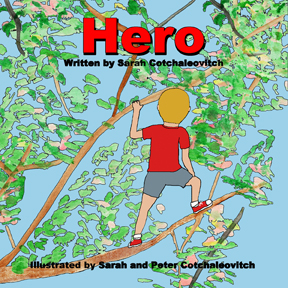
Hero by Sarah Cotchaleovitch

Hero by Sarah Cotchaleovitch

Hero is a children’s book about two regular kids and their pets. The kids who have read it so far seem to enjoy it, and I can’t think of a more appropriate way to share my profits than with other children who deserve a chance at a normal life. So here is how you can participate:

Buy a copy of Hero any time from this coming Sunday, July 13th through the following Saturday, July 26th. If you would like an autographed copy, please message me, and I will ship one to you. If you live in Northeast Florida, Hero is available at the following retail locations:

The FotoTechnika Group in St. Nicholas (my printer and the family business)

Owens Pharmacy in Riverside

Proctor Ace Hardware (all three locations)

Roberts’ South Bank Pharmacy in San Marco

• Sweetwood Books of Fleming Island

Hero is also available from Amazon.com.

If you already have a copy, why not purchase another to donate to Children’s Healthcare of Atlanta? I think the kids there would love it. Or buy one for your favorite niece, nephew, godchild, or friend. The Care-a-Thon itself will air Thursday, July 31 and Friday, August 1, 2014. Click this link to read more about it (including stories about these amazing children), or use this link to donate directly to the Care-a-Thon online.

Cancer will eventually affect everyone either directly or indirectly, but with our help, these children and their families won’t have to go it alone.

Another Project Bites the Dust


The setup for NaNoWriMo at home, if I need to ...

Getting ready for NaNoWriMo (Photo credit: Wikipedia)

This past week was the big deadline: after June 30th, the CreateSpace coupon code for two free copies of my NaNoWriMo novel would expire. As a perfectionist, I found it difficult to call my novel good enough. But then I realized that not only had a written a novel – from scratch – in just a few months, but I had also fully revised it a couple times. That’s a record for me – and quite an accomplishment, considering I’m so picky.

Now, if you’re reading this and wondering, What in the world is she talking about? What is NaNoWriMo?, I will tell you. NaNoWriMo (National Novel Writing Month) comes around every November. Why November? I don’t know. You can read more at nanowrimo.org. All I know is that it’s awesome. And it’s also for crazy people. Like me. Even some really successful novelists participate in NaNoWriMo. Like Sara Gruen, who wrote Water for Elephants, and Erin Morgenstern, author of The Night Circus.

While brainstorming my last blog of October – the one in which I would list all the reasons why my sorry butt wouldn’t participate in NaNoWriMo, yet again – I had an idea of novel-sized proportions. So I figured, What the heck? I just had a couple days to wait, so I held off until November first, then started writing like… what did I say earlier? Oh yeah – a crazy person.

A novel, as defined by NaNoWriMo, is 50,000 words. I wrote over 80,000 in November, so I “won,” but I wasn’t finished with the book. I kept at it until I finally finished in early February. Then I sat back and let it rest for a month – something Stephen King recommends (maybe I read it in On Writing – can’t remember).

When the month-long waiting period was over, it was time to start editing. I usually enjoy editing just as much as writing. Sometimes it’s the joy of discovering a detail I forgot I wrote. Sometimes I realize I really screwed something up, and I feel liked I’ve accomplished something after I fix it. And I always, always try to cut extraneous words and make the manuscript as clean as possible.

Now, I know this will sound gross, but the first draft is kind of like diarrhea of the pen (or keyboard, whatever). Many – way too many – writers leave their first drafts pretty much alone, so consider how awful it is for editors to read diarrhea-on-the-page. One of the goals of NaNoWriMo is to just plow straight through, so there’s going to be lots of crap. It’s necessary if you’re going to write so much in such a short time. But if you want to have a chance of the success that Sara Gruen, Erin Morgenstern, and authors like them have enjoyed, you have to return to that original draft and pull out your ax. After all the useless words are cut, you pull out your chisel and try to make the story as close to its intended shape as possible.

One great goal to help achieve this is another that Stephen King recommends (which I read in the same place as “wait  a month”): he says to cut the manuscript by 10%. I have tried this with other novels and short stories – always to no avail. If you haven’t figured out by now, I’m wordy. I mean, I almost always break the blogs-should-only-be-500-words rule. And I had new scenes that I wanted to add to my book. How in the world would I cut a 148,000-word book down to a little over 133,000? (A double-spaced page in a word processing program has 250 to 300 words, so that’s like cutting 50 to 60 pages.)

My mom's amazing cover art.

My mom’s amazing cover art.

But I did. And for once in my writing life, I surpassed my goal. A couple days before the deadline, I trimmed it to just over 129,000. I even managed to design a cover. I got the basic outline done, told my mom (who is an amazing artist) what I really wanted, and then she waved her magic wand, and BOOM! Cover, done. It’s wonderful having a talented mom.

I sell my children’s book through CreateSpace (shameless plug – buy it here!), so I knew I needed to submit my story one day early to make it through the reviewing process. Hero is an illustrated book, so I had to submit it as a PDF. Like a dummy, I assumed my novel needed to be a PDF, as well. It was only after I submitted it that I saw they would also accept .doc or .docx.

Sure enough, the morning of the 30th, I saw that they had rejected the PDF – it cut off all my pages numbers. So I resubmitted it as a .doc, then waited. And waited. I went to sleep and set my alarm to wake me a few minutes before midnight, so I could still order my copies before my coupon code expired. But at midnight, July first, my book still wasn’t approved.

Grr. By the time I woke up the next morning, the book was approved. Isn’t that how it always goes? Part of me felt like giving up and continuing to edit my book to supposed perfection. But I’m enough of a realist to know that that will never happen. The whole reason I even considered sending it to CreateSpace to begin with was because of the two free copies, but I was already planning on buying a few more. They’re not expensive, and I wanted to have something nice to give my beta readers. So I went ahead and ordered them anyway.

My books should arrive early next week. I am both excited and nervous. If you had told me this time last year that I would have a sudden brainwave and write an entire novel in just over three months – and edit it and print it for its first critique-ers within eight months – I would have thought you were nuts. I had no idea that I would love NaNoWriMo. Even though I had to write ridiculous amounts every day, it wasn’t a chore. Maybe it’s just that serendipitous magic of the right story coming to me at the right time. As is my goal every time I write fiction, I created the story that I wanted to read. My only hope that my beta readers agree and won’t give a unanimous, What was she thinking? This is terrible!

Either way, my third big project of this year is done. I’m currently living in a bit of a fiction-writing vacuum. Yes, I still have plenty to do. But at night, when the kids are in bed and I’d usually be revising, I sit around and think, What do I do now? It’s hard to adjust back to a normal life, whatever that is.

There is, however, one consolation. I know that when my beta readers get done – even if their comments are miraculously positive – I’ll have my work cut out for me again. And I look forward to that day.

Bread and Circuses and Why I Write

The chase

The chase (Photo credit: focusshoot)

I grew up on all kinds of nature shows. My dad has always been fascinated with all things wild, and since he was in charge of the remote, I saw quite a bit of PBS and Discovery Channel back in the day. Later add channels like Animal Planet, TLC, and NatGeo, and I was in nature heaven. Was.

Steve Irwin 1962 - 2006

Steve Irwin 1962 – 2006 (Photo credit: pauliepaul)

My kids love these kinds of shows, too. When we can find them. My elder son recently took an interest in reptiles, and so my husband told him about Steve Irwin, the Crocodile Hunter, and looked for some of his old shows on the web. I’m glad for this resource because good luck finding anything like that on TV. We finally found a different reptile guy with some shows on Netflix, but it’s rare to find a good nature show on TV anymore.

Then this week I just happened to see this article about Animal Planet’s Call of the Wildman: “Animals Are Injured in This ‘100 Percent Fake’ Reality Show.” Not only is it bothersome that apparently animals were drugged for a good number of these shows, but the attitude behind it all is what drove this deception to begin with. In 2008, Animal Planet’s president Marjorie Kaplan said, “We’re looking to be an entertainment destination, not a natural history channel.”

I suppose this makes sense, considering that I can never find the good old lioness-chasing-a-hyena type show anymore. Still, it sickens me how so-called reality TV (or what the article calls “guided reality”) has taken over.

Think about TLC – The Learning Channel, for goodness’ sake! What do you learn there? I’ll tell you: what not to wear, how to make a cake that looks like a person, and how bratty, four-year-old beauty pageant contestants behave at home (and worse).

Who came up with the idea that we need to watch how people supposedly live in order to be entertained, anyway? Hey, I’ve got an idea: follow me around with a camera all day. I’ve got two young boys. It should be entertaining, right? Well, maybe not. I know! You can jazz it up by putting us into some kind of controversial situation. Or rile my kids up, and make them drive me crazy.

Someone please tell me when reality became so fake.

As my mother pointed out when I mentioned the Animal Planet article, human nature hasn’t changed much over the millennia. As we did in Ancient Rome, we continue to do now: give us bread and circuses (food and entertainment), and we’re pacified. Just because we’re not watching slaves-turned-gladiators slaughter each other anymore doesn’t make us more sophisticated. Instead, we exploit people who are too ignorant to know that the world is making fun of them (or worse yet – they don’t care and just want the money); we turn ludicrous contests into “must-see” TV; and we stage all kinds of nonsense in order to make people think that the so-called “Wildman” is a hero.

I’m not saying that all TV shows are worthless or that tuning in upon occasion is bad. Hey, my husband and I used to love watching Top Shot and cooking competitions on the Food Network. But at some point, enough is enough. Nowadays, people think that the only way you can break into the music or cooking or fashion industry is to win a competition on one of these shows. And if you don’t, you’re worthless. Whatever happened to trying to break into your industry of choice the old-fashioned way – by forging out there and proving yourself without all the attention and sensationalism? And whatever happened to being entertained by, I don’t know, a professional entertainer instead of a “real” person’s stupidity?

All of this got me thinking. As my regular readers know, I am an avid reader, and my dream is to be a published novelist. Years ago, I was forced to consider both why I read and why I write, which goes right back to bread and circuses, right? No, I’m not talking about reading The Hunger Games. I’m talking about reading and writing indiscriminately.

Back in the days when I attended my friend and mentor Ari’s fiction workshops, he sometimes cornered the class by making us think about things we often take for granted. We knew that, according to the Gospel of Ari, we always had to read something, but he also wanted us to consider why we were reading. And we went around the room, each of us saying why we read. On another occasion, we had to say why we write.

Here are the answers that Ari did not want to hear: “I read to escape” and “I write for the money.”

I can’t remember what I said, but if Ari were to ask me now after years (okay, over a decade) to think about it, I have plenty of answers. I don’t read fiction to escape but rather to augment my life. I read to find out what could happen if. I love it when an author creates a setting (dystopian America) or a character (vampire) that is obviously not real, but I believe anyway. I love it when a story transports me to a new place, and I don’t even have to leave my couch. And as an introvert, I can meet all kinds of new people without ever having to introduce myself.

As for why I write, if I’d had the guts, here is what I would have said:

Of course I want to make money writing fiction. That’s why I’m not getting a useful degree that will get me some high-paying job. I’m young enough to still have the hope to make a living writing novels.

But that doesn’t mean writing any old novel. Unlike Animal Planet, I’m not going to change my M.O. mid-course to make a buck. I sometimes joke that if I decided to write Forty Shades of Pink or something raunchy like that, I would make it big. But at what cost? And besides, I can’t write that kind of garbage, anyway. At the end of the day, I can only write what brings me joy – which is what I want to read but simply hasn’t been written yet.

So I continue to be a starving artist (or nearly so).

There are writers out there who can memorize a formula and whip up a story that fits the mold. And people will continue to read them. People who maybe haven’t stopped to think why they read. People who have never considered that fiction can be more than an escape or sensationalism.

But I am not one of those readers or writers, so I’ll keep writing what moves me. I’ll go against popular culture and do something really real for a change. I’m happy with who I am and what I do – with not a single camera in sight to document how I go about my life – and I’m trying to raise my kids to find that same satisfaction. It’s going to be tougher for them than it was for me, but thank goodness for parental controls, archived TV shows, and zoos. We can keep it real just fine on our own.

Pacing Is Everything: The Parenting Version

Alphabet Soup & Wordsearch

Alphabet Soup & Wordsearch (Photo credit: dmelchordiaz)

I never understood what people meant when they talked about the “terrible twos.” My first child, Peter, has never had that kind of behavior problem. My second one? Well, Ian is a different story. When people ask if he’s a terrible two, I’ll usually come back with, “He has been since birth.”

Peter and Ian couldn’t be any more different. From the womb until the present, Ian has made sure everyone knows he’s his own person.

Still, I couldn’t help but compare my kids. And to aid me, I keep “baby’s first” books, where I record when they cut their teeth and ate solid food and took their first steps. Both of my boys walked and said their first words about the same time, so I made the bad assumption that their development would be pretty similar.

With such opposing personalities, I should have known better. For instance, Ian is a screamer. Granted, he had a rough start with colic and reflux – but so did Peter. Yet Peter got over his colic and was a happy baby. For Ian, however, the screams never stopped. He screams in his sleep, screams when he’s happy, screams when he’s upset, screams when he meets someone new. After witnessing one of these episodes, a woman told me, “That’s because he doesn’t know how to communicate yet. When he learns how to talk, he’ll stop.”

What I wanted to tell her was that I had a whole list of words that he’d said, but as soon as Ian learned a new one, he seemed to forget it. I made an effort to teach him baby sign language (after all, it worked with Peter), but Ian only ever picked up two or three signs. For the longest time, I would talk to him and get a blank look – or he would avoid looking at me altogether.

When Ian was about eighteen months old, we pulled out an old video of eighteen-month-old Peter. The difference was striking. Peter talked in complete sentences, told us his eyes were blue, and re-enacted scenes from his favorite book. We weren’t sure Ian even knew he had eyes, much less their color, and forget trying to read him a book. Thomas and I felt we had failed him at some point.

We knew we had to make an effort. We struggled to hold Ian in one spot to read a book. I took him for walks and pointed out lizards and flowers and told him the colors of things. For the longest time, it didn’t seem like he understood that a yellow house was, in fact, a house that was yellow. He said it like a compound word: “yellow-house.” He was months and months behind Peter.

But slowly, so slowly, he started using more words. Communications improved: I could say, “It’s time to clean up,” and he would clean up. There was one-way understanding, at least, even if he sounded like the Muppets’ Swedish Chef when he talked.

After Peter was diagnosed with several learning disabilities, we expected the same for Ian. In fact, when I researched the cues for reading disabilities (slow speech, late speech, trouble speaking complete and complex sentences), Ian fit them all. If our well-adjusted child had dyslexia and a practically non-existent working memory, what other surprises were in store with the kid who had behavior and communication problems? Instead of trying to force concepts into Ian’s brain (like we did with Peter), we hoped he would absorb things via osmosis, and we crossed our fingers that something would take.

Something did. A couple months ago, Ian started to recognize shapes. And colors, too. Not all of them but enough to show me that he understood that “yellow” and “house” were two separate things. And he started counting things – usually without skipping numbers. Thomas and I admitted that he was actually ahead of Peter on that score. He was learning, just at his own pace.

Then last week, the biggie:

We have letter and number magnets on our fridge. I have to keep them out of Ian’s reach, otherwise they’ll be all over the house. In fact, I’m not sure why I never got rid of them, but now I’m glad I didn’t. Out of the blue, he pointed up and said, “Bumblebee.” I looked all over the fridge for a bumblebee but only saw the magnet letter B. I pulled it down, and that’s exactly what he wanted.

Later that week, Thomas was wearing a shirt that said “FLORIDA,” and Ian started pointing at the letters and naming them. He got them all right. Shocked, we began writing uppercase letters at random. He knew them all, including Q and Z. Well, X did trip him up a little. He called it K. But as soon as I told him the difference, he got it. Peter, who is four years older, still gets M and W and B and D mixed up. I don’t think it will be long before Ian will be able to read the easy reading books that still challenge his dyslexic big brother.

After so much frustration, we’re watching our child blossom. I don’t know what triggered this change, only that I am grateful for it – that this is the turning point I have prayed for since we came home from the hospital with an inconsolable baby.

Not only does Ian know his letters, but he’s talking more than ever. He cracks us up with “Oh my goodnets” and “heeky-boos” (peek-a-boo). He often offers a spontaneous “thank you” when someone gives him something. He’s even able to entertain himself independently, something that he could only do sporadically a couple weeks ago.

I’m sorry I let mothering Ian be a chore for so long. A lot of it was that we were just out of sync. The greater part, however, was that I wasn’t one hundred percent okay with his pace.

I am well aware that there is plenty of room for all of us to grow. He still screams. And he still has to be potty-trained. But I know he’s not Peter, and I’m done wishing that he would be more like his big brother. I am fully aware of how unfair that is to him – and the frustrations it will cause if I expect him to meet someone else’s milestones. I am ready to parent him along the unexplored and exciting Ian Way.

Pacing Is Everything

Unscheduled meeting

Unscheduled meeting (Photo credit: Roger Smith)

Have you ever read a book that has such a slow pace that it puts you to sleep? You feel like you should get a medal for reading one page. Maybe you save it for nights when you have insomnia. I can certainly appreciate a slow pace if it makes a scene feel just as excruciatingly slow to the reader as the characters involved, but it’s hard to read an entire book like that.

On the other hand, have you ever read a book where you feel like you’re panting with exertion after a few pages? Just like the slow pace, there are places where this is appropriate, but it’s hard to sustain for the duration of a novel. And I have to admit, I often keep myself so busy that I feel like I’m living a fast-paced novel kind of life. There’s a reason my workout program and even the Bible prescribe a day of  rest. You can certainly go too far with this concept, but the original idea is a good one. It helps us recharge and keep from burning out – or running head-long into a brick wall.

Can you tell what I’m working up to? This week, I started getting a cold, something that happens to me when I’m entering burn out-mode. It was my cue that if I didn’t slow down from my break-neck pace, I would crash soon.

I go through cycles of taking on so much that I drive myself and others around me crazy. Then I regroup and work at a slower pace for a while before ramping up again. One time years ago, I had so many things on my plate that I worked my body into stress-induced acid reflux disease. I took a pill for a while, but I didn’t want to live like that. Something had to go.

Usually, I find a rhythm, a happy place. But adding first one and then a second child complicated things. I don’t work full-time outside the home any more, but that doesn’t make me any less busy. In fact, I think that many stay-at-home parents would agree that we tend to get dumped on because full-time workers assume that we have all this unused time on our hands. I wish that were true.

I have gotten better, though. Several times recently, I’ve said “no” when I might have given a “yes” without a second thought – like turning down several volunteer opportunities. It’s a hard thing to do when people who know I’m dependable ask me to do something. The last one I turned down – and it was a biggie – was met with: “I had to give you the chance to say no. But I think you’re making the right decision.” This person knows how busy I am and gave me a gift – the honor of offering a position with lots of responsibility, yet understanding from a fellow parent who also had two young kids once upon a time.

It’s really hard to say no to work, though. My husband and I both have this problem. We’re penny-pinchers, and if we turn down paying work, we feel guilty. That could be an extra car payment, money for a future vacation, or savings for our emergency fund.

I recently received a query regarding proofreading. I can proofread in my sleep; it’s my favorite kind of work. It was a good-size project, too. The only problem was that I was getting ready to launch a client’s website (see last week’s post) and knew that I needed to devote all my work time to that project. I didn’t turn down the potential client, but I was honest about how long it would take me to complete the job – a week longer than usual. My turnaround wasn’t quick enough, and the client took the work elsewhere.

I missed out on a nice paycheck, but if I’d taken on that project, I would have missed out on more time with my family. My elder son is already used to me taking a couple good chunks of time out for work every day, and I didn’t want to sacrifice any more of my time with him just to get ahead on the budget. If our electricity were at stake, sure, I would have. But it wasn’t. I stuck to my work-at-home covenant as best I could.

But it also sometimes means a sacrifice on my kids’ part. This is where I feel most guilty. Vacation Bible school was coming up, and this is one volunteer job for which I will always rearrange my schedule. It was a full week right on top of two big projects, a weekend full of birthday parties, a grand opening for a bookstore where my children’s book Hero is being sold, and all the usual mom stuff. Then Peter got an invitation for a play date.

“Just email me,” the mom said. I’m glad she gave me that option instead of asking for an answer on the spot. I knew Peter would have fun, but the timing was all wrong. It was a swimming play date, and I would have my toddler with me (always a challenge). It turned out that it was also my ten-year wedding anniversary. Whoops. I sent a quick email turning down the offer, and I’m glad I did. It was a busy day, and even though I know we could have squeezed the play date in, I saved myself a lot of stress. And when Mama’s not stressed, everyone’s a lot happier.

So how do you know when enough is enough? How can you achieve that perfect pace?

Well, if you’re writing, start by avoiding passive voice and past perfect tense.

Unfortunately, real life is not quite as easy. But I will say this: if you say yes because you’re worried that someone will think you’re lazy or a bad parent or will judge you in any way, you’re likely saying yes for the wrong reason.

And if it’s going to cause unwanted stress (like signing your kid up for yet another sport because all his friends are doing it – or taking a job that will make you hell to live with for a week or two), you need to give it some serious thought first.

Now does this mean that my summer is going to be full of relaxation and stress-free days? Not hardly. I’m still plenty busy. And quite honestly, I like it that way. But I’m going to make sure I enjoy my kids and live at a pace that the whole family can manage. I’m picking up two new projects to replace the ones I’ve just wrapped up, but the people I’m working with know that we’re making long-term plans with no firm deadlines. There’s even the chance we’ll still like each other when all is said and done. winky emoticon


Here’s A Book to Add to Your Kids’ Summer Reading List (One Big Project Done!)

Hero

Hero

Let me tell you the story of a young woman who signed onto a children’s book project.

Yes, I’m talking about me, and although I’ve always been a novel-writing kind of girl, when this project landed in my lap, I thought it was the perfect way to get my foot in the publishing world’s door.

About a year after I graduated from college, I was one of several writers contracted to write a series of children’s picture books. The first step was to provide a sample children’s story of my own creation. It didn’t need to have illustrations, so I figured it would be a piece of cake. I soon came up with a story called Hero about a boy who had to face a challenge to live up to this nickname. My job done, I promptly forgot it.

It turns out the reason I was contracted to begin with was because the creator of this series had no business in the writing world. This soon became obvious, and the project fell flat. I hadn’t particularly enjoyed the storyline and characters, so I shrugged it off and moved on.

Fast forward seven years, and a friend introduced me to a local author, figuring this might help me get one step closer to publishing my novel. The author I met was an absolute delight. She told me all about her books and the work that went into them, from getting them illustrated to collaborating with other writers to printing and selling them. (Check out her website Bluejean Books in the sidebar or here.)

While I still wanted to go the traditional route of finding an agent and a publisher for my novel, this conversation reminded me that I had a children’s book already written – and my parents’ business had a new digital press that would be perfect for printing books on demand.

Wedding Shoes by Saundra Howard

Wedding Shoes by Saundra Howard

There still was a problem, though – that of finding an illustrator. My number one choice was my mother. The image on the right is an example of one of her pencil drawings. She was an art major, and one of her many hats is that of a graphic artist. But when it comes to illustrating children’s books, she didn’t feel qualified, not to mention that she just didn’t have the time. (But I think I’ve convinced her to help me with the cover art for my NaNo novel.)

The book idea went on the back burner, where it simmered for well over a year. I learned a lot as I began to substitute teach and work with kids of all ages and reading levels. My elder son was diagnosed with several learning disabilities. I gained an appreciation for books that are easy readers versus the ones that are content-appropriate but still have to be read by parents. All of this percolated in my mind, stored up for when I would need it.

Then one day when substituting in kindergarten, I had an interesting opportunity. The kids were learning about authors and illustrators and how to create a book. The teacher, knowing I’m a writer, asked if I would mind talking to them about the process. The kids hung on my every word – it was crazy! Afterward, they asked if I had a book of my own.

That’s when the lightbulb went off. I realized I could illustrate my book myself. I’m not my mother, but I am capable of creating more than stick figures. And my six-year-old has an artistic bent, so I thought we could illustrate together. I started with a simple watercolor painting of a tree and a few sketches. Peter joined in, and we soon had enough to get started. That was in late January. I figured I would be done within a month. Ha.

So creating a children’s book is harder than I thought. Revising the copy was just one thing I had to tackle. On top of that, there’s the business end of getting an ISBN and marketing. And then those pesky illustrations pulled me right out of my element and into the realm of What in the world am I doing?

February came and went. March was busy; I worked on the illustrations on our vacation, but I was nowhere near finished. There was still hope, though. As long as I could share it with the kindergarteners before the end of the year, all would be well.

I probably wasted about a month of trial and error figuring out how to illustrate in Photoshop (yes, Photoshop, not InDesign). I would challenge myself to finish three illustrations in a week, and I’d only get halfway through one. Memorial Day weekend arrived, and I worked all day every day, staying up four hours past my bedtime into Monday morning. I thought I was done, then realized I still had several hours’ worth of work still ahead of me after I woke up.

But I finished – finally! (If you read my post last week, this was the third big project I’ve taken on in the past year.) I had my first copies ready so that Peter was able to share the book with his class on the second-to-last day of school. Kids that knew I’d been working on the book for months were excited to see it. My friends and family have been so supportive, and I cannot explain how wonderful it feels to have something in print, even if it’s not with some big-name publishing house.

Now that Hero is done, I have my work cutout for me, from getting it into bookstores to getting it online through CreateSpace. (Check the My Fiction page for when it goes live.) Until then, you’re welcome to message me for a copy – Peter and I will even sign it!

I can cross one big project off my list. It was a challenge, something I never would have considered doing over nine years ago when I first wrote the text. Finishing the book with my son has been a joy, and I finally have a real book to show for a small portion of my hard work.

Sarah and Hero

Sarah and Hero

Enhanced by Zemanta

Free Time? Not on My Watch

Keep up and blog on

Keep Up and Blog On (Photo credit: futureshape)

A couple months ago, I blogged about time management, and a friend joked with me that he would read it when he learned how to manage his time.

I know the feeling, and I’m the one who was giving advice.

My problem isn’t procrastination but, rather, taking on too many projects at once. (My husband is probably applauding me for admitting this.) I have no idea what boredom is because as soon as I check one item off my to-do list, something else takes its place. Currently, I think of them as “The Big Three” looming projects.

First, in September I took on a job with a client that doesn’t quite fall in my area of expertise, but she was desperate, and I knew I could handle it. It’s the end of May now, and I’m just grateful that she’s patient.

Second, in November I participated in NaNoWriMo – a huge time hog but the most fun I’ve ever had writing – and I’m still editing my manuscript, getting ready to claim my two free paper copies from CreateSpace.

Third, in January I decided to pull an old writing project off the back burner, figuring I would finish it within a month. That didn’t happen. In fact, it’s this project that is making me so tardy with this post.

And a bonus – my dad started a blog for the family business. I’ve contributed one article so far (and thanks to my patient readers for reading it a couple weekends ago instead of my usual post). I edit each blog, even when I’m not the writer, and I’ve posted most of them, too.

These are in addition to substitute teaching, reading and editing for Fiction Fix, bookkeeping part-time, and being a mom. I’m sure I’m forgetting something. The wonderful news, however, is that The Big Three are finally wrapping up. I can see the proverbial light at the end of the tunnel – and I think I’ll get there in time to have a breather before school gets back in session. And then I’ll be in for it because this mama hopes to go back to school some time in the next year. I mean, what else am I supposed to do with my free time?

Now it’s time to get back to it, so the next post you read can actually include an announcement about finishing something for once. Until then, back to work…

Enhanced by Zemanta