Books I’m Excited to Read in 2026

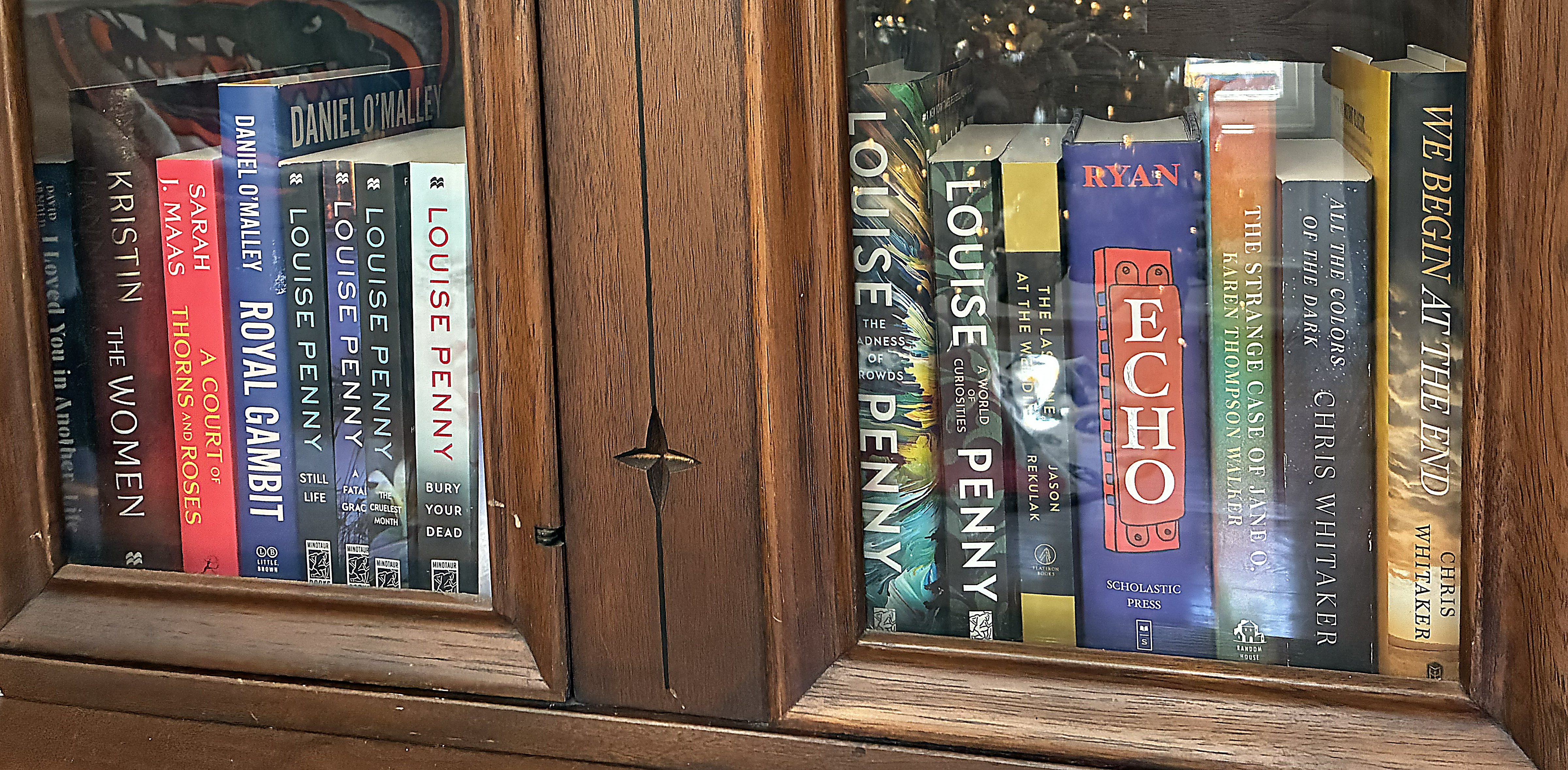
Just a few of my TBRs

I’m excited to do anything in 2026, to be honest. Three weeks ago, I had cardio-thoracic surgery. No one expected that the solution to my problem would be the easiest that it could possibly be, as far as diagnosis, procedure, and recovery because multiple doctors, who were informed by multiple scans and tests, were unsure what they would find when they went in. I couldn’t envision life beyond the surgery, although I anticipated that one or two more surgeries would be necessary to solve my problem. The problem? It started with a spontaneously collapsed lung in March and was followed by a recurrent collapsed lung in July. Thankfully, when the surgeon went in, he found out exactly what was causing my lung to collapse and fixed things so that it should never happen again (fingers, toes, and eyes crossed). The first collapse happened exactly 10 days after my last post. In combination with a number of other unforeseen events (one of which happened this week), 2025 became quite a memorable year—also a year in which keeping up with this blog was the least of my concerns. I did, however, keep up with my reading better than in recent years. And that’s why we’re here.

I had a simple goal for 2025: to read more than I read in 2024. Granted, I read more in 2024 (29 books) than the year before, but since I only read 21 books in 2023, that’s not saying much. At the end of the day, I own a lot of books, people lend me a lot of books, and I find joy in buying a lot of books, but it’s hard to justify getting more when my TBR list doesn’t change much from year to year. And I want to be very clear: no matter what, I will always want more books. It’s my vice, people. But I did it in 2025—I started the year with the goal of reading 25 novels (nine of them carried forward from 2024), and I read 20 of my goal titles. In fact, I read all but one of the carried-forward-from-2024 books, and number nine is the book I’m currently reading, so take that, 2024 and 2025 lists! I also have a strategic plan, and that is to prioritize the five books I’m bringing from 2025 into 2026 (with one exception—more on that in a sec) before reading the rest of the list or getting sidetracked by other books. (This is where Ron Howard starts narrating my life and says, “She got sidetracked.”)

Sadly, part of why I was able to read more in 2025 is because I didn’t dedicate much time to writing. Even if I don’t write during the rest of the year, I usually participate in National Novel Writing Month in November, but the non-profit NaNoWriMo went down in flames for a number of reasons, including their confusing stance on AI (read: they didn’t require writers to prove that they hadn’t used AI, which turned off most of their supporters). I have mixed feelings about NaNoWriMo shutting down because my first experience with NaNoWriMo in 2013 was exhilarating. Although I never matched that level of success again, NaNoWriMo (and the couple times I participated in Camp NaNoWriMo) helped me feel like I was staying connected to my writer side, especially when work and grad school pushed writing to the side. But when there was no validation process last year, the whole experience felt cheapened, and I honestly breathed a sigh of relief this past November because, for the first time in over a decade, I didn’t feel the internal push to write 50,000 words in 30 days (or, alternatively, the internal guilt for not doing it). I certainly hope I’m not done writing, but that extra time this year allowed me to squeeze in extra titles toward the end. And here they are in chronological order (* indicates books that weren’t on the original list):

  1. Rule of Wolves (King of Scars #2) by Leigh Bardugo
  2. Dark Age (Red Rising Saga #5) by Pierce Brown
  3. Light Bringer (Red Rising Saga #6) by Pierce Brown
  4. A Wish in the Dark by Christina Soontornvat
  5. Fourth Wing (The Empyrean #1) by Rebecca Yarros
  6. Iron Flame (The Empyrean #2) by Rebecca Yarros
  7. Onyx Storm (The Empyrean #3) by Rebecca Yarros*
  8. Sunrise on the Reaping (The Hunger Games #0.5) by Suzanne Collins
  9. Wild River (The Wild #2) by Rodman Philbrick
  10. Solimar: The Sword of Monarchs by Pam Munoz Ryan
  11. Took by Mary Downing Hahn*
  12. The Little Prince by Antoine de Saint-Expuréry*
  13. The Fire, the Water, and Maudie McGinn by Sally J. Pla*
  14. The Lost Year by Katherine Marsh*
  15. The Dearly Beloved by Cara Wall*
  16. When Sea Becomes Sky by Gillian McDunn*
  17. Murtagh (The Inheritance Cycle #5) by Christopher Paolini
  18. Simon Sort of Says by Erin Bow*
  19. The One (Dark Future #1) by John Marrs
  20. Olivetti by Allie Millington*
  21. The Cuckoo’s Calling (Cormoran Strike #1) by Robert Galbraith
  22. The Silkworm (Cormoran Strike #2) by Robert Galbraith
  23. The Storied Life of A.J. Fikry by Gabrielle Zevin*
  24. Career of Evil (Cormoran Strike #3) by Robert Galbraith
  25. Lethal White (Cormoran Strike #4) by Robert Galbraith
  26. Troubled Blood (Cormoran Strike #5) by Robert Galbraith
  27. The Ink Black Heart (Cormoran Strike #6) by Robert Galbraith
  28. The Running Grave (Cormoran Strike #7) by Robert Galbraith
  29. The Hallmarked Man (Cormoran Strike #8) by Robert Galbraith
  30. The Warm Hands of Ghosts by Katherine Arden*
  31. The Rook (The Checquy Files #1) by Daniel O’Malley
  32. Stiletto (The Checquy Files #2) by Daniel O’Malley

Not on the above list is the Bible (English Standard Version), which I read in 364 days. This was accompanied by a year-long devotional that a friend gave me last Christmas. To be honest, I wasn’t sure if I would do it because I didn’t think I could keep up with the readings (given my track record). But on January first last year, I dove in, and I am very proud of myself for making it to the finish line. I did use the audio version for many of the more difficult readings. (Not sure how to pronounce that jumble of letters? Let the audio guy do it!) I also read a book in relation to (but not required for) my job as a literacy specialist, but given that I only agreed with about half of it, I won’t be recommending it here.

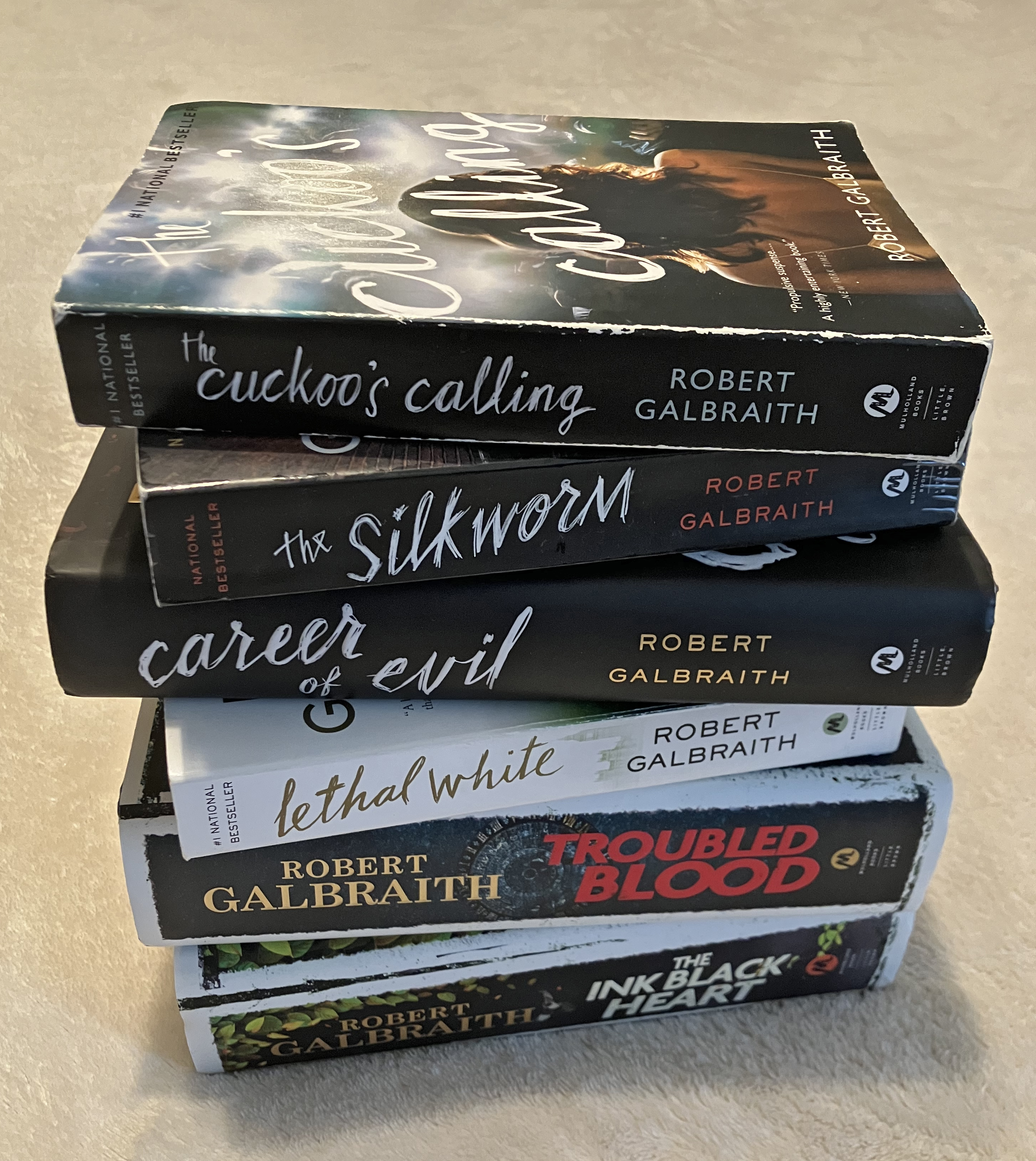
Of the 32 books listed above, my top recommendation is the entirety of the Cormoran Strike series (which Robert Galbraith, aka J.K. Rowling has not finished writing yet). This is detective fiction, but if you’re thinking Miss Marple, think again. My husband was a detective for years, and a very good one, but he hasn’t figured whodunit in any of these books yet. Murder mysteries were my first fiction love, way back in 1996. Yes, I read plenty of books before then, but when I discovered Agatha Christie, I officially became book crazy, and I haven’t recovered since. I won’t say that if you love Harry Potter, you’ll love these—do not do J.K. Rowling the disservice of stuffing her into a magical young adult box. She is the most brilliant writer I’ve ever read (just my humble opinion). She grabs you from The Cuckoo’s Calling and builds on the realistic, historically correct British world of Cormoran Strike from there. They’re amazing mysteries, but the writing also reflects a good understanding of people and what makes them tick.

Another one of my loves is kidlit, and my school’s librarian hooked me up, yet again. Every single one of the titles I borrowed was amazing, so I highly recommend them if you have an upper elementary/middle school kid in your life or if you just love to read great books. The Fire, the Water, and Maudie McGinn is about an autistic girl (narrated first person), and it got me right in the feels. The Lost Year was a book that all our 6th Graders had to read, and it addresses the cover up of a devastating famine that happened in Ukraine in the 1930s. Not only is it a great read for historical purposes, but the ending—wow. When Sea Becomes Sky was another gut punch at the end and also a fun sibling adventure. Simon Sort of Says does a fine job of dealing with pre-adolescent PTSD without getting political or hitting you over the head with it. The narrator’s sense of humor provides a much-needed counterpoint to the heaviness of the subject matter. Thomas read it and enjoyed it as much as I did, and now Ian is reading it. Lastly, Olivetti is narrated by… a typewriter. Yep. And deals with how families can be affected by disease. Here’s the thing about good kidlit: done right, it addresses issues that kids can identify with in an authentic way. By this, I mean that kids can read these books without feeling like they’re being taught a moral or that they’re supposed to learn something. Kids enjoy them for their great storytelling, and adults enjoy that aspect, too, while understanding the full impact of the sensitive subject matter handled between those pages.

Thomas and I are fortunate to have friends who love to read as much as we do. One of the reasons I have such an extensive personal library is because I love sharing books that I’ve enjoyed (I may have mentioned that before). I borrowed and read six books from one such friend in 2025, and I want to highlight two in particular, The Dearly Beloved and The Storied Life of A.J. Fikry. These two deserve a chef’s kiss, and for completely different reasons. Thomas read The Dearly Beloved first and was interested to see what I would think about it. This book is about the intertwined lives of two pastors, but I hesitate to call it a Christian book. Is there Christianity in it? Yes. But at the heart, the more important thing is that this author gets life. Maybe it’s cliché, but this book made me feel heard, validated, whatever you want to call it. There were so many parts that resonated with me. Highly recommend. And A.J. Fikry was an interesting little book with some twists that really surprised me. It’s also a great book for book lovers—the main character owns a bookstore. I had Thomas read it, and he was also pleasantly surprised. And almost as soon as he finished, a different friend lent him Tomorrow, and Tomorrow, and Tomorrow, which is by the same author. Thomas has read it and gives it his stamp of approval. You’ll see it on this year’s book list.

As for The Empyrean series, yes, I got on that bandwagon. Thanks to a friend clueing me in ahead of time, I knew better than to mistake it for YA, even though it shared some young adult themes. Said a different way: I would let my own teenagers read a lot of other adult novels before these. It seems to assume that, for younger adults (if not teenagers) to want to read a book, it must include violence, foul language, and sex. Okay, fine. If they’re all so shallow (which I don’t believe), can’t we dress it up in better prose, style, and literary devices? The nougat center of this story is unique and compelling but enrobed in a layer of casualness around people biting it that is enrobed in an equally casual we-might-die-tomorrow-so-let’s-get-freaky-tonight outer shell. There are no clever turns of phrase, challenging vocabulary, or jaunty witticisms. And some lines are so cringey as to make me mentally gag: “I shatter.” Give me a break. Never has anyone ever shattered. I know it’s metaphorical, but also, who has ever thought, in the heat of the moment, “I shatter”? With that said, I did mention that the story is unique and compelling, didn’t I? I really have no idea where it’s going, so even though I’m not wild about how it’s being told, I am curious enough about what will happen in the next installment that I’ll probably check it out. I reserve the right to read books that I’ve semi-panned.

The one book on my list that is a definite no (and has already been turned in for credit at one of my favorite used bookstores) is The One. It was one of those craft-paper-wrapped, date-with-a-book purchases. And it’s made me shy away from ever buying one of those again (as alluring as the mystery of it may seem). The premise of this book is interesting: what if every person could be genetically matched to “the one,” their soulmate? Some of the writing is humorous, but it’s the first in a series of what seems to be a cautionary tale that I don’t need to be told (I felt the same way about The Circle when I read it years ago).

Lastly, I read The Rook in 2023, another book loan from my friend mentioned above. I knew I wanted to continue the series as soon as I finished it—it’s kind of a mash-up of X-Men and the Ministry of Magic with a Douglas Adams-ian sense of humor. In 2024, I planned to read the sequel, Stiletto, and the threequel, Blitz, but I didn’t acquire either until 2025—whoops. By then, I knew I wouldn’t remember the finer details of The Rook, so I went ahead and bought it, too. I was too deep into rereading Cormoran Strike one through seven, followed by the newly published eighth installment, The Hallmarked Man, to get all three of these books in by the end of the year. And guess what I found out when my planning my 2026 list? The fourth book, Royal Gambit, was recently published, so that’s the one book I’m planning to read early on before I tackle the leftovers from 2025 (or get distracted by something off-list).

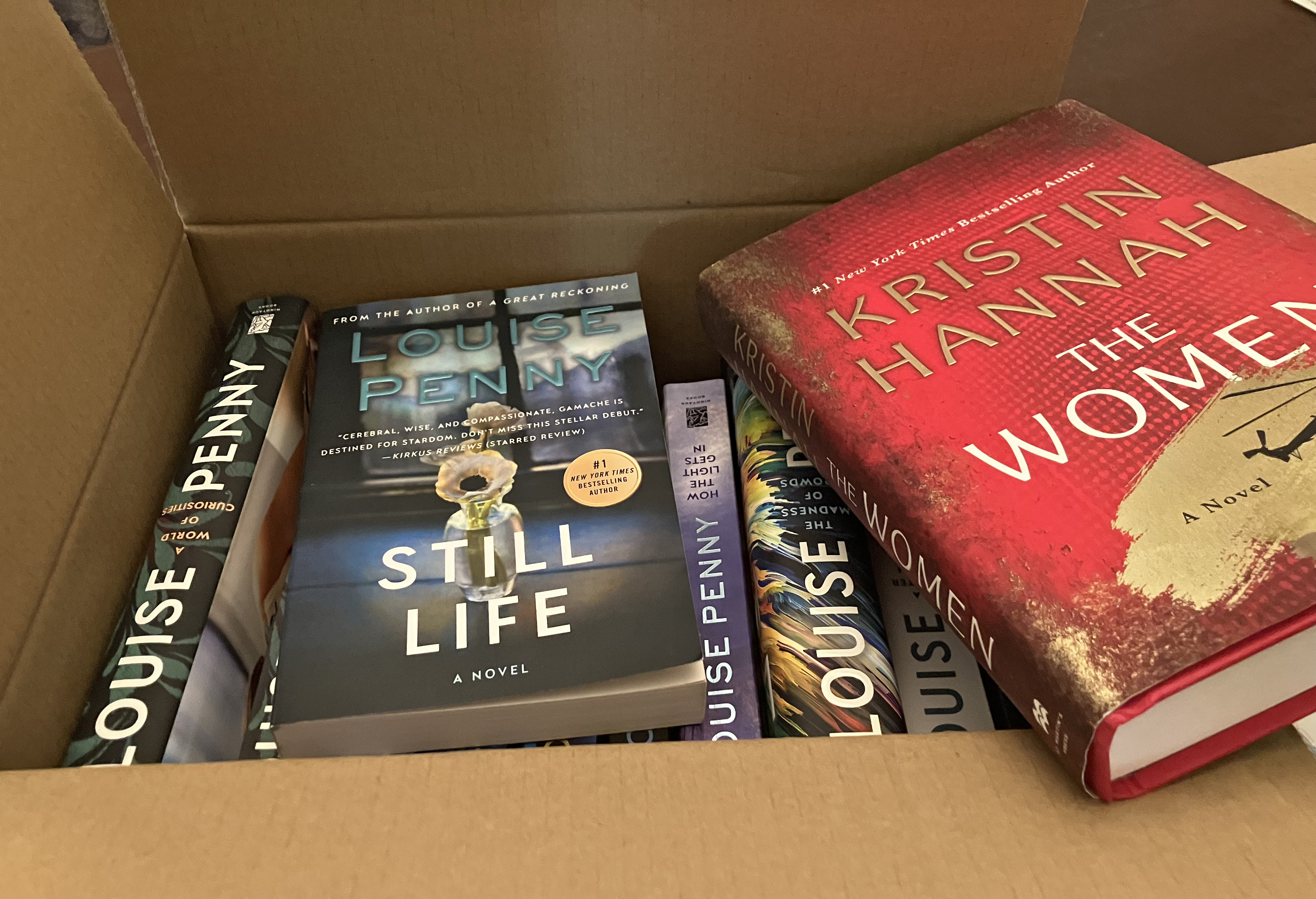
If you’re still hanging in there, my 2026 list contains many new books, thanks to contributions and recommendations from a few friends and some last-minute buys. In fact, the only repeat on the list is the Harry Potter series, which I haven’t read since 2019—yikes. A whole pandemic has happened since then. It’s time. You might have noticed a lot of Louise Penny books in my TBR shelf photo and wonder why I’m only listing one title. Penny is a complete unknown—these books were donated by good friends downsizing their library—so I am not going to commit to reading more than one before I know what I’m getting myself into. Maybe I’ll love them, and then—sidetrack. I’m also listing Corrie ten Boom’s autobiography, which belongs to Peter. He read it recently and then placed on my desk for me to read. (Even though I miss reading to little Peter and Ian, I am so happy to be trading with and recommending book to them.) One last minute addition that gives me immense joy is Neal Shusterman’s Break to You. I read Challenger Deep years ago on the recommendation of my cousin-in-law Julie, who became friends with Shusterman through a FAME (Florida Association for Media in Education) Conference. Julie is one of the librarians in the 2025 documentary The Librarians (which has its Florida debut this month), and she is the first person listed in Shusterman’s dedication in Break to You—of course I needed my own copy! Above all others, I will make this title a priority after finishing the books I’m bringing forward from 2025. And if, by some miracle I finish everything else on the list, will read the ancient behemoth Don Quixote. Since that I haven’t gotten through an entire year’s list in I don’t know how long (although it has happened before), I think I’ll be realistic and save it for 2027. (It’s Thomas’s book, anyway—he has to tackle it first.) With all that in mind, here are the books (alpha by author) that I hope to read in 2026:

  1. I Loved You in Another Life by David Arnold
  2. World War Z: An Oral History of the Zombie War by Max Brooks
  3. The Women by Kristin Hannah
  4. Demon Copperhead by Barbara Kingsolver
  5. A Court of Thorns and Roses (A Court of Thorns and Roses #1) by Sarah J. Maas
  6. Blitz (The Checquy Files #3) by Daniel O’Malley
  7. Royal Gambit (The Checquy Files #4) by Daniel O’Malley
  8. Still Life (Chief Inspector Armand Gamache #1) by Louise Penny
  9. The Last One at the Wedding by Jason Rekulak
  10. Harry Potter and the Philosopher’s Stone (Harry Potter #1) by J.K. Rowling
  11. Harry Potter and the Chamber of Secrets (Harry Potter #2) by J.K. Rowling
  12. Harry Potter and the Prisoner of Azkaban (Harry Potter #3) by J.K. Rowling
  13. Harry Potter and the Goblet of Fire (Harry Potter #4) by J.K. Rowling
  14. Harry Potter and the Order of the Phoenix (Harry Potter #5) by J.K. Rowling
  15. Harry Potter and the Half-Blood Prince (Harry Potter #6) by J.K. Rowling
  16. Harry Potter and the Deathly Hallows (Harry Potter #7) by J.K. Rowling
  17. Echo by Pam Munoz Ryan
  18. Mistborn: The Final Empire (Mistborn #1) by Brandon Sanderson
  19. The Well of Ascension (Mistborn #2) by Brandon Sanderson
  20. The Hero of Ages (Mistborn #3) by Brandon Sanderson
  21. Break to You by Neal Shusterman
  22. The Hiding Place: The Triumphant True Story of Corrie Ten Boom by Corrie ten Boom
  23. The Strange Case of Jane O. by Karen Thompson Walker
  24. All the Colors of the Dark by Chris Whitaker
  25. We Begin at the End by Chris Whitaker
  26. One of Our Kind by Nicola Yoon
  27. Tomorrow, and Tomorrow, and Tomorrow by Gabrielle Zevin

Time to go—I have some reading to do!

Please Let Me Read More in 2025

Shelf-Worthy Books?

Despite the title, I did read more in 2024 than in 2023. Still, I wish I’d been able to read more the last couple months of the year. Participating in NaNoWriMo and all the usual Christmas shenanigans gave me very little time to read—sometimes only several pages a day. I don’t think anyone who knows me will be surprised that I deviated from my planned list a few times. When family members or friends lend me books, I read them. That’s how I came by three series—All SoulsThe Kane Chronicles, and Schools of Dune—all of which I finally read in 2024 (two had been on my list since 2022). I also borrowed the King of Scars duology, which I hoped to finish in November, but I barely finished the first book by Christmas and am currently reading the second.

I always expect to deviate from my list when it comes to my students; I just don’t know which titles I’ll be reading with them. In 2024, this included Fantastic Mr. Fox and Charlotte’s Web, to name a couple. My school’s librarian also understands my love of all things kidlit and occasionally loads me up, so I read several unplanned books at the end of the 2023-24 school year (titles such as A Monster Like Me and Dead Wednesday). While I, sadly, no longer read aloud to my sons, the younger one got into the Underland Chronicles last spring and insisted I read them. I’d read the first book, Gregor the Overlander, in 2007, and with his encouragement, I finished the series 17 years later.

The only book that I read in 2024 that was a real stinker was A Psalm for the Wild-Built. It was a book I received in a book exchange from a total stranger, which is always a risk, but it was on my list, and I was determined to choke it down and get it over with. On the other hand, Wonder, which I read with a 4th Grade book club, was a delightful surprise.

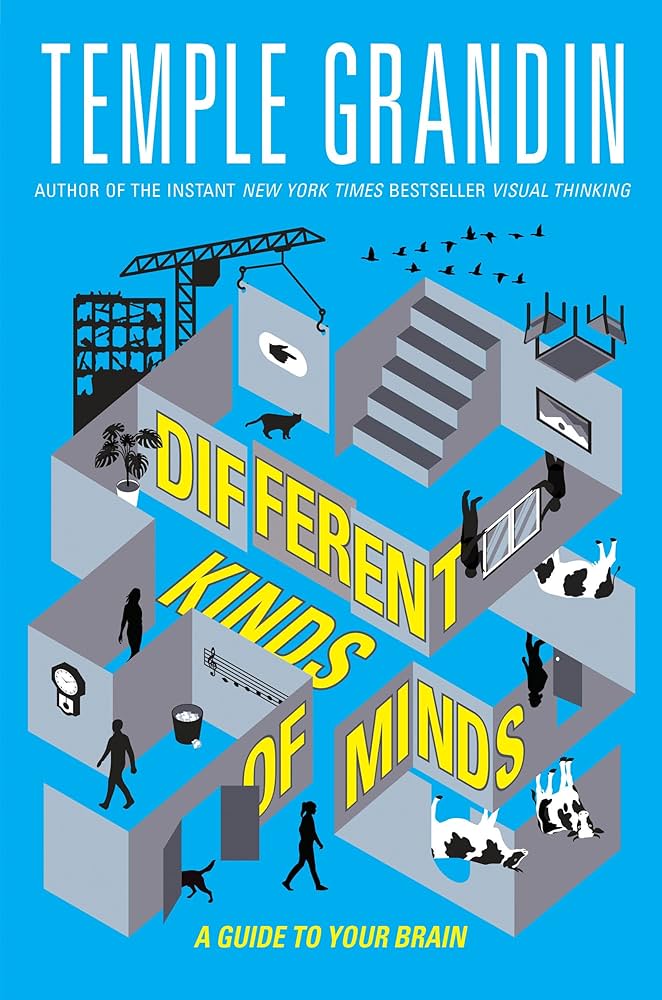
I also have a couple non-fiction titles that I’m including this year. I don’t always list my non-fiction, but these were ones I truly enjoyed and believe they are accessible to many readers. In fact, Thomas and I both read and enjoyed these books, Tuesdays with Morrie (which I’d always assumed was fiction before reading it) and Different Kind of Minds (check out my review of it here).

In 2024, my book list included 25 titles. Although I only read 16 of the books I planned to read, I read 29 books in all, which I consider a win. Here they are, in the order in which I read them (* indicates the unplanned titles):

  1. A Discovery of Witches (All Souls Trilogy #1) by Deborah Harkness
  2. Shadow of Night (All Souls Trilogy #2) by Deborah Harkness
  3. Wonder by R.J. Palacio*
  4. The Book of Life (All Souls Trilogy #3) by Deborah Harkness
  5. The Red Pyramid (The Kane Chronicles #1) by Rick Riordan
  6. The Throne of Fire (The Kane Chronicles #2) by Rick Riordan
  7. The Serpent’s Shadow (The Kane Chronicles #3) by Rick Riordan
  8. Gregor the Overlander (Underland Chronicles #1) by Suzanne Collins*
  9. Gregor and the Prophecy of Bane (Underland Chronicles #2) by Suzanne Collins*
  10. Gregor and the Curse of the Warmbloods (Underland Chronicles #3) by Suzanne Collins*
  11. Gregor and the Marks of Secret (Underland Chronicles #4) by Suzanne Collins*
  12. Gregor and the Code of Claw (Underland Chronicles #5) by Suzanne Collins*
  13. New Dragon City by Mari Mancusi*
  14. Tuesdays with Morrie by Mitch Albom
  15. A Monster Like Me by Wendy S. Swore*
  16. Dead Wednesday by Jerry Spinelli*
  17. A Psalm for the Wild-Built (Monk & Robot #1) by Becky Chambers
  18. Fantastic Mr. Fox by Roald Dahl*
  19. Fractal Noise (Fractalverse #0) by Christopher Paolini
  20. Sisterhood of Dune (Schools of Dune #1) by Brian Herbert and Kevin J. Anderson
  21. Mentats of Dune (Schools of Dune #2) by Brian Herbert and Kevin J. Anderson
  22. Charlotte’s Web by E.B. White*
  23. Navigators of Dune (Schools of Dune #3) by Brian Herbert and Kevin J. Anderson
  24. Red Rising (Red Rising Saga #1) by Pierce Brown
  25. Golden Son (Red Rising Saga #2) by Pierce Brown
  26. Morning Star (Red Rising Saga #3) by Pierce Brown
  27. Different Kinds of Minds by Temple Grandin*
  28. King of Scars (King of Scars #1) by Leigh Bardugo*
  29. Iron Gold (Red Rising Saga #4) by Pierce Brown

In 2024, I said I would prioritize the books that I didn’t read in previous years, and I was mostly successful. I still need to read Pierce Brown’s Dark Age and Light Bringer to finish his Red Rising series, and then it will be on to the seven books left over from 2024. Something that was missing in 2024 was a real page-turner that made me want to prioritize reading. That’s not to say that I didn’t read some excellent books, but they were all books that I could put down. This year, I plan to dive into the Cormoran Strike series again because they are penned by my favorite author (Robert Galbraith, AKA J.K. Rowling), and they are the best mystery novels I’ve ever read. AND *drum roll please* the title of book eight of the series has been released, The Hallmarked Man. Although there’s no publication date yet, I am crossing my fingers that it will happen in 2025, so onto the list it goes. I am also going to pick up Harry Potter again. It’s been over five years since I’ve read the series, and even though I’ve read the first four books 13 times (and five to 12 times for books five through seven), there is so much to love about these books, and it goes much deeper than an orphaned wizard. My 13-year-old recently breezed through the series over the period of a couple weeks. It was the first time he’d read all the books on his own, and his enthusiasm for them (plus a deep understanding that he didn’t have previously) has rekindled my interest.

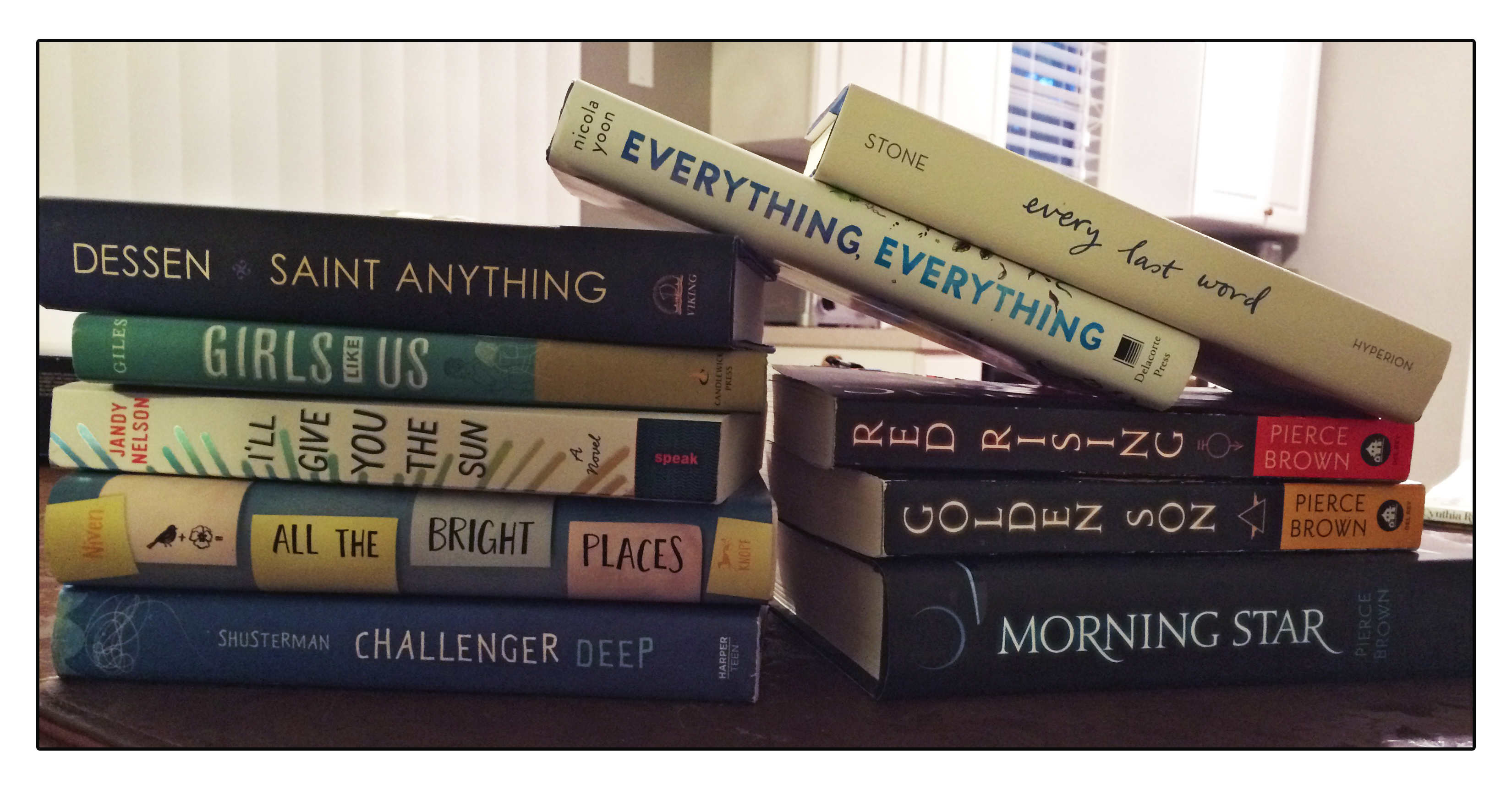
Rounding out my 2025 list are books that have yet to find a spot on my shelves. It used to be that, as soon as I acquired a new book, I would shelve it. Which usually meant a monumental shift of books, since I shelve all my fiction alphabetically by author across two large cabinets. Then one of my voracious-reader friends posted a picture of her unread books, which she keeps on a separate bookshelf. This, I realized, would not only keep the books I have yet to read front and center, but it would also keep me from shelving books that are unknown and might not be shelf-worthy. These are the books in the photo featured at the top of this post. While I don’t have an extra bookshelf to spare, I do have a handy hearth that is empty most of the year, so that’s where those books will live until they’re read and shelved or… they meet some other fate. (Not pictured are books I have yet to acquire—The Rook Files—or books in my classroom library.) In a separate corner of the house altogether is a box of books (shown above) that was gifted to me on the last day of the year. While visiting friends on New Year’s Eve, I was invited to take what I wanted, so I did just that. I am not familiar with Louise Penny, but I’m told she writes mystery novels, so I’ll try the first one of the series and see where it goes from there. And if none of these books work out, I won’t have to rearrange the whole bookcase again.

With all of that in mind, here are the nine books I’m pulling forward from 2023 and 2024 plus 16 new ones that I might possibly read in 2025:

  1. Rule of Wolves (King of Scars #2) by Leigh Bardugo
  2. Dark Age (Red Rising Saga #5) by Pierce Brown
  3. Light Bringer (Red Rising Saga #6) by Pierce Brown
  4. The Cuckoo’s Calling (Cormoran Strike #1) by Robert Galbraith
  5. The Silkworm (Cormoran Strike #2) by Robert Galbraith
  6. Career of Evil (Cormoran Strike #3) by Robert Galbraith
  7. Lethal White (Cormoran Strike #4) by Robert Galbraith
  8. Troubled Blood (Cormoran Strike #5) by Robert Galbraith
  9. The Ink Black Heart (Cormoran Strike #6) by Robert Galbraith
  10. The Running Grave (Cormoran Strike #7) by Robert Galbraith
  11. The Hallmarked Man (Cormoran Strike #8) by Robert Galbraith
  12. The Women by Kristin Hannah
  13. A Court of Thorns and Roses (A Court of Thorns and Roses #1) by Sarah J. Maas
  14. The One by John Marrs
  15. The Rook (The Rook Files #1) by Daniel O’Malley
  16. Stiletto (The Rook Files #2) by Daniel O’Malley
  17. Blitz (The Rook Files #3) by Daniel O’Malley
  18. Murtagh (The Inheritance Cycle #5) by Christopher Paolini
  19. Still Life (Chief Inspector Armand Gamache #1) by Louise Penny
  20. Wild River (The Wild #2) by Rodman Philbrick
  21. Harry Potter and the Philosopher’s Stone (Harry Potter #1) by J.K. Rowling
  22. Solimar: The Sword of Monarchs by Pam Munoz Ryan
  23. A Wish in the Dark by Christina Soontornvat
  24. Fourth Wing (The Empyrean #1) by Rebecca Yarros
  25. Iron Flame (The Empyrean #2) by Rebecca Yarros

When I first started making this list in 2013, it was mainly to give me something to look forward to during the year, not something to chain me down. While I understand I have an obligation when I borrow books, I also want to enjoy what I read, so that’s the ultimate goal. May you find joy in reading (or whatever your creative outlet is) over the next 360-something days.

We’re Screening out Our Visual Thinkers

Earlier this year, my husband and I found ourselves in a little independent bookstore, and we did what I love to do in these establishments: we bought a book. (Note that it was just one book; I’m very proud of my restraint.) The book that caught our eyes—actually, the author who caught our eyes—was Temple Grandin. Years ago, we watched her eponymous movie (starring Claire Danes), and we knew that she is both brilliant and autistic. Our younger son is autistic, and we thought that Grandin’s Different Kinds of Minds would help us understand how he thinks. But how Ian thinks continues to be a bit of a puzzle because what Thomas and I discovered upon reading Different Kinds of Minds was a greater insight into the brain of our dyslexic son, Peter.

If you know me or have followed my educational posts, you’ve heard of Peter, and you might even know that I went back to grad school to help him and other struggling readers. I love reading so much that it broke my heart when Peter couldn’t learn his letters, much less blend them together to make actual words. I am now a reading specialist, certified to help students with dyslexia and other reading disabilities. For learners like Peter, the road to reading is blocked by dyslexia, but after much intervention, he was able to detour around this permanent roadblock so that, by the time he was a preadolescent, he could read a text aloud, and no one would know all the hard work that was going on in his brain to help the words flow freely. Still, though his reading sounds good now, he has to be extremely focused and has learned things about himself—such as that he needs to take notes and engage in discussion—in order to retain and comprehend what he reads. It’s tedious and by no means instantaneous; it makes reading even a short text a chore. Give him a graphic novel, photographs, charts, or videos, though, and information becomes much more accessible.

There are a couple different deficits that could affect a dyslexic person. One is a deficit in rapid naming (for example, showing them a series of easily identifiable shapes, which they know but have difficulty naming quickly). The second deficit is phonological in nature, which could include the inability to match letter sounds (phonemes) to their corresponding letter shapes (graphemes) or the inability to rhyme. A person with both of these deficits has double deficit dyslexia, and that’s Peter. Before we knew he had dyslexia, he was diagnosed with a working memory deficit, which unfortunately, has no permanent remediation. Testing also revealed that of the four kinds of learners, (visual, auditory, reading/writing, or kinesthetic), Peter was weakest in auditory, which is unusual; many dyslexic learners are auditorily adept, allowing them to memorize or at least easily comprehend what they hear. Not so for Peter. All of these put together make the American educational system a nightmare for him to negotiate. But it wasn’t until reading Temple Grandin’s book that I achieved a new level of clarity: not only are there different kinds of learners, but there are different kind of thinkers.

Grandin describes two kinds of thinkers, verbal and visual. The former “think more in words than in pictures,” are well-organized, have good executive functioning skills, and “learn best by reading books and listening” (p. 10). On the other hand, Grandin describes visual thinkers as those who “think in pictures more than words,” have messy backpacks and desktops but know exactly where to find things, excel at puzzles and chess, and “learn best from images, charts, and diagrams” (p. 11). She describes a verbal-to-visual spectrum, in which most people fall somewhere between these extremes. For Peter, though, and other visual thinkers like him, they are so far to the visual side that it is very difficult for them to succeed in a world built by and for verbal thinkers. Grandin provides an 18-question quiz that my whole family took. I was very surprised with my own results. If you answer 10 or more with “yes,” you are probably a visual thinker. Where do you fit?

Temple Grandin’s Visual Thinker Quiz from Different Kinds of Minds (pp. 38-39):

  1. Do you think mainly in pictures instead of words?
  2. Do you know things without being able to explain how or why?
  3. Do you solve problems in unusual ways?
  4. Do you have a vivid imagination?
  5. Do you remember what you see and forget what you hear?
  6. Are you terrible at spelling?
  7. Can you visualize objects from different perspectives?
  8. Do you have trouble organizing?
  9. Do you often lose track of time?
  10. Would you rather read a map than follow verbal directions?
  11. Do you remember how to get places you’ve visited only once?
  12. Is your handwriting slow and difficult for others to read?
  13. Can you feel what others are feeling?
  14. Are you musically, artistically, or mechanically inclined?
  15. Do you know more than others think you know?
  16. Do you hate speaking in front of a group?
  17. Did you feel smarter as you got older?
  18. Are you addicted to your computer?

For some of these questions, I wish I could ask what she means. Like #2, #15, and #17. I answered yes to all three. I suppose #2 refers to when you just “know” something (although I was a philosophy minor, so if I don’t know how or why, I tend to go to great lengths to figure out the answer and will create even longer explanations, like this very parenthetical aside). For #15, I know a lot of trivia and have a great memory for dates and names, a great skill to have in trivia games. But is that what the question is referring to? And for #17, I feel like pretty much everyone should be able to answer yes to this, so it doesn’t seem like it should count. Even without these, I answered “yes” to 11. The only ones that got a “no”: #1, I think in both words and pictures equally (and often simultaneously—my life is like a movie that I narrate in my head as I live it—often with a soundtrack that I may or may not be singing out loud); #6, I’m an excellent speller; #8, I’m an even better organizer (my super power, if you will); and #12, I have good, legible handwriting. Although I answered #18 with a “yes,” I suppose it may not count because, although my family would definitely say I’m addicted to my computer, what I’m usually working on is either a spreadsheet or a word document. But even if you don’t count that or #2, #15, and #17, that’s 10 with a “yes” answer. I was shocked. According to Grandin’s definition, I fit in with verbal thinkers because, hello, I’m verbose and write much better than I speak (BIG “YES” to #16). I also did very well in school and on tests, although I will forever hate standardized testing. I was not surprised that my husband was the least visual thinker (he answered “yes” to eight), and Ian had the next most, with 12. Peter, however, only answered “no” to one. He is almost entirely visual. And our schools are doing their best to hammer my visual boy into a verbal-shaped hole.

With her book and much of her life’s work, Grandin’s “goal is to get hands-on education back into schools so that we don’t screen out the people we need” (p. 7). Remember home-ec? Shop? They were a thing of the past by the time I got to high school. Although I live in a county that has some rural areas that still offer 4-H programs, not all students have opportunities like this. And who cares if you don’t want to be a farmer or rancher when you grow up? I think these are valuable things to learn, just to have an appreciation of them, if nothing else. I am a proponent of a well-rounded education, but the way our school system is nowadays, it shows what it values by testing students on the core subjects, period. And regarding standardized tests, if “the student doesn’t fit the mold? Too bad” (Grandin, p. 56).

This is a shame for people whose minds work in pictures instead of words. Who are these people? Grandin has a pet name for them that I love. She calls them “the clever engineers,” and they include artists, designers, inventors, electricians, architects, plumbers, and more (p. 7). Want some examples of real people? Think Steve Jobs, Albert Einstein, and Thomas Edison. Where would we be without these innovators? Peter also falls in this category of thinker. For years, we have trusted him to eye a space and tell us what should go where. For fun, he built our previous house in Minecraft. He’s in an architectural and engineering club in which they sometimes take on different challenges, and when the students were told to make a cantilever out of several pieces of paper, tape, and a paperclip, he was the only student to successfully MacGyver one out of the materials given. Yet he struggles with every midterm and final exam. He bombed both the ACT and SAT. If he has all the skills to become an architect but can’t pass the test to get into the college or university, what recourse does he have? Life skills seem to have no merit anymore. Grandin nails it when she writes, “It’s clear that doing well on tests can get you into good colleges; it’s not clear that doing well on tests leads to success in life” (p. 59).

At the elementary school where I teach, we strive to differentiate because we understand that there are as many types of learners as there are students in the classroom. At a professional development session a few years ago, our administration gave the faculty a group task that got us up and moving (which is great for our ADHD learners) and also allowed us to take on the tasks that spoke to our differing skill sets. At the end of it, everyone agreed that it was a great exercise that would work well with our students. One of my colleagues was worried, though—how would we assess their learning? And that’s the problem: there is so much emphasis on assessing that we lose all the great lessons learned in the process—including failure, which equals growth. I have no problem assessing skills to guide instruction, but I wish we would throw out letter grades. Yet, to keep our accreditation, to keep our doors open, we have to prove that our students are being taught and retaining certain skills. What is the answer?

First, I think that, if we say we honor “diversity” and “inclusion,” then we need to recognize that diversity goes much deeper than what we can see, and we need to include those who think differently than the test-writers. It has to do with what we can do and how we think, as well as what we bring from our individual experiences and cultures. Both of my kids are what we call “neurodiverse,” but even so, they are each differently neurodiverse, even though they have the same background and genetic makeup.

Second, for kids like Peter, who have artistic leanings but might get screened out of certain higher learning programs—which also means getting screened out of a career at which he could excel—we need more options. One option that Grandin touts is that of the apprenticeship, which is dying out in America. She writes that “we are facing an unprecedented skills gap. European and Asian countries have trained and encouraged their clever engineers. We have screened ours out” (p. 78). And if college degrees are still a requirement for such careers, then apprenticeships, internships, and experience should count toward college credit.

Lastly, more colleges—no, all colleges—need to quit requiring testing for acceptance. Does this make more work for the committees that decide who to admit and who to decline? Absolutely. But does it guarantee a fairer process? Yes. We have a friend who is an engineer, but he did so poorly on the math section of his SAT that the last college on his application list was the only one that would accept him, and even after entering their program, the academic rigors almost made him quit. Thank goodness he didn’t because he has had an amazing career and is very successful. His story gives me hope for Peter and learners like him, but… I wish that it didn’t have to be his story. How many others like him gave up and aren’t following their passion? I wish everyone’s story fit their learning profile and not what our school system decided to value. If you’re good at taking tests, hey, I am, too. But if not, you should be able to prove your knowledge some other way.

Grandin’s book covers many more issues, including parenting, a whole chapter on animals and how they think and feel, and the importance of different kinds of thinkers working in collaboration. I highly recommend it. (It’s also written for young readers, so it’s not full of dense jargon.) I bet you’ll start to identify visual thinkers in your life. The more we know about them and how they think, the more we can advocate for them and for changes that will help them have a positive educational experience. When our visual thinkers thrive, innovations happen, art and design are created, and we have outside-the-box problem solvers who can come to the rescue when there isn’t an instructional manual available.


Check out my Teachers Pay Teachers store for instructional videos and resources, Mrs C Loves to Read

Meet the 2024 Book List, Same as the 2023 Book List

Now that I have you thinking I was a total slacker in 2023, it’s really not as bad as my title suggests. I did read some of my book list last year. And now is the time when I lay out all my excuses for why I didn’t come anywhere close to reading my list of 30 titles. *cracks knuckles*

First, let’s tackle the elephant in the room, which is that I always veer off the path to read books that weren’t on my original list. There was a time when these books were the ones I read to my kids. Car rides were a favorite time to introduce them to series such as Harry PotterArtemis Fowl, and A Series of Unfortunate Events. The series that did me in was The Lord of the Rings. Reading elvish aloud is a different animal. That was two years ago. Now I have a kid who can drive himself, so we’re not always riding together. Plus, times have changed. When the four of us are riding somewhere together now, we’re more likely to be singing along with our extensive YouTube playlist. And that’s okay.

My side novels, as I like to think of them, have shifted to books that I read to keep up with my students. Because I teach kids with learning disabilities, it’s important to know firsthand exactly what happened in the books they read; when their comprehension takes a dive, I can help correct their misunderstandings. And I’ve really enjoyed some of these unplanned reading treasures. Although they pull me away from my list, they’re well worth it. Five of the seven unplanned books I read in 2023 fit this category.

One excuse down. Here’s another: In 2023, I struggled. Sometimes the struggle was because some of my books were just meh (I will not be returning to the Ship Breaker series). Sometimes the struggle was due to the length of the books and a lack of time. In July, our lives were turned upside down by an unexpected (but necessary) move in a horrible housing market. While I now believe that we ended up right where we were supposed to be, there was a lot of stress involved, a lot of sleepless nights (spent worrying, not reading), and up until a couple days before Christmas, we were still unpacking. The house projects promise to keep us busy for years to come. Oh, and before the move, we got chickens, so I can blame a lot of time evaporation on them, too.

Okay, that ended up being a whole list of excuses. I’m keeping on keeping on, but it’s slow. I’ve been reading my current book since late November, and sometimes I only manage five pages in a day. When your book has 700+ pages, it feels interminable. I could have devoted more time to reading this past week and squeezed in one last title, but instead, I chose to play games with my family, and I don’t regret it. After all, the books will always be waiting for me. (And, boy, do I have piles of books.)

Excuses delivered. Now it’s time to dive into the books. In 2023, my goal was to read 30 novels, and a few of them were doozies. (I did say it was ambitious right up front—the proof is here.) When it came right down to it, I only finished 22 books in 2023 (all but one were novels—the non-fiction title I read for work can be found on my Goodreads page). Only 14 of the books I read came from the original list of 30. Here they are, in the order in which I read them (* indicates where I deviated from my original list):

  1. Siege and Storm (The Shadow and Bone Trilogy #2) by Leigh Bardugo
  2. Ruin and Rising (The Shadow and Bone Trilogy #3) by Leigh Bardugo
  3. Carry Me Home by Janet Fox
  4. A Duet for Home by Karina Yan Glaser*
  5. Superstar by Mandy Davis*
  6. Stuck by Jennifer Swender*
  7. Written in My Own Heart’s Blood (Outlander #8) by Diana Gabaldon
  8. Go Tell the Bees That I Am Gone (Outlander #9) by Diana Gabaldon
  9. Instructions for Dancing by Nicola Yoon
  10. The Silkworm (Cormoran Strike #2) by Robert Galbraith
  11. Career of Evil (Cormoran Strike #3) by Robert Galbraith
  12. Lethal White (Cormoran Strike #4) by Robert Galbraith
  13. Troubled Blood (Cormoran Strike #5) by Robert Galbraith
  14. The Ink Black Heart (Cormoran Strike #6) by Robert Galbraith
  15. The Rook (The Rook Files #1) by Daniel O’Malley*
  16. Ship Breaker (Ship Breaker #1) by Paolo Bacigalupi
  17. The Drowned Cities (Ship Breaker #2) by Paolo Bacigalupi
  18. The BFG by Roald Dahl*
  19. Horns by Joe Hill
  20. The Running Grave (Cormoran Strike #7) by Robert Galbraith*
  21. Masterpiece by Elise Broach*

Of the titles I read, some favorites include everything by Robert Galbraith (aka J.K. Rowling), Superstar (a fantastic middle grade book about an autistic boy), and Instructions for Dancing (very different for Nicola Yoon but probably my favorite of her books).

In 2024, I will prioritize the 16 books that I wasn’t able to read in 2023, and I’ve added a few more because it’s me, and that’s what I do. Here’s the list (alpha by author):

  1. Tuesdays with Morrie by Mitch Albom
  2. Red Rising (Red Rising Saga #1) by Pierce Brown
  3. Golden Son (Red Rising Saga #2) by Pierce Brown
  4. Morning Star (Red Rising Saga #3) by Pierce Brown
  5. Iron Gold (Red Rising Saga #4) by Pierce Brown
  6. Dark Age (Red Rising Saga #5) by Pierce Brown
  7. Light Bringer (Red Rising Saga #6) by Pierce Brown
  8. A Psalm for the Wild-Built (Monk & Robot #1) by Becky Chambers
  9. A Discovery of Witches (All Souls Trilogy #1) by Deborah Harkness
  10. Shadow of Night (All Souls Trilogy #2) by Deborah Harkness
  11. The Book of Life (All Souls Trilogy #3) by Deborah Harkness
  12. Sisterhood of Dune (Schools of Dune #1) by Brian Herbert and Kevin J. Anderson
  13. Mentats of Dune (Schools of Dune #2) by Brian Herbert and Kevin J. Anderson
  14. Navigators of Dune (Schools of Dune #3) by Brian Herbert and Kevin J. Anderson
  15. The One by John Marrs
  16. Stiletto (The Rook Files #2) by Daniel O’Malley
  17. Blitz (The Rook Files #3) by Daniel O’Malley
  18. Fractal Noise (Fractalverse #2) by Christopher Paolini
  19. Murtagh (The Inheritance Cycle #5) by Christopher Paolini
  20. Wild River by Rodman Philbrick
  21. The Red Pyramid (The Kane Chronicles #1) by Rick Riordan
  22. The Throne of Fire (The Kane Chronicles #2) by Rick Riordan
  23. The Serpent’s Shadow (The Kane Chronicles #3) by Rick Riordan
  24. Solimar: The Sword of Monarchs by Pam Munoz Ryan
  25. A Wish in the Dark by Christina Soontornvat

This year’s list isn’t nearly as daunting as last year’s, so maybe I’ll finally reach my goal. If not, I’m still going to enjoy the journey. As a writing professor told me decades ago (sigh), the important thing is to always have an answer when someone asks what I’m reading, and that I can do.

Books I Might Actually Read in 2023

As usual, my 2022 book list got derailed. I mean, I even predicted it in my title (“My Totally Unrealistic 2022 Book List”), but a year ago, even I didn’t know that I would be taking a class that would require me to read more than one novel per week. I just thought I would have a hard time keeping up because a) I knew I wouldn’t have much time to read for pleasure because of grad school, and b) I had five Diana Gabaldon titles on the list, and it takes me weeks (if not months) to get through one of her books. So it comes as no surprise that I only read three of the Gabaldons. I have to space them out with other books just so I can feel like I accomplished something. And then there came the magical night sometime in the fall when I walked into a Barnes & Noble and was drawn to a new release that I didn’t even realize existed: Robert Galbraith’s The Ink Black Heart. Since I was in the middle of my multicultural lit course at the time, my husband read it first, and as soon as he finished it, he was adamant that I make it my top priority. Having just finished grad school, that’s what I decided to do. And because Galbraith (aka J.K. Rowling) is my favorite author, and murder mystery is my oldest fictional genre love, as soon as I finished The Ink Black Heart, I decided to return to Galbraith’s first book and re-read the series. If you love a good murder mystery/thriller, I highly recommend these books (and you will see all the titles below in my 2022 and 2023 lists).

Thanks to my lit course, I read more books in 2022 than originally planned. And thanks to finishing grad school and getting my life back, I now have a craving to read whatever I want whenever I want simply because that’s now an option. So yes, this year’s list is very ambitious, but also more do-able than my annual lists since 2019.

Before I present the lists, however, I want to take a second to talk about the aforementioned multicultural lit course. It was a class that was a requirement to graduate, but I am so glad that it was. A couple of the books were assigned (Gratz’s Grenade and Khorram’s Darius the Great Is Not Okay), but others were left up to the students to find on our own. I am grateful to work in an elementary school with a well-stocked media center, and our media specialist loaded me down with more books than I needed (but that I read anyway), and the winner that left me sobbing on the couch after everyone else went to bed was Kereen Getten’s If You Read This. Despite being overwhelmed by having to read more than a novel per week, I was introduced to books I would not have otherwise read, and it also immersed me in the literature that many of my students are reading. When I visited our school’s fall book fair, I did so with a different outlook than usual, and my 2023 list includes a middle grade title that I purchased there (Carry Me Home). By adding titles like this to my personal library, not only am I reading great books that I genuinely enjoy, but I am also in touch with what my students are reading.

My 2022 list included one title (“Randomize” by Andy Weir) that I did not realize is a short story. It’s available electronically only, and I just don’t have it in me to purchase an electronic short story. So I’m removing that from my list and hoping that he releases another actual novel soon. Of the remaining 19 titles from that list, I read 10 and added quite a few more (not even counting non-fiction—you can see those five titles on my Goodreads page). Here they are in the order I read them (* indicates the ones not from my original list):

  • 1. The Fiery Cross (Outlander #5) by Diana Gabaldon
  • 2. Yaqui Myths and Legends by Ruth Warner Giddings*
  • 3. Artemis by Andy Weir
  • 4. The Rim of the Prairie by Bess Streeter Aldrich*
  • 5. The Crown’s Game by Evelyn Skye*
  • 6. Ready Player One by Ernest Cline
  • 7. Ready Player Two by Ernest Cline
  • 8. I Am the Cheese by Robert Cormier*
  • 9. The Swarm (The Second Formic War #1) by Orson Scott Card
  • 10. The Crown’s Fate by Evelyn Skye*
  • 11. The Hive (The Second Formic War #2) by Orson Scott Card
  • 12. A Breath of Snow and Ashes (Outlander #6) by Diana Gabaldon
  • 13. The Christmas Pig by J.K. Rowling
  • 14. To Sleep in a Sea of Stars (Fractalverse #1) by Christopher Paolini
  • 15. Home of the Brave by Katherine Applegate*
  • 16. The Sun Is Also a Star by Nicola Yoon*
  • 17. Indian No More by Charlene Willing McManis and Traci Sorell*
  • 18. The Unsung Hero of Birdsong, USA by Brenda Woods*
  • 19. The Total Eclipse of Nestor Lopez by Adrianna Cueves*
  • 20. Grenade by Alan Gratz*
  • 21. If You Read This by Kereen Getten*
  • 22. Darius the Great Is Not Okay by Adib Khorram*
  • 23. The Year of the Dog by Grace Lin*
  • 24. Okay for Now by Gary D. Schmidt*
  • 25. An Echo in the Bone (Outlander #7) by Diana Gabaldon
  • 26. Ghost Boys by Jewell Parker Rhodes*
  • 27. Black Brother, Black Brother by Jewell Parker Rhodes*
  • 28. The Sweetest Sound by Sherri Winston*
  • 29. The Ink Black Heart (Cormoran Strike #6) by Robert Galbraith*
  • 30. Darius the Great Deserves Better by Adib Khorram*
  • 31. The Cuckoo’s Calling (Cormoran Strike #1) by Robert Galbraith*
  • 32. Shadow and Bone (The Shadow and Bone Trilogy #1) by Leigh Bardugo*

For the first time in I can’t remember how long, I did not receive a single book for Christmas—and I didn’t need to. I still have last year’s book from my husband to read (Go Tell the Bees That I Am Gone), as well as all the other books from my 2022 list, not to mention the other books I added to my collection last year. So here is that very ambitious list (alpha by author):

  • 1. Ship Breaker (Ship Breaker #1) by Paolo Bacigalupi
  • 2. The Drowned Cities (Ship Breaker #2) by Paolo Bacigalupi
  • 3. Siege and Storm (The Shadow and Bone Trilogy #2) by Leigh Bardugo
  • 4. Ruin and Rising (The Shadow and Bone Trilogy #3) by Leigh Bardugo
  • 5. Red Rising (Red Rising Saga #1) by Pierce Brown
  • 6. Golden Son (Red Rising Saga #2) by Pierce Brown
  • 7. Morning Star (Red Rising Saga #3) by Pierce Brown
  • 8. Iron Gold (Red Rising Saga #4) by Pierce Brown
  • 9. Dark Age (Red Rising Saga #5) by Pierce Brown
  • 10. Light Bringer (Red Rising Saga #6) by Pierce Brown
  • 11. Carry Me Home by Janet Fox
  • 12. Written in My Own Heart’s Blood (Outlander #8) by Diana Gabaldon
  • 13. Go Tell the Bees That I Am Gone (Outlander #9) by Diana Gabaldon
  • 14. The Silkworm (Cormoran Strike #2) by Robert Galbraith
  • 15. Career of Evil (Cormoran Strike #3) by Robert Galbraith
  • 16. Lethal White (Cormoran Strike #4) by Robert Galbraith
  • 17. Troubled Blood (Cormoran Strike #5) by Robert Galbraith
  • 18. The Ink Black Heart (Cormoran Strike #6) by Robert Galbraith
  • 19. A Discovery of Witches (All Souls Trilogy #1) by Deborah Harkness
  • 20. Shadow of Night (All Souls Trilogy #2) by Deborah Harkness
  • 21. The Book of Life (All Souls Trilogy #3) by Deborah Harkness
  • 22. Sisterhood of Dune (Schools of Dune #1) by Brian Herbert and Kevin J. Anderson
  • 23. Mentats of Dune (Schools of Dune #2) by Brian Herbert and Kevin J. Anderson
  • 24. Navigators of Dune (Schools of Dune #3) by Brian Herbert and Kevin J. Anderson
  • 25. Horns by Joe Hill
  • 26. Fractal Noise (Fractalverse #2) by Christopher Paolini
  • 27. The Red Pyramid (The Kane Chronicles #1) by Rick Riordan
  • 28. The Throne of Fire (The Kane Chronicles #2) by Rick Riordan
  • 29. The Serpent’s Shadow (The Kane Chronicles #3) by Rick Riordan
  • 30. Instructions for Dancing by Nicola Yoon

That’s it! Just a little reading list. Subject (definitely going) to change. Happy reading in 2023!

My Totally Unrealistic 2022 Book List

Book Purgatory, where books wait to be read… or not.

Every year when I post my book list, I have the opportunity to reflect on the previous year, the book list serving as a kind of visual soundtrack of my life. My 2021 post reminds me that I lost a dear friend on New Year’s Day and that books, more than ever, helped me escape into a world that didn’t contain that pain. Later in the year, I had my younger son to thank for Tolkien; he wanted to read The Lord of the Rings, but of course, I had to start with The Hobbit. I am grateful that my kids still let me read to them, and in this case, I read for the whole family because my husband had never read the series before. When I think about the vacations we took in 2021, I will remember reading those works of fiction to my guys. (As a side note, they are the most difficult books to read aloud that I have ever read; with a lack of helpful punctuation and copious Elvish, I was stumbling all over the place.) About halfway through last year’s book list, the pace slowed down regarding the number of books I read, marking the end of a comparatively relaxing stretch in which I was waiting to transfer to a new university. By the end of 2021, not only was I taking a heavier class load than ever, but I was also into the Outlander series, all the books of which are monsters (800 pages or more).

Reading and writing go hand in hand, and along with reading less, my writing has completely stalled. I can’t even say I’m suffering from writer’s block because I’m not trying to write—and haven’t in more than six months. I don’t feel guilty about not participating in NaNoWriMo because there’s no way I could have fit it in. Reading and writing voraciously will likely not be a part of my life again until I finish grad school (whenever that happens). Rather than getting upset by this reality, I’m choosing to think of this as my fallow time. Just as fields need to lie fallow periodically for the sake of the crops that will be grown there in future seasons, now is the time for my creative juices to enjoy an extended break. I will continue to read because that helps me stay sane; plus, having some fictional stimulation will keep me primed for when I can write again.

I hoped to read 25 works of fiction last year—and I did—but I instead of my detours adding to my list, they replaced some of the books that I am now shifting to my 2022 list. Here are the fiction titles I read in 2021 (* indicates books that were not on my original list):

  1.  A Reaper at the Gates (An Ember in the Ashes #3) by Sabaa Tahir
  2. The Ickabog by J.K. Rowling
  3. A Sky Beyond the Storm (An Ember in the Ashes #4) by Sabaa Tahir
  4. Troubled Blood (Cormoran Strike #5) by Robert Galbraith
  5. Water for Elephants by Sara Gruen
  6. Six of Crows (Six of Crows #1) by Leigh Bardugo
  7. Crooked Kingdom (Six of Crows #2) by Leigh Bardugo
  8. The Diabolic (The Diabolic #1) by S.J. Kincaid
  9. The Empress (The Diabolic #2) by S.J. Kincaid
  10. The Nemesis (The Diabolic #3) by S.J. Kincaid
  11. The Hobbit by J.R.R. Tolkien*
  12. The Starless Sea by Erin Morgenstern*
  13. Children of the Fleet (Fleet School #1) by Orson Scott Card
  14. Before We Were Yours by Lisa Wingate*
  15. Outlander (Outlander #1) by Diana Gabaldon
  16. Dragonfly in Amber (Outlander #2) by Diana Gabaldon
  17. The Fellowship of the Ring (The Lord of the Rings #1) by J.R.R. Tolkien*
  18. The Giver by Lois Lowry*
  19. Voyager (Outlander #3) by Diana Gabaldon
  20. Project Hail Mary by Andy Weir*
  21. The Creakers by Tom Fletcher*
  22. Drums of Autumn (Outlander #4) by Diana Gabaldon
  23. The Two Towers (The Lord of the Rings #2) by J.R.R. Tolkien*
  24. Dune (Dune Chronicles #1) by Frank Herbert
  25. The Return of the King (The Lord of the Rings #3) by J.R.R. Tolkien*

This year, I have no idea what books I’ll be reading aloud with my family, but I hope we continue this tradition. (I’m rooting for Harry Potter.) I also hope that my husband discovers a new book that he thinks is a must-read, like 2021’s Hail Mary. Yet again, this is a list that presumes a lot more free time than I actually have—and it’s not even complete. I always read at least 25 books in a year. I’m five short, so I’m looking for some must-reads. Check out the list below, and if you know of a book that you think I would love, please drop me a comment!

  1. The Swarm (The Second Formic War #1) by Orson Scott Card
  2. The Hive (The Second Formic War #2) by Orson Scott Card
  3. Ready Player One (Ready Player One #1) by Ernest Cline
  4. Ready Player Two (Ready Player One #2) by Ernest Cline
  5. The Fiery Cross (Outlander #5) by Diana Gabaldon
  6. A Breath of Snow and Ashes (Outlander #6) by Diana Gabaldon
  7. An Echo in the Bone (Outlander #7) by Diana Gabaldon
  8. Written in My Own Heart’s Blood (Outlander #8) by Diana Gabaldon
  9. Go Tell the Bees That I Am Gone (Outlander #9) by Diana Gabaldon
  10. A Discovery of Witches (All Souls Trilogy #1) by Deborah Harkness
  11. Shadow of Night (All Souls Trilogy #2) by Deborah Harkness
  12. The Book of Life (All Souls Trilogy #3) by Deborah Harkness
  13. Sisterhood of Dune (Schools of Dune #1) by Brian Herbert and Kevin J. Anderson
  14. Mentats of Dune (Schools of Dune #2) by Brian Herbert and Kevin J. Anderson
  15. Navigators of Dune (Schools of Dune #3) by Brian Herbert and Kevin J. Anderson
  16. To Sleep in a Sea of Stars by Christopher Paolini
  17. The Christmas Pig by J.K. Rowling
  18. Artemis by Andy Weir
  19. Randomize by Andy Weir
  20. Instructions for Dancing by Nicola Yoon

Reading Is Healing: My 2021 Book List

If you read my post from just after ringing in the new year, you know that my 2021 started with a melancholy tone. A dear friend was battling COVID-19, and I awoke to learn that his body had finally succumbed. He was the director of the community chorale of which I’ve been a member since the late 1990s. With coronavirus shutting down almost all things choral (because singers are considered super spreaders), all of our rehearsals and plans for performances stopped last March. Singing is one of my outlets, and I’ve been fortunate to be one of the few singers at my church most Sundays.

Fortunately, while singing is incredibly healing, it’s not my only outlet. I also love to read. Maybe that’s an understatement. I have to have something to read at all times—a healthy addiction?—and I also love to share what I read. (Which is why I started making this annual post however-many years ago.)

While 2020 took so much from everyone, it was a great year for me as far as reading goes. I read all the books from my 2020 book list, plus some. In fact, I re-read two different trilogies immediately after finishing them—sometimes it’s just hard to let books go. (Those trilogies are Lady Helen and His Fair Assassin. I read the first book of Lady Helen in 2019 but all the rest in 2020.)

Many of the other books on my list were ones that I read with my children. We finished A Series of Unfortunate Events, as planned. I also read The Hunger Games to them because they enjoy the movies, and Suzanne Collins recently published a prequel, The Ballad of Songbirds and Snakes. We finished all of those about a week ago.

If you’re one of my regular readers, you know that my elder son is dyslexic. Even before his diagnosis, it was my habit to read my favorite children’s books to him. (Maybe it was crazy, but I read the Harry Potter books to both kids in utero.) We often read his school novels together, and the format of virtual school last spring was particularly challenging for him. His entire grade level broke into a handful of book clubs, and the book he chose (okay, that I encouraged him to choose because I wanted to read it to him anyway) was Lois Lowry’s The Giver. A dystopian novel before that was even a genre, The Giver was new when I was a kid. Since then, Lowry has published three sequels. We finished reading the quartet after the book club was finished, and Peter really enjoyed them.

Two or three years ago, I discovered Usborne’s graphic novel classics (including titles such as HamletThe Hound of the BaskervillesJason and the ArgonautsAlice in Wonderland, and many others). Graphic novels are a great way for people with reading difficulties to access literature because the drawings provide so many contextual clues. Each time I got one for Peter, he devoured it. It became his habit to read one every night before bed. I can’t tell you the joy I feel from my son finding enthusiasm for books. Plus, he’s being introduced to classic stories without the barrier of archaic language (which can prove onerous even for the most fluent of readers).

Still, there are plenty of great books that aren’t graphic novels. Peter loves historical fiction, especially of the World War II era, so that’s why Salt to the Sea and The Book Thief are on the 2020 list. (Salt to the Sea is centered around the greatest maritime disaster in history, regarding loss of life. And no, it wasn’t the Titanic or Lusitania—check it out!) After we finished these, since Usborne hadn’t released a new graphic novel in a while, my husband let Peter borrow Maus and Maus II, graphic novels about some of the events of World War II. When he finished those, something different and wonderful happened: Peter asked if we could recommend any other good books.

We decided that a good first on-his-own novel was Nicola Yoon’s Everything, Everything. This book has a unique style, including short chapters and drawings throughout. These would help break up the text, making it less daunting. Plus, the language isn’t that difficult, except for humuhumunukunukuapua’a—I have yet to make it from one end of that word to other without needing a nap in the middle. We gave it to Peter, and he devoured it. Every time he finished a chapter, he would tell us about it. A common trait of dyslexics is poor working memory. He’s had to learn study skills particular to his learning style, which allow him to suss out the main idea and decide which details are important. Summarizing what he’s read—and sometimes having in-depth discussions about it—is Peter’s strategy to aid his reading comprehension. After Everything, Everything, he asked for a book Thomas had told him about, Ernest Cline’s Ready Player One. It was a much more challenging read, but Peter made it through and now considers it his favorite book. (There’s a recently published sequel—hope it lives up to the first one!) He’s currently reading Stephen King’s The Green Mile. For his birthday and Christmas, we gave him more novels—Ender’s Game and Jurassic Park. Peter is excited to have his own growing collection, and on more than one occasion, he’s said, “Now I see why you and Dad read all the time.” After catching him staying up late to read more times than I can count (my favorite form of rebellion), he’s learned to look ahead and see how long a chapter is before getting started because he has to complete a chapter in order to fully process and remember it. I don’t care what it takes—this kid is making reading a priority and enjoying it.

Okay, Sarah, what does this have to do with books you read in 2020? Nothing at all. These are books I didn’t read—because Peter read them himself! And more books I didn’t read: Harry Potter. When we finished A Series of Unfortunate Events, that’s what Ian wanted to read, but when I noticed one of his classmates reading the series, I told Ian it was time to read them on his own. So that’s what he’s doing now, and I’m proud of him, too. It’s a real joy to see my boys reading on their own and loving it.

So without further ado, here is the complete list of novels I read in 2020, ordered chronologically. Titles in red are the books that I either read a second time or were not on the original list.

  1. Where the Crawdads Sing by Delia Owens
  2. The Wide Window (A Series of Unfortunate Events, Book the Third) by Lemony Snicket
  3. The Dark Days Pact (Lady Helen #2) by Alison Goodman
  4. The Miserable Mill (A Series of Unfortunate Events, Book the Fourth) by Lemony Snicket
  5. The Dark Days Deceit (Lady Helen #3) by Alison Goodman
  6. The Austere Academy (A Series of Unfortunate Events, Book the Fifth) by Lemony Snicket
  7. Salt to the Sea by Ruta Sepetys
  8. The Dark Days Club (Lady Helen #1) by Alison Goodman
  9. The Ersatz Elevator (A Series of Unfortunate Events, Book the Sixth) by Lemony Snicket
  10. The Dark Days Pact (Lady Helen #2) by Alison Goodman
  11. The Vile Village (A Series of Unfortunate Events, Book the Seventh) by Lemony Snicket
  12. The Dark Days Deceit (Lady Helen #3) by Alison Goodman
  13. The Hostile Hospital (A Series of Unfortunate Events, Book the Eighth) by Lemony Snicket
  14. Why We Broke Up by Daniel Handler
  15. The Carnivorous Carnival (A Series of Unfortunate Events, Book the Ninth) by Lemony Snicket
  16. Earth Unaware (The First Formic War #1) by Orson Scott Card
  17. The Slippery Slope (A Series of Unfortunate Events, Book the Tenth) by Lemony Snicket
  18. The Giver (The Giver #1) by Lois Lowry
  19. The Grim Grotto (A Series of Unfortunate Events, Book the Eleventh) by Lemony Snicket
  20. Earth Afire (The First Formic War #2) by Orson Scott Card
  21. Earth Awakens (The First Formic War #3) by Orson Scott Card
  22. The Penultimate Peril (A Series of Unfortunate Events, Book the Twelfth) by Lemony Snicket
  23. The Book Thief by Marcus Zusak
  24. The Starless Sea by Erin Morgenstern
  25. The Night Circus by Erin Morgenstern
  26. The End (A Series of Unfortunate Events, Book the Thirteenth) by Lemony Snicket
  27. The Cuckoo’s Calling (Cormoran Strike #1) by Robert Galbraith
  28. Stormbreaker (Alex Rider #1) by Anthony Horowitz
  29. The Silkworm (Cormoran Strike #2) by Robert Galbraith
  30. Career of Evil (Cormoran Strike #3) by Robert Galbraith
  31. Lethal White (Cormoran Strike #4) by Robert Galbraith
  32. Gathering Blue (The Giver #2) by Lois Lowry
  33. Graceling (Graceling Realm #1) by Kristin Cashore
  34. Messenger (The Giver #3) by Lois Lowry
  35. Fire (Graceling Realm #2) by Kristin Cashore
  36. Bitterblue (Graceling Realm #3) by Kristin Cashore
  37. Grave Mercy (His Fair Assassin #1) by Robin LaFevers
  38. Dark Triumph (His Fair Assassin #2) by Robin LaFevers
  39. Mortal Heart (His Fair Assassin #3) by Robin LaFevers
  40. Son (The Giver #4) by Lois Lowry
  41. Grave Mercy (His Fair Assassin #1) by Robin LaFevers
  42. The Hunger Games (The Hunger Games #1) by Suzanne Collins
  43. Dark Triumph (His Fair Assassin #2) by Robin LaFevers
  44. Catching Fire (The Hunger Games #2) by Suzanne Collins
  45. Mortal Heart (His Fair Assassin #3) by Robin LaFevers
  46. Mockingjay (The Hunger Games #3) by Suzanne Collins
  47. The Tower of Nero (The Trials of Apollo #5) by Rick Riordan
  48. An Ember in the Ashes (An Ember in the Ashes #1) by Sabaa Tahir
  49. The Ballad of Songbirds and Snakes (The Hunger Games #0) by Suzanne Collins
  50. A Torch Against the Night (An Ember in the Ashes #2) by Sabaa Tahir

As you can see, 22 of the 50 books I read were unplanned. While I was worried that some of them might derail me from reaching my goal, I don’t regret reading them. (Okay, one exception—Stormbreaker, a school book for Peter that neither of us enjoyed.) When I saw that Erin Morgenstern had a new book, I had to get it, and The Starless Sea might be the best book I’ve ever read. Unless it’s The Night Circus. Yikes, she needs to get busy and write a bunch more.

Woo-Hoo! New Books for 2021

Now for 2021. I’m excited that some of my favorite authors have penned new books, some adding to ongoing series. That’s why I’m re-reading An Ember in the Ashes, the fourth book of which was recently published and is on this year’s list. There’s also a fifth novel in the Robert Galbraith (J.K. Rowling) Cormoran Strike series. Since I just re-read the first three books over the summer in order for the story to be fresh for the new-to-me fourth book, I don’t need to re-read those. J.K Rowling also wrote a new book, The Ickabog, for families during the COVID lockdown. It was originally an online publication, and she held an illustration competition. The whole thing was published with beautiful color illustrations from the winners, and I just started reading it with my family today. A few chapters in, I’m reminded why Rowling is one of my favorite authors.

Other titles of interest: Christopher Paolini (author of the Eragon books) released a new book, unrelated to The Inheritance Cycle. I read S.J. Kincaid’s The Diabolic in 2019 and am finally collecting the other books in that trilogy. Years ago, my dad lent us the books from the Ender’s Game series, including spin-offs. I plan to finish those (one of which I just got for him for Christmas, so I’m going to have to borrow that when he’s done with it). I also plan to re-read Dune because—hello! Have you seen that they’re re-doing the movie? And of course, I need to have it fresh so I can get peeved every time the movie takes creative license. Actually, I have high hopes. Please don’t screw it up, new movie! (So when my dad reads this, please let me borrow Dune again, too.) There are other books I’ll re-read, since the list would be sparse, otherwise. (Hoping Diana Gabaldon publishes Outlander #9 in 2021 or early enough in 2022 that I won’t forget everything from the first eight books.) As always, I expect there will be a lot of red on here when I post what I read a year from now.

Until then, here’s my jumping off place (alpha by author):

  1. Six of Crows (Six of Crows #1) by Leigh Bardugo
  2. Crooked Kingdom (Six of Crows #2) by Leigh Bardugo
  3. Children of the Fleet (Fleet School #1) by Orson Scott Card
  4. The Swarm (The Second Formic War #1) by Orson Scott Card
  5. The Hive (The Second Formic War #2) by Orson Scott Card
  6. Ready Player One (Ready Player One #1) by Ernest Cline
  7. Ready Player Two (Ready Player One #2) by Ernest Cline
  8. Outlander (Outlander #1) by Diana Gabaldon
  9. Dragonfly in Amber (Outlander #2) by Diana Gabaldon
  10. Voyager (Outlander #3) by Diana Gabaldon
  11. Drums of Autumn (Outlander #4) by Diana Gabaldon
  12. The Fiery Cross (Outlander #5) by Diana Gabaldon
  13. A Breath of Snow and Ashes (Outlander #6) by Diana Gabaldon
  14. An Echo in the Bone (Outlander #7) by Diana Gabaldon
  15. Written in My Own Heart’s Blood (Outlander #8) by Diana Gabaldon
  16. Troubled Blood (Cormoran Strike #5) by Robert Galbraith
  17. Water for Elephants by Sara Gruen
  18. Dune (Dune Chronicles #1) by Frank Herbert
  19. The Diabolic (The Diabolic #1) by S.J. Kincaid
  20. The Empress (The Diabolic #2) by S.J. Kincaid
  21. The Nemesis (The Diabolic #3) by S.J. Kincaid
  22. To Sleep in a Sea of Stars by Christopher Paolini
  23. The Ickabog by J.K. Rowling
  24. A Reaper at the Gates (An Ember in the Ashes #3) by Sabaa Tahir
  25. A Sky Beyond the Storm (An Ember in the Ashes #4) by Sabaa Tahir

If you know of a book that I should add, please let me know in the comments—I’m always looking for recommendations! Good reading in 2021.

What to Read in 2020…

I am pleased to say (and this doesn’t happen often), that I finished all the books from my 2019 book list. (Just finished the last two yesterday, but finished is finished!) I started grad school in August, and it really derailed my pleasure reading, but I anticipated this when I created my book list; I’d already finished most of my list before then. (I’m also happy to report that, out of all the books I read, only two disappointed, The Circle and The Girl In the Spider’s Web.)

Of the two books that I finished at the last minute, I didn’t even receive Rick Riordan’s The Trials of Apollo Book 4: The Tyrant’s Tomb until Christmas. And by “receive,” I mean that my husband and I each wanted the same books, so rather than each of us buying the same thing for the other, I bought them both, wrapped them, and stuck them under the tree for us. I didn’t even succumb to temptation and start reading before I wrapped them.

The other book that I finished yesterday was the last of the Artemis Fowl series, The Last Guardian. I read this series years ago and thought my pre-teen son would enjoy them. It’s taken a while to get through all eight books, but we enjoyed reading them together. He’s dyslexic and comprehends texts best when they’re read to him. Although he has an app that reads to him, I will continue reading with him as long as he lets me. He’s into World War II right now, so a couple novels on this year’s list are re-reads for me that I’m looking forward to introducing to Peter.

Another series I re-read this year was Harry Potter (the first four books of which I’ve now read 13 times). I read it to Peter when he was in the second grade, so now that Ian is in the second grade, it was his turn. We read the first three books in the Jim Kay illustrated format—they’re gorgeous. I knew that the boys would receive the fourth illustrated one for Christmas and asked Ian if he would like to wait to get it before we read on, but he couldn’t wait that long. Instead, we plowed through books four through seven, finishing before Christmas. His imagination is vivid enough that he had no trouble making it through them. (But we have the illustrated version of The Goblet of Fire now, and it’s spectacular.)

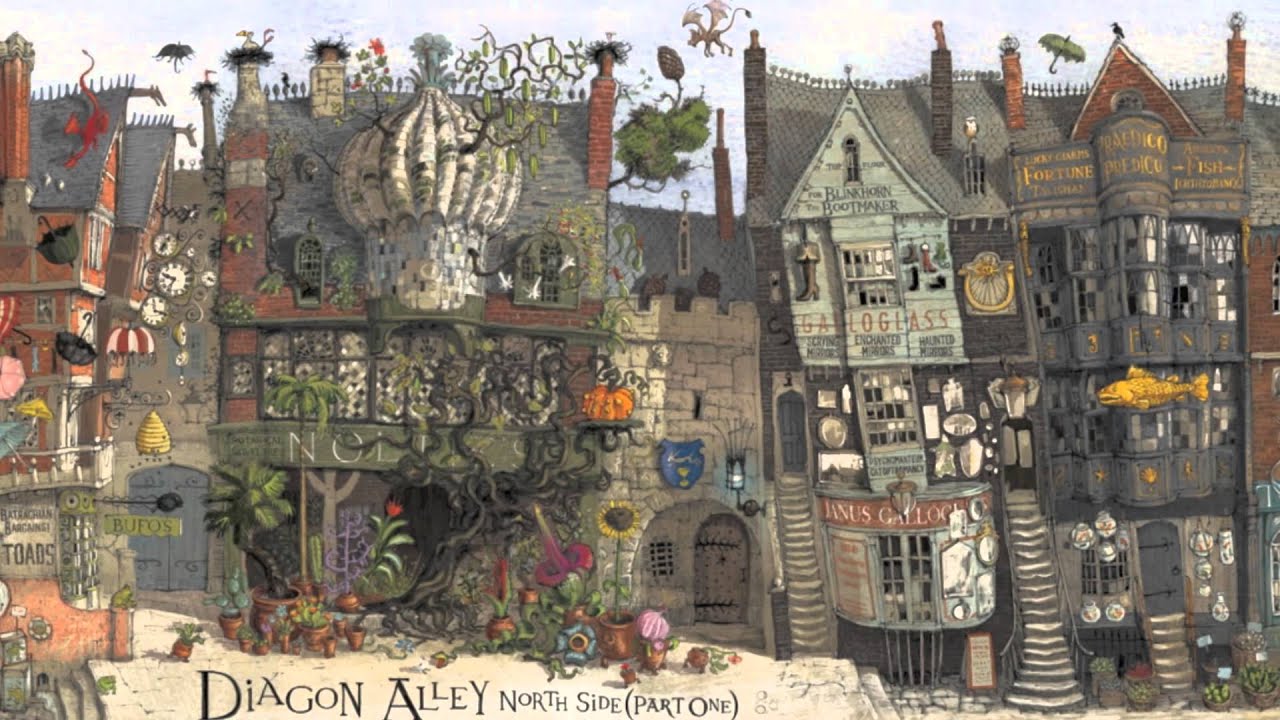
Jim Kay Diagon Alley illustration

Diagon Alley, as illustrated by Jim Kay


Following are the novels I read in 2019 (in the order I read them—the ones in red text are the extras that weren’t on the original list):

  1. Shadow Puppets (The Shadow Series #3) by Orson Scott Card
  2. The Burning Maze (The Trials of Apollo #3) by Rick Riordan
  3. Shadow of the Giant (The Shadow Series #4) by Orson Scott Card
  4. Dog Man and Cat Kid (Dog Man #4) by Dav Pilkey
  5. Shadows in Flight (The Shadow Series #5) by Orson Scott Card
  6. Kids of Appetite by David Arnold
  7. The Circle by Dave Eggers
  8. Salt to the Sea by Ruta Sepetys
  9. The Reader (Sea of Ink and Gold #1) by Traci Chee
  10. Artemis Fowl: The Opal Deception by Eoin Colfer
  11. A History of Glitter and Blood by Hannah Moskowitz
  12. Turtles All the Way Down by John Green
  13. The Female of the Species by Mindy McGinnis
  14. Rebel of the Sands (Rebel of the Sands #1) by Alwyn Hamilton
  15. Nil (Nil #1) by Lynne Matson
  16. The Diabolic (The Diabolic #1) by S.J. Kincaid
  17. Bird Box by Josh Malerman
  18. The Girl with the Dragon Tattoo (Millennium #1) by Stieg Larsson
  19. The Girl Who Played with Fire (Millennium #2) by Stieg Larsson
  20. Artemis Fowl: The Lost Colony by Eoin Colfer
  21. The Girl Who Kicked the Hornet’s Nest (Millennium #3) by Stieg Larsson
  22. Refugee by Alan Gratz
  23. The Girl in the Spider’s Web (Millennium #4) by David Lagercrantz
  24. Amal Unbound by Aisha Saeed
  25. Harry Potter and the Sorcerer’s Stone by J.K. Rowling
  26. Harry Potter and the Chamber of Secrets by J.K. Rowling
  27. Artemis Fowl: The Time Paradox by Eoin Colfer
  28. Iron Gold (Red Rising Saga #4) by Pierce Brown
  29. Harry Potter and the Prisoner of Azkaban by J.K. Rowling
  30. Harry Potter and the Goblet of Fire by J.K. Rowling
  31. Artemis Fowl: The Atlantis Complex by Eoin Colfer
  32. Harry Potter and the Order of the Phoenix by J.K. Rowling
  33. Dark Age (Red Rising Saga #5) by Pierce Brown
  34. Harry Potter and the Half-Blood Prince by J.K. Rowling
  35. Harry Potter and the Deathly Hallows by J.K. Rowling
  36. The Dark Days Club (Lady Helen #1) by Alison Goodman
  37. The Bad Beginning (A Series of Unfortunate Events, Book the First) by Lemony Snicket
  38. An Abundance of Katherines by John Green
  39. The Reptile Room (A Series of Unfortunate Events, Book the Second) by Lemony Snicket
  40. Artemis Fowl: The Last Guardian by Eoin Colfer
  41. The Tyrant’s Tomb (The Trials of Apollo #4) by Rick Riordan

And now for the 2020 list. It may seem long, but all the Unfortunate Events books are ones I’m reading with Ian (after Harry Potter, he’s stuck on series). Otherwise, my list is modest because I know my time will be limited. I’m looking forward to continuing several series and reading some books that are new to me. I also hope I can carve out some time to re-read some favorites.

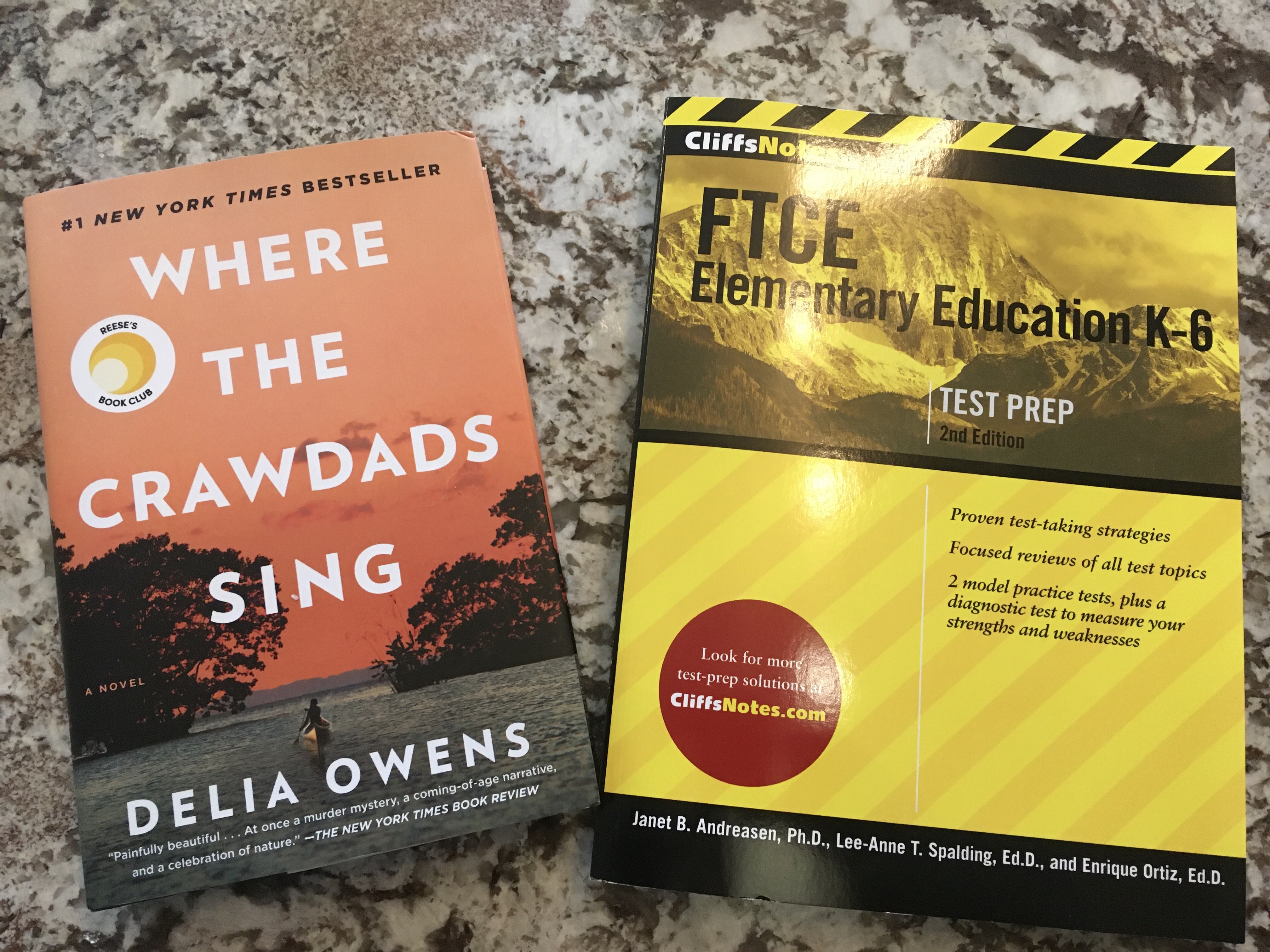
On the left is the book I just started (it’s really good!)… and another one that I’ll be starting soon. (Yep, more testing awaits. But when I’m done with adding to my certification, I hope to be done with testing centers for a while.) IMG_5745

Without further ado, here’s what I hope to read this year (alpha by author):

  1. Earth Unaware (The First Formic War #1) by Orson Scott Card
  2. Earth Afire (The First Formic War #2) by Orson Scott Card
  3. Earth Awakens (The First Formic War #3) by Orson Scott Card
  4. Graceling (Graceling Realm #1) by Kristin Cashore
  5. Fire (Graceling Realm #2) by Kristin Cashore
  6. Bitterblue (Graceling Realm #3) by Kristin Cashore
  7. Lethal White (Cormoran Strike #4) by Robert Galbraith
  8. The Dark Days Pact (Lady Helen #2) by Alison Goodman
  9. The Dark Days Deceit (Lady Helen #3) by Alison Goodman
  10. Why We Broke Up by Daniel Handler
  11. Grave Mercy (His Fair Assassin #1) by Robin LaFevers
  12. Dark Triumph (His Fair Assassin #2) by Robin LaFevers
  13. Mortal Heart (His Fair Assassin #3) by Robin LaFevers
  14. Where the Crawdads Sing by Delia Owens
  15. The Tower of Nero (The Trials of Apollo #5) by Rick Riordan
  16. Salt to the Sea by Ruta Sepetys
  17. The Wide Window (A Series of Unfortunate Events, Book the Third) by Lemony Snicket
  18. The Miserable Mill (A Series of Unfortunate Events, Book the Fourth) by Lemony Snicket
  19. The Austere Academy (A Series of Unfortunate Events, Book the Fifth) by Lemony Snicket
  20. The Ersatz Elevator (A Series of Unfortunate Events, Book the Sixth) by Lemony Snicket
  21. The Vile Village (A Series of Unfortunate Events, Book the Seventh) by Lemony Snicket
  22. The Hostile Hospital (A Series of Unfortunate Events, Book the Eighth) by Lemony Snicket
  23. The Carnivorous Carnival (A Series of Unfortunate Events, Book the Ninth) by Lemony Snicket
  24. The Slippery Slope (A Series of Unfortunate Events, Book the Tenth) by Lemony Snicket
  25. The Grim Grotto (A Series of Unfortunate Events, Book the Eleventh) by Lemony Snicket
  26. The Penultimate Peril (A Series of Unfortunate Events, Book the Twelfth) by Lemony Snicket
  27. The End (A Series of Unfortunate Events, Book the Thirteenth) by Lemony Snicket
  28. The Book Thief by Marcus Zusak

What titles are on your list this year? Happy reading!

“Wow, You Really Like Books, Don’t You?”


New Stack of Books 2017

Books I can’t wait to read!

The title of this post is what my cousin said to me recently when I was at his house, returning a pile of books that his wife had lent me. And then because she has some sort of wicked sixth sense about her, she guessed that I might appreciate even more books, so she blessed me with another pile of loaner teen fiction. This is third such pile of books she’s let me borrow in the past couple years, and my cousin knows this, but I think this was the first time he was actually in the room while I eagerly accepted the books, all but bursting with delight to have my hands on more stuff to read.

If you know me, you know that I always have a book on hand. Nothing will stop me from reading. In fact, I finished one book and started another when I was in the delivery room, hours away from giving birth to my first baby. It’s a serious thing to me. (Some might call it a problem.) But I guess it’s different to witness me grabbing all the books I can get my hands on, a manic gleam in my eye, as if I’m on an episode of Oprah’s Favorite Things.

Now before anyone gets onto me for starting on a new pile of books before finishing what I set out to read at the beginning of the year, I will say that even though it’s killing me, I will read (or try my best to read) everything on my 2017 list before I get started on this latest stack of potential goodness. That’s not to say that I’ve been good and haven’t detoured at all. I have. The problem is that so many of the books from this year’s list are the first book of a series, and if I like a series, well… let’s just say that my bookshelf real estate is dwindling.

This could be a problem, having enough time to read everything I own. I was really worried when my position at work changed from teacher to admin support, which puts me in the office year-round. But I am not to be deterred. Maybe I’m not blogging as often, but I am reading and writing with as much gusto as ever.

It’s well past the halfway point of the year, so of the 34 books on my list, I should have read more than 17, correct? And I am happy to report that, despite getting sidetracked a few times, I’ve still crossed 23 off the list. (Check out the link to my Goodreads page in the sidebar for all the details.) If anything is going to sidetrack me from my list, it’s other books, not a lack of time to read them.

So bring them on! I need to have something to read in 2018, anyway. And please excuse me for cutting this post short; my current book is just getting to the good part.

Read. These. Books.

It’s already July – that time of year when I look at the book list that I created on January first to assess how well I’m keeping up. This year, I am pleased to say that, of the 27 novels I hoped to read, I’ve already read 22. I hope I’m not speaking too soon when I say that 2016 may be the year I’ll finally read every book.

Of the books I’ve finished, I would like to highlight the multitude of teen fiction titles that I’ve recently read.

Florida Teen Reads books

Read these books!

I mentioned in my book list post that my cousin’s wife is on the Florida Teen Reads committee. Last fall, she gave me a pile of the books she’d read for the committee, assuring me that there was a little bit of everything: sci-fi, romance, mental illness – you name it. I was excited to add them to this year’s list.

As always seems to happen, I read a few books from my list, and then I deviated some – that’s life, right? By May, I’d only read one of teen books I’d borrowed, but a message from my cousin-in-law gave me the little kick I needed to keep going. She would need to get two of the books back by the fall because they’re Florida Teen Reads finalists. I read both titles back-to-back – Every Last Word by Tamara Ireland Stone and Everything, Everything by Nicola Yoon. It was apparent why these books were finalists, and since I was on a roll, I continued reading the other FTR books, too.

Some of these books shine brighter than others. Knowing his taste, I had my husband read some of them and not others. One I had to twist his arm to finish, and he was glad he did. Another was the first book of a series, and Thomas liked it so much that he bought the whole trilogy – we both read them all.

Girl in PiecesIn the middle of reading all this teen fiction, I received an interesting opportunity: to read and review a teen fiction novel that hasn’t been published yet. While I’ve read books prior to publication before, it’s usually because I’m editing them, and that’s a completely different experience than being able to read a book to enjoy it. In this case, “enjoy” is a little too tame a description – I devoured Kathleen Glasgow’s Girl in Pieces in two days. (Read my review on Goodreads, and purchase it this fall.)

Before you say, “I’m not a teenager – why would I read any of these?”, let me assure you that teen fiction is not just for those in the 13 to 19 demographic. When I was in college, I took a class on young adult lit, and it was a rather recent genre classification at the time (in fact, much of what we read had previously been grouped with children’s lit). Books that fall into the YA genre star characters who live the issues that real young adults face. Okay, yes, sometimes the teens in these books are being chased by dragons, but they’re still coming of age and having all the issues that that entails.

Parents may find some YA issues uncomfortable, such as substance abuse, suicide, sexuality, and mental illness. Guess what? These are tough issues, but we can’t just put our heads in the sand and pretend they’re not there. When I read about a girl who hung with the cool crowd at school while keeping her OCD hidden from her best friends, I was glad that such a book was out there. It’s normal to read about the underdog succeeding – and I love those books, too – but to read about a cool girl with issues? Well, isn’t that life?

Today’s teenagers can only be sheltered so much. As a parent, I understand being protective, but I also would rather supervise my child’s exposure to these issues by handing him a book and then talking about it than praying that that kind of thing never happens. Who knows? My kids may have friends who face these issues one day – and many of these books list resources that provide support and help. Even within a fictional (and sometimes fantastical) setting, teens are capable of applying what they read to real life.

Read these books! Then share them with a teenager you care about.