Summer 2015 Reading

Magical books

Magical books (Photo credit: Wikipedia)

My last blog was all about the writing I’ve done this summer (and since then, I’ve achieved my Camp NaNoWriMo goal – yay!), but as any worthwhile author will tell you, you can’t write if you’re not reading. So I’ve been doing what a good writer should do, naturally.

The reading list that I set for myself this year is an ambitious one. (Read it here.) On it are 27 books, including several series. Christopher Paolini’s The Inheritance Cycle has been on my to-read list for three years now, and I finally finished it. But those books are dense and ate up a lot of my reading time. As I approached the halfway point through the year, I wondered how I was doing.

I’m happy to report that as of mid-July, I’ve finished 13 of the 27 books. Maybe Inheritance didn’t set me back too far, after all. Of course, I read a lot during our two-week vacation. I worried I was being overly ambitious when I packed the entire Divergent series, as well as a book that a friend lent to me a few months ago. But I read the whole borrowed book on the plane trip from east coast to west coast (Talk to the Hand by Lynne Truss – I highly recommend it, particularly if you’re a fan of British humor), and I plowed through all but a couple hundred pages of the Divergent series over the two weeks.

Ahead of me, I still have at least one doozy (Diana Gabaldon’s Written in My Heart’s Own Blood – all of the books in her Outlander series are formidable), plus Suzanne Collins’s The Hunger Games series. I know I re-read it last year, but I want it to be fresh when the final movie comes out this fall. Also, I’ll start reading Harry Potter and the Philosopher’s Stone to my seven-year-old in the next week. I’m excited that he’s finally old enough to comprehend the story – we may have another Potter geek in the making.

Other than my non-fiction books (which I rarely list here, unless it’s what I consider entertaining non-fiction, such as Talk to the Hand), I’ve stuck to my book list pretty well. Early on, I decided to read Daniel Woodrell’s Winter’s Bone because I’d seen the movie and was interested in seeing what kind of extra character developments happened in the book. I’m glad I did. Woodrell’s use of language is unique, and as a writer, it’s always helpful to mix it up with a different style from time to time.

The only other detour I’ve made was Lisa Genova’s Still Alice (also a book-turned-movie). This was a book I had to read. I’m going back to teach full-time in the fall, and the faculty at my school has a summer reading list. Still Alice was the only novel on our list of choices. I’ve jotted down the titles of several non-fiction books that interest me, but I wanted a good story – and I got it. But frequent criers, keep your tissues handy.

I’m sticking to my list and loving it. I hope to finish Lois Lowry’s The Giver series by the time the kids go back to school (I’m halfway through the second book, Gathering Blue), and then I’ll keep plowing ahead.

And never fear – if I actually make it through this whole list, I already have several new books waiting. (She rubs her hands together and cackles with glee.)

Overcoming Dyslexia: 10 Things You Should Know

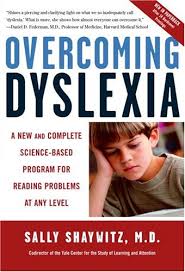
Overcoming Dyslexia by Sally Shaywitz, M.D.

Overcoming Dyslexia by Sally Shaywitz, M.D.

Right around two years ago, I realized there was a serious disconnect with my then-five-year-old son Peter. He was at the end of his second year of preschool, but this intelligent child could not learn his letters or their sounds. Today, I know that he has moderate dyslexia, and it’s been quite a journey. For my sweet boy, it’s a journey that he will continue to take for the rest of his life.

The teacher who tested Peter and helped formulate the blueprint of what the next few years will bring for him lent me her copy of Overcoming Dyslexia by Sally Shaywitz, M.D. I recommend this book to all parents and teachers. Even after I knew that Peter had dyslexia, I still didn’t fully understand what it is – certainly more than mixing up letters, which is a common misconception.

There’s no way I can boil down every point, so I’ve chosen the ten that I found most important:

  1. Dyslexia Affects More People than You Think

In a 20-year study that followed 445 children from Connecticut, Shaywitz discovered “that reading disability affects approximately one child in five” (30). Some of the personal accounts that Shaywitz shares in her book are of bright kids who were left behind because they didn’t “qualify” as students who needed help reading. One was even unfortunate enough to attend a school in which the administration didn’t believe in dyslexia. There are many more children who can benefit from reading resources than are currently receiving help. If you think you don’t know anyone with dyslexia – think again. Especially if you’re a teacher, you likely have a child who desperately needs help right in your classroom.

  1. There’s a Reason Some Smart People Can’t Read

In her chapter entitled “Why Some Smart People Can’t Read,” Shaywitz introduces the Phonologic Model. In subsequent chapters, she breaks down why this model doesn’t work for dyslexics. They have what she repeatedly refers to as a “sea of strengths” – lots of pros surrounding one big con, the inability to decode phonemes (the smallest unit of speech). While good readers can quickly decode phonemes to make the sounds k, aaaa, and t become cat, dyslexics’ brains are not wired to do this efficiently. The frustrating part is that phonology is the lowest level of the language system, followed by semantics, syntax, and discourse. While semantics, syntax, and discourse are all intact in a dyslexic person’s brain, these higher-level abilities are trapped behind the wall of un-decodable phonemes because…

  1. Dyslexics’ Brains Are Wired Differently

There are now scientific tests that show just how a dyslexic’s person’s brain is wired. Starting in the chapter “Reading the Brain,” Shaywitz goes into great detail about how our brains decode words. A dyslexic person’s brain uses a different path – one that is not automatic and therefore much slower. The functional MRI (fMRI) is the test that shows exactly how dyslexic versus non-dyslexic people read. These tests aren’t necessary to diagnose dyslexia, but they prove that dyslexics aren’t missing a part of their brain, and they’re not brain damaged; they simply read in a different way than “good” readers.

  1. Training Kids Before School Age Helps

Unfortunately, dyslexia often goes undetected in children until they reach the third grade. At this point, they are very far behind because they are still struggling to sound out words, while their peers are transitioning from learning to read to reading to learn.

One way that we can save these kids so many years of frustration is by catching it sooner. Kids enrolled in preschool are ahead of the game (which is how we were able to catch Peter’s dyslexia so early), but even if you keep your children at home, helping them differentiate beginning, middle, and ending sounds of simple words (pig and pan, hen and pet, and hen and pin are the examples Shaywitz uses) will not only help them when they learn to read, but it will also help to identify if there is a problem.

With Peter, while I could say a word like “bird” to his four- and five-year-old classmates, and they would hear b, rrr, and d, he might only be able to pick out the beginning or the ending sound – forget the middle. Peter’s dyslexia wouldn’t let him distinguish the different sounds.

  1. The Severity of Dyslexia Differs from Person to Person

While “one-quarter [to] one-half of the children born to a dyslexic parent will also be dyslexic,” the way in which dyslexia manifests itself differs from person to person (99). Shaywitz writes that “the ultimate expression of dyslexia depends on an interaction between a child’s genetic endowment and his environment.” So if your child is dyslexic, don’t throw your hands in the air and give up. Continue to read aloud to him at home; expose her to as much language as you can. This particularly helps dyslexic children develop larger vocabularies because they will not read and pick up new words as quickly as their classmates who can read fluently.

  1. Dyslexics Have High IQs

High IQ’s and difficulty in reading just don’t seem to correlate, but that’s exactly what happens with a dyslexic person. In fact, dyslexic people are often amazing problem solvers; their dyslexia forces them to be creative in order to read, and they carry this skill into other areas of life.

Dyslexia should never discourage someone from pursuing his or her dream. The last chapter of Overcoming Dyslexia is devoted to the personal accounts of highly successful people, such as author John Irving, American businessman and finance expert Charles Schwab, former West Virginia governor Gaston Caperton, and a number of others. These men and women struggled in school and failed entrance exams that could have kept them from getting higher education – yet they persevered and proved that a reading problem would not force them to give up on their dreams.

  1. Retention Does Not Help Dyslexic Children

While retention is sometimes helpful for other reasons, dyslexia should not be one of them. Not only does holding a child back a year in school avoid the problem (which is decoding words), but it can also be a psychological and emotional hindrance.

Ignoring the problem is just as bad. Waiting a month or a year to see if the problem straightens itself out only robs your child of much-needed help. When I first thought that Peter might have a problem, I hoped that a little tutoring over the summer would solve it. But that tutoring didn’t address his specific issue, and the frustration we both faced the first few weeks of his kindergarten year were enough to make me wish I’d had him tested sooner.

  1. Common Indicators of Dyslexia
  • Delay in Speech While children typically start saying words by one year and phrases by 18 to 24 months, a delay could indicate dyslexia.
  • Trouble with Pronunciation This can manifest itself as baby talk, the right syllables pronounced in the wrong order, or whole syllables (such as the beginning of words) not being pronounced at all.
  • Inability to Rhyme Because they have a hard time separating phonemes, dyslexics may not be able to ascertain what rhymes and what doesn’t because they are not able to distinguish what the last sound of a word is.
  • Talking Around a Word If your child is a regular Mrs. Malaprop, that’s another indicator. Two examples that Shaywitz uses are lotion used in place of ocean and tornado used in place of volcano. The children who made these mistakes knew exactly what they were trying to say, but they simply could not recall the proper word. (This can be very embarrassing in dyslexic adults when speaking publicly.)
  • Difficulty in Learning the Alphabet They may be able to sing their ABC’s, but when shown the actual symbols that match the sounds, dyslexics may not be able to identify them.
  • Inability to Learn by Rote While dyslexics generally have strong math skills, when it comes to rote memorization of times tables, they may suddenly have trouble. The same goes for memorizing words that don’t follow the rules, people’s names, place names, and even phone numbers. I wondered, since dyslexia is a phoneme problem, why dyslexic people often dial the wrong phone number – especially since they’re often so good at math. It’s not because they can’t see the difference between the numbers but because those seven numbers seem random. There was no logical way to arrive at them (as in the answer to a math problem).
  • Inability to Focus While Reading Especially in a noisy classroom or study hall, a dyslexic person may not be able to complete a homework task because she needs quiet to be able to concentrate. Dyslexics use a lot more brain power to get the job done, so it’s harder for them to focus.
  • Discomfort When Reading Aloud Some kids will act out or fake being sick when asked to read aloud because it’s so uncomfortable for them. They may even be misjudged as ADHD by a parent or teacher, but the problem here isn’t inattention but discomfort. Be sensitive to dyslexic people when they ask not to read aloud.
  • Misspelling Even if a dyslexic person is able to read difficult words, do not expect him to spell those same words from memory. In the same manner, if shown a new word out of context, he may not be able to read it, even if it seems simple to a non-dyslexic person.
  • Terrible Handwriting This is another tell-tale characteristic of many dyslexics. The word processor is the dyslexic person’s best friend.

A dyslexic person may exhibit only a few of the above – or may have other indicators not mentioned. But if your child or someone you know shows a number of these, it would be prudent to have him or her tested for dyslexia.

  1. Common Strengths of Dyslexic People

In addition to the individual “sea of strengths” that dyslexic people have, there are common strengths that most dyslexic people share. Many dyslexic children fly under the radar because they are extraordinary auditory learners. They can hear a passage read aloud and memorize it, therefore making their teachers believe they’re reading. They are also usually skilled at math, and they are very creative. (Now, don’t worry if your child doesn’t fit this model 100%. Peter is a poor auditory learner, but kinesthetically, he’s off the charts. And I know some dyslexics who also aren’t skilled at math.)

What marks dyslexics as different than other poor readers is their reading comprehension skills, which are intact. Let them hear a book (instead of making them struggle with decoding all those words), and then open a discussion with them, and you will find that they understand the text just as well (or better) than a fluent reader. When dyslexics are not hindered by people who misjudge them, they are able to prove themselves just as capable as fluent readers, and many successful dyslexics wouldn’t have it any other way because they can easily think outside the box, unlike colleagues who never had to struggle to read.

  1. How to Help Dyslexic People in School and Beyond

The Orton-Gillingham approach of scientifically-based instruction is what Shaywitz recommends for dyslexic children. Although she lists many different ways in which parents can help their dyslexic children at home, having one-on-one instruction with a tutor who is trained in this systematic and structured method is what really helps. (Peter’s tutor uses Barton, which utilizes Orton-Gillingham and has been very beneficial to him.)

There’s also good news for dyslexic adults who have gone undiagnosed: there are programs for adult literacy, and although they do require a commitment of time, they produce dividends that improve quality of life. Many undiagnosed adults either flunked or dropped out of school and, thus, have few options for employment because of their inability to read. It’s not that they’re unintelligent, just that they were never given the proper instruction for the way that their brains are wired.

Recording for the Blind and Dyslexic (RFB&D) of Princeton, New Jersey provides audio copies of books, so dyslexics can listen to their material and follow along with the hard copy. Requesting more time and a quiet room for multiple choice exams is also a must, although oral or essay tests are preferable. (As Shaywitz and so many others have pointed out, these multiple choice tests really only prove how proficient people are at test-taking.) Shaywitz lists a number of computer programs that help dyslexics, as well as study tips. In a world that is not very friendly to dyslexics, there are still ways in which they can excel.

In Conclusion

There are so many more points that I wish I could list, but this post is already very long. Please, if any of this rings true for your child or someone you know, get the book! It’s scientifically-based, and one of the many case studies included may remind you of someone you know. I know the first one I read almost made me cry because it sounded so much like my son and reminded me of his early struggles.

The great news is that there is help. As I said, Peter is being tutored in an Orton-Gillingham program, Barton. After not quite five months, his reading has improved more than my husband and I ever thought possible. Over the summer, I saw that one of his friends was reading at a level two, and Peter struggled to get through “My First” books. Now, he can pick up a level two or even books that aren’t leveled readers.

Last week, we took turns reading a Magic Tree House book aloud – Peter was even the one who volunteered to read. About halfway through a chapter, he said, “Chapter books are fun!” I couldn’t agree more, buddy.

Punctuation: It’s More Than Emoticons

Punctuation Cookies For National Punctuation Day

Punctuation Cookies For National Punctuation Day (Photo credit: DavidErickson)

In Lynne Truss’s Eats, Shoots & Leaves, she has a particular problem with emoticons – you know, the colons and parentheses that make sideways smileys, as she calls them. I admit that I use them, but only for fun. I certainly don’t include them in cover letters or resumes. But there is a whole generation of kids right now who, without proper education, might never know that the colon has an actual use within a sentence.

Anyone interested in punctuation has a dual reason to feel aggrieved about smileys, [Truss writes,] because not only are they a paltry substitute for expressing oneself properly; they are also designed by people who evidently thought the punctuation marks on the standard keyboard cried out for an ornamental function. What’s this dot-on-top-of-a-dot thing for? What earthly good is it? Well, if you look at it sideways, it could be a pair of eyes. What’s this curvy thing for? It’s a mouth, look! Hey, I think we’re onto something.

: – (

Now it’s sad!

; –)

It looks like it’s winking! (193)

Why should we care, though? Why bother continuing to fight what seems a losing battle? Truss puts it pretty well early in her book.

The reason it’s worth standing up for punctuation is not that it’s an arbitrary system of notation known only to an over-sensitive elite who have attacks of the vapours when they see it misapplied. The reason to stand up for punctuation is that without it there is no reliable way of communicating meaning. Punctuation herds words together, keeps others apart. Punctuation directs you how to read, in the way musical notation directs a musician how to play. (20)

As a musician, I get it. Anyone who’s ever read lines from a script gets it, too. But what about everyone else, those who consider punctuation so much debris on the page? Think about ancient Hebrew, in which there was no punctuation, nor were there spaces between words – not even vowels! There have been nasty fights over translations of the Bible because of this. But by the time we began printing, we’d devised ways to help readers decipher the meaning of what they were reading. All these little marks, the periods and colons and dashes and hyphens, are aids; they’re here to help us.

When did things begin to fall apart? Truss gives her opinion on the matter, one well worth noting:

But to get back to those dark-side-of-the-moon years in British education when teachers upheld the view that grammar and spelling got in the way of self-expression, it is arguable that the timing of their grammatical apathy could not have been worse. In the 1970s, no educationist would have predicted the explosion in universal written communication caused by the personal computer, the internet and the key-pad of the mobile phone. But now, look what’s happened: everyone’s a writer!

[. . .] People who have been taught nothing about their own language are (contrary to educational expectations) spending all their leisure hours attempting to string sentences together for the edification of others. And there is no editing on the internet! (16-7)

That’s right; there are a lot of people claiming to be writers – educated people! – who make absolute fools of themselves online. Since anyone with access to a computer could be a virtual writer now, it is more important than ever to know the rules. How many times have you misread an e-mail because it’s just so hard to decipher tone and meaning via electronic communication? At least if the punctuation is right, that will go a long way toward making the meaning clearer.

After we learn the rules, we can flex our artistic muscles and enhance our writing with the stylistic uses of punctuation, as Noah Lukeman points out in A Dash of Style: The Art and Mastery of Punctuation. As I mentioned two posts ago, the only form of punctuation that he doesn’t cover is the apostrophe. He even considers paragraph breaks as a form of punctuation. And the way you apply (or don’t) all the different forms of punctuation tells something about you, the writer.

The semicolon, for instance. Aside from the winky face, what good is it? A semicolon separates two independent clauses when a comma and conjunction just don’t do the trick, and when two sentences separate those thoughts a little too much. But writers could choose one of the alternatives I’ve just listed and still be technically correct. Truss says that newspapers don’t use it,

[T]he official reason being that readers of newsprint prefer their sentences short, their paragraphs bite-sized and their columns of type uncluttered by wormy squiggles. It’s more likely that the real reasons are a pathetic editorial confusion about usage and a policy of distrusting contributors even when they demonstrably know their onions. (110)

Ouch. And Lukeman’s take is that

Artistically, the semicolon opens a world of possibilities, and can lend a huge impact. In this sense, it is the punctuation mark best suited for creative writers[. . .]

We use the semicolon for the same reason we trade cement floors for marble: cement floors are equally functional but not as elegant, not as aesthetically pleasing as marble. The semicolon elevates punctuation from the utilitarian (from punctuation that works) to the luxurious (to punctuation that transcends). Business memos do not need semicolons; creative writers do. (70)

It follows that creative writers are artists and might decide to get flowery with their punctuation, but I can easily imagine academic writers turning up their noses at such a notion. There are, however, necessary punctuation marks that everyone has to use, so it’s important to learn about them – and how to keep from overusing them. Lukeman subtitles a portion of his last chapter “Use Sparingly,” and included in this section are the question mark, exclamation point, italics, ellipses (you know: . . .), and the hyphen. Most of these make sense, but the question mark? It’s supposed to come at the end of a question, right? I mean, it wouldn’t be right to end a question with a period (although that doesn’t stop people from trying). In the publishing world, Lukeman says,

[A] publishing professional is looking to reject a manuscript as quickly as he can. [. . .] And an abundance of question marks in the first pages  [. . .] nearly always indicates amateur or melodramatic writing. For some reason, the poor question mark gets seized upon by the writer who is desperate to immediately hook the reader in a cheap way. (184)

Likewise, the exclamation point

[C]an be painfully misused. Like the question mark, it can be used as a crutch to create a heightened sense of drama, can be transformed into a screaming car salesman. As a rule, if you need an exclamation point to make a scene come alive, then you better reexamine that scene. (187)

I do like an example that Truss cites, however, that wouldn’t be possible without these two marks. She mentions “the French 19th-century novelist Victor Hugo, who – when he wanted to know how Les Miserables was selling – reportedly telegraphed his publisher with the simple inquiry ‘?’ and received in the expressive reply ‘!'” (136).

Those of us who care enough to properly and painstakingly choose between semicolons and colons must first learn the rules (and when to break them) and unite with fellow sticklers. I’m waving my electronic hand here, trying to catch the attention of anyone else who cares. As Truss says,

[M]y personal hunches about the state of the language were horribly correct: standards of punctuation in general in the UK are indeed approaching the point of illiteracy; self-justified philistines (“Get a life!”) are truly in the driving seat of our culture; and a lot of well-educated sensitive people really have been weeping friendlessly in caves for the past few years, praying for someone – anyone – to write a book about punctuation with a panda on the cover. (xix-xx)

Truss’s book has a lot of answers, as well as Lukeman’s (and he covers much more than I’ve been able to do here). Three other books that I highly recommend because they have greatly helped me with the craft are the old standby, Strunk and White’s The Elements of Style (4th Edition), Anne Lamott’s Bird by Bird: Some Instructions on Writing and Life, and (believe it or not) Stephen King’s On Writing: A Memoir Of The Craft.

And I’ll let Noah Lukeman have the final word on making the case for proper punctuation:

[L]et your punctuation unfold organically, as the text demands. Punctuation should never be forced on a text, never be brought in to rescue you from confusing sentence construction. It is not here to save – it is here to complement. This is an important distinction. The sentence itself must do the work. If it does, the punctuation will coexist seamlessly, and you will never  have an awkward struggle to squeeze in a dash, or make a semicolon work. If you find yourself having a struggle, reexamine your sentence structure, your word choice. More likely than not, you will need to rewrite, not repunctuate. [. . . I]n the best writing the punctuation is seamless, invisible, at one with the text. It will never stand out. You know you are punctuating the best you possibly can when, ironically, you don’t even know it’s there. (200)

Where the Heck Do I Put This Comma?

The punctuation mark comma

Comma (Photo credit: Wikipedia)

I know I’ve been harping on about grammar and punctuation a lot lately, but I am of the school of thought that if you are from an English-speaking country, you should have a firm grasp of the English language and usage. It is a sad commentary on society that many foreigners go to great pains to learn English, and accents or no, they grasp the ins and outs of our language better than a great number of us. Granted, English (being the mess that it is) is one of the most difficult languages to learn, but that’s no excuse.

I concentrated on the apostrophe last week, and Lynne Truss’s Eats, Shoots & Leaves, but this week I’m also going to let Noah Lukeman, author of A Dash of Style: The Art and Mastery of Punctuation, chime in as well.

Eats, Shoots & Leaves is for those of us who are sticklers, the die-hard punctuation freaks who are ready to defend the likes of commas and semicolons to the death. Truss also addresses style with a bit of history and humor thrown in. She has the unique perspective of a British editor, and she points out the differences and similarities between British and American punctuation. Lukeman, an American writer and literary agent, sticks to style; he assumes that we come to the page with the knowledge, and now we need to apply it. As such, I’ll let Truss go first, then allow Lukeman to round out the conversation. And since I gave the apostrophe so much time last time, I thought I’d give the same amount of space to the comma here.

Following is an example from Truss’s book about how punctuation can change the meaning of a string of words:

A woman, without her man, is nothing.
A woman: without her, man is nothing. (9)

Rearrange the commas and add a colon, and you have two completely different ideas.

Unlike the apostrophe, however, there is no neat little list of all the rules of comma usage. Although there are some hard and fast rules (as in always placing a comma between city and state: Jacksonville, Florida), many “rules” can be ignored and are merely there to satisfy the desires of some writers and editors. I’m kind of a “the more the merrier” kind of gal, whereas Lynne Truss uses commas less frequently. There is a purpose for commas, though, no matter how tricky that purpose is to define and apply.

More than any other mark, [Truss writes] the comma draws our attention to the mixed origins of modern punctuation, and its consequent mingling of two quite distinct functions:

1 To illuminate the grammar of a sentence

2 To point up – rather in the manner of musical notation – such literary qualities as rhythm, direction, pitch, tone and flow

[. . .] On the page, punctuation performs its grammatical function, but in the mind of the reader it does more than that. It tells the reader how to hum the tune. (70-1)

I identify with Truss’s musical notation explanation because I am a musician as well as a writer. When you consider it that way, it seems so sensible. Why not allow it to do its job and aid the written word? After all, when we talk, we speak with inflection, and most of us don’t run all of our words together. But if you were to read a long sentence (such as this one), full of twists and turns and various types of clauses, without the aid of inner-sentence punctuation, you would find quite a mess. You might have to puzzle over a jumble of words several times before getting the emphasis just right. Commas can help.

Truss gives another analogy for the job of the little hooky-looking thingy that we know and love (but often misuse):

[B]etween the 16th century and the present day, [the comma] became a kind of scary grammatical sheepdog. As we shall shortly see, the comma has so many jobs as a “separator” (punctuation marks are traditionally either “separators” or “terminators”) that it tears about on the hillside of language, endlessly organizing words into sensible groups and making them stay put: sorting and dividing; circling and herding; and of course darting off with a peremptory “woof” to round up any wayward subordinate clause that makes a futile bolt for semantic freedom. Commas, if you don’t whistle at them to calm down, are unstoppably enthusiastic about this job. (79)

Yeah, I am a wee bit guilty of letting my commas become unstoppably enthusiastic. You know that pesky Oxford comma? It’s the one in series that goes just before the “and”; it’s the last comma in: “I had an omlet, hashbrowns, and mixed fruit for breakfast.” My parents and I have many unresolved fights about this one. I’m right and they’re wrong. Except that they’re right and I’m wrong because I’m younger, and nothing I read (including Strunk & White) can refute their education. Doesn’t matter that I’m the editor. Well, as it turns out, we’re all right because the Oxford comma is optional. There are cases when it assists the clarity of a sentence. You could have lemonade, chicken fingers and macaroni and cheese (without the Oxford comma), or you could have lemonade, chicken fingers, and macaroni and cheese (with). Since “macaroni and cheese” is considered one item in that series, the comma helps tell the reader where the series will end. Okay, enough about that. You’re either going to be with me or against me (or likely not care at all).

There is one rule that Truss spells out quite clearly, and with which I hope we can all agree. And if you don’t get it. . . well, then you’re on your own, I’m afraid. “The big final rule for the comma is one that you won’t find in any books by grammarians. It is quite easy to remember, however. The rule is: don’t use commas like a stupid person. I mean it” (96). Yes, ma’am. She gives several examples, and my favorite is, “Leonora walked on her head, a little higher than usual.” If you ever see me write something like that, know that I’ve been abducted, and some doppelganger imposter has taken over.

So once you’ve figured out where to place that little bugger, Lukeman is the guy sitting in the plush chair with the notepad, watching you with one eyebrow raised, ready to help you discover what your comma placement means.

While Truss likens punctuation to musical notations and commas to sheep dogs, Lukeman borrows a quote from journalist Russell Baker that I like just as much. “In writing, punctuation plays the role of body language. It helps readers hear you the way you want to be heard,” Baker says (28). A proliferation of commas or a complete lack of them not only guides the reader in hearing pauses (or not) in a phrase, but it shows something about the author, as well.

Knowing that I have a little problem with overindulging in commas, I was a bit anxious when I got to the part about what that means. I suppose it’s a bit like a literary horoscope.

The writer who overuses commas [Lukeman writes] tends to also overuse adjectives and adverbs. He tends to be repetitive, won’t be subtle, and often gives too much information. He grasps for multiple word choices instead of one strong choice, and thus the choices he makes won’t be strong. His language won’t be unique[. . .] This writer will need to simplify, to take a stronger stance, and to understand that less is more. (65-6)

Gulp. Okay, I suppose I am guilty yet again, although ever since taking multiple fiction workshops with my good friend Mark Ari many years ago, I’ve gotten much better about tightening my prose and losing adjectives and especially adverbs. I guess the commas are leftover scars, and I’m doing my best to remedy their use, while maintaining my own style.

But never fear, Lukeman also addresses those who don’t like commas.

There are two types of writers who underuse commas: the first is the unsophisticated writer who has not developed an ear for sentence rhythm. He is unable to hear fine distinctions, and thinks writing is solely about conveying information. (66)

Phew! Thank goodness that’s not me. Actually, I know I am also guilty of info dumping, especially in my early writing days. It’s something that I think many beginning writers fight – or don’t fight, if they lack proper instruction and criticism – and I see it all the time.

The second [type of writer, Lukeman continues,] is the sophisticated writer who (like Gertrude Stein) has an aversion to commas and underuses them on purpose [. . .] The danger for these writers is the rare problem of overestimating the reader [. . .] There is a need for marks – especially commas – to indicate ebbs and flows, pauses and pitch, division of clauses and meaning. The writer who ignores this is the writer who writes for himself, not with the reader in mind. He will not be a commercial writer, or plot oriented, but prose oriented, interested in nuances of style – but to a fault. (66)

This, I think, is where it’s handy to remember the image of the comma as the helpful sheep dog.

So if you scrutinize your comma usage, where do you fall? Are you scared that you don’t get your point across, using too many descriptions? Or do you just let it all flow and let the reader fend for himself? As with everything, I think a little moderation is in order here. Let the reader use his imagination a little, but don’t forget to leave a few cues along the way.

My Poor Little Misunderstood Friend, the Apostrophe

Eats, Shoots & Leaves

Eats, Shoots & Leaves (Photo credit: Wikipedia)

I love it when I find a writer who cares just as much about English usage and craft as I do. I found my self-proclaimed stickler sister in Lynne Truss, author of Eats, Shoots & Leaves. She had me from page one:


 A printed banner has appeared on the concourse of a petrol station near to where I live. “Come inside,” it says, “for CD’s, VIDEO’s, DVD’s, and BOOK’s.”

If this satanic sprinkling of redundant apostrophes causes no little gasp of horror or quickening of the pulse, you should probably put down this book at once.

My original idea was to write one blog about both Truss’s book and Noah Lukeman’s A Dash of Style: The Art and Mastery of Punctuation, but there’s too much to say about both of these amazing punctuation books to cram in here. And while you might be thanking me for not subjecting you to such a long post, please don’t hate me for what I’m about to do.


Lukeman never addresses apostrophes in his book, and I can only assume it’s because A Dash of Style is about, well, style, and apostrophes aren’t things that should be thrown around like optional commas – although that doesn’t stop people from trying. (I actually do know of one stylistic apostrophe choice, but I’ll get to that later.) Lynne Truss, on the other hand, has such a wonderful chapter devoted to the oft misused and abused apostrophe that I decided it could use a post all to itself. What did I do to deserve this? you might be thinking, but I promise that what Truss has to say on the subject is both humorous and informative, thus worth the read.


The apostrophe (like the hyphen) is one of those few punctuation marks that is necessary when we learn how to spell; we simply couldn’t (or shouldn’t) write many of our words without it. Some people, when confused, might throw a comma in “men,s restroom,” for example, which is utter nonsense. Commas don’t go in words. Ever. But the person writing “men,s” knows that something needs to happen. “Mens restroom” just looks empty.


Following are the rules of apostrophe usage, along with examples, as Lynne Truss spells them out on pages 40-45 (American edition):


1 It indicates a possessive in a singular noun

For instance, “The girl’s doll.” What if, however, there are more than one girl? Then the apostrophe follows the “s”: “The girls’ dolls.” And finally, for those tricky words that are plural but don’t end in an “s” (children, women, men), the apostrophe precedes the “s”: “The children’s dolls.”


2 It indicates time or quantity

Truss’s favorite example, which she uses throughout the book as an indication of how far our society has slipped in proper punctuation usage, is the movie Two Weeks Notice. This is incorrect. It should be Two Weeks’ Notice.

Film poster for Two Weeks Notice - Copyright 2...

Photo credit: Wikipedia

3 It indicates the omission of figures in dates

I was born in the spring of ’83. Not too difficult to grasp.


4 It indicates the omission of letters

Ah, the contraction. This can be anything from the combination of “it” and “is” to abbreviations, such as “int’l” instead of “international.” And here’s a little extra that Truss has to say on the matter:


To those who care about punctuation, a sentence such as “Thank God its Friday” (without the apostrophe) rouses feelings not only of despair but of violence. The confusion of the possessive “its” (no apostrophe) with the contractive “it’s” (with apostrophe) is an unequivocal signal of illiteracy and sets off a simple Pavlovian “kill” response in the average stickler. The rule is: the word “it’s” (with apostrophe) stands for “it is” or “it has”. If the word does not stand for “it is” or “it has” then what you require is “its”. This is extremely easy to grasp. Getting your itses mixed up is the greatest solecism in the world of punctuation. No matter that you have a PhD and have read all of Henry James twice. If you still persist in writing, “Good food at it’s best”, you deserve to be struck by lightning, hacked up on the spot and buried in an unmarked             grave. (43-44)

Bless her.


Spelling at its worst 047224

Spelling at its worst (Photo credit: Wikipedia)

5 It indicates strange, non-standard English

Remember how I said there’s a stylistic use for apostrophes? That’s where this one comes in, and I’ll elaborate later.


6 It features in Irish names such as O’Neill and O’Casey

Okay, that one is just obvious.


7 It indicates the plurals of letters

You don’t get straight As, you get straight A’s. This rule, in my opinion, is there to indicate how to pronounce what you’re reading. While I don’t think you would confuse Bs and B’s, my example above shows that with vowels, the pronunciation could vary and change the meaning (or obscure the meaning, anyway), so it’s best to stay consistent.


And finally, going along with #7,


8 It also indicates the plural of words

As an editor, this one comes in quite handy. I might write in a critique, “There were too many and’s in that paragraph.”


So where did this troublesome little mark come from, to begin with? On page 37, Truss writes:


The English language first picked up the apostrophe in the 16th century. The word in Greek means “turning away”, and hence “omission” or “elision”. In classical texts, it was used to mark dropped letters, as in t’cius for “tertius”; and when English printers adopted it, this was still its only function.

It picked up more tasks over the centuries, as the above rules show. Perhaps it is because the little mark is expected to do so much that it is so often confused with other marks or omitted altogether.


As for the stylistic use of the apostrophe that I’ve mentioned, I’ve read books by well-established authors in which apostrophes are omitted in dialogue when the people speaking drop letters at the end of words (such as “g”). Say Joe Character has a strong Southern drawl and not the best grammar. For instance, “I was going to the park the other day, walking the dog, minding my own business, when this kid on a skateboard came out of nowhere and almost ran me over.” Written like this, it’s difficult hear the accent. So let’s try: “I was goin’ to the park th’other day, walkin’ the dog, mindin’ m’own business, when this kid on a skateboard come out of nowhere and almost run me over.” The authors who choose to stylistically drop apostrophes would not place them in the words with the missing g’s. I don’t know why, exactly. Maybe the apostrophe’s presence looks a little too formal for someone who’s speaking improperly. Either way, as long as we can all still tell what the words are supposed to be without the apostrophes, it’s an okay choice to make (although I’m too much of a stickler to do it myself). The other time authors might do this is if a first person narrator has an accent and narrates as such throughout a story. Here, though, I must warn against giving characters too much of an accent. They often require words that are misspelled to match their mis-pronunciations, and that can end up sounding affected and fake. J.K. Rowling did a great job with Hagrid in her Harry Potter books, but if you’ve ever tried to decipher George Bernard Shaw’s Pygmalion without help, you might never be able to get past the first few pages.
 

Did I make myself pretty clear, or are you more confused than when you started? I hope that I’ve encouraged rather than discouraged you. Be vigilant about your punctuation because it matters! And, of course, Lynne Truss has much more to say about the matter in Eat, Shoots, & Leaves, which I hope you will pick up. And since she inspired this post, I will let her have the last word.


We lovers of the apostrophe will not stand by and let it be abolished — not because we are dinosaurs who drink tea out of saucers (interesting image) but because we appreciate the way the apostrophe has for centuries graced our words and illuminated our meaning. It is no fault of the apostrophe that some of our words need so much help identifying themselves. Indeed, it is to the credit of the apostrophe that it can manage the task. Those spineless types who talk  about abolishing the apostrophe are missing the point, and the pun is very much intended. The next day after the abolition of the apostrophe, imagine the scene. Triumphant abolitionist sits down to write, “Good-bye to the Apostrophe; we’re not missing you a bit!” and finds that he can’t. Abolish the apostrophe and it will be necessary, before the hour is up, to reinvent it. (66-67)

Calling All Judy Blume Lovers!

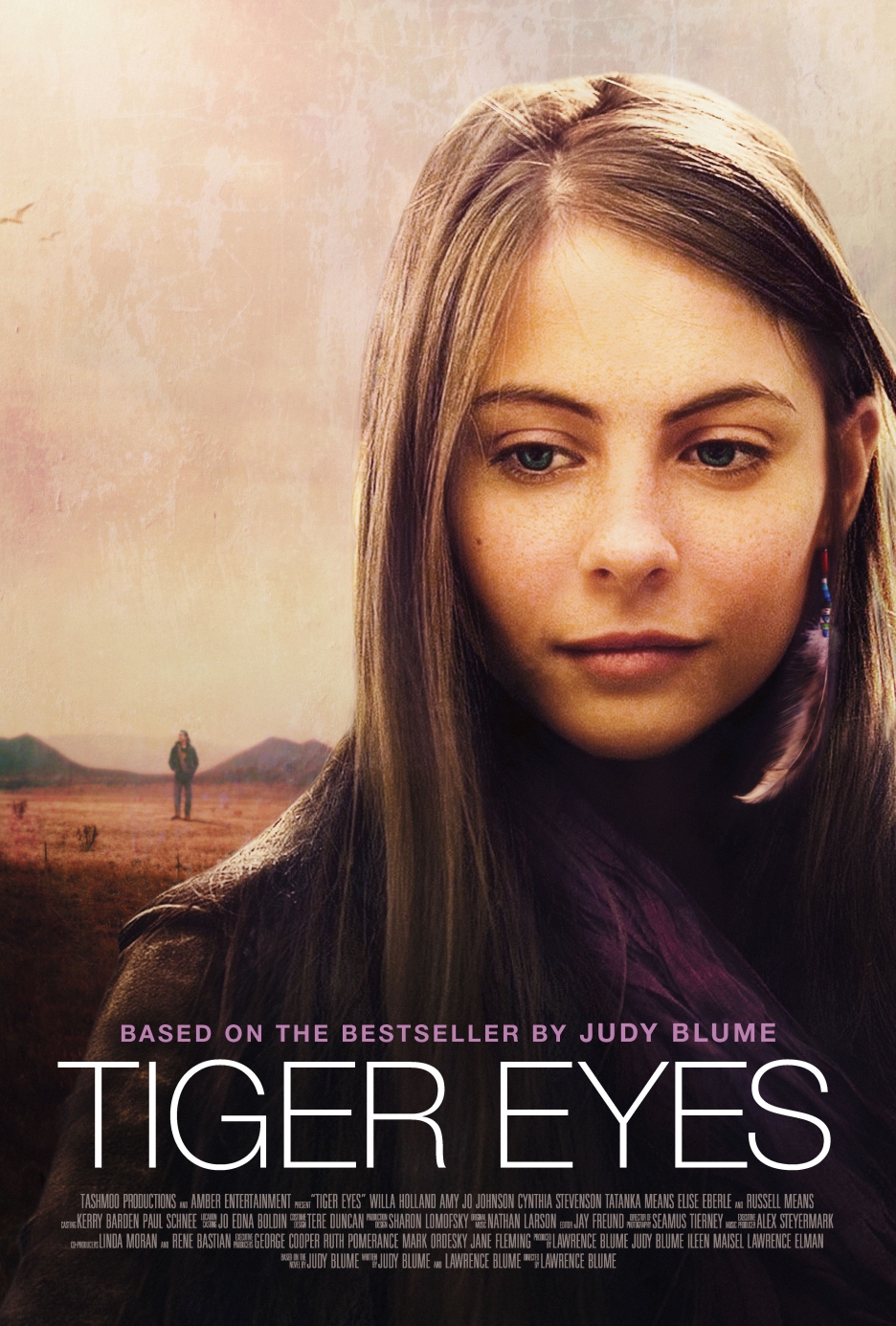
Tiger-Eyes-Poster

How cool would it be to not just publish a number of successful children’s and adolescent novels but then turn one into a major motion picture with your son as the director? No, it’s not me; I’ve got to work on publishing first, not to mention raise my kids. I’m talking about author Judy Blume and her novel-turned-movie Tiger Eyes.

When I heard about this movie, I automatically remembered Tales of a Fourth Grade Nothing, the first of Blume’s Fudge series and the book that introduced me to the fictional world of Judy Blume. And although I get very nostalgic when I think about it (my second grade teacher read it to my class, and the fourth grade was in the very distant future at that point), I’m ashamed to say I never bothered to return to Blume as a teenager. I had no idea that she wrote for adolescents, too.

When I took a course on adolescent lit a million years ago, I learned that this genre is important because it connects with teens on issues that matter to them. And while teens might enjoy adult lit (I certainly did) and adults certainly do love a lot of the adolescent books that are out there (yep), it’s important for there to be books that directly relate and speak to that age group. A regrettably under-addressed issue for teens is how to deal with the death of a loved one. We prepare kids to “Just Say No,” but who wants to talk about death, anyway? It’s so morbid. But that is just what Judy Blume does with the protagonist of Tiger Eyes, Davey Wexler. I won’t be spoiling anything by telling you that Davey’s father is murdered in his 7-Eleven store; you can read as much on the back of the book. The story is about what happens afterward, how Davey and her family deal with his death, how they figure out how to live without him.

Judy Blume told this story over thirty years ago; the book was actually published before I was even born. From the preview, I can’t tell if the movie will be set in the early ’80s or not. It’s one of those things that doesn’t matter all that much in reading the book; the only clue is the occasional mention of The Grateful Dead or other popular ’80s musicians. (And, I suppose, the lack of iPhones, texting, and Facebook.) The point is, though, that Davey’s story could be the story of any young girl, and it could be set in any time. I’m looking forward to seeing how it will be portrayed on-screen.

The book is narrated first-person present. I’m not sure if Willa Holland, as Davey, will provide narration throughout the movie to convey that same intimacy, but I do know, from Blume’s account in the Special Edition publication of Tiger Eyes that Davey is in every scene. I also know that there will be extra scenes not included in the book and that there were scenes that they shot that just didn’t work. That’s the nature of filmmaking, as it also is with novel-writing. If I were fortunate enough to be able to have a movie made of one of my books a number of years after publication, I imagine that I would take that opportunity to work in whatever I might have thought of in the intervening years, the extra little tidbits that hadn’t occurred to me until after publication. And Blume was fortunate enough to be able to be on set every day, working right next to her son Larry, the director.

The problem with so much popular adolescent fantasy fiction-turned-movies is that excellent stories like this one kind of get shoved to the back burner. As an independent film with a small marketing budget, the filmmakers have reached out to sympathetic writers like me to spread the word. So if you haven’t already, read the book. Then, on June 7th, see the movie. It’s showing in select theatres, and it’s also being simultaneously released on DirecTV, iTunes (pre-order here), and On Demand. Meanwhile, you can watch the trailer, read Entertainment Weekly’s write-up, like the official Tiger Eyes movie page on Facebook, and follow it on Twitter.

Someone Tapped My Brain Again, and Her Name is Anne Lamott

Anne Lamott

Anne Lamott (Photo credit: mdesive)

Did you ever read an article or a blog or a book, and afterward, you felt like the writer tapped your brain (but probably wrote everything much more coherently than you ever could have)? That is how I felt when I read Anne Lamott‘s Bird by Bird: Some Instructions on Writing and Life “It’s one of the best books about writing ever written,” my writer/avid-reader cousin-in-law Julie told me. And I must agree. I only wish I’d known about it sooner. So now it is my turn to pass the good stuff onto other writers or people who are just interested in learning more about the writing process.
Although Bird by Bird is full of hyperbole, the exaggerations really aren’t too far off, at least with how writers often feel (even if we don’t literally move to a trailer park near our therapists, as Lamott suggests at one point). Her style is candid, humorous, and unafraid of pointing out some of the ugly realities of which new and non-writers are unaware. She explains writing truths that experienced writers know but that are so difficult to verbalize.
Below, are some of my favorite passages, although you should just do yourself a favor and read the whole book. If you want (or need) to be inspired, if you want to read about the trials and truths of what an author has experienced, this is the book for you.

Upon the publication of her first book, “it seemed that I was not in fact going to be taking early retirement. I had secretly believed that trumpets would blare, major reviewers would proclaim that not since Moby Dick had an American novel so captured life in all its dizzying complexity. And this is what I thought when my second book came out, and my third, and my fourth, and my fifth. And each time I was wrong.

“But I still encourage anyone who feels at all compelled to write to do so. I just try to warn people who hope to get published that publication is not all that it is cracked up to be. But writing is. . . The act of writing turns out to be its own reward.” (pp. xxv-xxvi)

 —

“A writer paradoxically seeks the truth and tells lies every step of the way. It’s a lie if you make something up. But you make it up in the name of the truth, and then you give your heart to expressing it clearly.” (p. 52)

 —

“Just don’t pretend you know more about your characters than they do, because you don’t. Stay open to them. It’s teatime and all the dolls are at the table. Listen. It’s that simple.” (p. 53)

 —

“I do the menial work of getting [the words] down on paper, because I’m the designated typist, and I’m also the person whose job it is to hold the lantern while the kid does the digging. What is the kid digging for? The stuff. Details and clues and images, invention, fresh ideas, an intuitive understanding of people. I tell you, the holder of the lantern doesn’t even know what the kid is digging for half the time—but she knows gold when she sees it.” (p. 56)

 —

“Over and over I feel as if my characters know who they are, and what happens to them, and where they have been and where they will go, and what they are capable of doing, but they need me to write down for them because their handwriting, is so bad.” (p. 60)

 —

Regarding writer’s block, “I no longer think of it as block. I think that is looking at the problem from the wrong angle. If your wife locks you out of the house, you don’t have a problem with your door.

“The word block suggests that you are constipated or stuck, when the truth is that you’re empty. . .

“The problem is acceptance, which is something we’re taught not to do. . . But if you accept the reality that you have been given—that you are not in a productive creative period—you free yourself to begin filling up again.” (p. 178)

 —

“We write to expose the unexposed. If there is one door in the castle you have been told not to go through, you must. Otherwise, you’ll just be rearranging furniture in rooms you’ve already been in. Most human beings are dedicated to keeping that one door shut. But the writer’s job is to see what’s behind it, to see the bleak unspeakable stuff, and to turn the unspeakable into words—not just any words but if we can, into rhythm and blues.” (p. 198)

 —

“Many nonwriters assume that publication is a thunderously joyous event in the writer’s life, and it is certainly the biggest and brightest carrot dangling before the eyes of my students. They believe that if they themselves were to get something published, their lives would change instantly, dramatically, and for the better. Their self-esteem would flourish; all self-doubt would be erased like a typo. Entire paragraphs and manuscripts of disappointment and rejection and lack of faith would be wiped out by one push of a psychic delete button and replaced by a quiet, tender sense of worth and belonging. Then they could wrap the world in flame.

“But this is not exactly what happens. Or at any rate, this is not what it has been like for me.” (pp. 210-211)

Why our writing matters: “Writing and reading decrease our sense of isolation. They deepen and widen and expand our sense of life: they feed the soul. When writers make us shake our heads with the exactness of their prose and their truths, and even make us laugh about ourselves or life, our buoyancy is restored. We are given a shot at dancing with, or at least clapping along with, the absurdity of life, instead of being squashed by it over and over again. It’s like singing on a boat during a terrible storm at sea. You can’t stop the raging storm, but singing can change the hearts and spirits of the people who are together on that ship.” (p. 237)

If It’s Good Enough for Madeleine L’Engle, It’s Good Enough for Me

In several recent blogs, I’ve quoted Madeleine L’Engle, and for good reason. If you have not yet discovered her (she passed away a few years ago, although her writing lives on), I encourage you to click on any of the links or book covers in this blog. I will talk a little about how she has inspired and encouraged me, but there is so much more than I can include in one blog.

I credit L’Engle with one writing practice that I’ve kept up with for five years now, journaling. A lot of people poke fun at me about it, as if I’m ten and writing about the boy I have a crush on. But journaling is so much more than “Dear Diary” entries. It’s something that I can do with total honesty, without the fear of criticism or rejection, something that I can turn to later and either laugh at myself or marvel at how much an experience shaped my life.

It wasn’t Madeleine L’Engle who introduced the idea to me. Someone gave me my first diary when I was barely old enough to write cohesive sentences. I still have it, with a pink cover on the outside and the progression of my wobbly handwriting through the beginnings of cursive on the inside. It wasn’t a regular thing, but something fun for me to do from time to time, something that made me feel grown up. As a teenager, I tried to keep a more regular journal, but I eventually gave up and checked in maybe once every few months or years to say, “Yep, I graduated from high school” or “Wedding date set for next summer.”

Then in early 2007, I found out I was pregnant. I owned a number of books that I still had not read, and I knew that there was a chance that a new baby would occupy most of my reading time. Included in the list of unread books were a handful of Madeleine L’Engle’s, starting with her famous A Wrinkle in Time. There was also one entitled Madeleine L’Engle Herself: Reflections on a Writing Life (Writers’ Palette), which is a compilation of material from her writings, speeches, and workshops. Before I even finished the book, I adopted the journaling habit with renewed enthusiam and vigor.

L’Engle gives three recommendations to writers: “read, keep an honest journal, and write every day” (188). Reading wasn’t a problem. And I wrote when I had the time or when inspiration struck, often in spurts. But journaling? I recalled my poor, neglected blank book (I did actually graduate from the pink cover to a Star Wars one at some point), and I had no idea when I’d written in it last. When I finally found the book, I realized that if anyone were to pick it up, my life would seem full of holes. There were many significant events that I had not bothered to document. Organizer that I am, I went through all my old calendars, looking at all that had happened in the years since I’d kept my journal somewhat faithfully, and I began the act of recording. Well over a month later, I sat in a hospital bed, waiting to welcome my first child into the world, and I finished catching up. I’ve kept it up daily ever since.

Sometimes I simply go through the motions: “I woke up late today”; “It was a typical Tuesday”; “I’m too tired to think straight, but here I am, anyway.” If I’m so busy that I hardly have time to pause and write in my journal, it’s even more important that I force myself to do so. Otherwise, it might be a day in which my writing skills become stagnant. Like playing scales on the piano or stretching before a run, this practice is necessary to keep a writer primed. I’ve gone months at a time when my journal was the only place I wrote, and I’m thankful that I had it. So ingrained is the practice now that not doing it would be like forgetting to brush my teeth.

I don’t know what inspired me to do so, but I recently re-read Herself. Due to its format (most sections are less than one page), I absorbed it one idea at a time and over the period of a couple months rather than a few days. If I came away with the discipline of journaling five years ago, I left with so much more in the way of writerly advice this time around. I think it’s safe to say that my blogs will contain quotes from her for a while. I admire her for her strength as a person as well as a writer. She stuck with her chosen vocation through a decade of rejection (and she’d already published successfully before that), which inspires me to hold on and persevere through the unfriendly publishing world.

Page 34 says, “Being a writer does not necessarily mean being published. It’s very nice to be published. It’s what you want. When you have a vision, you want to share it. But being a writer means writing. It means building up a body of work. It means writing every day.” Many people, knowing that I write but was (for the most part) unpublished called me an aspiring writer. Lack of publication, however, makes me no less of a writer. It’s writing that is the qualifier here. L’Engle gave me permission to call myself what I really am.

One final thing (and I’m culling the list quite a bit here) is her knowledge on writing for children. I do not consider myself a writer for children, per se. In fact, the two stories that I have published (one out of print, the other here at Smashwords.com) are not for children at all, although they do have children as secondary characters. If you’re familiar with A Wrinkle in Time, a book that is included in the elementary school curriculum of many schools, did you know that L’Engle did not originally write it for a young audience? She simply wrote it, and it was categorized for children later. “To write for children,” she says, “it usually synonymous with writing down to children, and that’s an insult to [them]. Children are far better believers than adults; they are aware of what most adults have forgotten” (157). I certainly want to write for an audience who believes, so that is the goal I keep in mind when I write. And on that future date when someone (I hope) finds my book worthy of publication, I can worry about which age group wants to read it.

Hold It! You’re Exercising Wrong (I Know I Was)

Cover of "Hold It! You're Exercising Wron...

I read Hold It! You’re Exercising Wrong: Your Prescription for First-Class Fitness Fast! the first time in 1999. I was about to give up on exercise completely because I exercised all the time, yet I never lost weight. I was chubby and had low self-esteem. I wanted to tell people I ran into, “I really shouldn’t look like this. I do workouts from a weightlifting book by Lou Ferrigno. I do step aerobics, too, I promise.”

Searching the fitness section of Chamblin Bookmine (the most awesome bookstore in northeast Florida, by the way), author Edward Jackowski’s title practically jumped out and grabbed me. I knew I had to be doing something wrong to work out so often and have absolutely no results. And when I read the book, I discovered that there were many people in the same situation. The reason is that there are many fitness programs out there, but they are often directed at anyone and everyone instead of targeting the appropriate body types.

Jackowski lists four body types, according to where one puts on weight. Cones are broader of shoulder and narrower at the hips, putting more weight and muscle on the upper halves of their bodies (usually men but not always). Rulers gain weight evenly from top to bottom, with small to medium hips. Spoons are the opposites of cones, amassing weight on the lower halves of their bodies, particularly thighs. And finally, hourglasses (most often women) are proportional on top and bottom, usually with slender waists.

Body types are genetic, so there’s no way to change that. Jackowski, however, details plans for each type, listing which exercises to avoid (because they accentuate the negative aspects of those particular body types) and which to add to a person’s routine to become as fit as possible. I found out, since I was a spoon, Lou-Ferrigno-style weightlifting and step aerobics were the two last things that I should have done. As soon as I adopted Jackowski’s workout, I became physically fit within a few short months.

The most gratifying part was running into friends several months after losing weight, and they looked at me and asked where “the rest of me” was, since there wasn’t as much of me as there had been before.

There are many things I love about Jackowski’s workout. First, he explains why we need to do certain things, like a warm up and stretches and why they need to go in a particular order. And the exercises he recommends don’t require any special or expensive equipment. If I don’t have time to do a full workout, I can pick and choose exercises and tailor the whole thing to my limited schedule. Since 2009, I have also added the spoon-appropriate exercises from P90X and Spartacus.

The central component to the You’re Exercising Wrong workout, which is challenging for many people, is jump rope. According to Jackowski, “you burn more fat with rope jumping than with any other exercise” (81). I try to jump rope two to three times a week, and at one point between babies, I could do so continuously for ten minutes. It sounded impossible at first, but I built up gradually from 30 seconds to one minute on up. If an average girl who barely participated in team sports can do it, anyone with two functional legs can. Even if you’re skeptical about the jump rope part, I highly recommend this book if you want to get into shape and learn more about your own body type.

My Babies Slept with the Help of Babywise

There is a reason On Becoming Baby Wise: Giving Your Infant the Gift of Nighttime Sleep is my favorite gift to give new parents; it is the number one parenting book in my own collection. Authors Gary Ezzo and Dr. Robert Bucknam not only offer advice on how to get infants to sleep through the night, but they also cover a wide range of issues from how to raise multiples to what to do about colicky and reflux babies to fitting baby in with an older sibling or siblings to which baby products to buy and beyond.

I was very skeptical when a family member recommended Babywise, but she swore that it was the main reason all of her babies slept through the night by eight weeks. I had many other books in my maternity collection, but even the book that was specifically about breastfeeding didn’t give me nearly as helpful advice as Babywise did about the pros and cons of breast versus bottle, when to feed, and most importantly, why to feed (or not feed) at certain times.

Both of my sons had colic and reflux. Not only is there a chapter dedicated to these specific issues, but it also encourages parents like me to stay on the Babywise plan, with necessary modifications. Instead of giving up because my children had a few early problems, sticking with it helped them regulate and sleep through the night at seven and eight weeks, respectively.

So what is it that Babywise recommends? It’s called parent-directed feeding (PDF). Someone asked me, “Is it one of those books where it tells you not to feed your baby?” Absolutely not! Rather, it teaches parents how to recognize when the baby actually needs nourishment versus a diaper change or some other form of care. Just because the baby cries doesn’t mean he needs the breast or bottle, in other words. Many people of the attachment persuasion are opposed to this method, but think of it this way: You wouldn’t eat when you had a stomach ache or just needed to get some rest, so why would you put food in your baby’s upset tummy or try to pacify him by nursing when what he really needs is a nap?

Ezzo and Bucknam explore the history of parenting theories and explain the extremes of hyperscheduling (the baby must eat every X hours—no flexibility!) to no schedule at all. PDF is a happy medium, creating a predictable, flexible routine, which babies and children crave. They will be happy, well-rested, self-assured babies with equally well-rested and satisfied parents.