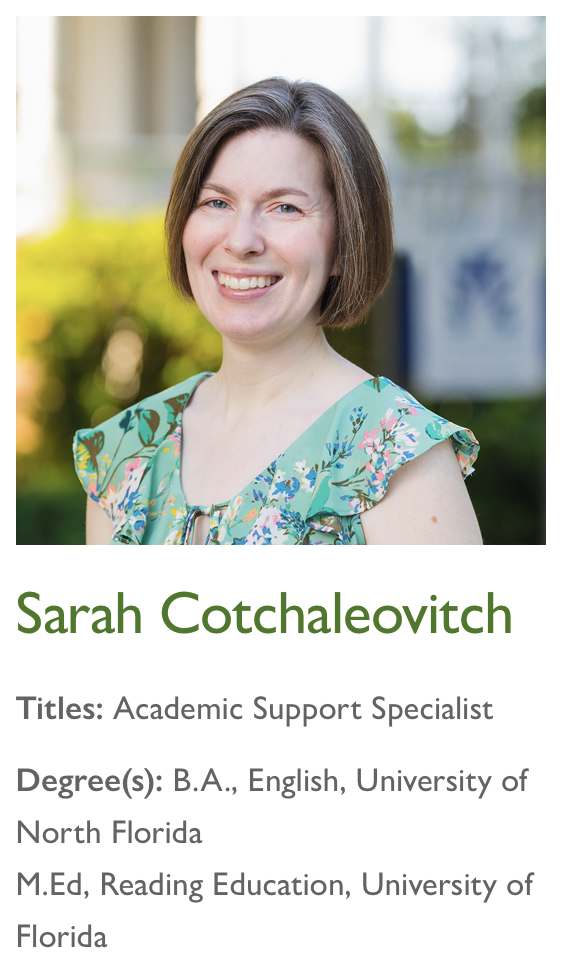
Famous Last Words: “I Would Never Be a Teacher”

I could also have titled this “I Will Never Go Back to School.” And guess what? I’m a teacher, and went back to school. Hmm. I will never have a million dollars. Let’s see if that works.

Many little girls admire their teachers and like to play teacher, so becoming a teacher is a natural next step to take. That wasn’t my childhood dream. Almost from the time I could hold a crayon, I wanted to be a writer. The University of North Florida didn’t have a creative writing program, so I settled for the next best thing, a degree in English. When I told people my major, most assumed that I would teach high school English or literature. “I would never be a teacher,” I told them. In my arrogance, I thought I would be the one writer to break through, immediately land an agent, get published, have my books in bookstores all over the world, and be the breadwinner for my family—happily ever after, the end.

Yes, I was the editor in chief of a literary rag when I was 19, where I learned about the slush pile, the rejections, editing, printing, distributing, and so on. And that was just for a little start up. I dabbled in freelance writing and editing for a few years, which was a whole lot of work for very little pay. I even self-published a couple books over 10 years ago. I have been humbled and realize that my dream might remain just that.

When it was time for my elder son to start school, I convinced Thomas to put Peter in the elementary school I had attended, a small Christian school that went from preschool through the 6th grade. At the beginning of the year, Peter’s teacher solicited for parent volunteers. I liked the idea of being involved with what Peter did on a day-to-day basis, so I volunteered once a week, doing whatever Peter’s teacher asked me to do. Sometimes I was cutting laminated pieces or taking down and putting up bulletin boards. I played games with three- and four-year-olds. I painted with them. I ran stations. I continued going every week because I enjoyed every aspect of it.

The next year, a plea went out for substitute teachers. I thought that substituting couldn’t be much different than volunteering—with the added benefit of being paid for it. I took the plunge, wondering if any of the teachers would take me seriously, would entrust me with their classes… and I was soon working 20 to 30 hours or more per week as a substitute teacher. I taught all grades, all subjects, although I was particularly busy in the younger grades.

I began to think that, since I would have two children at the school before long, it would only make sense for me to work there full-time. I decided to pursue a teaching certificate, and since I didn’t have a degree in education, I had to go the competencies route. I’m not sure what this looks like in other states, but in Florida, it’s the alternative to going back to school. Aspiring teachers have to prove that they are competent enough to plan a lesson, assess students, teach students with different needs and in different modalities, and so on. If memory serves, there were about 17 different competencies. I had to take some online courses, type papers, complete projects, and present everything to a member of our administration, who helped me submit my materials to the Department of Education. I also had to take a number of tests, including one in the subject area of my choice. I chose to be certified to teach prekindergarten through 3rd grade students (and added a K-6thgrade certification a few years later). I took the first available job opening, which was as a PreK 4 assistant teacher.

That’s how I got my start. How I got where I am now has to do with Peter. Since I was in his classroom so much in the early days, I had the advantage that many parents don’t have: I was able to see how my child did in school firsthand. He was a people pleaser, not a behavior problem at all. He made friends easily, especially with kids who didn’t particularly fit in. These were all things that made my parent heart happy. One day toward the end of his first year of school, the kids were playing a game in which they marched around the outside of the classroom rug that was bordered with the letters of the alphabet. The teacher played music, and when the music stopped, the kids would stop and say whatever letter they landed on. As I watched Peter, I noticed that he got a little antsy every time he passed the P. Whenever the music stopped, he somehow managed to land on it. Finally, he landed on a different letter nowhere near the P. He tried to sneak his way over to the P, and his teacher called him out on it.

Although that wasn’t a lot of evidence, I had this feeling… so I looked up dyslexia markers, one of the biggest signs of which is delayed speech. Not only had Peter’s speech not been delayed, but he had spoken early and well—no speech impediment and full sentences with good grammar. I expressed my worries to Peter’s assistant teacher because the idea that he might have trouble reading broke my heart. He loved listening to me read to him, but I am not just a bookworm—I’m a bookdragon—and I wanted to pass my love of reading onto my boys. The assistant teacher reassured me, saying one of her sons was dyslexic and was doing fine in college, with the help of academic accommodations. While this was reassuring, all I knew about dyslexia was the little I’d heard from others, most of which was wrong. I started to drill Peter on his letters, to no avail. I remember one frustrating exercise, in which I recited the alphabet and then stopped, asking him to tell me which letter came next. He could not come up with it. I got upset, thinking he was intentionally messing up. We had other frustrating moments, not related to reading, when I would give Peter a simple task, like asking him to take dirty clothes, put them in the laundry basket, and turn out the light on his way back. He would get halfway down the hall and wonder why he was holding dirty clothes.

In Peter’s second year of school (PreK 4), I was in his classroom one day, and the kids were each assigned a different zoo animal to paint. Each child had to sound out the name of their animal and write it on a label under their painting. The youngest boy in the class, who was six months younger than Peter, wrote “BRD.” Today, I know that means that he heard all three phonemes (sounds) of the word bird. I can’t even remember what Peter’s animal was, but I do remember that he was only able to identify the first sound. It’s like the rest of the word didn’t even exist.

Sight word garage

By the beginning of kindergarten, Peter knew most of his letters and their sounds. The ones he still confused were B/D and M/W. But what really tripped him up were sight words. The students always had to do some sort of activity as they entered the class, and one week, the teachers had a sight word garage (as pictured) taped to the door. The students would lift a flap, read the sight word written underneath, and enter the class. Peter’s strategy was to listen to the kid in front of him, pick the same flap, and repeat the word he’d just heard. One morning, Peter arrived, and no one was in front of him. He was on his own. I prayed he would choose the flap that had Iunder it, but Peter didn’t remember which words were where. He chose one—not I—and didn’t know what the word was (I think it was either me or we). He had no idea where to start, and I was helpless to do anything for him. It was humiliating for both of us.

About a week later was the parent-teacher conference, and I felt like an abject failure. Peter had co-teachers that year, and I assured them that I read to Peter every night. I had no idea why he couldn’t read; it wasn’t like he was a first-time student. Both of his teachers teared up; they cared about my child and read my desperation, my confusion about what was going on with him. One of the teachers told me that when she got her children’s report cards, she would fold under the part with the grades and read the comments from the teacher because that’s what mattered. She assured me that Peter was a great citizen. Both teachers also told me they knew I was a good mom, which was a relief—I hadn’t done anything wrong. They were prepared with a list of child psychologists, and I immediately got on the phone to have Peter evaluated. In the end, Peter is dyslexic. He is also kinesthetically gifted, has an auditory deficit (which is unusual for dyslexic people), and his working memory is in the toilet. 

My boy has gone through many testing sessions over the years. He spent two days a week with a tutor his 1st grade year, and when he was in 2nd grade, the school finally had a full-time dyslexia specialist on staff who pulled Peter every day. Although I finally learned what dyslexia is (thanks to Overcoming Dyslexia by Sally Shaywitz), I still had no idea how to help him read. The summer before 1st grade, he was supposed to read Froggy Goes to School. Although I usually read everything to him, I believed that he should be able to read the one book the school had assigned to him. While the book was short enough to be read in one sitting, Peter struggled to read one page every day. It took weeks to finish that book. At the time, we didn’t know that Peter also had severe anxiety, so struggling to read, compounded with his feelings about himself, made for a miserable experience that we both still remember.

While Peter was going through his reading struggles, we were also trying to figure out what was going on with our younger son, Ian, who was language delayed (he would parrot a word he’d heard and never say it again) but at the age of two read every single letter on my husband’s t-shirt. Due to Peter’s reading struggles, we hadn’t pushed it with Ian, so this came out of left field. This was a kid who could read but couldn’t tell us what color his eyes were (we weren’t sure he even knew he had eyes), and he floundered behaviorally. So started our journey to get Ian diagnosed, as well. Although it took many doctors (some of whom were quacks) and years to get all the diagnoses, I can now tell you that we have two neurodiverse children. Ian is the poster child for ADHD (with a big ol’ H!), high on the autism spectrum (what they used to call Asperger’s), and has social pragmatic language disorder, OCD, and dyspraxia (the last of which I’d never even heard of when he was diagnosed). Every therapy known to man was recommended for him, and we finally settled on speech therapy, occupational therapy, and ABA, starting at age four and continuing through the 5th grade. For both of my children, I read every book and article I could get my hands on to give myself the tools to help them. But when it came right down to it, since I was already a teacher, I took the path that would help kids like Peter—the educational route—and at age 36, I gritted my teeth, swallowed my pride, and went to grad school to get a master’s degree in reading education.

When explaining to my adviser why I was going back to school, she told me about University of Florida’s Dyslexia Certificate program. Instead of the reading block that was a part of the Reading Education degree, I would detour and take five courses through the College of Special Education, ending with a 40-hour practicum, a master certificate in dyslexia, and a reading endorsement. I have done a lot of professional development, but the dyslexia certificate is by far the most valuable continuing education I have ever received. It changed my life, and finally, I felt like I not only had to tools to screen and assess for reading disabilities, but I had a game plan to remediate them. I finally made it onto my school’s student support team, and that’s where I’ve been for the past five years.

If you had told me what I would be doing now 20 years ago, I wouldn’t have believed you. In fact, I think I would have been sad to hear that I wouldn’t have a single novel published. I would still love to be an author—don’t get me wrong—but I feel like there is so much I have learned on this journey. Not only do I get to watch the light bulb go on for struggling learners all the time, but an unspoken part of my job is helping parents. These students need an advocate. One of the most unintentionally hurtful things said to me about Peter was, “But I thought he was so smart.” Well, guess what? Peter is smart, and dyslexia doesn’t change that. We need to stop treating As and Bs like they are the definition of a worthwhile student. This isn’t to say that people with good grades don’t work hard or don’t deserve praise, but grades aren’t everything and certainly don’t tell the full story. This is something that needs to be addressed in the American educational system, but that’s for another post.

If you have read this far, thank you. I am in the running for America’s Favorite Teacher. I am shocked that I made it through the first round as a Top 20 teacher. It would mean the world to me to win this, although I know it’s a very long shot. I wanted to write this to give my amazing supporters some idea what they’re supporting. Let me tell you, early morning wake-ups are hard, and many of the days are long. I always knew I wanted my kids to have the same great early educational experience I had—and they did. I did not expect to go back to school myself—both as a teacher and a student—and it’s been one of the most joyful and rewarding experiences of my life.

Please vote for me daily at the following link: https://americasfavteacher.org/2025/sarah-cotchaleovitch
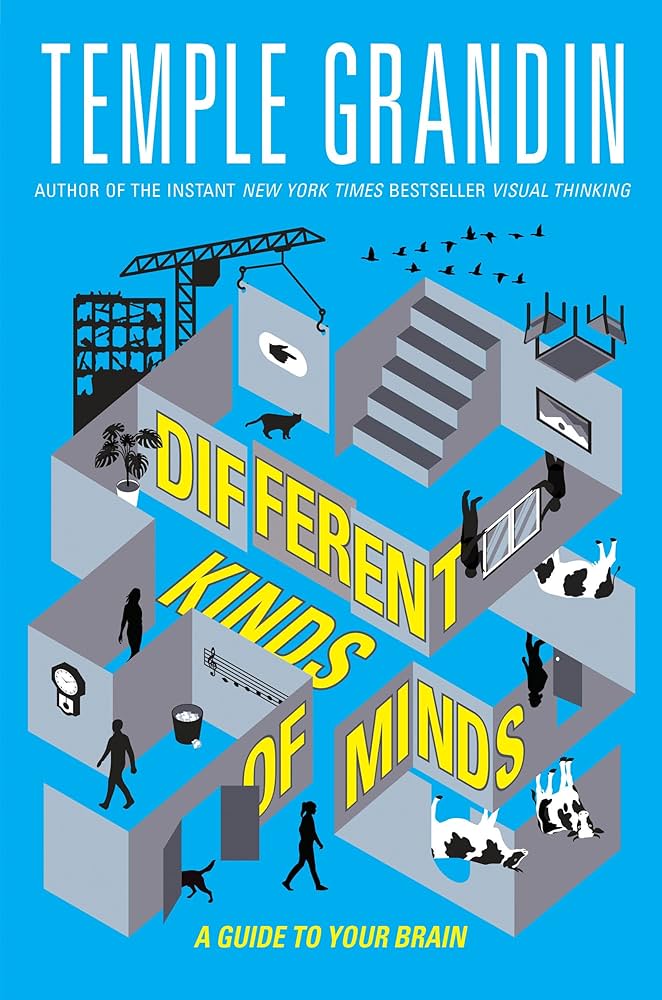
We’re Screening out Our Visual Thinkers

Earlier this year, my husband and I found ourselves in a little independent bookstore, and we did what I love to do in these establishments: we bought a book. (Note that it was just one book; I’m very proud of my restraint.) The book that caught our eyes—actually, the author who caught our eyes—was Temple Grandin. Years ago, we watched her eponymous movie (starring Claire Danes), and we knew that she is both brilliant and autistic. Our younger son is autistic, and we thought that Grandin’s Different Kinds of Minds would help us understand how he thinks. But how Ian thinks continues to be a bit of a puzzle because what Thomas and I discovered upon reading Different Kinds of Minds was a greater insight into the brain of our dyslexic son, Peter.

If you know me or have followed my educational posts, you’ve heard of Peter, and you might even know that I went back to grad school to help him and other struggling readers. I love reading so much that it broke my heart when Peter couldn’t learn his letters, much less blend them together to make actual words. I am now a reading specialist, certified to help students with dyslexia and other reading disabilities. For learners like Peter, the road to reading is blocked by dyslexia, but after much intervention, he was able to detour around this permanent roadblock so that, by the time he was a preadolescent, he could read a text aloud, and no one would know all the hard work that was going on in his brain to help the words flow freely. Still, though his reading sounds good now, he has to be extremely focused and has learned things about himself—such as that he needs to take notes and engage in discussion—in order to retain and comprehend what he reads. It’s tedious and by no means instantaneous; it makes reading even a short text a chore. Give him a graphic novel, photographs, charts, or videos, though, and information becomes much more accessible.

There are a couple different deficits that could affect a dyslexic person. One is a deficit in rapid naming (for example, showing them a series of easily identifiable shapes, which they know but have difficulty naming quickly). The second deficit is phonological in nature, which could include the inability to match letter sounds (phonemes) to their corresponding letter shapes (graphemes) or the inability to rhyme. A person with both of these deficits has double deficit dyslexia, and that’s Peter. Before we knew he had dyslexia, he was diagnosed with a working memory deficit, which unfortunately, has no permanent remediation. Testing also revealed that of the four kinds of learners, (visual, auditory, reading/writing, or kinesthetic), Peter was weakest in auditory, which is unusual; many dyslexic learners are auditorily adept, allowing them to memorize or at least easily comprehend what they hear. Not so for Peter. All of these put together make the American educational system a nightmare for him to negotiate. But it wasn’t until reading Temple Grandin’s book that I achieved a new level of clarity: not only are there different kinds of learners, but there are different kind of thinkers.

Grandin describes two kinds of thinkers, verbal and visual. The former “think more in words than in pictures,” are well-organized, have good executive functioning skills, and “learn best by reading books and listening” (p. 10). On the other hand, Grandin describes visual thinkers as those who “think in pictures more than words,” have messy backpacks and desktops but know exactly where to find things, excel at puzzles and chess, and “learn best from images, charts, and diagrams” (p. 11). She describes a verbal-to-visual spectrum, in which most people fall somewhere between these extremes. For Peter, though, and other visual thinkers like him, they are so far to the visual side that it is very difficult for them to succeed in a world built by and for verbal thinkers. Grandin provides an 18-question quiz that my whole family took. I was very surprised with my own results. If you answer 10 or more with “yes,” you are probably a visual thinker. Where do you fit?

Temple Grandin’s Visual Thinker Quiz from Different Kinds of Minds (pp. 38-39):

  1. Do you think mainly in pictures instead of words?
  2. Do you know things without being able to explain how or why?
  3. Do you solve problems in unusual ways?
  4. Do you have a vivid imagination?
  5. Do you remember what you see and forget what you hear?
  6. Are you terrible at spelling?
  7. Can you visualize objects from different perspectives?
  8. Do you have trouble organizing?
  9. Do you often lose track of time?
  10. Would you rather read a map than follow verbal directions?
  11. Do you remember how to get places you’ve visited only once?
  12. Is your handwriting slow and difficult for others to read?
  13. Can you feel what others are feeling?
  14. Are you musically, artistically, or mechanically inclined?
  15. Do you know more than others think you know?
  16. Do you hate speaking in front of a group?
  17. Did you feel smarter as you got older?
  18. Are you addicted to your computer?

For some of these questions, I wish I could ask what she means. Like #2, #15, and #17. I answered yes to all three. I suppose #2 refers to when you just “know” something (although I was a philosophy minor, so if I don’t know how or why, I tend to go to great lengths to figure out the answer and will create even longer explanations, like this very parenthetical aside). For #15, I know a lot of trivia and have a great memory for dates and names, a great skill to have in trivia games. But is that what the question is referring to? And for #17, I feel like pretty much everyone should be able to answer yes to this, so it doesn’t seem like it should count. Even without these, I answered “yes” to 11. The only ones that got a “no”: #1, I think in both words and pictures equally (and often simultaneously—my life is like a movie that I narrate in my head as I live it—often with a soundtrack that I may or may not be singing out loud); #6, I’m an excellent speller; #8, I’m an even better organizer (my super power, if you will); and #12, I have good, legible handwriting. Although I answered #18 with a “yes,” I suppose it may not count because, although my family would definitely say I’m addicted to my computer, what I’m usually working on is either a spreadsheet or a word document. But even if you don’t count that or #2, #15, and #17, that’s 10 with a “yes” answer. I was shocked. According to Grandin’s definition, I fit in with verbal thinkers because, hello, I’m verbose and write much better than I speak (BIG “YES” to #16). I also did very well in school and on tests, although I will forever hate standardized testing. I was not surprised that my husband was the least visual thinker (he answered “yes” to eight), and Ian had the next most, with 12. Peter, however, only answered “no” to one. He is almost entirely visual. And our schools are doing their best to hammer my visual boy into a verbal-shaped hole.

With her book and much of her life’s work, Grandin’s “goal is to get hands-on education back into schools so that we don’t screen out the people we need” (p. 7). Remember home-ec? Shop? They were a thing of the past by the time I got to high school. Although I live in a county that has some rural areas that still offer 4-H programs, not all students have opportunities like this. And who cares if you don’t want to be a farmer or rancher when you grow up? I think these are valuable things to learn, just to have an appreciation of them, if nothing else. I am a proponent of a well-rounded education, but the way our school system is nowadays, it shows what it values by testing students on the core subjects, period. And regarding standardized tests, if “the student doesn’t fit the mold? Too bad” (Grandin, p. 56).

This is a shame for people whose minds work in pictures instead of words. Who are these people? Grandin has a pet name for them that I love. She calls them “the clever engineers,” and they include artists, designers, inventors, electricians, architects, plumbers, and more (p. 7). Want some examples of real people? Think Steve Jobs, Albert Einstein, and Thomas Edison. Where would we be without these innovators? Peter also falls in this category of thinker. For years, we have trusted him to eye a space and tell us what should go where. For fun, he built our previous house in Minecraft. He’s in an architectural and engineering club in which they sometimes take on different challenges, and when the students were told to make a cantilever out of several pieces of paper, tape, and a paperclip, he was the only student to successfully MacGyver one out of the materials given. Yet he struggles with every midterm and final exam. He bombed both the ACT and SAT. If he has all the skills to become an architect but can’t pass the test to get into the college or university, what recourse does he have? Life skills seem to have no merit anymore. Grandin nails it when she writes, “It’s clear that doing well on tests can get you into good colleges; it’s not clear that doing well on tests leads to success in life” (p. 59).

At the elementary school where I teach, we strive to differentiate because we understand that there are as many types of learners as there are students in the classroom. At a professional development session a few years ago, our administration gave the faculty a group task that got us up and moving (which is great for our ADHD learners) and also allowed us to take on the tasks that spoke to our differing skill sets. At the end of it, everyone agreed that it was a great exercise that would work well with our students. One of my colleagues was worried, though—how would we assess their learning? And that’s the problem: there is so much emphasis on assessing that we lose all the great lessons learned in the process—including failure, which equals growth. I have no problem assessing skills to guide instruction, but I wish we would throw out letter grades. Yet, to keep our accreditation, to keep our doors open, we have to prove that our students are being taught and retaining certain skills. What is the answer?

First, I think that, if we say we honor “diversity” and “inclusion,” then we need to recognize that diversity goes much deeper than what we can see, and we need to include those who think differently than the test-writers. It has to do with what we can do and how we think, as well as what we bring from our individual experiences and cultures. Both of my kids are what we call “neurodiverse,” but even so, they are each differently neurodiverse, even though they have the same background and genetic makeup.

Second, for kids like Peter, who have artistic leanings but might get screened out of certain higher learning programs—which also means getting screened out of a career at which he could excel—we need more options. One option that Grandin touts is that of the apprenticeship, which is dying out in America. She writes that “we are facing an unprecedented skills gap. European and Asian countries have trained and encouraged their clever engineers. We have screened ours out” (p. 78). And if college degrees are still a requirement for such careers, then apprenticeships, internships, and experience should count toward college credit.

Lastly, more colleges—no, all colleges—need to quit requiring testing for acceptance. Does this make more work for the committees that decide who to admit and who to decline? Absolutely. But does it guarantee a fairer process? Yes. We have a friend who is an engineer, but he did so poorly on the math section of his SAT that the last college on his application list was the only one that would accept him, and even after entering their program, the academic rigors almost made him quit. Thank goodness he didn’t because he has had an amazing career and is very successful. His story gives me hope for Peter and learners like him, but… I wish that it didn’t have to be his story. How many others like him gave up and aren’t following their passion? I wish everyone’s story fit their learning profile and not what our school system decided to value. If you’re good at taking tests, hey, I am, too. But if not, you should be able to prove your knowledge some other way.

Grandin’s book covers many more issues, including parenting, a whole chapter on animals and how they think and feel, and the importance of different kinds of thinkers working in collaboration. I highly recommend it. (It’s also written for young readers, so it’s not full of dense jargon.) I bet you’ll start to identify visual thinkers in your life. The more we know about them and how they think, the more we can advocate for them and for changes that will help them have a positive educational experience. When our visual thinkers thrive, innovations happen, art and design are created, and we have outside-the-box problem solvers who can come to the rescue when there isn’t an instructional manual available.


Check out my Teachers Pay Teachers store for instructional videos and resources, Mrs C Loves to Read

What’s Schwa Got to Do with It?

Ooh, schwa. Sounds exotic. What is it?

Unless you teach elementary-aged kids, sing chorally, or are a word nerd (word nerds, unite!), you may not know what in the world a schwa is. Why should you care? Well, if you play Wordle, it’s a fantastic word to know (you’re welcome). And if you’ve ever thought that English is a ridiculously hard language to learn, you can thank the schwa—it’s a big part of why this is such a difficult language to read and spell.

Merriam-Webster defines schwa as “an unstressed mid-central vowel (such as the usual sound of the first and last vowels of the English word America),” wherein “mid-central” refers to the placement of the vowel in the mouth. The Oxford Dictionary definition is, “the unstressed central vowel (as in a moment ago), represented by the symbol /ә/ in the International Phonetic Alphabet.”

What does all this mean? Even though we know there are five vowels (a, e, i, o, and u) and sometimes a sixth (y), the schwa sound can be made by any of them. The key is identifying where it falls in a word (unstressed syllables in multisyllabic words). What, to the naked ear, may sound like a short u or could actually be spelled with any of the vowels—and often not the ones you expect.

Learn from My Mistakes

It was time to teach the schwa sound to my students, and we practiced “calling words home” (a trick that helps them identify stressed and unstressed syllables), and then I set them loose with a worksheet to find the schwa in a bunch of different words. I’m not proud of it, but it was one of those lessons when I just needed an activity to fill the time, so I did what (some) teachers do in this type of situation: I looked for a free worksheet online. One that didn’t require my students to cut out and glue anything because, even though I have a very cute chicken-shaped receptacle for my glue sticks, I absolutely abhor using them. More glue gets on the table than on the paper, and what little does get on the paper doesn’t hold, so there are scraps of paper everywhere and a sticky table. But I digress.

The nice lady who created the worksheet explained that she had vetted every single word to ensure they all had a schwa syllable. Indeed, all were schwa words. But many of them are what I call hiding-in-plain-sight schwa words, and I did an inadequate job preparing my students for these. Within a few minutes of turning them loose with what should have been an independent activity, I was getting called to help them left and right because they were able to find the unstressed syllables, but then it appeared that many of the unstressed syllables had the vowels they were expecting. So how could they be schwas? I had missed one important detail about the schwa, which was right there in my teacher’s manual. UFLI Foundations defines schwa as a “quick, unstressed neutral vowel pronunciation, noted by the symbol /ә/. The purpose of schwa is to allow unstressed syllables to be said more quickly” (p. 371, emphasis added).

I had neglected to tell my students that, sometimes, the schwa vowel is, in fact, the one you think it is (depending on regional pronunciation, of course). What I mean by this is that I can sound out a word like muffin and figure out that its vowels are u and i (in that order). Does this word have a schwa? Yes, it’s the i. Say it. Which syllable gets the stress? muf Now, say the whole word, and when you do, really listen for that second vowel. Does is sound like a pure i (“ih”), or do you say it so quickly that its sound is indistinct? (I hope you said it’s indistinct, but if you think differently, I’ll get to that in a sec.)

Every multisyllable word has at least one unstressed syllable, and chances are, that unstressed syllable has the schwa sound. Try some more words: acrosschickendentistdragonupon. Unstressed syllables make the schwa lazy; the vowel is kind of taking a nap and not doing its proper job. This was a hard concept for me to grasp because I am a trained singer, and when singing, I often modify the schwa sound to make it more palatable to the ear.

For example, when singing “The Star-Spangled Banner,” I pronounce the i in perilous as the pure short /i/, not /ә/. Even though no one goes around saying per-ih-lous, this is a choice that many singers make because the schwa sound is, quite frankly, ugly when it’s sung (especially when a note/vowel is sustained for any length). Because I’ve been singing for a lot longer than I’ve been teaching, I sometimes (unintentionally) speak in an affected way, making the schwa hard for me to detect. This happens even more when I’m sounding out a word in isolation with my students. Note to self: when teaching, take off your singer hat. When my students were trying to find the schwa in a syllable that clearly sounded like /ә/ and just as clearly was spelled with a u (like until), it’s no wonder they were confused. They thought that the schwa could never be the vowel that typically makes that sound. It’s important to teach that, even though it may sound like a short u (or i, as the case may be), the schwa prevents it from having its purest sound. In other words, when trying to be a schwa detective, be the opposite of a good singer.

How to Teach Schwa and Why It’s Important

First, being able to identify which syllables are stressed and unstressed is a great tool for readers to have in their literacy toolboxes. Because I have a very long last name that starts with an unstressed syllable, I’m familiar with people attempting to lead with a stressed syllable. And once they start pronouncing it incorrectly, they get stuck. I teach my students what stressed and unstressed syllables are by using their names. I pretend they’re very far away, then call them in a sing-song voice. When I do, which syllable do I naturally stretch out? That’s the stressed syllable. (Kids love this because they discover that many of them have one or more schwa sounds in their names.) We can use this same exercise with multisyllabic words. If emergent readers are decoding a word for the first time and it sounds wrong, they’re likely emphasizing the wrong syllable. They need to “call” it the other way, with the stress on the other syllable. Then all kinds of light bulbs start to go off. (To see exactly what I mean, here’s a FREE video of me teaching the schwa sound.)

Second, if students don’t learn about the schwa, they might be prone to spell words like nickul (nickel) or baskit (basket). And while spell check is out there to fix a lot of these mistakes, it can’t help when someone is wildly off. I teach with the simple view of reading approach, in which sounds (phonemes) and word parts (syllables) are taught in an explicit, systematic manner. The spelling patterns are more important than the individual words because they’re like keys, and once readers have the keys to decode, they can “open up” all kinds of new words. Once I’ve taught a spelling pattern (like the schwa sound), I include it in word work, games, and texts, and students gain reading comprehension. It’s a formula that looks like this:

RC = D x LC

in which Reading Comprehension is the product of Decoding and Language Comprehension.

Why It Matters (My Soapbox Moment)

The more students engage with and experience these words, the better they will understand and retain them. The better readers they will be. The better spellers and writers. But what about those students who struggle? They may have the reading strategies down cold, but they just can’t get the hang of spelling, no matter how hard they try. They are the kids who routinely fail spelling tests (in the schools that still give them) or who lose a letter grade because their essays, while including all the right content, look like they were written by a three-year-old. If you’ve read my blog before, you know how I feel about tests (don’t like them one bit), although I grudgingly understand why we do have to have some way to quantify what students know.

I am a formative assessment kind of gal, and one great way to give this kind of assessment was introduced to me in a math workshop, of all things. While I was attending in the hopes of helping my kiddos who struggle with math (and I did get a lot of great tips for that—never fear!), I came away with a much stronger sense of how to help all my students in any subject.

When we throw concepts at students and expect them to swallow (and regurgitate) them with no opportunity for reflection, how much are they getting out of the lesson? How much do they retain? The answer is often just enough to get them through the unit test—if that. What I learned from Dr. Yeap Ban Har from [Math]odology is that the answer does not matter nearly as much as the journey to searching for the answer. He uses the analogy of going to the airport. Some students are on their way there (need assistance). Some have arrived at the airport and are ready to board (emergent). Others are at cruising altitude (independent). One way to gauge which level of “airport” readiness students have achieved is by giving them the opportunity to show their learning through reflective journals. These can take many different forms, from simply describing what they learned to turning it into a story or letter to a friend to… well, whatever way a student needs to express him- or herself. If education across the board could shift in this direction, I think great things could happen for our young minds.

Bringing it back to the schwa sound, I would much rather a student explore and find words in texts they’re reading, write them out, and play with syllable stresses than memorize a list of words for a spelling test. If they get the vowel wrong, at least they’re thinking. We’ll read some great literature together, and they’ll suddenly start seeing words with schwas everywhere, and the dots will start to connect. If you’re a teacher, wouldn’t you much rather spend your time reading great texts to your students than drilling them for a test? If you’re a parent, doesn’t that sound like the kind of education you’d like your child(ren) to have? With the right exposure, the right techniques, they’ll become much more competent and confident readers, writers, learners, and thinkers.


For more about schwa and all kinds of other spelling patterns, check out my Teachers Pay Teachers store, Mrs C Loves to Read. For two days only (August 6-7, 2024), get up to 25% off everything in my TpT store using the code below.