I’ve Got Too Much to Read, Dude

This (the title) is what I told my husband mere minutes ago, after watching the new trailer for The Hunger Games: Mockingjay Part I. Even though I just re-read the entire Hunger Games trilogy earlier this year, seeing the trailer made me eager to do it again.

So let’s see, if the movie comes out in November, and it’s late September now, and I haven’t nearly caught up with my 2014 reading list, and I’ve bought more new books since creating the list, and I received a bunch of books for Christmas that I have yet to crack (more on that at the end), and I have a 1000+ page history book I’m supposed to be reading right now…

I’ve got too much to read, dude.

Now, this is a good problem to have. It’s just the kind of problem that I like. Not always easily solved, but it’s fun to try, anyway. There was a point in my life when I was disciplined enough to read every book in the house before buying anything new, but that was in 2007, and let’s be honest: a lot of good books have been published since then.
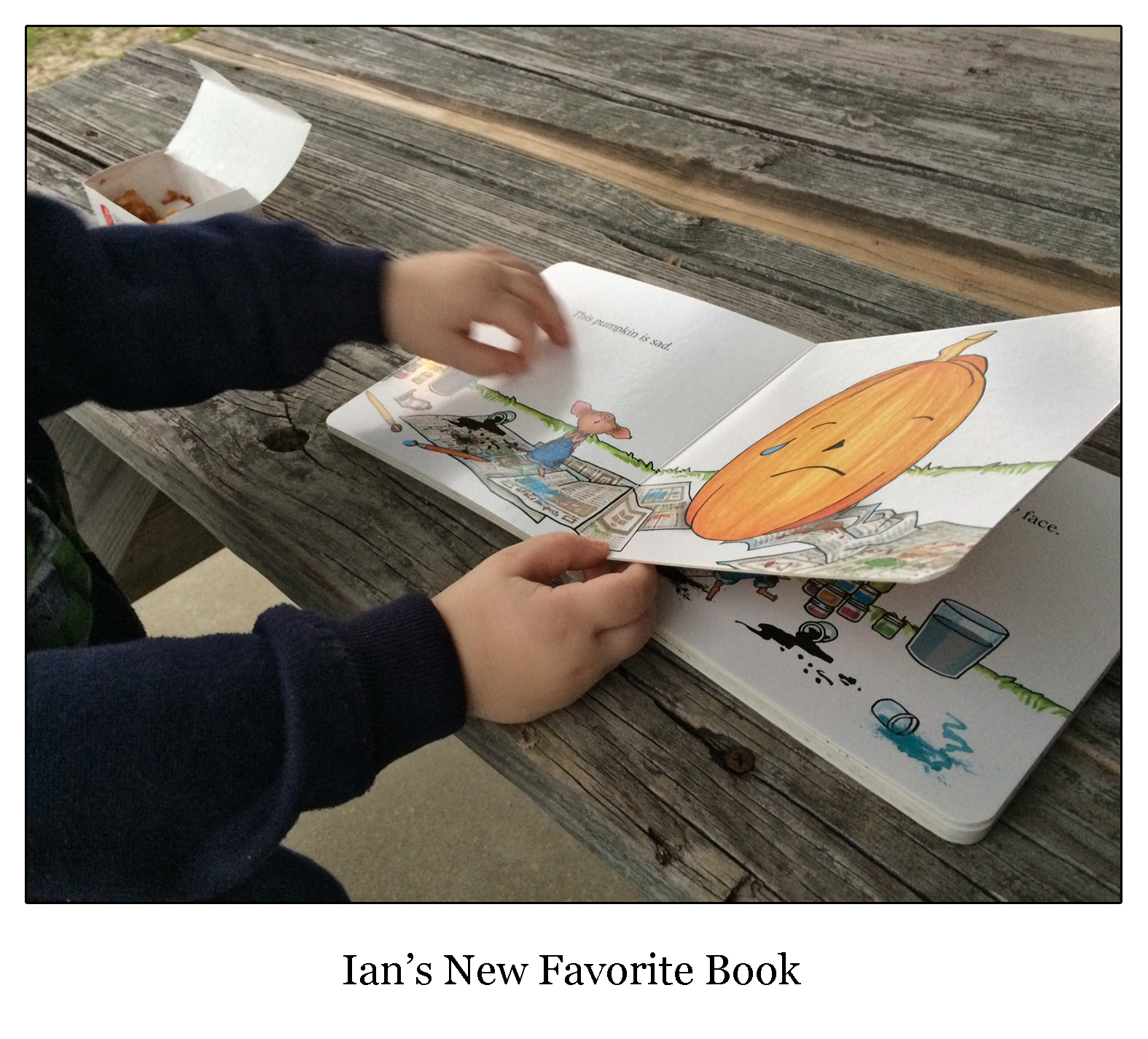
Ian ReadingWe are a reading family. There’s me, of course, the crazy-avid reader. There’s my husband, who currently has three or four books that he’s reading. There’s my first grader, who gets an ice cream party at the end of the year if he reads 100 books, so we make sure to squeeze one in every night. And there’s even my two-year-old, who took an interest late in the game (compared to his elder brother, who was re-enacting his favorite books at 18 months) and wants a new book every time we go to our local bookstore’s story time. I particularly love reading with my kids, watching them absorb so much information and the excitement when they get a new book. They are quickly becoming like their mama, getting excited every time we take a trip to a library or bookstore.

And if you follow my blog, you know that one of my biggest problems when it comes to books (aside from wanting to spend all of our money on them and then not having time to read them, in any case) is where to put them. When I ran out of room in our china-cabinet-turned-bookshelf, I started using the top of the piano. I stored large, hardback volumes in cabinets, and the little corner shelf in my bedroom was overflowing. I started looking for people who might want to borrow books, just so I could make more room.

Then something wonderful happened. My grandfather’s widow finally decided she was tired of keeping his old bookcase kicking around in her garage. This isn’t some other piece of furniture that can be converted for book shelving purposes – it was made to hold books. My parents didn’t have room for it, so that meant that it could be mine – AAAALL MIIIIINE! If only I could find a place to put it.

Now, you know that I would be cool with getting rid of our toys and even some furniture, as long as I still have a good chair to sit in. But since I don’t live alone (and I don’t want to any time soon), I have to consider the other people who live with me. We ended up scooting our little photo album shelf over a few feet and moving my mother’s lovely painting up, and – voilà! – instant bookcase space.

Bookcase


What do you think? It’s a little banged up, but after all, it is antique. And to see all (well, not quite all, but most) of our books in one place makes me realize how many we have. Yikes, that’s a lot.

But you know, there’s no such thing as too many books.
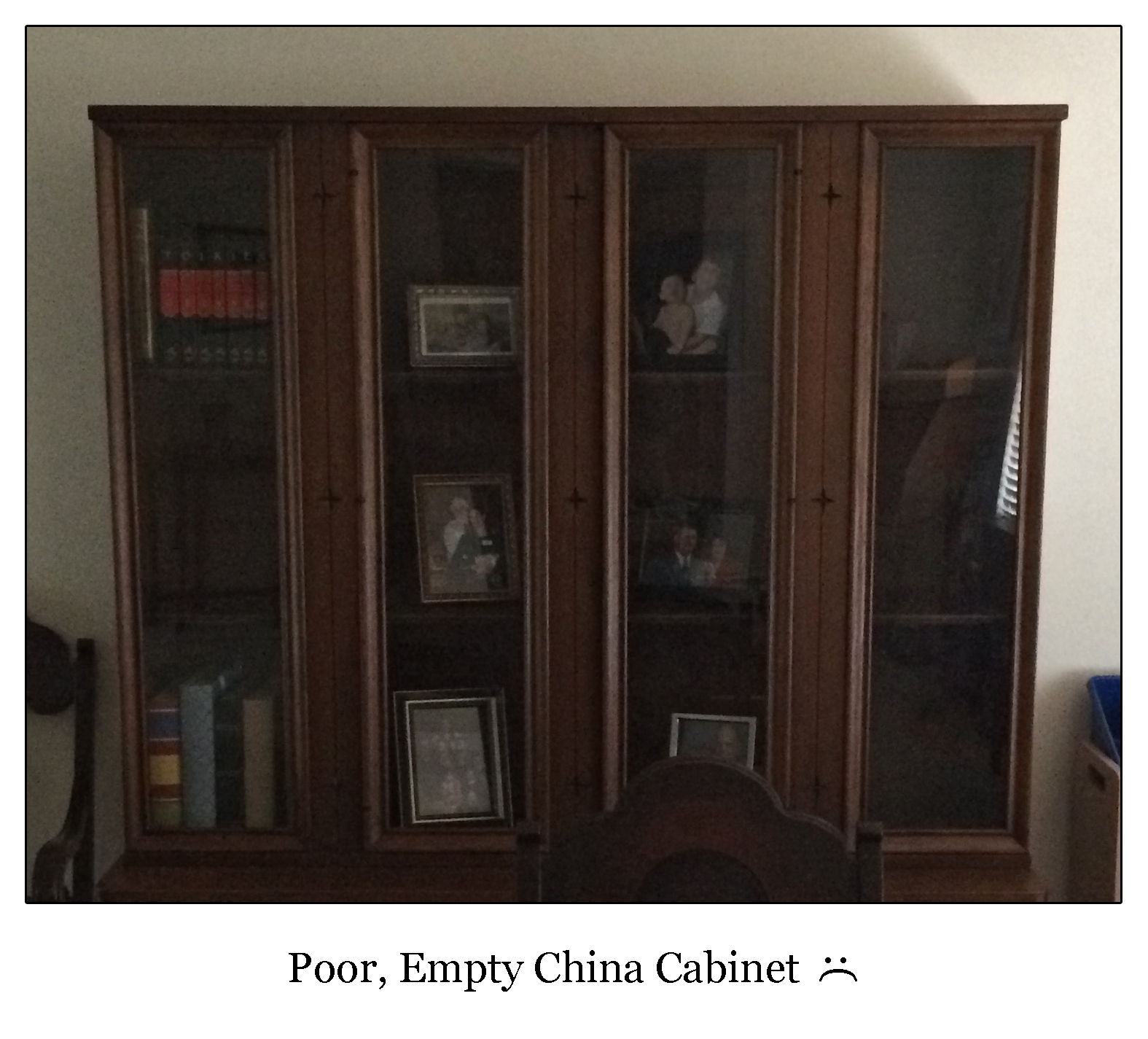
Look at our poor china cabinet. The only thing left in there is Tolkien. And photo albums. I put some in there to keep it from looking empty. Oh, and family photos. Hello, family. Love you. Just wish there were some more books behind you.

Of course, as I told my husband, we might want to consider actually pulling our china out (wherever it is) and put it in the china cabinet. I mean, it has little display lights and everything. It would be a shame not to use it for its intended purpose.

Okay, you know I’m just joking. The reason the china is packed up is because I do not intend to use it, but I do intend to buy more books. Oh yes. Picture me rubbing my hands together in glee.

Which brings me to something amazing that happened this weekend. This is the kind of thing that happens to people in books and movies, but never to us.

Remember when I said that we got books for Christmas that we haven’t bothered to crack yet? Yeah, well believe me, that’s never going to happen again. The problem is, as stated in the title, I just have too much to read. And darn it, people keep publishing new books that I want to read all the time. Or someone will tell me about an author I have yet to discover, and I have to read everything that author ever wrote – like right now. So it’s not that I won’t read those books. It’s just that it could take two or three years. I mean, my husband bought me books that I asked for in 2011, and I just read them a couple months ago. (That’s part of the reason I started compiling a list of books that I want to read every year. Even if I get sidetracked, I can at least be somewhat accountable.)
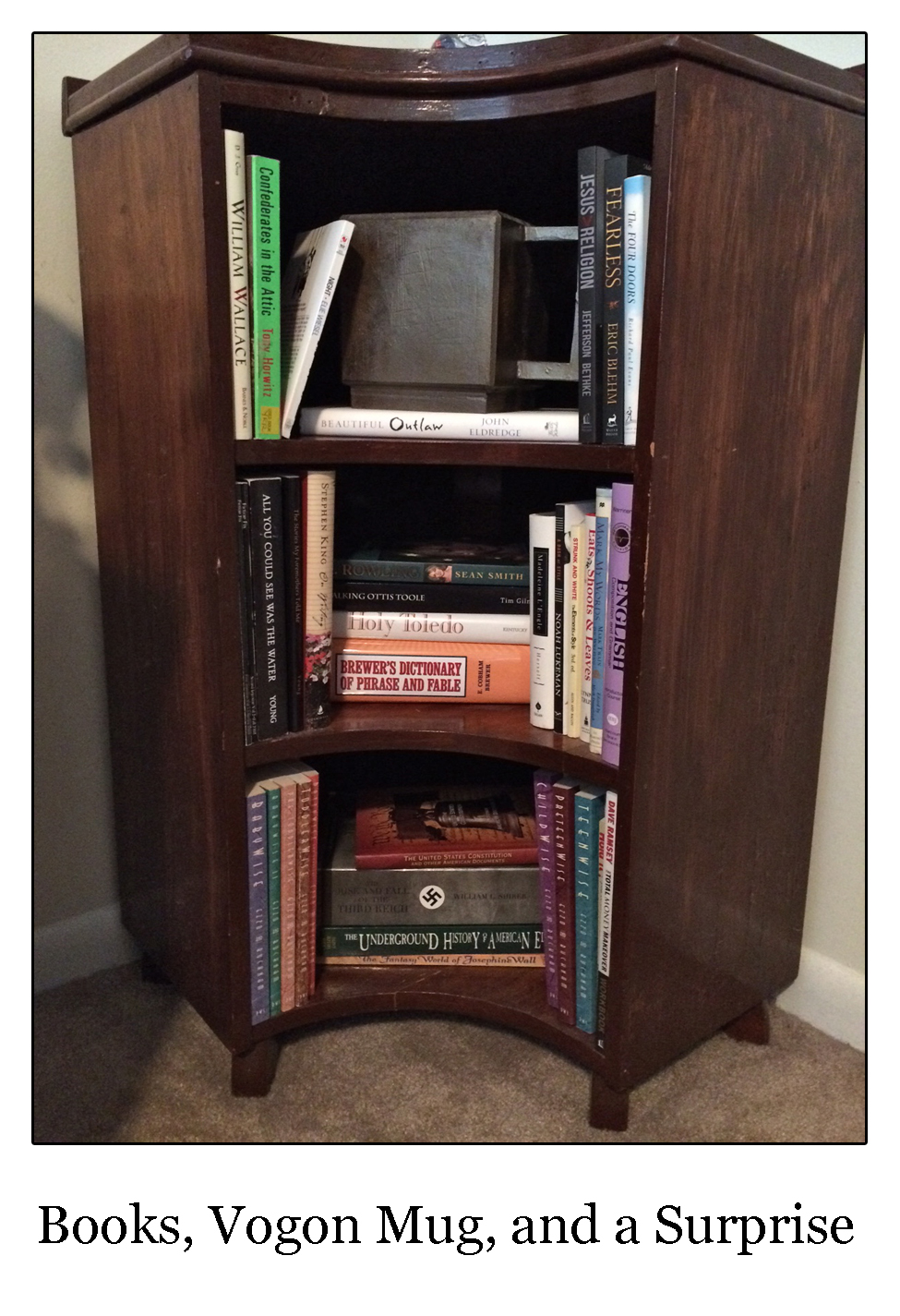
Books Vogon MugSo here’s the cute little shelf in our bedroom. Now, it’s all non-fiction, but before the big bookcase, I had even more stuff crammed in here. So when I pulled those books out to sort them onto the new (to me) bookshelves, I decided I might as well dust while I was at it because, let’s be honest, it doesn’t happen very often.

I pulled all the books out, and when I removed the ones to the right of the Vogon mug (yes, that is a Vogon mug you’re looking at on the top shelf, Hitchhiker fans), I saw some paper sticking out of one of the books we received last Christmas. And I began to have a horrible-slash-wonderful feeling. I pulled the paper out, and it was a sweet note from the relative who gave us said book. And in the note was a pile of money. I think, were I ten years older, I might have had a heart attack on the spot.

I carried the note and the money into the living room, where my husband sat oblivious to this miracle. I showed him the money. I probably said some crazy stuff. I’m really not sure because I was in shock right then. Like I said, this kind of thing never happens to us.

Maybe it’s time to start looking for agents again, if my luck continues like this.

It did not take long for me to conclude that a good portion of this money needs to stimulate our local bookstore and help fill the poor, empty china cabinet shelves. You could say that this was meant to be.

Bookshelves and dusting can lead to marvelous things. I still haven’t found more time in my day to read, but you know me: I like a challenge. And if you like morals, the moral to this story is that if someone gives you a book for a gift, open it up and make sure nothing’s lurking inside. And then, of course, add it to your book list.

Does the Genre Really Matter?

All seven books in the Harry Potter series in ...

All seven books in the Harry Potter series. (Photo credit: Wikipedia)

Wanted: Good fiction.

To be more specific, fiction that draws me in right from the start. Fiction in which the characters are believable, in which I can hear the dialogue in my mind. Fiction that makes me think, raises tough questions, makes me cry, makes me emote. Fiction that makes me want to talk to someone else about it. Fiction that saddens me when it’s over.

I like to think that if I were a literary agent, that’s what I would list under my “interests.” Because, try as I might, I can’t pin down a favorite style or genre. Now, there are certain things that I definitely don’t like. Mediocre writing, inconsistency, lack of craft. Like I said, I want the characters to be believable. If the debutante protagonist has never scrambled an egg in her life, I won’t believe it when she whips a six-course meal out of thin air. (Unless she’s magic, of course – and if she is, I better have a hint of it first.) I don’t want adverbs trying to tell me how desperately someone says something. Show me the desperation with a sweaty brow and shaking hands. I don’t want plots that are so insubstantial they can be knocked over by a sneeze.  I don’t want endings that are unrealistically happy or tragedies that are unnecessary, the only point being to make the reader cry.

I really just want a good story, one in which I can forget that I’m reading at all.

This is why labels kind of bother me. Romances, for instance. Label it like that, and I don’t want to read it. Why? Because all the romance novels I saw growing up had half-naked men massaging busty women’s shoulders on their front covers, and I really don’t want to read a novel that’s connected by one sex scene after another. So I was shocked to discover a truly excellent book that is sold in the romance section. Although the story revolves around a love story (or stories, really), it’s so much more than that. I’m speaking of Diana Gabaldon’s Outlander.

Or take the case of my friend who told me that he could not stand to read fantasy. Wouldn’t give Harry Potter the time of day because of how it’s categorized. I’ve known other people who won’t read these wonderful books, not because of the fantasy and magic, but because they’re so-called “kids’ stuff.” Well, if kids’ stuff comes with a side of good beating the crap out of evil, I’m on board with it.

How about Stephen King? He’s known as the king of horror, yet while he started that way, his more recent books (and my favorites) are much more sci-fi, fantasy, and I-don’t-know-what. They’re just good stories. Not to mention that the guy knows how to write and how to instruct writers how to write. Chances are, if you call him a hack, you haven’t read much beyond Cujo or Pet Sematary.

When I looked for beta readers for my novel RIP, I decided to go the vague route. People asked, “What’s it about?” or “What genre is it?” I told them that it was young adult, and fortunately, my beta readers were kind enough to read because they know me. One actually told me he wouldn’t have usually read that kind of book, but he was glad that he did. Good thing I kept my mouth shut, right?

But, as I posted a couple weeks ago, I was able to workshop a portion of my novel with an agent, and in my introduction, I told her it was young adult. It was almost as if, by giving that tiny bit of a description, it put blinders on her. My book was much too long. She was unwilling to consider almost anything about the content until I addressed the length. Young adult novels generally have a word count, and mine exceeded it by double. (Nevermind that books like Twilight are half again as long as mine.) Now, she is right: there are many thousands of words that I can cut, but shouldn’t she be trying to sell a story, not a word count? (That’s an issue for another blog.)

This whole issue has gotten me thinking: does labeling novels with a genre help or hinder? If I had just told the agent: here’s the beginning of my novel, would she have judged me for not nailing down a genre?

I don’t go through bookstores and read book jackets or first pages until I find something I think I want, but many other people find their books by following this practice. (Or if not in a bookstore, online.) What about someone who only picks books from the Christian lit shelves? This person might never consider reading Veronica Roth’s Divergent series because it’s sold as young adult and dystopian – would completely miss the way that Roth’s Christianity colors her novels.

While talking books with a friend recently, we got onto young adult lit, specifically John Green‘s books (which are awesome, by the way – do yourself a favor, and read them). My friend said, in a semi-surprised tone, that he’d gone on a young adult lit binge lately. And he’s in his forties with no kids. I find this wonderful – that a book written “for” an audience in their teens can speak to such a wider audience.

Of course, I totally get that if there were no classifications, I could very well mistakenly shop my novel with agents who are only interested in political thrillers or erotica. And marketing is another issue. No matter what, there are people who will refuse to read anything except X, even though they would really enjoy Y, if only they would give it a chance.

But it seems, in the effort to makes genres more attractive to more people, sub-genres have to be added. You ought to check out this list from Writer’s Digest. And it’s not even complete! I just heard of a new genre called New Adult. Each genre and sub-genre has its own little specifications, and if you hope to publish, you have to try to fit the mold. Well, what if I don’t want to? What if I just want to write or read a good book? What if I want to mull it over afterward and then say, “I think I just read a really good Western. Who knew? I never thought I would enjoy a book like that.”

All I’m asking for is a little bit more of an open mind. From agents, publishers, and readers, alike. Hey, I’ll try to have one, too.

I suppose this is why I’m not a big publishing executive. The bottom line is important, I know. Believe me, I want to make a living in this business, too. But at the end of the day, piles of money aren’t going to captivate me. But a great story will every time.

So You Want to Write a Book – Well, Now What?

William Faulkner's Underwood Universal Portabl...

William Faulkner’s Underwood Universal Portable (Photo credit: Wikipedia)


Has this ever happened to you? You’re with a group of people – let’s say a moms’ group, with everyone exchanging tips and anecdotes – and someone says, “We could write a book.”

“We really could!” someone else chimes in.

Another mom even throws in a title: “Temper Tantrum on Aisle Four – How to Survive the Toddler Years!”

Everyone laughs, and they go about their lives and forget about it. But you linger on the thought that maybe you could write a book. Then again, the idea that you don’t know how to start – and what would make your book any more special than any other, any more worthy of the New York Times Bestseller List? – is intimidating, so your idea stays an idea and no more.

On the one hand, you might be right. Everyone does have a story (or three), and some of them aren’t worth telling (and those are the ones that seem to be repeated the most). But any time you impart a nugget of knowledge to someone else who seems to get something out of it, you feel that I-should-really-write-this tug.

Nowadays, blogs (much like this one) pick up the slack. A mom blogs about potty-training her strong-willed toddler, and other moms unite behind her or take comfort that they aren’t alone in the struggle. A man loses his job but figures out how to make a living from home – and writes a great how-to post. Someone with an incredible weight-loss story posts a menu and workout routine online to help others in the same situation. Blogs are great resources, and the topics they cover are endless.

But still, there are those for whom blogging and swapping stories around the water cooler aren’t enough. The problem is that they aren’t necessarily writers and don’t know what to do. The idea persists, won’t let them go.

Sometimes for decades.

I get all kinds of mixed reactions when people find out that I’m a writer. They want to know what I write. (“Novels? How can you write so much?”) They want to know how much freelance work I can handle. (“How do you manage it with two kids?”) They marvel that I’ve actually made an occupation out of this – you know, it’s not just a cute hobby. (“You mean you edit and write for a living?”)

And sometimes they ask me, kind of sheepishly, if I can help them with something they’ve been wanting to do for years.

One such person is a client of my parents’ business and happened to mention to my mom that she had a writing project. My mother said that I’m a writer, and the next time the woman came in, I was there. I gave her my business card and promptly forgot about it. I talk to a lot of people about my services, but that doesn’t necessarily mean they’re going to hire me.

A few weeks later, to my surprise, she called. She went into great detail about this project, one that she started over ten years ago. Her kids have been encouraging her to write a memoir because she’s led such an interesting life, but she doesn’t use computers, and the woman who helped her start it has been too busy to continue.

As I talked to this woman and learned her story, I realized that there are so many people who lead amazing lives, but some of the best details will die with them. They may not have a great command of the English language, but they have stories worth passing on. It would be a shame for this woman to never see her dream fulfilled just because she’s not a “writer.” I feel privileged to help her share her bit of history with her family.

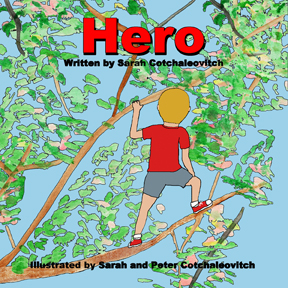
Another opportunity arose in late May. I had just published my children’s book Hero (shameless plug – buy it here!), and Peter shared it with his kindergarten class. Afterward, one of his teachers mentioned that she has always wanted to write a book but needs help.

“Sure, let’s do it,” I said before I even knew what she wanted. Hey, I had just illustrated and published my first children’s book – I was flying high and felt like I could do anything.

Her face lit up as she described her 20-year dream. She used to take her children for bike rides around Amelia Island. They would stop at interesting trees, and she would make them create stories about how those trees came to look like that. Combining her love of nature with her interest in developing writing skills in children, she wants to create a book with photos of interesting trees and writing prompts. As with her own children, kids will “Look at this tree” and be encouraged to write a story about it.

It’s right up my alley. Although I’ve never created a book like this, I must admit that I love writing prompts. I love anything that starts with a tiny seed and blossoms into a beautiful story.

I really feel that I could give her a push – much like with a child on a bike with the training wheels removed for the first time – and watch her go, but I also understand that I’ve been in the publishing world for a while now, and it’s no longer mysterious to me. If you’re not right in the middle of it, though, you might think writing a book is unattainable.

I was there once. I’ve talked about my college fiction workshop before, and the second time I signed up, our instructor Ari pulled a group of us together (the ones who were serious about getting published) and gave us the low-down on publishing. 1) It’s a competitive market that’s difficult to break into, and 2) it’s still not guaranteed to be everything you hoped and dreamed even if you do get published. What Ari suggested was that we pull our best stories together and create our own publication. And so Fiction Fix was born. With his direction, we figured out what we were supposed to do, and more than 11 years later, Fiction Fix is going strong as an online fiction journal. We’ve grown quite a bit from that group of desperate writers who just wanted to see our stories in print; now we receive submissions from all over the world.

We were lucky in that we had someone who saw our desire to write and be read and who knew just when to push us. But for those out there with the desire but no direction, no help, no idea except THE IDEA for a story or book, the task can seem daunting. But here’s the thing: if you have a book that you want to write, the only thing in your way is your own indecision. Instead of dreaming or joking about maybe writing a book some day, you need to take action.

Indie (self-published) authors are more prevalent than ever. The internet has done many wonderful things for writers, on-demand and e-publishing being two of them. And even if you don’t write, these tools and their practitioners have made publishing a much more attainable reality than it used to be.

An internet search can give you everything you need, from writers’ support groups and social networks to online book publishing to lists of freelance editors (like me!). Don’t ever assume that the person you’ve just looked up is the real deal until you’ve done some research. (I learned this the hard way, regarding literary agents – read my story here.) Also don’t assume that the big companies are your only choice. Everywhere you look, you will find writers and editors with different levels of expertise. You’ll even find local printing companies, graphic designers, and illustrators who can all help bring your book to life. These are real people with whom you can share a cup of coffee – and your dream.

But if you’d like some resources, here are some websites to check out:

  • Kindle Direct Publishing and CreateSpace (Amazon.com’s answers to e-publishing and on demand publishing)
  • Smashwords.com (distributor of eBooks to every conceivable e-format)
  • Writer’s Digest and Writer’s Market (tips for writing and publishing)
  • LinkedIn (where professionals go to network – Facebook and Twitter are great, but if you want to connect with writers who can help you get started, I can’t think of a better place)
  • NaNoWriMo.org (Ever wonder if you could write a novel in a month? If you’re serious about this, I promise that you will have the writing experience of a lifetime.

So… do you have a story to tell?

Want to help with the writing prompt book?

Look at This Tree

Look at This Tree

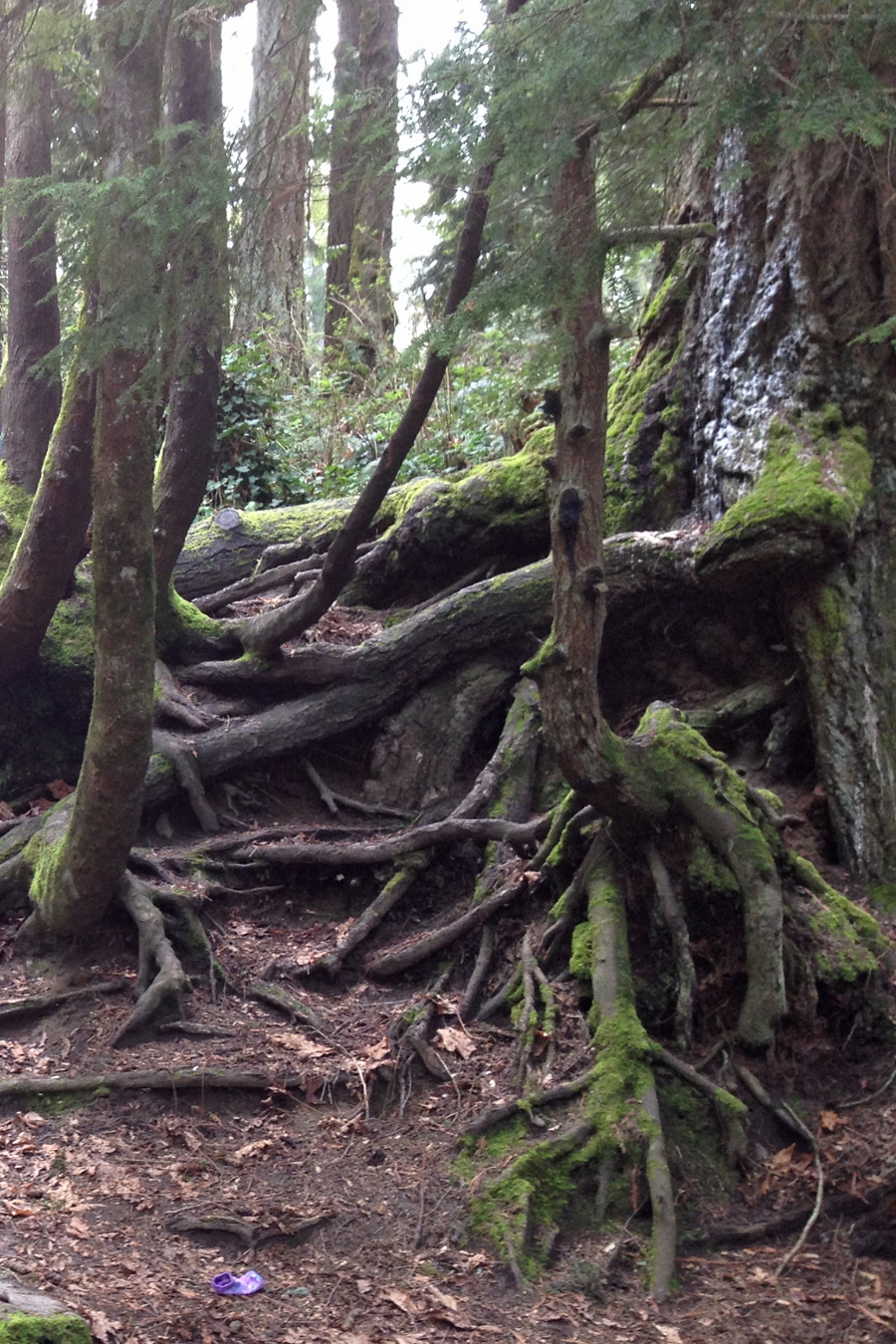
The writing prompt book I mentioned is the brain-child of my friend Karen Saltmarsh. We’re going to title it Look at This Tree, and we’re looking for high-quality photos of interesting trees that could tell a story. To the left is an example from a park that I visited in Washington State. (Don’t you think there could be a secret hideout for some mythical, woodland creature under the roots?) If you have something you’d like to submit, please fill out the contact form on my Writing Services page, and Karen and I will consider your photo for her book.

Adding to My Personal Soundtrack

Quarta gregoriano

Quarta gregoriano (Photo credit: Wikipedia)

I don’t talk enough about the musical influences in my life. I know it’s all books-this and writing-that, but I really wouldn’t be the well-rounded individual that I am (ha) without the music in my life.

There are times when music surprises me; a song that I’ve heard many times will suddenly awaken a creative something within me. Since I’m a writer, that “something” is usually a scene in a book I’m writing. Sometimes it’s the “aha!” moment I’ve been waiting for. Other times (like what I posted about most recently), a novel almost gets derailed by a new scene that I never would have imagined, were it not for hearing the right song at the right time.

Then there are other times that music doesn’t necessarily evoke a specific image or scene, yet it fulfills some emotional (and I would go as far as to say spiritual) hole and leaves me pleasantly full and happy, even energized.

What brings all this up? Well, I’m kind of riding a high from attending an evening of uplifting, choral music. A boring way to spend a Friday night, right? Well, not if I got chills during the first song (I did) and can’t stop thinking about the sound and the joy on the faces of the singers (I can’t).

You see, that’s how it is in this relationship I have with music. Many songs or musical events become a part of what I think of as the soundtrack of my life. (Don’t worry, as a writer, I sometimes narrate my life, too, but today it’s all about the music.)

Alanis Morissette

Cover of Alanis Morissette

For instance, any time I hear “The Sign” (Ace of Base), I’m overcome with nostalgia – it’s the title song of my first CD. The same goes for Alanis Morisette’s Jagged Little Pill; I bought that CD in the seventh grade, and so did my husband. It’s part of our middle school soundtrack.

And so it continues: musicals I participated in as a teenager, such as Annie and Fiddler on the Roof; Metallica’s S&M CD (one of the best Christmas presents Thomas ever bought); our first System of a Down CD, which we bought and listened to when we drove to a Gator football game; the mix CD Thomas’s brother burned for us a couple days before we got married, so we listened to it everywhere we drove on our honeymoon. And our wedding itself contained a mini-concert. Some people told me it was a long ceremony because of all the music. But we’re musical people. Thomas’s grandfather was in a band. My mom’s mom and dad’s dad were both organists. It’s in our DNA.

Bohemian Rhapsody

Bohemian Rhapsody (Photo credit: Wikipedia)

So I’m raising my kids right, making them listen to “Bohemian Rhapsody” and “Thriller” wherever we go. (Hey, I also downloaded “Let It Go” – don’t worry.) I’m helping them create their own soundtracks.

Most recently, I’ve discovered Rachael Sage; her single “Happiness (Maddie’s Song)” just came out on iTunes. I heard it once and couldn’t stop humming it for a couple days. And then there’s Pentatonix. I love it when someone posts one of their new songs on Facebook – which I’ll watch over and over, to my children’s chagrin. And Bastille – who doesn’t dig a rocker with a cool British accent?

Rachael Sage

Cover of Rachael Sage

Every new song, every concert, is a possible source for inspiration, but it goes deeper than potential best-selling novel ideas (as nice as they are). Songs are little triggers. I can hear one in the grocery store and be transported back to the fourth grade. Or remember the last concert I attended with a friend before she passed away. They’re pieces that may not always seem to go together – discordant, you might say – yet they make up the puzzle of me. And as strange as it may seem to hum classic rock in the store, listen to folk songs in the car, and spend an evening listening to choral music, I totally dig the big picture.

And it just keeps getting bigger. But I wouldn’t call that a bad thing.

Dyslexia – A Mere Stumbling Block on the Path to Book Creation

“Peter is still getting his M’s and W’s mixed up.”

This was Peter’s kindergarten teacher four months ago. Peter is six. He should have known all of his letters a year ago. In fact, he did. So why the sudden trouble with these two? I was a bit disappointed when she told me, but I wasn’t surprised.

Peter has dyslexia. On top of that, his working memory does not function at 100%, making it difficult for him to retain everything we do to help him overcome his learning hurdles. It’s better than it was. This time last year, his working memory only functioned at about 20%, and he’s in an intensive program that’s helping, but it’s still a struggle.

So Peter and I practiced with M and W flashcards, and right about the time he got those two letters down, he slid back again and started having trouble with B and D. Peter is aware that he has a hard time reading. He knows his friends read books a couple levels beyond his capabilities. He groans whenever I make him read or do flashcards. Sometimes I’ll give him a night off and just read a book to him. The poor kid. Up until he had to start reading them himself, he had a love-love relationship with books.

I focus on Peter’s strengths. He’s good at math. He’s athletic. He can build anything, loves making inventions, and is very creative. But at the same time, I don’t want him to give up on reading, to think that it’s something a lot of people can do but is unattainable for him.

Then he happened to be watching the Disney Channel when Bella Thorne’s TTI came on. TTI’s (or “The Time I…”) are clips about some of the actors in Disney’s shows. I hadn’t seen Bella Thorne’s TTI since Peter was diagnosed.

Why does Bella Thorne’s particular TTI matter? Well, because she has dyslexia. She started talking about why reading was a challenge, and how she mixed up B and D and M and W. Peter turned to me, eyes alight, and said, “Hey! That’s just like me!”

http://www.youtube.com/watch?v=vhhSLneazQ8

It couldn’t have been more perfect.

I made sure to point out to him that she can read now, even though it’s a challenge.

I know it boggles Peter’s mind that I write. When I pulled my children’s book Hero out of mothballs earlier this year, I decided to involve Peter by using him as a first reader. I read it to him while he sat with me at my computer, looking at a screen with a bunch of symbols that he struggled to make sense of. With no illustrations to guide him, he didn’t connect with the story. I had to read passages twice and ask him questions about them to make them stick.

And then it hit me: Peter can draw. He may struggle to read Hero, but I knew if he helped illustrate it, he’d have some ownership. Even with dyslexia, he could still be a part of the book creation process.

Peter learning cursive

Peter learning cursive

If you’re a regular reader, you know that we did it (and you can read about it here). Peter is half-shy, half-proud when he helps me deliver a book. Even though he’s quick to say that it’s too tough for him to read (yet), he loves that his name is on the cover, that it’s our book. He even asked me to teach him cursive, so he can sign the inside cover.

Starting in the fall, I’m going to talk to elementary school students about writing and illustrating a picture book. I’m excited for them to know that a regular mom can make children’s books, but I’m even more excited to encourage them by telling Peter’s story. Books are for everyone – for bookworms like me, those who struggle like Peter, and everyone in between.

Don’t forget, through July 26th, all of my proceeds from Hero are going to WSB’s Care-a-Thon to benefit the Aflac Cancer and Blood Disorders Center of Children’s Healthcare of Atlanta. Click here for all the details, including where you can buy Hero in Northeast Florida. You can also get yours from Amazon.com, or message me for a signed copy.

Here’s A Book to Add to Your Kids’ Summer Reading List (One Big Project Done!)

Hero

Hero

Let me tell you the story of a young woman who signed onto a children’s book project.

Yes, I’m talking about me, and although I’ve always been a novel-writing kind of girl, when this project landed in my lap, I thought it was the perfect way to get my foot in the publishing world’s door.

About a year after I graduated from college, I was one of several writers contracted to write a series of children’s picture books. The first step was to provide a sample children’s story of my own creation. It didn’t need to have illustrations, so I figured it would be a piece of cake. I soon came up with a story called Hero about a boy who had to face a challenge to live up to this nickname. My job done, I promptly forgot it.

It turns out the reason I was contracted to begin with was because the creator of this series had no business in the writing world. This soon became obvious, and the project fell flat. I hadn’t particularly enjoyed the storyline and characters, so I shrugged it off and moved on.

Fast forward seven years, and a friend introduced me to a local author, figuring this might help me get one step closer to publishing my novel. The author I met was an absolute delight. She told me all about her books and the work that went into them, from getting them illustrated to collaborating with other writers to printing and selling them. (Check out her website Bluejean Books in the sidebar or here.)

While I still wanted to go the traditional route of finding an agent and a publisher for my novel, this conversation reminded me that I had a children’s book already written – and my parents’ business had a new digital press that would be perfect for printing books on demand.

Wedding Shoes by Saundra Howard

Wedding Shoes by Saundra Howard

There still was a problem, though – that of finding an illustrator. My number one choice was my mother. The image on the right is an example of one of her pencil drawings. She was an art major, and one of her many hats is that of a graphic artist. But when it comes to illustrating children’s books, she didn’t feel qualified, not to mention that she just didn’t have the time. (But I think I’ve convinced her to help me with the cover art for my NaNo novel.)

The book idea went on the back burner, where it simmered for well over a year. I learned a lot as I began to substitute teach and work with kids of all ages and reading levels. My elder son was diagnosed with several learning disabilities. I gained an appreciation for books that are easy readers versus the ones that are content-appropriate but still have to be read by parents. All of this percolated in my mind, stored up for when I would need it.

Then one day when substituting in kindergarten, I had an interesting opportunity. The kids were learning about authors and illustrators and how to create a book. The teacher, knowing I’m a writer, asked if I would mind talking to them about the process. The kids hung on my every word – it was crazy! Afterward, they asked if I had a book of my own.

That’s when the lightbulb went off. I realized I could illustrate my book myself. I’m not my mother, but I am capable of creating more than stick figures. And my six-year-old has an artistic bent, so I thought we could illustrate together. I started with a simple watercolor painting of a tree and a few sketches. Peter joined in, and we soon had enough to get started. That was in late January. I figured I would be done within a month. Ha.

So creating a children’s book is harder than I thought. Revising the copy was just one thing I had to tackle. On top of that, there’s the business end of getting an ISBN and marketing. And then those pesky illustrations pulled me right out of my element and into the realm of What in the world am I doing?

February came and went. March was busy; I worked on the illustrations on our vacation, but I was nowhere near finished. There was still hope, though. As long as I could share it with the kindergarteners before the end of the year, all would be well.

I probably wasted about a month of trial and error figuring out how to illustrate in Photoshop (yes, Photoshop, not InDesign). I would challenge myself to finish three illustrations in a week, and I’d only get halfway through one. Memorial Day weekend arrived, and I worked all day every day, staying up four hours past my bedtime into Monday morning. I thought I was done, then realized I still had several hours’ worth of work still ahead of me after I woke up.

But I finished – finally! (If you read my post last week, this was the third big project I’ve taken on in the past year.) I had my first copies ready so that Peter was able to share the book with his class on the second-to-last day of school. Kids that knew I’d been working on the book for months were excited to see it. My friends and family have been so supportive, and I cannot explain how wonderful it feels to have something in print, even if it’s not with some big-name publishing house.

Now that Hero is done, I have my work cutout for me, from getting it into bookstores to getting it online through CreateSpace. (Check the My Fiction page for when it goes live.) Until then, you’re welcome to message me for a copy – Peter and I will even sign it!

I can cross one big project off my list. It was a challenge, something I never would have considered doing over nine years ago when I first wrote the text. Finishing the book with my son has been a joy, and I finally have a real book to show for a small portion of my hard work.

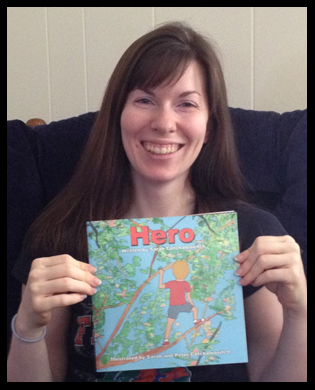
Sarah and Hero

Sarah and Hero

Enhanced by Zemanta

Don’t Judge a Book by Its Author

You can’t blame a writer for what the characters say.

                                                                                                                                             –Truman Capote


The Casual Vacancy

The Casual Vacancy (Photo credit: Darlene Acero)


Avid readers, do you remember a time when you discovered a new writer, fell in love with one book, then went crazy looking for all of his or her other publications?

This has happened a number of times with me, from my early days of reading with authors like Beverly Cleary and Louisa May Alcott, then ramping up to Agatha Christie, J.R.R. Tolkien, Michael Crichton, and then Stephen King. In every case, I devoured their books, as many as I could get my hands on.

But sometimes… sometimes this doesn’t happen. Sure, every prolific author has an off-book or two. Even in the middle of bestseller series, it’s not uncommon to have a middle-of-the-road slump. (Harry Potter And The Order Of The Phoenix comes to mind.)

Sometimes, it’s no fault of the author’s, though, because they get pigeonholed. They commit the unforgivable sin of writing outside of one particular genre and so get panned by masses of once-adoring fans.

This often happens with actors. Think about how many of them, in the effort to avoid being typecast, take on just about any role they’re offered to prove they can do something other than what originally made them famous. You might be disillusioned when your favorite child actor tries to show she’s all grown up by portraying a risqué character.

Now, authors aren’t going around in the nude to prove that they’re all grown up. But sometimes we treat them as if they’re doing just that. If you find out that your favorite children’s author has an adult title coming out soon, don’t be shocked that it’s not all “See Dick and Jane” anymore. Dick and Jane might be doing something that you don’t want your children to read about. And that’s fine. Writing for children doesn’t mean they have nothing else to offer the writing world.

The opposite it true for authors such as Stephen King. Many people shy away from him because he’s known primarily as an author of “horror” stories. But I’ve found that he actually writes much more fantasy and suspense than horror, not to mention moving love stories, at least one hard-boiled mystery, and one of the best non-fiction books on the craft of writing that I’ve ever read. (Check it out here.)

Truman Capote was right: we can’t blame writers for what their characters say and do. There is a certain amount of censoring that automatically happens if your story is meant for younger audiences, but the truth must always prevail. As Stephen R. Donaldson writes about the creative process:

[N]one of us can explain how it works. In a sense, writers don’t get ideas: ideas get writers. They happen to us. If we don’t submit to their power, we lose them; so by trying to control or censor them we can make the negative choice of encouraging them to leave us alone.

I don’t know about you, but it sounds very unattractive to tick off my muse by not letting the story be the story. I recently posted about striking gold with a story idea for this year’s NaNoWriMo. When this idea first occurred, I assumed that it would be another young adult novel. After all, the main characters are teenagers, and most of my stories end up going the middle grade or young adult route.

Yet the more I’ve thought about this new premise, I’ve realized that my novel might actually be for adults. That’s not to say that young adults wouldn’t ever read it – after all, I started reading Stephen King when I was 14 – but the amount of censoring I’d have to do to make it appropriate would change the intent and tone of the story. I suppose I could make it work, but would that be right?

This reminds me of a book I read recently, The Casual Vacancy by J.K. Rowling. Oh, you’ve heard of her? Yeah, she wrote that itty bitty Harry Potter series that a few people around the world seem to like.

Okay, if you know me, you know that I’m a Harry Potter nut. I bought The Casual Vacancy, which Rowling published as an adult novel, with no illusions of it containing wand-wielding teenage wizards. In the early pages, I sometimes scratched my head over this being the same author of the seven books I so dearly love. True, there are teenagers in her new book, but they’re facing very real temptations and demons, not the fantastical kind. The language, the grittiness was sometimes hard to reconcile with my previous experience of this author.

But knowing how hard it is to force a story into a genre that it’s not, I had an easier time – making my preconceived notions of Rowling disappear into the background – than many other readers who gave up on the book when they discovered it’s not about adult wizards. Rowling still has her fingerprints all over it, but in the form of turns of phrase, descriptions, and little gems that claim her no matter what the genre.

As much as I love most things young adult and fantasy, what I love above all are characters that come to life on the page and stories that pull me in. When I allowed the story to take over, it both compelled and moved me. It took a lot of courage for Rowling to put herself out there and publish something so different than the series that made her a household name. I know of people she’s upset because they expected more of the same, but I admire her for letting the story take the lead.

If you’re an author wrestling with a story unlike anything you’ve ever written, here’s some great advice from Anne Lamott’s Bird by Bird: “[S]ome days it feels like you just have to keep getting out of your own way so that whatever it is that wants to be written can use you to write it.”

Getting out of your own way means ditching those preconceived notions about what you can and should write. Let the story tell itself – at least in the first draft – and you can figure out what’s still appropriate to keep in the revision process.

And if you’re a reader who tends to pigeonhole, open your mind a little bit. Realize that the best authors, the ones that convey the truth through pages and pages of lies, are simply doing what Stephen R. Donaldson wrote about: they’re allowing the creative process to work as it should. To censor it, to hold back, would be to lie in the worst possible way.

For writers to deny themselves the chance to branch out into other genres and interests is to deny growth within the craft, to deny them doing what they’re meant to do.

Writers don’t just love to write – they must. Lamott also says:

We write to expose the unexposed. If there is one door in the castle you have been told not to go through, you must. Otherwise, you’ll just be rearranging furniture in rooms you’ve already been in. Most human beings are dedicated to keeping that one door shut. But the writer’s job is to see what’s behind it, to see the bleak unspeakable stuff, and to turn the unspeakable into words—not just any words but if we can, into rhythm and blues.

Amen? Amen.

Enhanced by Zemanta

Five Signs You Might Need a Book Intervention

Birthday Books

Birthday Books

When creating my list of books to read in 2014, I thought, I should be able to do this. I was determined to read more from this year’s list than I did in 2013. After all, there were quite a few books that I was excited to read; I was motivated. I did well at first, even reporting my numbers a few short weeks ago.

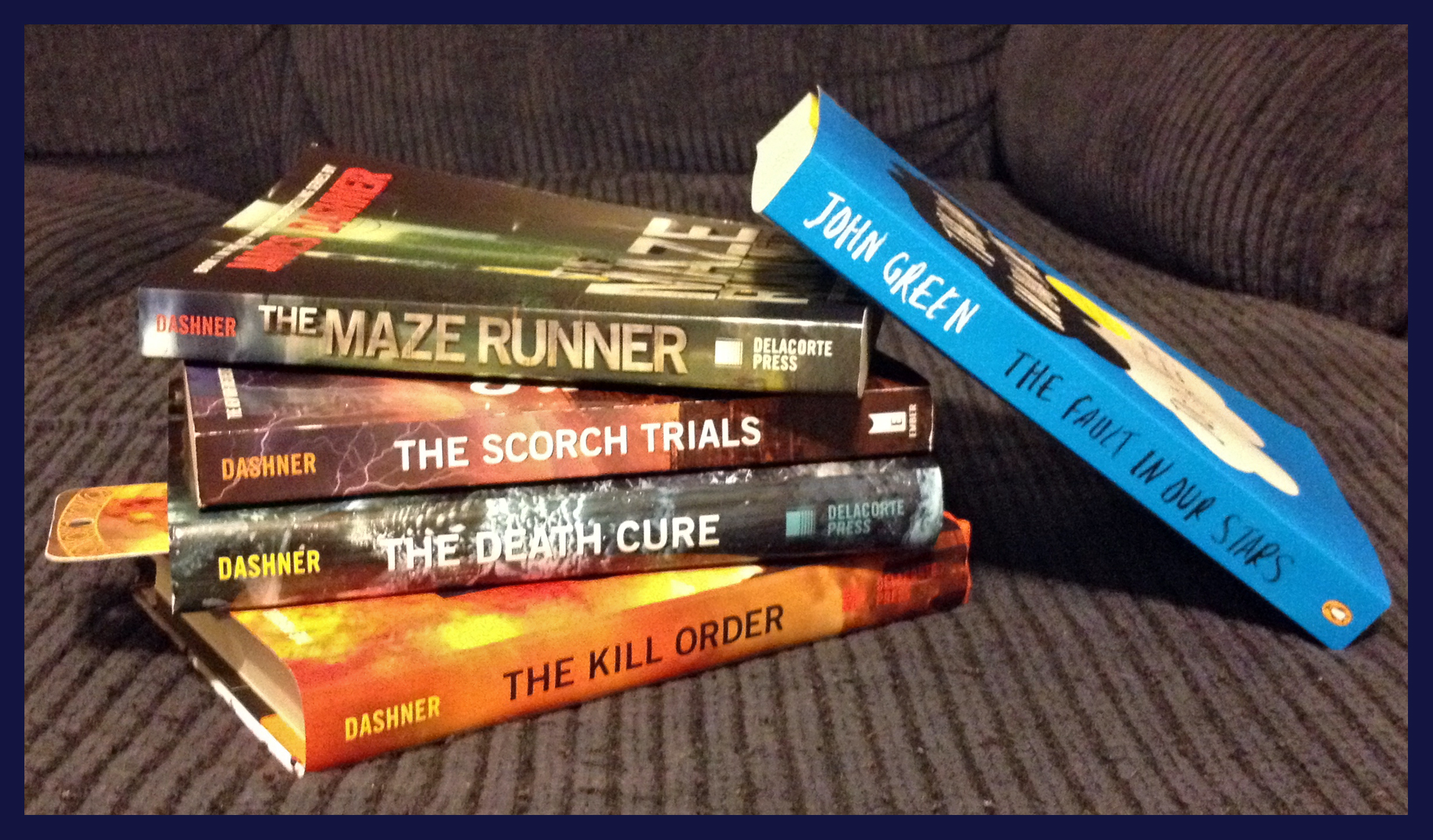
Then it happened. My husband, eldest niece, and I went to see Divergent, all having read and loved the series. And we got more than we bargained for while there: we were introduced to a book we hadn’t heard of, soon to be released in movie form, The Maze Runner.

I couldn’t help myself; I started researching it while still sitting in the theatre. Who was the author? When was it published? Is there more than one book? Why hadn’t I heard of it?

James Dashner, 2009, two sequels and one prequel – these were the easy answers. As for why I hadn’t heard of it, well, there are just so many books out there. Each new discovery adds another star or constellation to my reader’s night sky, and the funny thing is that I am never satisfied. Give me a good book, and it only makes me want more.

A few weeks later, when my husband asked what I wanted for my birthday, I got the bright idea that I could kill two birds if he got The Maze Runner for me. Since I knew he wanted to read it, too, he went ahead and bought it a few days early. I was dutifully reading another book from my list with the full knowledge that I would completely derail if Thomas said the book was any good.

Thomas pronounced The Maze Runner worthy, so I took the cash a few relatives gave me for my birthday and went to pick up the rest of the series. The cashier told me that if I didn’t care about them being a matched set, I could buy all three from the bargain section. Which saved me enough money to buy a fourth book, John Green’s The Fault in Our Stars.

That silly movie trailer, aided by a little extra cash, just made my original 2014 book list a lot harder to finish. I might need a…

Book Intervention

Here are five signs that you might need one, too:

1. You always have a book in the car, just in case you get stuck in traffic.

No, I don’t read or text while driving, but I do when stopped at a light. Hey, I have a very stop-and-go commute, and I get tired of listening to the radio. And if I’m not the driver, you better believe I have a book with me. I feel bad for people who get carsick – such a great reading opportunity missed.

2. You panic when you forget your book.

It’s one thing if you’re just going to the store, but it’s full-scale panic mode when you are stuck at a social event with nothing to do except make small-talk with people you hardly know. Or even people you do know. It’s kind of a joke among my family that I’m often in the background of photos, oblivious to my surroundings, absorbed in a book. Everyone’s opening Christmas presents, and I’m reading. Or I sneak a book into a movie to read before the lights go down.

3. You can never read all the books on your to-do list because you keep adding more.

When I was pregnant with my first son, I was determined to read every book in the house. I figured that I might never have the chance to read after my little bundle of joy came into the world. I’m happy to report that not only did I finish all the books in the house, but reading does continue post-baby. And ever since making that discovery, I’ve been buying more books than I can read again.

4. You spend your disposable income on purses big enough to hold a good-sized hardback.

Okay, maybe men don’t have this problem, but I certainly do. I also carry my laptop, so my poor purse was begging to be replaced. I’m happy to report that my new purse holds the laptop and a novel quite comfortably. Could I get a Kindle or just read on my iPhone? Sure, and I have. But I just love actual books (read more about that here), and I love owning them. The book fair is in town this week, and I think there’s going to be more backsliding, which means…

5. You forego putting your china out in favor of shelving your books in the china cabinet.

Or on top of the piano. Or in stacks around the house. I’m doing a pretty good job of keeping them neat (at least, I did until my latest quadruple purchase). But although I’ve dreamed of having a house with a proper library, I somehow think it still wouldn’t be enough. Give me shelves, and I will gladly fill them, then continue getting more.

You know, if this is a vice, I’m not sure I want to give it up. Please tell me I’m not alone. If this sounds like you, too, do we need an intervention, or just some uninterrupted reading time? Methinks the latter.

Happy reading.

Enhanced by Zemanta

What to Read, What to Read?

My Books

Books (Photo credit: Jennerally)

At the end of 2012 and again at the end of 2013, I posted lists of the books I planned to read in the next twelve months. I’ll have to say that I’m pretty proud of my progress so far. It’s just into the second quarter of the year, and I’m already on the tenth book from my list of 23 titles. I’ve only gotten sidetracked once so far (something that happened quite often last year), so I have some hope of actually getting through my entire list.

It was fun looking at the year ahead and asking myself, “What do I want to read?” Whereas many people look forward to vacations and promotions and other big events (and I do, too, don’t get me wrong), I love the anticipation of discovering new fictional landscapes and re-reading some of my old favorites.

When it comes to choosing books, I know that some people read book jackets and may even skim a few pages before making a final decision. Others will look for titles that have won awards. But that’s not really my style. How, then, do I choose the books for my list? Many times, I read books by authors that I’ve read before. If I’ve had good luck in the past, I’m likely to read more titles by those authors.

Other times, I’ll either see a movie or the preview of a movie based on a novel, and if intrigued, I’ll pick up the original books. This happened most recently with the Divergent series, which I read, then saw the movie. It also happened with Harry Potter. I saw the first two movies, then jumped on the bandwagon. Every time, I’m pleased that I got the books because there’s just so much more to love on the written page.

Lastly, and perhaps the greatest way to introduce me to new books is through recommendations and reviews from friends who know what I like to read. In fact, that one extra book I’ve read this year was from a friend who is responsible for lending me some of my favorite titles. When I see someone with similar tastes with a book in hand, I’m always interested to see if there’s a new favorite in the making.

I love personal recommendations and book reviews because they’re not written by some writer who’s paid to make books sound good. Reviews have sometimes saved me from wasting my time (“It turned out to be a good love story in the end, but the writing wasn’t any good.”) and have often encouraged me to try books that I might not have read, otherwise (“It’s long, but you’ll want to make time for it.”).

My regular readers know that I’m on the staff of Fiction Fix, and one of our goals is to not only publish great new fiction but to also encourage people to read until they’re full to overflowing. In order to mix up our blog a little bit, we decided to write book reviews – but in new and fun ways. The first way was in haiku form, the second as six-word reviews. Read the whole story here, and check out the haiku reviews, all of which are now up. (One six-word review is available, with more to follow.)

I don’t know about you, but these reviews have certainly encouraged me to expand my library, yet again. And it’s never too late to make your own “must read” list.

Song of Years haiku

Enhanced by Zemanta

Why Can’t I Take a Vacation from Writing?

I love my vacations. I love the flurry of packing and cleaning and setting everything in order to be gone for a while… and then leaving. Then, while on vacation, people look at me like I’m crazy while I type away on my laptop. No, I’m not getting caught up on a client’s work. In fact, I’m not guaranteed to ever make one penny on what I’m writing. So why in the world am I doing it?

filedesc http://www.epa.gov/win/winnews/images...

Typing Away (Photo credit: Wikipedia)

For non-writers, understand that it’s not as simple as putting away the typewriter or laptop or fountain pen – whatever your writing implement of choice.

Remember when Stephen King said he was going to retire? This was well over ten years ago. I wondered how serious he was at the time: I certainly couldn’t imagine having a successful novel-publishing career and just giving it up.

In fact, King didn’t say he was going to quit writing at all, just that he thought he was almost done publishing. If you’ve read any Stephen King novels published since 2002, you’ll see that he’s apparently still not done. But even if he were to never publish another novel, I can’t imagine that he would quit writing. How many other professionals could do the same?

Consider people who have careers in the military or law enforcement, medical practitioners or pharmacists, teachers or professors – really, I could go on all day. Most professions are finis at retirement. You walk out the door, and you don’t come back. And until then, you take vacations, leaving all work behind for abbreviated periods of time.

But as with Stephen King, we writers have a somewhat different situation. While it’s absolutely appropriate to take a vacation from client work for a week or two, maybe even “retire” from the public scene, I never just leave my laptop at home or put my stories on the back burner.

My stories aren’t just going to take a vacation because I’m out of town. In fact, my NaNoWriMo novel, which I’m currently editing, woke me up early this morning, filling my head with new ideas. Sure, I could ignore them, try to recall them all in a couple weeks, but I’d likely forget them before then, not to mention that it would make me miserable to not work on my novel. In fact, I don’t even know if “work” is the appropriate word. Sure, I’ve spent a lot of time on it, but writing is a vacation in itself.

That’s not to say that I’m going to write to the exclusion of my family and our vacation plans. I’ll soak up the new experiences, laugh a lot, and sleep too little. But I will also take advantage of the time away to squeeze in as much extra writing as I can because I love it.

And, God willing, I hope to type away past retirement age and die with my fingers poised over the keyboard.

Enhanced by Zemanta