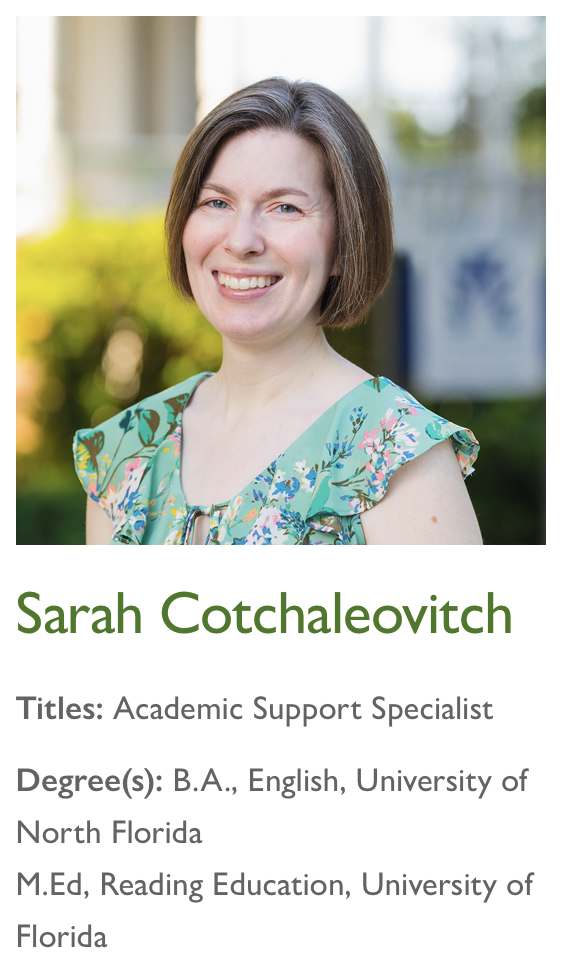
Famous Last Words: “I Would Never Be a Teacher”

I could also have titled this “I Will Never Go Back to School.” And guess what? I’m a teacher, and went back to school. Hmm. I will never have a million dollars. Let’s see if that works.

Many little girls admire their teachers and like to play teacher, so becoming a teacher is a natural next step to take. That wasn’t my childhood dream. Almost from the time I could hold a crayon, I wanted to be a writer. The University of North Florida didn’t have a creative writing program, so I settled for the next best thing, a degree in English. When I told people my major, most assumed that I would teach high school English or literature. “I would never be a teacher,” I told them. In my arrogance, I thought I would be the one writer to break through, immediately land an agent, get published, have my books in bookstores all over the world, and be the breadwinner for my family—happily ever after, the end.

Yes, I was the editor in chief of a literary rag when I was 19, where I learned about the slush pile, the rejections, editing, printing, distributing, and so on. And that was just for a little start up. I dabbled in freelance writing and editing for a few years, which was a whole lot of work for very little pay. I even self-published a couple books over 10 years ago. I have been humbled and realize that my dream might remain just that.

When it was time for my elder son to start school, I convinced Thomas to put Peter in the elementary school I had attended, a small Christian school that went from preschool through the 6th grade. At the beginning of the year, Peter’s teacher solicited for parent volunteers. I liked the idea of being involved with what Peter did on a day-to-day basis, so I volunteered once a week, doing whatever Peter’s teacher asked me to do. Sometimes I was cutting laminated pieces or taking down and putting up bulletin boards. I played games with three- and four-year-olds. I painted with them. I ran stations. I continued going every week because I enjoyed every aspect of it.

The next year, a plea went out for substitute teachers. I thought that substituting couldn’t be much different than volunteering—with the added benefit of being paid for it. I took the plunge, wondering if any of the teachers would take me seriously, would entrust me with their classes… and I was soon working 20 to 30 hours or more per week as a substitute teacher. I taught all grades, all subjects, although I was particularly busy in the younger grades.

I began to think that, since I would have two children at the school before long, it would only make sense for me to work there full-time. I decided to pursue a teaching certificate, and since I didn’t have a degree in education, I had to go the competencies route. I’m not sure what this looks like in other states, but in Florida, it’s the alternative to going back to school. Aspiring teachers have to prove that they are competent enough to plan a lesson, assess students, teach students with different needs and in different modalities, and so on. If memory serves, there were about 17 different competencies. I had to take some online courses, type papers, complete projects, and present everything to a member of our administration, who helped me submit my materials to the Department of Education. I also had to take a number of tests, including one in the subject area of my choice. I chose to be certified to teach prekindergarten through 3rd grade students (and added a K-6thgrade certification a few years later). I took the first available job opening, which was as a PreK 4 assistant teacher.

That’s how I got my start. How I got where I am now has to do with Peter. Since I was in his classroom so much in the early days, I had the advantage that many parents don’t have: I was able to see how my child did in school firsthand. He was a people pleaser, not a behavior problem at all. He made friends easily, especially with kids who didn’t particularly fit in. These were all things that made my parent heart happy. One day toward the end of his first year of school, the kids were playing a game in which they marched around the outside of the classroom rug that was bordered with the letters of the alphabet. The teacher played music, and when the music stopped, the kids would stop and say whatever letter they landed on. As I watched Peter, I noticed that he got a little antsy every time he passed the P. Whenever the music stopped, he somehow managed to land on it. Finally, he landed on a different letter nowhere near the P. He tried to sneak his way over to the P, and his teacher called him out on it.

Although that wasn’t a lot of evidence, I had this feeling… so I looked up dyslexia markers, one of the biggest signs of which is delayed speech. Not only had Peter’s speech not been delayed, but he had spoken early and well—no speech impediment and full sentences with good grammar. I expressed my worries to Peter’s assistant teacher because the idea that he might have trouble reading broke my heart. He loved listening to me read to him, but I am not just a bookworm—I’m a bookdragon—and I wanted to pass my love of reading onto my boys. The assistant teacher reassured me, saying one of her sons was dyslexic and was doing fine in college, with the help of academic accommodations. While this was reassuring, all I knew about dyslexia was the little I’d heard from others, most of which was wrong. I started to drill Peter on his letters, to no avail. I remember one frustrating exercise, in which I recited the alphabet and then stopped, asking him to tell me which letter came next. He could not come up with it. I got upset, thinking he was intentionally messing up. We had other frustrating moments, not related to reading, when I would give Peter a simple task, like asking him to take dirty clothes, put them in the laundry basket, and turn out the light on his way back. He would get halfway down the hall and wonder why he was holding dirty clothes.

In Peter’s second year of school (PreK 4), I was in his classroom one day, and the kids were each assigned a different zoo animal to paint. Each child had to sound out the name of their animal and write it on a label under their painting. The youngest boy in the class, who was six months younger than Peter, wrote “BRD.” Today, I know that means that he heard all three phonemes (sounds) of the word bird. I can’t even remember what Peter’s animal was, but I do remember that he was only able to identify the first sound. It’s like the rest of the word didn’t even exist.

Sight word garage

By the beginning of kindergarten, Peter knew most of his letters and their sounds. The ones he still confused were B/D and M/W. But what really tripped him up were sight words. The students always had to do some sort of activity as they entered the class, and one week, the teachers had a sight word garage (as pictured) taped to the door. The students would lift a flap, read the sight word written underneath, and enter the class. Peter’s strategy was to listen to the kid in front of him, pick the same flap, and repeat the word he’d just heard. One morning, Peter arrived, and no one was in front of him. He was on his own. I prayed he would choose the flap that had Iunder it, but Peter didn’t remember which words were where. He chose one—not I—and didn’t know what the word was (I think it was either me or we). He had no idea where to start, and I was helpless to do anything for him. It was humiliating for both of us.

About a week later was the parent-teacher conference, and I felt like an abject failure. Peter had co-teachers that year, and I assured them that I read to Peter every night. I had no idea why he couldn’t read; it wasn’t like he was a first-time student. Both of his teachers teared up; they cared about my child and read my desperation, my confusion about what was going on with him. One of the teachers told me that when she got her children’s report cards, she would fold under the part with the grades and read the comments from the teacher because that’s what mattered. She assured me that Peter was a great citizen. Both teachers also told me they knew I was a good mom, which was a relief—I hadn’t done anything wrong. They were prepared with a list of child psychologists, and I immediately got on the phone to have Peter evaluated. In the end, Peter is dyslexic. He is also kinesthetically gifted, has an auditory deficit (which is unusual for dyslexic people), and his working memory is in the toilet. 

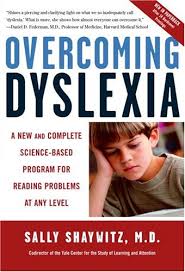
My boy has gone through many testing sessions over the years. He spent two days a week with a tutor his 1st grade year, and when he was in 2nd grade, the school finally had a full-time dyslexia specialist on staff who pulled Peter every day. Although I finally learned what dyslexia is (thanks to Overcoming Dyslexia by Sally Shaywitz), I still had no idea how to help him read. The summer before 1st grade, he was supposed to read Froggy Goes to School. Although I usually read everything to him, I believed that he should be able to read the one book the school had assigned to him. While the book was short enough to be read in one sitting, Peter struggled to read one page every day. It took weeks to finish that book. At the time, we didn’t know that Peter also had severe anxiety, so struggling to read, compounded with his feelings about himself, made for a miserable experience that we both still remember.

While Peter was going through his reading struggles, we were also trying to figure out what was going on with our younger son, Ian, who was language delayed (he would parrot a word he’d heard and never say it again) but at the age of two read every single letter on my husband’s t-shirt. Due to Peter’s reading struggles, we hadn’t pushed it with Ian, so this came out of left field. This was a kid who could read but couldn’t tell us what color his eyes were (we weren’t sure he even knew he had eyes), and he floundered behaviorally. So started our journey to get Ian diagnosed, as well. Although it took many doctors (some of whom were quacks) and years to get all the diagnoses, I can now tell you that we have two neurodiverse children. Ian is the poster child for ADHD (with a big ol’ H!), high on the autism spectrum (what they used to call Asperger’s), and has social pragmatic language disorder, OCD, and dyspraxia (the last of which I’d never even heard of when he was diagnosed). Every therapy known to man was recommended for him, and we finally settled on speech therapy, occupational therapy, and ABA, starting at age four and continuing through the 5th grade. For both of my children, I read every book and article I could get my hands on to give myself the tools to help them. But when it came right down to it, since I was already a teacher, I took the path that would help kids like Peter—the educational route—and at age 36, I gritted my teeth, swallowed my pride, and went to grad school to get a master’s degree in reading education.

When explaining to my adviser why I was going back to school, she told me about University of Florida’s Dyslexia Certificate program. Instead of the reading block that was a part of the Reading Education degree, I would detour and take five courses through the College of Special Education, ending with a 40-hour practicum, a master certificate in dyslexia, and a reading endorsement. I have done a lot of professional development, but the dyslexia certificate is by far the most valuable continuing education I have ever received. It changed my life, and finally, I felt like I not only had to tools to screen and assess for reading disabilities, but I had a game plan to remediate them. I finally made it onto my school’s student support team, and that’s where I’ve been for the past five years.

If you had told me what I would be doing now 20 years ago, I wouldn’t have believed you. In fact, I think I would have been sad to hear that I wouldn’t have a single novel published. I would still love to be an author—don’t get me wrong—but I feel like there is so much I have learned on this journey. Not only do I get to watch the light bulb go on for struggling learners all the time, but an unspoken part of my job is helping parents. These students need an advocate. One of the most unintentionally hurtful things said to me about Peter was, “But I thought he was so smart.” Well, guess what? Peter is smart, and dyslexia doesn’t change that. We need to stop treating As and Bs like they are the definition of a worthwhile student. This isn’t to say that people with good grades don’t work hard or don’t deserve praise, but grades aren’t everything and certainly don’t tell the full story. This is something that needs to be addressed in the American educational system, but that’s for another post.

If you have read this far, thank you. I am in the running for America’s Favorite Teacher. I am shocked that I made it through the first round as a Top 20 teacher. It would mean the world to me to win this, although I know it’s a very long shot. I wanted to write this to give my amazing supporters some idea what they’re supporting. Let me tell you, early morning wake-ups are hard, and many of the days are long. I always knew I wanted my kids to have the same great early educational experience I had—and they did. I did not expect to go back to school myself—both as a teacher and a student—and it’s been one of the most joyful and rewarding experiences of my life.

Please vote for me daily at the following link: https://americasfavteacher.org/2025/sarah-cotchaleovitch


In America, an A Is an A, and a B Is a D

Dusting off the top of my soapbox and climbing on

I’m on team of teachers who work exclusively with students with learning differences. We meet throughout the year to evaluate our students’ progress, problem-solve, and commiserate with each other over things we can’t change, such as what goes on at home. Many parents remain in denial about their children’s needs, even with a diagnosis in hand. One problem with learning differences is that they can be elusive. Okay, yes, you can tell that a child doing log rolls across the floor has the H (hyperactivity) of ADHD, but dyslexia, dyscalculia, anxiety? These are not nearly as obvious, and students with high IQs and good coping skills can fly under the radar for a long time. In some ways, it might be easier for children who have a physical difference because people can see it and adjust their expectations. For example, parents of a blind child might be disappointed that he won’t grow up to be a professional baseball player, but they understand his limitations. Not so with some of my students. I’ve known parents to name drop with the universities they attended, as if their impressive alma maters will somehow make it possible to “cure” their kids—like maybe I’ll try harder now that I know what’s at stake. They can’t accept that their kids might not be Harvard material because if their kids don’t follow in their footsteps, then what’s the point?

Think I’m being harsh? How many people do you know who have fallen out with their parents because they didn’t live up to their unreasonable expectations? Or even expectations that seem reasonable but don’t work for that particular child. Unfortunately, I can think of too many.

Reflecting on the worst of the discipline problems I dealt with this past year, they boil down to two categories:

  1. Parents don’t want to be bothered by child, so child seeks negative attention over no attention; and
  2. Parents don’t understand child, so child lashes out when parents try to force the square child into a round hole.

Forget about #1 for now—that’s a whole series of books unto itself. But #2 often happens with the best of intentions. The issue isn’t that parents don’t love their children (although one could argue that sometimes parents are attempting to fulfill their unrealized dreams vicariously through said children); the issue is that parents need to wake up.

My first wake up call came over 10 years ago (read about my second one here). My husband and I have no learning disabilities and are fairly intelligent people. We’re both college graduates, both motivated and self-disciplined. If we didn’t achieve something (academically), it was on us. When we had our first child, we did what “good” parents do: we kept him away from screens, read to him, fed him healthy foods, made sure he got plenty of sleep, gave him educational toys. He even started going to school at the age of three. There is not any reason in the world why this child with this life shouldn’t know his letters, except he didn’t. He is dyslexic. This is not something we could have bought our way out of or prevented, and it will be part of his identity his whole life. Just the possibility of him being dyslexic scared me because all I knew were a pile of myths and misinformation, and I thought trying harder and tutoring and encouraging him would fix the “problem.”

His problem had more to do with me than himself. Once I took the time to learn what dyslexia really is and how Peter is wired, I got the right help for him and realized that my expectations for him to follow in my academic footsteps put way too much pressure on him. He put in all the effort, but tests are not made for kids like him. Project-based learning is more his speed, but for all we educators like to talk about differentiation and equity (both great things—don’t get me wrong!), our American school system has yet to get with the times. And after all, it’s not as easy to assess a great, failed science project where lots of learning occurs than penciled-in bubbles on a scantron.

And even if we were able to assess every child in a way that took into account his or her own particular learning profile, that wouldn’t magically make kids who struggle good at every subject. For those who need help in one area or another or—gasp—only muster a B, are they unfulfilled as humans?

At one of my team’s meetings, we were talking about how great one of these “B” students was doing—a student with “we went to this impressive college” parents, so Bs aren’t acceptable—when one of my colleagues said, “In America, an A is an A, and a B is a D.” How right she was (and thanks for the great post title)! The opposite of apathy, this stance is that if you’re not achieving the top at [fill-in-the-blank], then you might as well have not tried to begin with. It’s even true of myself—cough—if I’m to be honest. When I was in grad school, I started to panic if I thought my work might earn less than 98%. And why? My grades were between my professors and me—no one else knew. It’s a hard habit to break, caring about grades. And it’s not that getting good grades is bad—I’m really proud of my kiddos (at home and in the classroom) when they do well. But I’m also proud of them when they make a good effort, when they take a risk by going outside their comfort zones, when they make mistakes and learn from them. Unfortunately, our esteemed institutes of higher learning don’t seem to think that way. Even state universities (like my alma mater) are turning away great kids. Can you blame Lori Loughlin and Felicity Huffman for doing what they did to fudge their kids’ college admission documents? Well, yeah, I can and do, but you get my point. If people with all the money in the world can’t get their kids into the schools they want, what are the rest of us lowly, normal parents to do? (Secondarily, why do they want those schools for their kids? Would their lives amount to anything at a different school—or no school?)

Those aren’t rhetorical questions. Here we go:

We can be proud of our kids for being who they are, period. I’m not talking about giving up. Kids should still be motivated to give their best effort, but even more importantly, they should be nurtured in ways that allow them to discover their true passions. I’m proud of a mom I know for doing just that. I was catching up on what her daughter’s been up to lately. This girl is a phenomenal singer and actress, and I was surprised to hear that she’s not pursuing the stage. “But it’s not her passion,” her mom said. Wow. If only more parents would realize this. Just because their kids are good at sports or ballet or academics doesn’t mean their future is decided based on those things. I feel like our culture is making this even harder now that young athletes are getting paid at the collegiate level. It certainly would be hard to turn down free college tuition and a giant paycheck, especially at the impressionable age of 18 when the lure of the almighty dollar is so powerful.

When I was in my 20s, I struggled with the desire to be at home with my children and my (in)ability to afford it. My husband just about killed himself, working extra to pay the bills, while I floundered at a mediocre freelance writing career (if you can call it that). I’m a good writer and editor, and I got some business, but it wasn’t nearly enough to pay for diapers, much less all the other expenses we incurred with two small children. A couple of my friends were court reporters and told me that, with my typing and proofreading skills, I would be a natural. I could “be my own boss” and make a six-figure income. It was very, very tempting. But when I thought about leaving my babies and spending all day in a courtroom…my soul shrank away from the idea. I know it’s a great job for some people but not for me, even though the idea of that salary was so alluring.

While I tried to figure out what in the world to do with my life, I began volunteering at Peter’s school, and when they put out a plea for substitute teachers, I thought that was something I could do and make a little extra money. When my younger son started attending there, too, it just so happened that they had a full-time job for me. In a very unexpected way, I found my love of teaching (something I said I would never do)… and it started with saying no to something much more lucrative. In fact, if we think about salaries, you could say I turned down an A for a C. But if it means making less money to be fulfilled, that doesn’t even feel like a choice.

Yes, encourage your kids to always do their best. Lead by showing them the right choices instead of the easy or flashy ones. Have compassion (on them and yourself) when setbacks happen. What did we learn?

That grades are for school, and there they should stay.

That tests are for people who are good at taking them.

That a life worth living can’t be documented on a resume or a paycheck.


Check out my TpT (Teachers Pay Teachers) store, Mrs. C Loves to Read, to see what I teach in the classroom.

Premature NaNoWriMo?

I don’t plan to participate in National Novel Writing Month (NaNoWriMo) this year. There, I said it. It’s something I’ve been contemplating since the summer, and I know it’s the right thing to do. I’ve written a novel every November since 2013, but not this year. I started 2021 with a lot on my plate but added even more in March, when I ended a nine-month hiatus in my grad school venture, transferring to a new school and plunging back in with both feet. The queen of over-committing myself, I may have signed up for NaNoWriMo without batting an eye in previous years, but not now. Maybe it’s COVID that’s given me a different perspective, but I’m more protective of my time than I’ve ever been—I’ve actually said no to some things, and NaNoWriMo one of them.

The idea of skipping made me feel like a failure at first. I told myself that I would sign up but give myself permission not to write if I couldn’t afford the time. But I know me, and if I sign up for something, I’m going to by-God finish it. And I really can’t say I mind the sacrifice. What I’m doing with my degree connects with my passion for reading and writing: I’m working on a dyslexia certificate as a specialty within Reading Education. This time next year, I should be able to screen kids for dyslexia and devise individualized plans to help them learn to read. There’s not much sadder to me than knowing there are people who struggle to read but would love it if only someone would help them. I want to be that someone.

Another reason I don’t mind taking off this year is that I wrote a ton from early March through June—close to 114,000 words, in fact. It was one of those stories that just blossomed out of nowhere. I wondered why it couldn’t have hit me at a more convenient time—October 31st, say. But it happened in March, and I wrote 55,000 of those nearly 114,000 words during the first 30 days. At the time, I kicked myself because I was worried I wouldn’t have anything left by November. But as I continued with grad school, work, spending time with my family, and life in general, my initial impetus to write waned. I believe things happen for a reason, and it seems that the reason the story came to me eight months prematurely is because I wouldn’t be able to commit to it in November. When the time it right (write?), I’ll take it up again—with no regrets or guilt.

If you’ve read my previous November posts, you know that I have really struggled with NaNoWriMo the past few years. One year, I actually re-started my previous year’s novel from a different angle, hoping to break through the writer’s block that had kept me from finishing the book the first time. Maybe taking a year off—writing when I have the itch and not on a schedule—is what I need in this chapter of my life. I don’t say this to deter potential WriMos, but I do hope that those of you who struggle with the November-only commitment will feel relieved that you’re not alone. Life happens. Sometimes you can spin out 50,000 words in November; sometimes you can’t. For those of you who need to pause, you’re in good company. And for those of you who do participate, I wish you well.

____________________________________

Want to sign up for NaNoWriMo? Here’s the link: https://nanowrimo.org

Reading Is Healing: My 2021 Book List

If you read my post from just after ringing in the new year, you know that my 2021 started with a melancholy tone. A dear friend was battling COVID-19, and I awoke to learn that his body had finally succumbed. He was the director of the community chorale of which I’ve been a member since the late 1990s. With coronavirus shutting down almost all things choral (because singers are considered super spreaders), all of our rehearsals and plans for performances stopped last March. Singing is one of my outlets, and I’ve been fortunate to be one of the few singers at my church most Sundays.

Fortunately, while singing is incredibly healing, it’s not my only outlet. I also love to read. Maybe that’s an understatement. I have to have something to read at all times—a healthy addiction?—and I also love to share what I read. (Which is why I started making this annual post however-many years ago.)

While 2020 took so much from everyone, it was a great year for me as far as reading goes. I read all the books from my 2020 book list, plus some. In fact, I re-read two different trilogies immediately after finishing them—sometimes it’s just hard to let books go. (Those trilogies are Lady Helen and His Fair Assassin. I read the first book of Lady Helen in 2019 but all the rest in 2020.)

Many of the other books on my list were ones that I read with my children. We finished A Series of Unfortunate Events, as planned. I also read The Hunger Games to them because they enjoy the movies, and Suzanne Collins recently published a prequel, The Ballad of Songbirds and Snakes. We finished all of those about a week ago.

If you’re one of my regular readers, you know that my elder son is dyslexic. Even before his diagnosis, it was my habit to read my favorite children’s books to him. (Maybe it was crazy, but I read the Harry Potter books to both kids in utero.) We often read his school novels together, and the format of virtual school last spring was particularly challenging for him. His entire grade level broke into a handful of book clubs, and the book he chose (okay, that I encouraged him to choose because I wanted to read it to him anyway) was Lois Lowry’s The Giver. A dystopian novel before that was even a genre, The Giver was new when I was a kid. Since then, Lowry has published three sequels. We finished reading the quartet after the book club was finished, and Peter really enjoyed them.

Two or three years ago, I discovered Usborne’s graphic novel classics (including titles such as HamletThe Hound of the BaskervillesJason and the ArgonautsAlice in Wonderland, and many others). Graphic novels are a great way for people with reading difficulties to access literature because the drawings provide so many contextual clues. Each time I got one for Peter, he devoured it. It became his habit to read one every night before bed. I can’t tell you the joy I feel from my son finding enthusiasm for books. Plus, he’s being introduced to classic stories without the barrier of archaic language (which can prove onerous even for the most fluent of readers).

Still, there are plenty of great books that aren’t graphic novels. Peter loves historical fiction, especially of the World War II era, so that’s why Salt to the Sea and The Book Thief are on the 2020 list. (Salt to the Sea is centered around the greatest maritime disaster in history, regarding loss of life. And no, it wasn’t the Titanic or Lusitania—check it out!) After we finished these, since Usborne hadn’t released a new graphic novel in a while, my husband let Peter borrow Maus and Maus II, graphic novels about some of the events of World War II. When he finished those, something different and wonderful happened: Peter asked if we could recommend any other good books.

We decided that a good first on-his-own novel was Nicola Yoon’s Everything, Everything. This book has a unique style, including short chapters and drawings throughout. These would help break up the text, making it less daunting. Plus, the language isn’t that difficult, except for humuhumunukunukuapua’a—I have yet to make it from one end of that word to other without needing a nap in the middle. We gave it to Peter, and he devoured it. Every time he finished a chapter, he would tell us about it. A common trait of dyslexics is poor working memory. He’s had to learn study skills particular to his learning style, which allow him to suss out the main idea and decide which details are important. Summarizing what he’s read—and sometimes having in-depth discussions about it—is Peter’s strategy to aid his reading comprehension. After Everything, Everything, he asked for a book Thomas had told him about, Ernest Cline’s Ready Player One. It was a much more challenging read, but Peter made it through and now considers it his favorite book. (There’s a recently published sequel—hope it lives up to the first one!) He’s currently reading Stephen King’s The Green Mile. For his birthday and Christmas, we gave him more novels—Ender’s Game and Jurassic Park. Peter is excited to have his own growing collection, and on more than one occasion, he’s said, “Now I see why you and Dad read all the time.” After catching him staying up late to read more times than I can count (my favorite form of rebellion), he’s learned to look ahead and see how long a chapter is before getting started because he has to complete a chapter in order to fully process and remember it. I don’t care what it takes—this kid is making reading a priority and enjoying it.

Okay, Sarah, what does this have to do with books you read in 2020? Nothing at all. These are books I didn’t read—because Peter read them himself! And more books I didn’t read: Harry Potter. When we finished A Series of Unfortunate Events, that’s what Ian wanted to read, but when I noticed one of his classmates reading the series, I told Ian it was time to read them on his own. So that’s what he’s doing now, and I’m proud of him, too. It’s a real joy to see my boys reading on their own and loving it.

So without further ado, here is the complete list of novels I read in 2020, ordered chronologically. Titles in red are the books that I either read a second time or were not on the original list.

  1. Where the Crawdads Sing by Delia Owens
  2. The Wide Window (A Series of Unfortunate Events, Book the Third) by Lemony Snicket
  3. The Dark Days Pact (Lady Helen #2) by Alison Goodman
  4. The Miserable Mill (A Series of Unfortunate Events, Book the Fourth) by Lemony Snicket
  5. The Dark Days Deceit (Lady Helen #3) by Alison Goodman
  6. The Austere Academy (A Series of Unfortunate Events, Book the Fifth) by Lemony Snicket
  7. Salt to the Sea by Ruta Sepetys
  8. The Dark Days Club (Lady Helen #1) by Alison Goodman
  9. The Ersatz Elevator (A Series of Unfortunate Events, Book the Sixth) by Lemony Snicket
  10. The Dark Days Pact (Lady Helen #2) by Alison Goodman
  11. The Vile Village (A Series of Unfortunate Events, Book the Seventh) by Lemony Snicket
  12. The Dark Days Deceit (Lady Helen #3) by Alison Goodman
  13. The Hostile Hospital (A Series of Unfortunate Events, Book the Eighth) by Lemony Snicket
  14. Why We Broke Up by Daniel Handler
  15. The Carnivorous Carnival (A Series of Unfortunate Events, Book the Ninth) by Lemony Snicket
  16. Earth Unaware (The First Formic War #1) by Orson Scott Card
  17. The Slippery Slope (A Series of Unfortunate Events, Book the Tenth) by Lemony Snicket
  18. The Giver (The Giver #1) by Lois Lowry
  19. The Grim Grotto (A Series of Unfortunate Events, Book the Eleventh) by Lemony Snicket
  20. Earth Afire (The First Formic War #2) by Orson Scott Card
  21. Earth Awakens (The First Formic War #3) by Orson Scott Card
  22. The Penultimate Peril (A Series of Unfortunate Events, Book the Twelfth) by Lemony Snicket
  23. The Book Thief by Marcus Zusak
  24. The Starless Sea by Erin Morgenstern
  25. The Night Circus by Erin Morgenstern
  26. The End (A Series of Unfortunate Events, Book the Thirteenth) by Lemony Snicket
  27. The Cuckoo’s Calling (Cormoran Strike #1) by Robert Galbraith
  28. Stormbreaker (Alex Rider #1) by Anthony Horowitz
  29. The Silkworm (Cormoran Strike #2) by Robert Galbraith
  30. Career of Evil (Cormoran Strike #3) by Robert Galbraith
  31. Lethal White (Cormoran Strike #4) by Robert Galbraith
  32. Gathering Blue (The Giver #2) by Lois Lowry
  33. Graceling (Graceling Realm #1) by Kristin Cashore
  34. Messenger (The Giver #3) by Lois Lowry
  35. Fire (Graceling Realm #2) by Kristin Cashore
  36. Bitterblue (Graceling Realm #3) by Kristin Cashore
  37. Grave Mercy (His Fair Assassin #1) by Robin LaFevers
  38. Dark Triumph (His Fair Assassin #2) by Robin LaFevers
  39. Mortal Heart (His Fair Assassin #3) by Robin LaFevers
  40. Son (The Giver #4) by Lois Lowry
  41. Grave Mercy (His Fair Assassin #1) by Robin LaFevers
  42. The Hunger Games (The Hunger Games #1) by Suzanne Collins
  43. Dark Triumph (His Fair Assassin #2) by Robin LaFevers
  44. Catching Fire (The Hunger Games #2) by Suzanne Collins
  45. Mortal Heart (His Fair Assassin #3) by Robin LaFevers
  46. Mockingjay (The Hunger Games #3) by Suzanne Collins
  47. The Tower of Nero (The Trials of Apollo #5) by Rick Riordan
  48. An Ember in the Ashes (An Ember in the Ashes #1) by Sabaa Tahir
  49. The Ballad of Songbirds and Snakes (The Hunger Games #0) by Suzanne Collins
  50. A Torch Against the Night (An Ember in the Ashes #2) by Sabaa Tahir

As you can see, 22 of the 50 books I read were unplanned. While I was worried that some of them might derail me from reaching my goal, I don’t regret reading them. (Okay, one exception—Stormbreaker, a school book for Peter that neither of us enjoyed.) When I saw that Erin Morgenstern had a new book, I had to get it, and The Starless Sea might be the best book I’ve ever read. Unless it’s The Night Circus. Yikes, she needs to get busy and write a bunch more.

Woo-Hoo! New Books for 2021

Now for 2021. I’m excited that some of my favorite authors have penned new books, some adding to ongoing series. That’s why I’m re-reading An Ember in the Ashes, the fourth book of which was recently published and is on this year’s list. There’s also a fifth novel in the Robert Galbraith (J.K. Rowling) Cormoran Strike series. Since I just re-read the first three books over the summer in order for the story to be fresh for the new-to-me fourth book, I don’t need to re-read those. J.K Rowling also wrote a new book, The Ickabog, for families during the COVID lockdown. It was originally an online publication, and she held an illustration competition. The whole thing was published with beautiful color illustrations from the winners, and I just started reading it with my family today. A few chapters in, I’m reminded why Rowling is one of my favorite authors.

Other titles of interest: Christopher Paolini (author of the Eragon books) released a new book, unrelated to The Inheritance Cycle. I read S.J. Kincaid’s The Diabolic in 2019 and am finally collecting the other books in that trilogy. Years ago, my dad lent us the books from the Ender’s Game series, including spin-offs. I plan to finish those (one of which I just got for him for Christmas, so I’m going to have to borrow that when he’s done with it). I also plan to re-read Dune because—hello! Have you seen that they’re re-doing the movie? And of course, I need to have it fresh so I can get peeved every time the movie takes creative license. Actually, I have high hopes. Please don’t screw it up, new movie! (So when my dad reads this, please let me borrow Dune again, too.) There are other books I’ll re-read, since the list would be sparse, otherwise. (Hoping Diana Gabaldon publishes Outlander #9 in 2021 or early enough in 2022 that I won’t forget everything from the first eight books.) As always, I expect there will be a lot of red on here when I post what I read a year from now.

Until then, here’s my jumping off place (alpha by author):

  1. Six of Crows (Six of Crows #1) by Leigh Bardugo
  2. Crooked Kingdom (Six of Crows #2) by Leigh Bardugo
  3. Children of the Fleet (Fleet School #1) by Orson Scott Card
  4. The Swarm (The Second Formic War #1) by Orson Scott Card
  5. The Hive (The Second Formic War #2) by Orson Scott Card
  6. Ready Player One (Ready Player One #1) by Ernest Cline
  7. Ready Player Two (Ready Player One #2) by Ernest Cline
  8. Outlander (Outlander #1) by Diana Gabaldon
  9. Dragonfly in Amber (Outlander #2) by Diana Gabaldon
  10. Voyager (Outlander #3) by Diana Gabaldon
  11. Drums of Autumn (Outlander #4) by Diana Gabaldon
  12. The Fiery Cross (Outlander #5) by Diana Gabaldon
  13. A Breath of Snow and Ashes (Outlander #6) by Diana Gabaldon
  14. An Echo in the Bone (Outlander #7) by Diana Gabaldon
  15. Written in My Own Heart’s Blood (Outlander #8) by Diana Gabaldon
  16. Troubled Blood (Cormoran Strike #5) by Robert Galbraith
  17. Water for Elephants by Sara Gruen
  18. Dune (Dune Chronicles #1) by Frank Herbert
  19. The Diabolic (The Diabolic #1) by S.J. Kincaid
  20. The Empress (The Diabolic #2) by S.J. Kincaid
  21. The Nemesis (The Diabolic #3) by S.J. Kincaid
  22. To Sleep in a Sea of Stars by Christopher Paolini
  23. The Ickabog by J.K. Rowling
  24. A Reaper at the Gates (An Ember in the Ashes #3) by Sabaa Tahir
  25. A Sky Beyond the Storm (An Ember in the Ashes #4) by Sabaa Tahir

If you know of a book that I should add, please let me know in the comments—I’m always looking for recommendations! Good reading in 2021.

Parental Pressure

Embed from Getty Images

This past week, I was fortunate to be trained to give an assessment, the Gesell Developmental Observation-Revised. My school administers it to all PreK3 students and any applicants for PreK4 and kindergarten. Although I may not ever be the examiner, I will need to know how to interpret this assessment’s results and share them with parents.

During the Gesell Institute‘s training, I realized that the information I gained about child development is crucial – not just for teachers, but for parents, as well. After being a mother for nearly eight years and being in the classroom almost three, I’ve figured out a lot of things, but some facts came as quite a surprise.

For instance, did you know you can do your child a disservice by teaching her to read too early? And the reason isn’t what you might initially think. Like everyone, I’ve been told that young brains are sponges, and this is absolutely true. But young bodies are still developing, and while a child’s brain might get that A is A and B is B, his eye muscles aren’t able to track from left to right (which we Westerners do when we read) until, on average, age five-and-a-half. In fact, you can usually tell a child who has learned to read too early because he turns his whole head in order to read across the page.

I can already hear outraged parents saying that their children learned to read on their own or that reading is a wonderful thing – we should promote it in any way possible. Number one, I know it’s possible that some kids just figure it out – my younger son certainly did, surprising us when he started reading the letters off my husband’s shirt a few months ago. It was not something we’d taught him at all. Number two, I absolutely agree that reading is wonderful and should be encouraged.

But could it also be possible that, underlying the desire to do what’s right for our kids by stimulating their little intellects and filling their minds with lots of valuable information, there’s something else at play here? Something a little selfish that you don’t want to admit?

I’m talking about peer pressure morphed into parental pressure. Peer pressure is an ugly thing when you’re thirteen, and your best friend makes a stupid decision and wants you along for the ride. It can either make you also do said stupid thing, or it can ostracize you from that friend when you say no. Either way, no fun, right?

But it doesn’t end when your zits disappear and your braces come off. It continues in fraternities and sororities, in the work place and across your neighbor’s fence. It’s the whole “keeping up with the Joneses” mess, which can turn expensive if you’re susceptible to it. It can wreck marriages or throw a kink into what you thought was a lifelong friendship.

And if you’re a parent, you can drag your innocent children into it. You have the best of intentions, but you’re actually doing damage to the precious people that you love so dearly.

I’m not saying that I’m immune. Far from it. When my son Peter was a toddler, I was talking to a mom whose child was a little older. This other child knew the entire alphabet and most of the sounds the letters made. While impressed, I also felt guilty. My son could sort of sing the alphabet, but that was the extent of it. Knowing little about early education at the time, I thought that I was remiss as a parent because my own child’s brain wasn’t brimming with this knowledge. So I came up with a brilliant plan.

Peter had a cute, wooden train, each car holding a different letter. I decided that every time he mastered a new letter, I would put the next car on. He loved trains. It would be a fun reward for him. We never got past B. I tried computer games, but the only ones he liked had nothing to do with letters. I was frustrated when nothing seemed to work, and I assumed that there was something wrong with how I was trying to teach him. But there was hope: in preschool, the problem would be solved because he would be with a person who was qualified to teach him.

Except letters didn’t come any easier in preschool. By the end of his first year, he could almost always tell you how to spell his name (and when he couldn’t, it was because he mixed up the order of the middle letters), and sometimes he could even recognize those four letters when they weren’t in his name. Otherwise, he knew the letter O.

Although it took until he was almost seven to get the formal diagnosis, we now know that Peter is dyslexic. When he couldn’t learn his letters, it wasn’t his fault, wasn’t my fault, and wasn’t his teacher’s fault. I could have saved myself a lot of frustration if I hadn’t tried to push him to do something at an age that was young for a normal child, not to mention unachievable for a dyslexic.

And reading isn’t the only place this happens.

Moms of babies, how often do you compare milestones with friends?

My child is seven months old and pulling up, but poor Susan – her baby is eight months old and hasn’t even crawled yet.

It’s hard not to feel that pride when your child does something that you think is Facebook status-worthy. I was thrilled that both of my boys walked at ten months, and I wasn’t shy about spreading the news. But that didn’t stop my elder son from having dyslexia. It didn’t teach my younger son how to behave.

One excellent resource that the Gesell Institute puts out is a booklet entitled “Ready or Not: Is My Child Ready for Kindergarten?” It points out that while the average child is able to walk at twelve months, the normal range is anywhere from eight-and-three-quarters to seventeen months. By two, all normal children can walk. Where is the relevance of my ten-month walkers now, when they’re seven and three?

Just as you don’t expect your newborn to get up and walk, you shouldn’t have ridiculous expectations for your child when it comes to reading. That’s not to say that exposure to words is bad or that certain children won’t start reading spontaneously. But it does mean that when it comes time to fill out college applications, the child who was seated in front of an encyclopedia at age two won’t have the upper hand over a child who learned to read in kindergarten.

So what are we parents to do? Are we not supposed to be proud of our children? Are we not supposed to encourage them when they show potential? A dad sees his four-year-old son chuck an acorn at a tree, and Dad immediately signs the kid up for the t-ball team (where he has just as much trouble tracking the ball flying toward him as he does reading without turning his head). A mom hears her two-year-old daughter singing along with the radio and starts looking for private music instruction.

Sometimes wonderful things happen. Star baseball players are discovered. Young musical prodigies attend Julliard and become famous concert pianists.

But sometimes Bobby complains that he doesn’t like t-ball, and then what do you do? It seems that parents are either reluctant to let him quit, thinking that he’ll get there one day if they keep pushing him, or they’re quick to involve him in another sport or activity because he’s got to be brilliant at something, right?

Maybe – and I know that I’m really going out on a limb here – maybe children need to be children. Maybe they are brilliant, yes, but that in no way means that they’ll miss their true calling unless they’re turned into little professionals right now. When they’re one or three or five or even ten, their true calling is to be a child. It’s to run around outside and catch lizards. Or to learn to ride a bike and even scrape their knees in the process. Or to have weekends that aren’t packed with activities, where they can bake cookies with their moms, help their dads wash the cars. Where the whole family can sit around and read a book together.

Through play, believe it or not, children learn. Play is their work. Putting puzzles together is a pre-cursor to reading. Building with large blocks can help them with math. Smooshing clay into pancakes or working it into balls with their little fingers develops fine muscles. Finger painting encourages hand-eye coordination, and cutting scrap paper with a pair of safety scissors teaches organization. (And I know, as a pre-school teacher, I might sound like I’m bashing my own job, but it’s nurturing and guided play that happens all day long with us.)

And reading… This one has a special place in my heart. Reading lessens discipline and self-esteem problems. It keeps kids in school, keeps them out of trouble (of course, good parenting is a big contributor, too, but then good parents often read to their children).

Since I’m such a big proponent of reading yet am getting onto parents for pressuring their kids to learn to read too early, what’s the solution? Read to your kids, of course. And not just moms – dads should be involved, too. Most nights, my husband reads a book like Goodnight Moon or Brown Bear, Brown Bear to our younger son, and I read a chapter book with our elder son. Right now, that chapter book happens to be Harry Potter and the Philosopher’s Stone, but at other times, it’s something easier, like Magic Tree House, that Peter can read to me.

Parents, quit pressuring your kids to be little adults. Quit expecting your schools to turn out mini physicists and doctors and poets by age four. And quit the boastful comparisons with other parents.

I don’t mean for everyone to immediately pull their kids from all ballet and music lessons, all gymnastics classes and tutoring sessions. As ever, you have to find the balance that’s right for your family. But that balance needs to include time to breathe, time to make a pile of leaves and jump on it, time to say yes to a trip to the park because you have plenty of time and aren’t stressed out about your packed schedule.

And when they’re tired and ready to rest, sit together and read a good book.

In closing, I’ll leave you with a list because, why not? Lists are cool. I wish I could take credit for it, but I’ll give credit where it’s due: my trainer from Gesell passed it out to everyone in our workshop, and I’m passing it on to you.

10 Reasons to Read to Your Child

  1. Because when you hold children and give them this attention, they know you love them.
  2. Because reading to children will encourage them to become readers.
  3. Because children’s books today are so good that they are fun even for adults.
  4. Because children’s books’ illustrations often rank with the best, giving children a life-long feeling for good art.
  5. Because books are one way of passing on your moral values to children. Readers know how to put themselves in others’ shoes.
  6. Because until they learn to read for themselves, they will think you are magic.
  7. Because every teacher and librarian they encounter will thank you.
  8. Because it’s nostalgic.
  9. Because for that short space of time, they will stay clean and quiet.
  10. Because, if you do, they may then let you read in peace.

And I’ll add my own #11: Because when the time is right (and it will be), they will read to you.

Overcoming Dyslexia: 10 Things You Should Know

Overcoming Dyslexia by Sally Shaywitz, M.D.

Overcoming Dyslexia by Sally Shaywitz, M.D.

Right around two years ago, I realized there was a serious disconnect with my then-five-year-old son Peter. He was at the end of his second year of preschool, but this intelligent child could not learn his letters or their sounds. Today, I know that he has moderate dyslexia, and it’s been quite a journey. For my sweet boy, it’s a journey that he will continue to take for the rest of his life.

The teacher who tested Peter and helped formulate the blueprint of what the next few years will bring for him lent me her copy of Overcoming Dyslexia by Sally Shaywitz, M.D. I recommend this book to all parents and teachers. Even after I knew that Peter had dyslexia, I still didn’t fully understand what it is – certainly more than mixing up letters, which is a common misconception.

There’s no way I can boil down every point, so I’ve chosen the ten that I found most important:

  1. Dyslexia Affects More People than You Think

In a 20-year study that followed 445 children from Connecticut, Shaywitz discovered “that reading disability affects approximately one child in five” (30). Some of the personal accounts that Shaywitz shares in her book are of bright kids who were left behind because they didn’t “qualify” as students who needed help reading. One was even unfortunate enough to attend a school in which the administration didn’t believe in dyslexia. There are many more children who can benefit from reading resources than are currently receiving help. If you think you don’t know anyone with dyslexia – think again. Especially if you’re a teacher, you likely have a child who desperately needs help right in your classroom.

  1. There’s a Reason Some Smart People Can’t Read

In her chapter entitled “Why Some Smart People Can’t Read,” Shaywitz introduces the Phonologic Model. In subsequent chapters, she breaks down why this model doesn’t work for dyslexics. They have what she repeatedly refers to as a “sea of strengths” – lots of pros surrounding one big con, the inability to decode phonemes (the smallest unit of speech). While good readers can quickly decode phonemes to make the sounds k, aaaa, and t become cat, dyslexics’ brains are not wired to do this efficiently. The frustrating part is that phonology is the lowest level of the language system, followed by semantics, syntax, and discourse. While semantics, syntax, and discourse are all intact in a dyslexic person’s brain, these higher-level abilities are trapped behind the wall of un-decodable phonemes because…

  1. Dyslexics’ Brains Are Wired Differently

There are now scientific tests that show just how a dyslexic’s person’s brain is wired. Starting in the chapter “Reading the Brain,” Shaywitz goes into great detail about how our brains decode words. A dyslexic person’s brain uses a different path – one that is not automatic and therefore much slower. The functional MRI (fMRI) is the test that shows exactly how dyslexic versus non-dyslexic people read. These tests aren’t necessary to diagnose dyslexia, but they prove that dyslexics aren’t missing a part of their brain, and they’re not brain damaged; they simply read in a different way than “good” readers.

  1. Training Kids Before School Age Helps

Unfortunately, dyslexia often goes undetected in children until they reach the third grade. At this point, they are very far behind because they are still struggling to sound out words, while their peers are transitioning from learning to read to reading to learn.

One way that we can save these kids so many years of frustration is by catching it sooner. Kids enrolled in preschool are ahead of the game (which is how we were able to catch Peter’s dyslexia so early), but even if you keep your children at home, helping them differentiate beginning, middle, and ending sounds of simple words (pig and pan, hen and pet, and hen and pin are the examples Shaywitz uses) will not only help them when they learn to read, but it will also help to identify if there is a problem.

With Peter, while I could say a word like “bird” to his four- and five-year-old classmates, and they would hear b, rrr, and d, he might only be able to pick out the beginning or the ending sound – forget the middle. Peter’s dyslexia wouldn’t let him distinguish the different sounds.

  1. The Severity of Dyslexia Differs from Person to Person

While “one-quarter [to] one-half of the children born to a dyslexic parent will also be dyslexic,” the way in which dyslexia manifests itself differs from person to person (99). Shaywitz writes that “the ultimate expression of dyslexia depends on an interaction between a child’s genetic endowment and his environment.” So if your child is dyslexic, don’t throw your hands in the air and give up. Continue to read aloud to him at home; expose her to as much language as you can. This particularly helps dyslexic children develop larger vocabularies because they will not read and pick up new words as quickly as their classmates who can read fluently.

  1. Dyslexics Have High IQs

High IQ’s and difficulty in reading just don’t seem to correlate, but that’s exactly what happens with a dyslexic person. In fact, dyslexic people are often amazing problem solvers; their dyslexia forces them to be creative in order to read, and they carry this skill into other areas of life.

Dyslexia should never discourage someone from pursuing his or her dream. The last chapter of Overcoming Dyslexia is devoted to the personal accounts of highly successful people, such as author John Irving, American businessman and finance expert Charles Schwab, former West Virginia governor Gaston Caperton, and a number of others. These men and women struggled in school and failed entrance exams that could have kept them from getting higher education – yet they persevered and proved that a reading problem would not force them to give up on their dreams.

  1. Retention Does Not Help Dyslexic Children

While retention is sometimes helpful for other reasons, dyslexia should not be one of them. Not only does holding a child back a year in school avoid the problem (which is decoding words), but it can also be a psychological and emotional hindrance.

Ignoring the problem is just as bad. Waiting a month or a year to see if the problem straightens itself out only robs your child of much-needed help. When I first thought that Peter might have a problem, I hoped that a little tutoring over the summer would solve it. But that tutoring didn’t address his specific issue, and the frustration we both faced the first few weeks of his kindergarten year were enough to make me wish I’d had him tested sooner.

  1. Common Indicators of Dyslexia
  • Delay in Speech While children typically start saying words by one year and phrases by 18 to 24 months, a delay could indicate dyslexia.
  • Trouble with Pronunciation This can manifest itself as baby talk, the right syllables pronounced in the wrong order, or whole syllables (such as the beginning of words) not being pronounced at all.
  • Inability to Rhyme Because they have a hard time separating phonemes, dyslexics may not be able to ascertain what rhymes and what doesn’t because they are not able to distinguish what the last sound of a word is.
  • Talking Around a Word If your child is a regular Mrs. Malaprop, that’s another indicator. Two examples that Shaywitz uses are lotion used in place of ocean and tornado used in place of volcano. The children who made these mistakes knew exactly what they were trying to say, but they simply could not recall the proper word. (This can be very embarrassing in dyslexic adults when speaking publicly.)
  • Difficulty in Learning the Alphabet They may be able to sing their ABC’s, but when shown the actual symbols that match the sounds, dyslexics may not be able to identify them.
  • Inability to Learn by Rote While dyslexics generally have strong math skills, when it comes to rote memorization of times tables, they may suddenly have trouble. The same goes for memorizing words that don’t follow the rules, people’s names, place names, and even phone numbers. I wondered, since dyslexia is a phoneme problem, why dyslexic people often dial the wrong phone number – especially since they’re often so good at math. It’s not because they can’t see the difference between the numbers but because those seven numbers seem random. There was no logical way to arrive at them (as in the answer to a math problem).
  • Inability to Focus While Reading Especially in a noisy classroom or study hall, a dyslexic person may not be able to complete a homework task because she needs quiet to be able to concentrate. Dyslexics use a lot more brain power to get the job done, so it’s harder for them to focus.
  • Discomfort When Reading Aloud Some kids will act out or fake being sick when asked to read aloud because it’s so uncomfortable for them. They may even be misjudged as ADHD by a parent or teacher, but the problem here isn’t inattention but discomfort. Be sensitive to dyslexic people when they ask not to read aloud.
  • Misspelling Even if a dyslexic person is able to read difficult words, do not expect him to spell those same words from memory. In the same manner, if shown a new word out of context, he may not be able to read it, even if it seems simple to a non-dyslexic person.
  • Terrible Handwriting This is another tell-tale characteristic of many dyslexics. The word processor is the dyslexic person’s best friend.

A dyslexic person may exhibit only a few of the above – or may have other indicators not mentioned. But if your child or someone you know shows a number of these, it would be prudent to have him or her tested for dyslexia.

  1. Common Strengths of Dyslexic People

In addition to the individual “sea of strengths” that dyslexic people have, there are common strengths that most dyslexic people share. Many dyslexic children fly under the radar because they are extraordinary auditory learners. They can hear a passage read aloud and memorize it, therefore making their teachers believe they’re reading. They are also usually skilled at math, and they are very creative. (Now, don’t worry if your child doesn’t fit this model 100%. Peter is a poor auditory learner, but kinesthetically, he’s off the charts. And I know some dyslexics who also aren’t skilled at math.)

What marks dyslexics as different than other poor readers is their reading comprehension skills, which are intact. Let them hear a book (instead of making them struggle with decoding all those words), and then open a discussion with them, and you will find that they understand the text just as well (or better) than a fluent reader. When dyslexics are not hindered by people who misjudge them, they are able to prove themselves just as capable as fluent readers, and many successful dyslexics wouldn’t have it any other way because they can easily think outside the box, unlike colleagues who never had to struggle to read.

  1. How to Help Dyslexic People in School and Beyond

The Orton-Gillingham approach of scientifically-based instruction is what Shaywitz recommends for dyslexic children. Although she lists many different ways in which parents can help their dyslexic children at home, having one-on-one instruction with a tutor who is trained in this systematic and structured method is what really helps. (Peter’s tutor uses Barton, which utilizes Orton-Gillingham and has been very beneficial to him.)

There’s also good news for dyslexic adults who have gone undiagnosed: there are programs for adult literacy, and although they do require a commitment of time, they produce dividends that improve quality of life. Many undiagnosed adults either flunked or dropped out of school and, thus, have few options for employment because of their inability to read. It’s not that they’re unintelligent, just that they were never given the proper instruction for the way that their brains are wired.

Recording for the Blind and Dyslexic (RFB&D) of Princeton, New Jersey provides audio copies of books, so dyslexics can listen to their material and follow along with the hard copy. Requesting more time and a quiet room for multiple choice exams is also a must, although oral or essay tests are preferable. (As Shaywitz and so many others have pointed out, these multiple choice tests really only prove how proficient people are at test-taking.) Shaywitz lists a number of computer programs that help dyslexics, as well as study tips. In a world that is not very friendly to dyslexics, there are still ways in which they can excel.

In Conclusion

There are so many more points that I wish I could list, but this post is already very long. Please, if any of this rings true for your child or someone you know, get the book! It’s scientifically-based, and one of the many case studies included may remind you of someone you know. I know the first one I read almost made me cry because it sounded so much like my son and reminded me of his early struggles.

The great news is that there is help. As I said, Peter is being tutored in an Orton-Gillingham program, Barton. After not quite five months, his reading has improved more than my husband and I ever thought possible. Over the summer, I saw that one of his friends was reading at a level two, and Peter struggled to get through “My First” books. Now, he can pick up a level two or even books that aren’t leveled readers.

Last week, we took turns reading a Magic Tree House book aloud – Peter was even the one who volunteered to read. About halfway through a chapter, he said, “Chapter books are fun!” I couldn’t agree more, buddy.

“He Has a Tutor? But I Thought He Was an Honors Student!”

This is a line that I heard in a commercial for a local tutoring center earlier this week. I’d seen the commercial before, but I guess it had been a while. Since, let’s say, my own son, Peter, started going to a tutor after school. Whereas I never gave this commercial a second thought before, it really bothers me now.

Of course, I’m glad that the tutoring center is there, doing what it’s doing to help kids. What bothers me is that it has to fight the assumption that smart kids couldn’t possibly need to be tutored.


Embed from Getty Images

And I have to admit, I used to be one of the parents this statement targets. I’m an overachiever. I skipped the 8th grade. I got my BA when I was 20. While I’m not one of these geniuses who gets a PhD at 15, if I ever got a B, that meant I was doing poorly. I was always embarrassed for the kids who tripped over words when we had to read aloud. I often thought they were stupid. I mean, how hard is it to read?

After Thomas and I admitted that, despite all our efforts, Peter needed help, we saw a child psychologist. We answered all of the usual questions, like if I had a normal pregnancy, if he often gets distracted, if he can keep eye contact, etc., etc. I could see that the answers to many of these questions could point to children with attention deficit problems, but our answers did not lead down that path at all. When we got done, the doctor asked us why we’d come to see him.

It was because Peter was almost six, and he still couldn’t identify all of his letters. He’d been in preschool two days a week for one year and five days a week for another. Yet kids who’d never had any kind of schooling before kindergarten were already running circles around him. They knew the alphabet and all the sounds that the different letters made. What was wrong with my child? I felt like I’d completely failed as a mother.

It was after Peter’s diagnosis that, with a shock, Thomas and I realized that his was an inherited problem. Neither of us has a learning disability, but the more we asked around, the more we realized that people in Thomas’s family have the same problem – and have been trying to cope with it all of their lives. Many hate to read because the task of decoding words is just so difficult.

I’m a reader. I carry at least one book with me everywhere. I didn’t want my child to grow up to hate books. It didn’t help that other well-meaning parents would say, “Did you hear about So-and-So? She’s being tested today. I knew something was wrong with her.” Oh the horror of being tested! I was embarrassed to say that Peter had been through the same battery of tests.

But I got over it soon enough. The problem wasn’t anything to do with how we’d parented our child. It’s all genetics. But even if it weren’t something he’d been born with, I still couldn’t just ignore the problem. When you’re a parent, your ultimate job is to help your child, and sometimes that means – gasp! – hiring a tutor.

Unfortunately, many parents of dyslexic children continue to ignore the problem, or sometimes they don’t even know it exists. This is because most dyslexic children have an extraordinary auditory capacity and are able to memorize, skating by for years when they could really use some one-on-one help.

In Peter’s case, his weakest area of learning is auditory, and he also has a deficient working memory. For years, I got mad at him for only completing one task, when I would ask him to do two or three. Imagine how terrible I felt when I realized he simply couldn’t complete more than one task because couldn’t remember what I’d asked. But this additional problem carried with it a huge advantage: I knew something was wrong much earlier than most parents, and we were able to get him help.

As soon as Peter was diagnosed, some people told us how shocked they were that he has a problem. He talked early and well. He’s a great problem solver and extremely creative. And while letters are his nemesis, he excels at math. Many of these are common traits among dyslexic people, some of them developed in order to survive in a world that is not very dyslexia-friendly.

One good thing, though, was that I was no longer afraid to talk about it. I started asking around about tutors and tutoring centers, and parents came out of the woodwork. Parents who do not have the mistaken idea that tutoring equals stupidity.


Embed from Getty Images

The improvement, the confidence in my child, has been amazing to watch. I am so grateful for the people in my life who have helped Peter, who continue to point out his great strengths (math and anything art-related). I am a little confused, however, by the people who continue to insist that I shouldn’t talk about Peter’s learning disabilities. Like it’s a shameful venereal disease or something. The more Peter understands about what we’re doing for him, the more compliant he is. He loves books and wants to be able to read them fluently. He knows that his tutoring will help him achieve this, and he also knows how to defend himself, if ever a kid (like I used to be) dares to make fun of him.

Sadly, many children are not diagnosed until the third grade or beyond. Many people slide through until adulthood and struggle all their lives with no help. If you are a parent or a teacher, pay attention. I hope your kids don’t have any problems, but if they do, don’t do them the disservice of acting like they can’t achieve great things if they need a tutor.

For further resources, check out Overcoming Dyslexia by Sally Shaywitz, M.D. and Barton Reading & Spelling System.

Dyslexia – A Mere Stumbling Block on the Path to Book Creation

“Peter is still getting his M’s and W’s mixed up.”

This was Peter’s kindergarten teacher four months ago. Peter is six. He should have known all of his letters a year ago. In fact, he did. So why the sudden trouble with these two? I was a bit disappointed when she told me, but I wasn’t surprised.

Peter has dyslexia. On top of that, his working memory does not function at 100%, making it difficult for him to retain everything we do to help him overcome his learning hurdles. It’s better than it was. This time last year, his working memory only functioned at about 20%, and he’s in an intensive program that’s helping, but it’s still a struggle.

So Peter and I practiced with M and W flashcards, and right about the time he got those two letters down, he slid back again and started having trouble with B and D. Peter is aware that he has a hard time reading. He knows his friends read books a couple levels beyond his capabilities. He groans whenever I make him read or do flashcards. Sometimes I’ll give him a night off and just read a book to him. The poor kid. Up until he had to start reading them himself, he had a love-love relationship with books.

I focus on Peter’s strengths. He’s good at math. He’s athletic. He can build anything, loves making inventions, and is very creative. But at the same time, I don’t want him to give up on reading, to think that it’s something a lot of people can do but is unattainable for him.

Then he happened to be watching the Disney Channel when Bella Thorne’s TTI came on. TTI’s (or “The Time I…”) are clips about some of the actors in Disney’s shows. I hadn’t seen Bella Thorne’s TTI since Peter was diagnosed.

Why does Bella Thorne’s particular TTI matter? Well, because she has dyslexia. She started talking about why reading was a challenge, and how she mixed up B and D and M and W. Peter turned to me, eyes alight, and said, “Hey! That’s just like me!”

http://www.youtube.com/watch?v=vhhSLneazQ8

It couldn’t have been more perfect.

I made sure to point out to him that she can read now, even though it’s a challenge.

I know it boggles Peter’s mind that I write. When I pulled my children’s book Hero out of mothballs earlier this year, I decided to involve Peter by using him as a first reader. I read it to him while he sat with me at my computer, looking at a screen with a bunch of symbols that he struggled to make sense of. With no illustrations to guide him, he didn’t connect with the story. I had to read passages twice and ask him questions about them to make them stick.

And then it hit me: Peter can draw. He may struggle to read Hero, but I knew if he helped illustrate it, he’d have some ownership. Even with dyslexia, he could still be a part of the book creation process.

Peter learning cursive

Peter learning cursive

If you’re a regular reader, you know that we did it (and you can read about it here). Peter is half-shy, half-proud when he helps me deliver a book. Even though he’s quick to say that it’s too tough for him to read (yet), he loves that his name is on the cover, that it’s our book. He even asked me to teach him cursive, so he can sign the inside cover.

Starting in the fall, I’m going to talk to elementary school students about writing and illustrating a picture book. I’m excited for them to know that a regular mom can make children’s books, but I’m even more excited to encourage them by telling Peter’s story. Books are for everyone – for bookworms like me, those who struggle like Peter, and everyone in between.

Don’t forget, through July 26th, all of my proceeds from Hero are going to WSB’s Care-a-Thon to benefit the Aflac Cancer and Blood Disorders Center of Children’s Healthcare of Atlanta. Click here for all the details, including where you can buy Hero in Northeast Florida. You can also get yours from Amazon.com, or message me for a signed copy.

Sugar-Coated Broccoli Just Tastes Like Really Nasty Broccoli

English: Trophy case at Theodore Roosevelt Hig...

Trophy case at Theodore Roosevelt High School in Kent, Ohio. (Photo credit: Wikipedia)

I’ve been toying with the idea of addressing a particular issue for a few months now, but I never quite knew how to approach it. And then this week, almost as if giving me permission, I read Matt Walsh’s blog and figured it was time.

Early in his post, Walsh talks about how we give trophies for everything now, especially mediocrity. I suppose that things have been going that way since I was a kid, although I was never a recipient of the “showing up” award. The first trophy I received (one of very few) was when I was fourteen, and it took me years to achieve it. I felt underachieved, indeed, when I started dating my husband because his bedroom’s shelves were filled with trophies he’d earned for his athletic prowess.

But I don’t mind my lack of accolades. Thomas and I know that we’re worthwhile people without all that. Besides, it’s better than doing the opposite and displaying junk of no value. I know someone who wanted to frame her husband’s military discharge papers. While not a dishonorable discharge, neither was it an honorable one. Summed up, it was basically: “You served your time. Thanks and good-bye.” Was that something to be proud of and display in a place of prominence?

And while I have no problem saying these things about myself and other people, I can completely understand why the situation changes when you throw your own kids into the mix. I certainly want to applaud my children’s achievements.

But what if they don’t have any? What if they do nothing exceptional, yet are surrounded by kids that do? Wouldn’t it help their feelings, give them a morale boost, to just give them a little something for showing up?

It’s situations like this that make it very easy for people without kids to criticize those who do. But since I’m in that inner circle now, I can safely criticize – and hold myself accountable at the same time.

Good parents (notice I didn’t say “all” parents) are forced to learn a whole new meaning of sacrifice and responsibility, and still there are no guarantees. The child who receives the best education may never get the big-paying job. The child who starts taking music lessons as a toddler may never get into Julliard. The child who is involved in sports from the age of four may never win a single trophy, and it’s a struggle to be the parent and just watch this happen.

My husband is a natural athlete and is one of those kinds of people who could nap through school and still pass. I was an overachiever and earned academic scholarships without even trying in college. Neither of us had to study very hard. When I was pregnant with our first son, we focused on reading books that would help us raise a healthy and conscientious child. We weren’t worried about his academic skills. I mean, look at us. It was in the bag, baby.

Peter started school when he was three, and I put him in two days a week. I daydreamed about my first parent-teacher conference, during which his teacher would tell me that he was her brightest star, knew all of his letters, and needed a bit more of a challenge than pre-school.

Instead, she shared his assessment results, and they were on the low side of average. Nothing special, not to mention there were certain measures I needed to take to help him catch up with the other kids, some of which were close to a year younger. His behavior was fine, of course, and I know I should have been thrilled with that. But I felt distinctly like I’d done something wrong.

The next year, when he was in pre-kindergarten full-time, his teachers were concerned that he didn’t know all his letters. I knew, with a new baby, that I hadn’t been as diligent as I should, so we pulled out the flashcards and got to work. To my dismay, as soon as Peter mastered a letter that caused him trouble, he would lose a letter that had never been a problem. Like there was a file cabinet in his brain that could only hold so much.

Looking back over Peter’s early toddler years, I can see the pattern because I now know what is wrong. I would ask him to do a couple simple tasks, and he would only do one. I would get frustrated when he couldn’t name a letter that we’d just gone over. This otherwise compliant and well-behaved kid caused us both trouble when it came to following directions and academics. Extra tutoring over the summer before he started kindergarten did little to help, so I wasn’t surprised when his reading assessment at the beginning of the year placed him as one of the worst readers.

When my husband and I went for the parent-teacher conference this year, it was with no illusions. I was prepared to apologize for falling down on my most important job but was met with empathy and compassion and a great deal of love from Peter’s two teachers. What was obvious to everyone in the room was that there was a problem, but it was something we could fix, since we cared enough to face it.

My husband comes from a long line of dyslexic men, but it skipped right over him and landed on Peter instead. But the problem goes deeper than that. Peter’s working memory – what helps him remember to do two or more simple tasks at a time, among other things – only functions at about twenty percent of what is normal in a kid his age. The kid can remember trips we took when he was two, can build almost anything with blocks, and has a working vocabulary much more sophisticated than his six years, so I never would have realized it without a professional diagnosis. And there was also absolutely nothing I could have done to change this. In fact, I could have continued being in denial and berated him for being lazy, just perpetuating the problem.

So what in the world does this have to do with sugar-coated broccoli? I’m not really picking on broccoli in particular. I mean, it’s obviously a very nutritious food, and although I don’t care for it raw, I love it roasted. But sweeten it up, disguise it under a layer of sugar, and – yuck. But isn’t this what our society does in so many ways?

In the name of protection, we sugar-coat things for our kids and raise them to be adults who are ill-equipped to deal with reality. Congrats, you showed up. Think about how anticlimactic the Super Bowl would be if the losing team were also showered with confetti, awarded a trophy, and gave rings to every player? They worked hard to get there, which in itself is a reward, but they’re not the ultimate winners.

I’m not saying that we should go out of our way to suppress kids, to not give them incentives to improve and perform their best. I’m also not saying that they aren’t special. Scientifically speaking, our DNA proves that each of us is unique, and people are certainly more than a string of genetic code. But none of them is God’s gift to mankind, and to treat them as if they are does them a gross disservice.

There’s a fine line we have to walk, and although it’s difficult to do so, if we are realistic and honest about our children’s limitations and strengths, we can help them survive and even thrive in an otherwise unfair and cruel world.

At six, Peter knows that he has trouble reading and doing some of the tasks that come easily to his friends. He also knows that he’s getting help but that there are other areas in which he needs no help at all. He also has an inkling that it’s a hard world, but I hope that I am raising a person who can help brighten it, even if he mixes up his M’s and W’s.

It’s hard to admit that one of the most precious people in my world has a problem. But, although his story is nowhere near it’s end, it is moving toward a happy ending as we re-train his brain. I hope this gives other parents permission to face tough realities instead of turning a blind eye and continuing to reward average-ness and even serious issues. In Peter’s case, his rewards mark his progress toward realizing his full potential. Find your child’s strengths, and build them up to bolster the weaknesses. While a spoonful of sugar makes a great song, it does nothing to solve real problems.

Enhanced by Zemanta