Famous Last Words: “I Would Never Be a Teacher”

I could also have titled this “I Will Never Go Back to School.” And guess what? I’m a teacher, and went back to school. Hmm. I will never have a million dollars. Let’s see if that works.

Many little girls admire their teachers and like to play teacher, so becoming a teacher is a natural next step to take. That wasn’t my childhood dream. Almost from the time I could hold a crayon, I wanted to be a writer. The University of North Florida didn’t have a creative writing program, so I settled for the next best thing, a degree in English. When I told people my major, most assumed that I would teach high school English or literature. “I would never be a teacher,” I told them. In my arrogance, I thought I would be the one writer to break through, immediately land an agent, get published, have my books in bookstores all over the world, and be the breadwinner for my family—happily ever after, the end.

Yes, I was the editor in chief of a literary rag when I was 19, where I learned about the slush pile, the rejections, editing, printing, distributing, and so on. And that was just for a little start up. I dabbled in freelance writing and editing for a few years, which was a whole lot of work for very little pay. I even self-published a couple books over 10 years ago. I have been humbled and realize that my dream might remain just that.

When it was time for my elder son to start school, I convinced Thomas to put Peter in the elementary school I had attended, a small Christian school that went from preschool through the 6th grade. At the beginning of the year, Peter’s teacher solicited for parent volunteers. I liked the idea of being involved with what Peter did on a day-to-day basis, so I volunteered once a week, doing whatever Peter’s teacher asked me to do. Sometimes I was cutting laminated pieces or taking down and putting up bulletin boards. I played games with three- and four-year-olds. I painted with them. I ran stations. I continued going every week because I enjoyed every aspect of it.

The next year, a plea went out for substitute teachers. I thought that substituting couldn’t be much different than volunteering—with the added benefit of being paid for it. I took the plunge, wondering if any of the teachers would take me seriously, would entrust me with their classes… and I was soon working 20 to 30 hours or more per week as a substitute teacher. I taught all grades, all subjects, although I was particularly busy in the younger grades.

I began to think that, since I would have two children at the school before long, it would only make sense for me to work there full-time. I decided to pursue a teaching certificate, and since I didn’t have a degree in education, I had to go the competencies route. I’m not sure what this looks like in other states, but in Florida, it’s the alternative to going back to school. Aspiring teachers have to prove that they are competent enough to plan a lesson, assess students, teach students with different needs and in different modalities, and so on. If memory serves, there were about 17 different competencies. I had to take some online courses, type papers, complete projects, and present everything to a member of our administration, who helped me submit my materials to the Department of Education. I also had to take a number of tests, including one in the subject area of my choice. I chose to be certified to teach prekindergarten through 3rd grade students (and added a K-6thgrade certification a few years later). I took the first available job opening, which was as a PreK 4 assistant teacher.

That’s how I got my start. How I got where I am now has to do with Peter. Since I was in his classroom so much in the early days, I had the advantage that many parents don’t have: I was able to see how my child did in school firsthand. He was a people pleaser, not a behavior problem at all. He made friends easily, especially with kids who didn’t particularly fit in. These were all things that made my parent heart happy. One day toward the end of his first year of school, the kids were playing a game in which they marched around the outside of the classroom rug that was bordered with the letters of the alphabet. The teacher played music, and when the music stopped, the kids would stop and say whatever letter they landed on. As I watched Peter, I noticed that he got a little antsy every time he passed the P. Whenever the music stopped, he somehow managed to land on it. Finally, he landed on a different letter nowhere near the P. He tried to sneak his way over to the P, and his teacher called him out on it.

Although that wasn’t a lot of evidence, I had this feeling… so I looked up dyslexia markers, one of the biggest signs of which is delayed speech. Not only had Peter’s speech not been delayed, but he had spoken early and well—no speech impediment and full sentences with good grammar. I expressed my worries to Peter’s assistant teacher because the idea that he might have trouble reading broke my heart. He loved listening to me read to him, but I am not just a bookworm—I’m a bookdragon—and I wanted to pass my love of reading onto my boys. The assistant teacher reassured me, saying one of her sons was dyslexic and was doing fine in college, with the help of academic accommodations. While this was reassuring, all I knew about dyslexia was the little I’d heard from others, most of which was wrong. I started to drill Peter on his letters, to no avail. I remember one frustrating exercise, in which I recited the alphabet and then stopped, asking him to tell me which letter came next. He could not come up with it. I got upset, thinking he was intentionally messing up. We had other frustrating moments, not related to reading, when I would give Peter a simple task, like asking him to take dirty clothes, put them in the laundry basket, and turn out the light on his way back. He would get halfway down the hall and wonder why he was holding dirty clothes.

In Peter’s second year of school (PreK 4), I was in his classroom one day, and the kids were each assigned a different zoo animal to paint. Each child had to sound out the name of their animal and write it on a label under their painting. The youngest boy in the class, who was six months younger than Peter, wrote “BRD.” Today, I know that means that he heard all three phonemes (sounds) of the word bird. I can’t even remember what Peter’s animal was, but I do remember that he was only able to identify the first sound. It’s like the rest of the word didn’t even exist.

Sight word garage

By the beginning of kindergarten, Peter knew most of his letters and their sounds. The ones he still confused were B/D and M/W. But what really tripped him up were sight words. The students always had to do some sort of activity as they entered the class, and one week, the teachers had a sight word garage (as pictured) taped to the door. The students would lift a flap, read the sight word written underneath, and enter the class. Peter’s strategy was to listen to the kid in front of him, pick the same flap, and repeat the word he’d just heard. One morning, Peter arrived, and no one was in front of him. He was on his own. I prayed he would choose the flap that had Iunder it, but Peter didn’t remember which words were where. He chose one—not I—and didn’t know what the word was (I think it was either me or we). He had no idea where to start, and I was helpless to do anything for him. It was humiliating for both of us.

About a week later was the parent-teacher conference, and I felt like an abject failure. Peter had co-teachers that year, and I assured them that I read to Peter every night. I had no idea why he couldn’t read; it wasn’t like he was a first-time student. Both of his teachers teared up; they cared about my child and read my desperation, my confusion about what was going on with him. One of the teachers told me that when she got her children’s report cards, she would fold under the part with the grades and read the comments from the teacher because that’s what mattered. She assured me that Peter was a great citizen. Both teachers also told me they knew I was a good mom, which was a relief—I hadn’t done anything wrong. They were prepared with a list of child psychologists, and I immediately got on the phone to have Peter evaluated. In the end, Peter is dyslexic. He is also kinesthetically gifted, has an auditory deficit (which is unusual for dyslexic people), and his working memory is in the toilet. 

My boy has gone through many testing sessions over the years. He spent two days a week with a tutor his 1st grade year, and when he was in 2nd grade, the school finally had a full-time dyslexia specialist on staff who pulled Peter every day. Although I finally learned what dyslexia is (thanks to Overcoming Dyslexia by Sally Shaywitz), I still had no idea how to help him read. The summer before 1st grade, he was supposed to read Froggy Goes to School. Although I usually read everything to him, I believed that he should be able to read the one book the school had assigned to him. While the book was short enough to be read in one sitting, Peter struggled to read one page every day. It took weeks to finish that book. At the time, we didn’t know that Peter also had severe anxiety, so struggling to read, compounded with his feelings about himself, made for a miserable experience that we both still remember.

While Peter was going through his reading struggles, we were also trying to figure out what was going on with our younger son, Ian, who was language delayed (he would parrot a word he’d heard and never say it again) but at the age of two read every single letter on my husband’s t-shirt. Due to Peter’s reading struggles, we hadn’t pushed it with Ian, so this came out of left field. This was a kid who could read but couldn’t tell us what color his eyes were (we weren’t sure he even knew he had eyes), and he floundered behaviorally. So started our journey to get Ian diagnosed, as well. Although it took many doctors (some of whom were quacks) and years to get all the diagnoses, I can now tell you that we have two neurodiverse children. Ian is the poster child for ADHD (with a big ol’ H!), high on the autism spectrum (what they used to call Asperger’s), and has social pragmatic language disorder, OCD, and dyspraxia (the last of which I’d never even heard of when he was diagnosed). Every therapy known to man was recommended for him, and we finally settled on speech therapy, occupational therapy, and ABA, starting at age four and continuing through the 5th grade. For both of my children, I read every book and article I could get my hands on to give myself the tools to help them. But when it came right down to it, since I was already a teacher, I took the path that would help kids like Peter—the educational route—and at age 36, I gritted my teeth, swallowed my pride, and went to grad school to get a master’s degree in reading education.

When explaining to my adviser why I was going back to school, she told me about University of Florida’s Dyslexia Certificate program. Instead of the reading block that was a part of the Reading Education degree, I would detour and take five courses through the College of Special Education, ending with a 40-hour practicum, a master certificate in dyslexia, and a reading endorsement. I have done a lot of professional development, but the dyslexia certificate is by far the most valuable continuing education I have ever received. It changed my life, and finally, I felt like I not only had to tools to screen and assess for reading disabilities, but I had a game plan to remediate them. I finally made it onto my school’s student support team, and that’s where I’ve been for the past five years.

If you had told me what I would be doing now 20 years ago, I wouldn’t have believed you. In fact, I think I would have been sad to hear that I wouldn’t have a single novel published. I would still love to be an author—don’t get me wrong—but I feel like there is so much I have learned on this journey. Not only do I get to watch the light bulb go on for struggling learners all the time, but an unspoken part of my job is helping parents. These students need an advocate. One of the most unintentionally hurtful things said to me about Peter was, “But I thought he was so smart.” Well, guess what? Peter is smart, and dyslexia doesn’t change that. We need to stop treating As and Bs like they are the definition of a worthwhile student. This isn’t to say that people with good grades don’t work hard or don’t deserve praise, but grades aren’t everything and certainly don’t tell the full story. This is something that needs to be addressed in the American educational system, but that’s for another post.

If you have read this far, thank you. I am in the running for America’s Favorite Teacher. I am shocked that I made it through the first round as a Top 20 teacher. It would mean the world to me to win this, although I know it’s a very long shot. I wanted to write this to give my amazing supporters some idea what they’re supporting. Let me tell you, early morning wake-ups are hard, and many of the days are long. I always knew I wanted my kids to have the same great early educational experience I had—and they did. I did not expect to go back to school myself—both as a teacher and a student—and it’s been one of the most joyful and rewarding experiences of my life.

Please vote for me daily at the following link: https://americasfavteacher.org/2025/sarah-cotchaleovitch
We’re Screening out Our Visual Thinkers

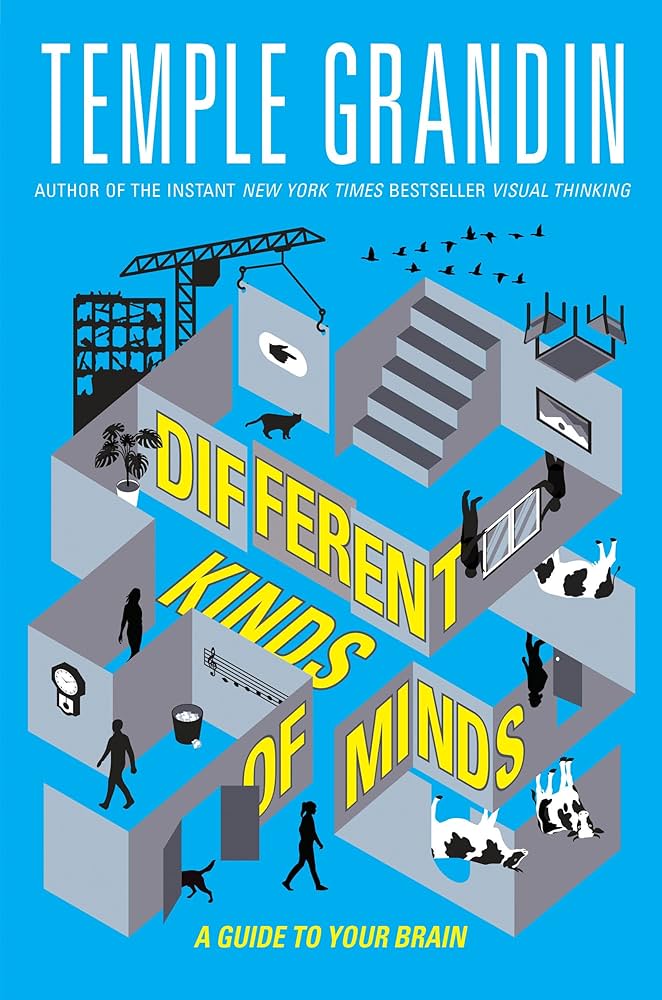
Earlier this year, my husband and I found ourselves in a little independent bookstore, and we did what I love to do in these establishments: we bought a book. (Note that it was just one book; I’m very proud of my restraint.) The book that caught our eyes—actually, the author who caught our eyes—was Temple Grandin. Years ago, we watched her eponymous movie (starring Claire Danes), and we knew that she is both brilliant and autistic. Our younger son is autistic, and we thought that Grandin’s Different Kinds of Minds would help us understand how he thinks. But how Ian thinks continues to be a bit of a puzzle because what Thomas and I discovered upon reading Different Kinds of Minds was a greater insight into the brain of our dyslexic son, Peter.

If you know me or have followed my educational posts, you’ve heard of Peter, and you might even know that I went back to grad school to help him and other struggling readers. I love reading so much that it broke my heart when Peter couldn’t learn his letters, much less blend them together to make actual words. I am now a reading specialist, certified to help students with dyslexia and other reading disabilities. For learners like Peter, the road to reading is blocked by dyslexia, but after much intervention, he was able to detour around this permanent roadblock so that, by the time he was a preadolescent, he could read a text aloud, and no one would know all the hard work that was going on in his brain to help the words flow freely. Still, though his reading sounds good now, he has to be extremely focused and has learned things about himself—such as that he needs to take notes and engage in discussion—in order to retain and comprehend what he reads. It’s tedious and by no means instantaneous; it makes reading even a short text a chore. Give him a graphic novel, photographs, charts, or videos, though, and information becomes much more accessible.

There are a couple different deficits that could affect a dyslexic person. One is a deficit in rapid naming (for example, showing them a series of easily identifiable shapes, which they know but have difficulty naming quickly). The second deficit is phonological in nature, which could include the inability to match letter sounds (phonemes) to their corresponding letter shapes (graphemes) or the inability to rhyme. A person with both of these deficits has double deficit dyslexia, and that’s Peter. Before we knew he had dyslexia, he was diagnosed with a working memory deficit, which unfortunately, has no permanent remediation. Testing also revealed that of the four kinds of learners, (visual, auditory, reading/writing, or kinesthetic), Peter was weakest in auditory, which is unusual; many dyslexic learners are auditorily adept, allowing them to memorize or at least easily comprehend what they hear. Not so for Peter. All of these put together make the American educational system a nightmare for him to negotiate. But it wasn’t until reading Temple Grandin’s book that I achieved a new level of clarity: not only are there different kinds of learners, but there are different kind of thinkers.

Grandin describes two kinds of thinkers, verbal and visual. The former “think more in words than in pictures,” are well-organized, have good executive functioning skills, and “learn best by reading books and listening” (p. 10). On the other hand, Grandin describes visual thinkers as those who “think in pictures more than words,” have messy backpacks and desktops but know exactly where to find things, excel at puzzles and chess, and “learn best from images, charts, and diagrams” (p. 11). She describes a verbal-to-visual spectrum, in which most people fall somewhere between these extremes. For Peter, though, and other visual thinkers like him, they are so far to the visual side that it is very difficult for them to succeed in a world built by and for verbal thinkers. Grandin provides an 18-question quiz that my whole family took. I was very surprised with my own results. If you answer 10 or more with “yes,” you are probably a visual thinker. Where do you fit?

Temple Grandin’s Visual Thinker Quiz from Different Kinds of Minds (pp. 38-39):

  1. Do you think mainly in pictures instead of words?
  2. Do you know things without being able to explain how or why?
  3. Do you solve problems in unusual ways?
  4. Do you have a vivid imagination?
  5. Do you remember what you see and forget what you hear?
  6. Are you terrible at spelling?
  7. Can you visualize objects from different perspectives?
  8. Do you have trouble organizing?
  9. Do you often lose track of time?
  10. Would you rather read a map than follow verbal directions?
  11. Do you remember how to get places you’ve visited only once?
  12. Is your handwriting slow and difficult for others to read?
  13. Can you feel what others are feeling?
  14. Are you musically, artistically, or mechanically inclined?
  15. Do you know more than others think you know?
  16. Do you hate speaking in front of a group?
  17. Did you feel smarter as you got older?
  18. Are you addicted to your computer?

For some of these questions, I wish I could ask what she means. Like #2, #15, and #17. I answered yes to all three. I suppose #2 refers to when you just “know” something (although I was a philosophy minor, so if I don’t know how or why, I tend to go to great lengths to figure out the answer and will create even longer explanations, like this very parenthetical aside). For #15, I know a lot of trivia and have a great memory for dates and names, a great skill to have in trivia games. But is that what the question is referring to? And for #17, I feel like pretty much everyone should be able to answer yes to this, so it doesn’t seem like it should count. Even without these, I answered “yes” to 11. The only ones that got a “no”: #1, I think in both words and pictures equally (and often simultaneously—my life is like a movie that I narrate in my head as I live it—often with a soundtrack that I may or may not be singing out loud); #6, I’m an excellent speller; #8, I’m an even better organizer (my super power, if you will); and #12, I have good, legible handwriting. Although I answered #18 with a “yes,” I suppose it may not count because, although my family would definitely say I’m addicted to my computer, what I’m usually working on is either a spreadsheet or a word document. But even if you don’t count that or #2, #15, and #17, that’s 10 with a “yes” answer. I was shocked. According to Grandin’s definition, I fit in with verbal thinkers because, hello, I’m verbose and write much better than I speak (BIG “YES” to #16). I also did very well in school and on tests, although I will forever hate standardized testing. I was not surprised that my husband was the least visual thinker (he answered “yes” to eight), and Ian had the next most, with 12. Peter, however, only answered “no” to one. He is almost entirely visual. And our schools are doing their best to hammer my visual boy into a verbal-shaped hole.

With her book and much of her life’s work, Grandin’s “goal is to get hands-on education back into schools so that we don’t screen out the people we need” (p. 7). Remember home-ec? Shop? They were a thing of the past by the time I got to high school. Although I live in a county that has some rural areas that still offer 4-H programs, not all students have opportunities like this. And who cares if you don’t want to be a farmer or rancher when you grow up? I think these are valuable things to learn, just to have an appreciation of them, if nothing else. I am a proponent of a well-rounded education, but the way our school system is nowadays, it shows what it values by testing students on the core subjects, period. And regarding standardized tests, if “the student doesn’t fit the mold? Too bad” (Grandin, p. 56).

This is a shame for people whose minds work in pictures instead of words. Who are these people? Grandin has a pet name for them that I love. She calls them “the clever engineers,” and they include artists, designers, inventors, electricians, architects, plumbers, and more (p. 7). Want some examples of real people? Think Steve Jobs, Albert Einstein, and Thomas Edison. Where would we be without these innovators? Peter also falls in this category of thinker. For years, we have trusted him to eye a space and tell us what should go where. For fun, he built our previous house in Minecraft. He’s in an architectural and engineering club in which they sometimes take on different challenges, and when the students were told to make a cantilever out of several pieces of paper, tape, and a paperclip, he was the only student to successfully MacGyver one out of the materials given. Yet he struggles with every midterm and final exam. He bombed both the ACT and SAT. If he has all the skills to become an architect but can’t pass the test to get into the college or university, what recourse does he have? Life skills seem to have no merit anymore. Grandin nails it when she writes, “It’s clear that doing well on tests can get you into good colleges; it’s not clear that doing well on tests leads to success in life” (p. 59).

At the elementary school where I teach, we strive to differentiate because we understand that there are as many types of learners as there are students in the classroom. At a professional development session a few years ago, our administration gave the faculty a group task that got us up and moving (which is great for our ADHD learners) and also allowed us to take on the tasks that spoke to our differing skill sets. At the end of it, everyone agreed that it was a great exercise that would work well with our students. One of my colleagues was worried, though—how would we assess their learning? And that’s the problem: there is so much emphasis on assessing that we lose all the great lessons learned in the process—including failure, which equals growth. I have no problem assessing skills to guide instruction, but I wish we would throw out letter grades. Yet, to keep our accreditation, to keep our doors open, we have to prove that our students are being taught and retaining certain skills. What is the answer?

First, I think that, if we say we honor “diversity” and “inclusion,” then we need to recognize that diversity goes much deeper than what we can see, and we need to include those who think differently than the test-writers. It has to do with what we can do and how we think, as well as what we bring from our individual experiences and cultures. Both of my kids are what we call “neurodiverse,” but even so, they are each differently neurodiverse, even though they have the same background and genetic makeup.

Second, for kids like Peter, who have artistic leanings but might get screened out of certain higher learning programs—which also means getting screened out of a career at which he could excel—we need more options. One option that Grandin touts is that of the apprenticeship, which is dying out in America. She writes that “we are facing an unprecedented skills gap. European and Asian countries have trained and encouraged their clever engineers. We have screened ours out” (p. 78). And if college degrees are still a requirement for such careers, then apprenticeships, internships, and experience should count toward college credit.

Lastly, more colleges—no, all colleges—need to quit requiring testing for acceptance. Does this make more work for the committees that decide who to admit and who to decline? Absolutely. But does it guarantee a fairer process? Yes. We have a friend who is an engineer, but he did so poorly on the math section of his SAT that the last college on his application list was the only one that would accept him, and even after entering their program, the academic rigors almost made him quit. Thank goodness he didn’t because he has had an amazing career and is very successful. His story gives me hope for Peter and learners like him, but… I wish that it didn’t have to be his story. How many others like him gave up and aren’t following their passion? I wish everyone’s story fit their learning profile and not what our school system decided to value. If you’re good at taking tests, hey, I am, too. But if not, you should be able to prove your knowledge some other way.

Grandin’s book covers many more issues, including parenting, a whole chapter on animals and how they think and feel, and the importance of different kinds of thinkers working in collaboration. I highly recommend it. (It’s also written for young readers, so it’s not full of dense jargon.) I bet you’ll start to identify visual thinkers in your life. The more we know about them and how they think, the more we can advocate for them and for changes that will help them have a positive educational experience. When our visual thinkers thrive, innovations happen, art and design are created, and we have outside-the-box problem solvers who can come to the rescue when there isn’t an instructional manual available.


Check out my Teachers Pay Teachers store for instructional videos and resources, Mrs C Loves to Read

What’s Schwa Got to Do with It?

Ooh, schwa. Sounds exotic. What is it?

Unless you teach elementary-aged kids, sing chorally, or are a word nerd (word nerds, unite!), you may not know what in the world a schwa is. Why should you care? Well, if you play Wordle, it’s a fantastic word to know (you’re welcome). And if you’ve ever thought that English is a ridiculously hard language to learn, you can thank the schwa—it’s a big part of why this is such a difficult language to read and spell.

Merriam-Webster defines schwa as “an unstressed mid-central vowel (such as the usual sound of the first and last vowels of the English word America),” wherein “mid-central” refers to the placement of the vowel in the mouth. The Oxford Dictionary definition is, “the unstressed central vowel (as in a moment ago), represented by the symbol /ә/ in the International Phonetic Alphabet.”

What does all this mean? Even though we know there are five vowels (a, e, i, o, and u) and sometimes a sixth (y), the schwa sound can be made by any of them. The key is identifying where it falls in a word (unstressed syllables in multisyllabic words). What, to the naked ear, may sound like a short u or could actually be spelled with any of the vowels—and often not the ones you expect.

Learn from My Mistakes

It was time to teach the schwa sound to my students, and we practiced “calling words home” (a trick that helps them identify stressed and unstressed syllables), and then I set them loose with a worksheet to find the schwa in a bunch of different words. I’m not proud of it, but it was one of those lessons when I just needed an activity to fill the time, so I did what (some) teachers do in this type of situation: I looked for a free worksheet online. One that didn’t require my students to cut out and glue anything because, even though I have a very cute chicken-shaped receptacle for my glue sticks, I absolutely abhor using them. More glue gets on the table than on the paper, and what little does get on the paper doesn’t hold, so there are scraps of paper everywhere and a sticky table. But I digress.

The nice lady who created the worksheet explained that she had vetted every single word to ensure they all had a schwa syllable. Indeed, all were schwa words. But many of them are what I call hiding-in-plain-sight schwa words, and I did an inadequate job preparing my students for these. Within a few minutes of turning them loose with what should have been an independent activity, I was getting called to help them left and right because they were able to find the unstressed syllables, but then it appeared that many of the unstressed syllables had the vowels they were expecting. So how could they be schwas? I had missed one important detail about the schwa, which was right there in my teacher’s manual. UFLI Foundations defines schwa as a “quick, unstressed neutral vowel pronunciation, noted by the symbol /ә/. The purpose of schwa is to allow unstressed syllables to be said more quickly” (p. 371, emphasis added).

I had neglected to tell my students that, sometimes, the schwa vowel is, in fact, the one you think it is (depending on regional pronunciation, of course). What I mean by this is that I can sound out a word like muffin and figure out that its vowels are u and i (in that order). Does this word have a schwa? Yes, it’s the i. Say it. Which syllable gets the stress? muf Now, say the whole word, and when you do, really listen for that second vowel. Does is sound like a pure i (“ih”), or do you say it so quickly that its sound is indistinct? (I hope you said it’s indistinct, but if you think differently, I’ll get to that in a sec.)

Every multisyllable word has at least one unstressed syllable, and chances are, that unstressed syllable has the schwa sound. Try some more words: acrosschickendentistdragonupon. Unstressed syllables make the schwa lazy; the vowel is kind of taking a nap and not doing its proper job. This was a hard concept for me to grasp because I am a trained singer, and when singing, I often modify the schwa sound to make it more palatable to the ear.

For example, when singing “The Star-Spangled Banner,” I pronounce the i in perilous as the pure short /i/, not /ә/. Even though no one goes around saying per-ih-lous, this is a choice that many singers make because the schwa sound is, quite frankly, ugly when it’s sung (especially when a note/vowel is sustained for any length). Because I’ve been singing for a lot longer than I’ve been teaching, I sometimes (unintentionally) speak in an affected way, making the schwa hard for me to detect. This happens even more when I’m sounding out a word in isolation with my students. Note to self: when teaching, take off your singer hat. When my students were trying to find the schwa in a syllable that clearly sounded like /ә/ and just as clearly was spelled with a u (like until), it’s no wonder they were confused. They thought that the schwa could never be the vowel that typically makes that sound. It’s important to teach that, even though it may sound like a short u (or i, as the case may be), the schwa prevents it from having its purest sound. In other words, when trying to be a schwa detective, be the opposite of a good singer.

How to Teach Schwa and Why It’s Important

First, being able to identify which syllables are stressed and unstressed is a great tool for readers to have in their literacy toolboxes. Because I have a very long last name that starts with an unstressed syllable, I’m familiar with people attempting to lead with a stressed syllable. And once they start pronouncing it incorrectly, they get stuck. I teach my students what stressed and unstressed syllables are by using their names. I pretend they’re very far away, then call them in a sing-song voice. When I do, which syllable do I naturally stretch out? That’s the stressed syllable. (Kids love this because they discover that many of them have one or more schwa sounds in their names.) We can use this same exercise with multisyllabic words. If emergent readers are decoding a word for the first time and it sounds wrong, they’re likely emphasizing the wrong syllable. They need to “call” it the other way, with the stress on the other syllable. Then all kinds of light bulbs start to go off. (To see exactly what I mean, here’s a FREE video of me teaching the schwa sound.)

Second, if students don’t learn about the schwa, they might be prone to spell words like nickul (nickel) or baskit (basket). And while spell check is out there to fix a lot of these mistakes, it can’t help when someone is wildly off. I teach with the simple view of reading approach, in which sounds (phonemes) and word parts (syllables) are taught in an explicit, systematic manner. The spelling patterns are more important than the individual words because they’re like keys, and once readers have the keys to decode, they can “open up” all kinds of new words. Once I’ve taught a spelling pattern (like the schwa sound), I include it in word work, games, and texts, and students gain reading comprehension. It’s a formula that looks like this:

RC = D x LC

in which Reading Comprehension is the product of Decoding and Language Comprehension.

Why It Matters (My Soapbox Moment)

The more students engage with and experience these words, the better they will understand and retain them. The better readers they will be. The better spellers and writers. But what about those students who struggle? They may have the reading strategies down cold, but they just can’t get the hang of spelling, no matter how hard they try. They are the kids who routinely fail spelling tests (in the schools that still give them) or who lose a letter grade because their essays, while including all the right content, look like they were written by a three-year-old. If you’ve read my blog before, you know how I feel about tests (don’t like them one bit), although I grudgingly understand why we do have to have some way to quantify what students know.

I am a formative assessment kind of gal, and one great way to give this kind of assessment was introduced to me in a math workshop, of all things. While I was attending in the hopes of helping my kiddos who struggle with math (and I did get a lot of great tips for that—never fear!), I came away with a much stronger sense of how to help all my students in any subject.

When we throw concepts at students and expect them to swallow (and regurgitate) them with no opportunity for reflection, how much are they getting out of the lesson? How much do they retain? The answer is often just enough to get them through the unit test—if that. What I learned from Dr. Yeap Ban Har from [Math]odology is that the answer does not matter nearly as much as the journey to searching for the answer. He uses the analogy of going to the airport. Some students are on their way there (need assistance). Some have arrived at the airport and are ready to board (emergent). Others are at cruising altitude (independent). One way to gauge which level of “airport” readiness students have achieved is by giving them the opportunity to show their learning through reflective journals. These can take many different forms, from simply describing what they learned to turning it into a story or letter to a friend to… well, whatever way a student needs to express him- or herself. If education across the board could shift in this direction, I think great things could happen for our young minds.

Bringing it back to the schwa sound, I would much rather a student explore and find words in texts they’re reading, write them out, and play with syllable stresses than memorize a list of words for a spelling test. If they get the vowel wrong, at least they’re thinking. We’ll read some great literature together, and they’ll suddenly start seeing words with schwas everywhere, and the dots will start to connect. If you’re a teacher, wouldn’t you much rather spend your time reading great texts to your students than drilling them for a test? If you’re a parent, doesn’t that sound like the kind of education you’d like your child(ren) to have? With the right exposure, the right techniques, they’ll become much more competent and confident readers, writers, learners, and thinkers.


For more about schwa and all kinds of other spelling patterns, check out my Teachers Pay Teachers store, Mrs C Loves to Read. For two days only (August 6-7, 2024), get up to 25% off everything in my TpT store using the code below.

Is AI Making Us Dumber?

In February 2023, I attended a conference for academic support teachers, and one of the workshops addressed ChatGPT. As an elementary school teacher, it wasn’t on my radar at all. The stance that the workshop leaders took wasn’t exactly “if you can’t beat them, join them,” but it wasn’t far off. If kids are going to be exploring ChatGPT anyway, they reasoned, we teachers need to make it our job to learn about it and any benefits it might have in the classroom.

I didn’t give ChatGPT another thought until last year’s preplanning, when one of our admin gave a ChatGPT demonstration by having it write her presentation. Were there some gaffes? Yes, but it did a decent job of covering her topic.

That was my only taste of ChatGPT until one day a few months later when I was completely burnt out and needed to write a lesson plan for my 3rd graders. One of my colleagues said, “Have ChatGPT write it for you.” So I thought, why not? I pulled it up and asked it to write my lesson plan. At the beginning of ChatGPT’s lesson plan, it gave instructions for whichever spelling pattern I was teaching (I wish I’d saved it—I can’t remember what pattern it was now), and while the structure of the lesson plan was fine, the explanation of the spelling pattern was incorrect. In ChatGPT’s defense, it is difficult to give printed instructions for a lesson that is dependent on sounds and articulation. I can imagine it being just as difficult to read a speech therapist’s lesson plan. Even so, the fundamental principals were just wrong. It concerned me that other teachers who are lost and looking to ChatGPT to help them might assume that it’s correct and teach it verbatim. You may think it doesn’t matter if kids don’t learn how to spell (after all, they can just have AI write it for them—yeesh), but what if it writes an incorrect chemistry or algebra lesson?

One thing I will give ChatGPT is that it asks for feedback, and I did not hold back. I told it that I couldn’t use the lesson plan because there were errors, and it asked me what those errors were because, as AI, it has the ability to learn. I told it what was wrong, but again, if I didn’t know what I was talking about, I could fill ChatGPT with all kinds of nonsense that it would internalize and use in the next lesson plan that some unsuspecting teacher asks for. In that way, it reminds me of Wikipedia—which, by the way, my school teaches students not to use as a trusted source. Sure, you may find facts there, but it’s also been known to have bogus information, such as that Sinbad died in 2007 (he’s still alive and well 17 years later).

ChatGPT isn’t the only AI out there. It seems like there’s something new every day. I see commercials for Grammarly constantly. Do we really need AI to help us with our emails? (Okay, I’ll admit, some people need to get help from somewhere. Apparently, it’s too much to ask people to proofread a two-liner before hitting send.) Even WordPress is trying to get me to use AI to “improve” this blog. I’m sorry, if I reach a smaller audience because I’m not using AI, at least that audience is reading my words.

And AI doesn’t just write and edit for you—it can also take a candid photo and make it look like a professional headshot. While this is a nice alternative to having to spend big bucks on a photographer, it’s also a hop, skip, and a jump away from fudging reality. If AI can make a snapshot of me at Disney World look like a professional headshot, couldn’t it also make it look like I’m best friends with J.K. Rowling? Or like I spent two weeks at a fancy resort that I’ve never actually visited? If seeing is believing… what if we can’t believe what we see anymore?

Thinking I’m a dinosaur who needs to get with the times, I asked my 16-year-old what he thinks about ChatGPT. To my surprise, I know more about it than he does. The extent of his knowledge is that it’s AI, therefore he has no interest in it. I asked him why—after all, he’s my dyslexic kiddo who has legitimate access to all the assistive technology he could ever want. What Peter said is that AI is allowing people to get dumber because they don’t have to think. There you have it from a high schooler, folks.

And as if the universe was giving me extra incentive to tackle this topic, I read this the other day: “Calculating machines could provide swift answers to complex sums, but what happened when the human mind atrophied and forgot how to calculate?” (Sisterhood of Dune by Brian Herbert and Kevin J. Anderson—yep, this lecture brought to you by a sci-fi geek).

I am all for assistive technology. After all, I’m the same person who made this vision board in grad school:

Just as I have students with dyscalculia (a math disorder) who are allowed to use calculators on math tests, there are assistive technologies that help people with just about any learning disability you can imagine. The more research that comes out about different learners, the more we’re able to differentiate and allow people to learn according to how they are wired. But before assistive technology can be used, the people using it need to know why they’re using these tools and how to use them properly. Putting a calculator into a child’s hands does no good if she doesn’t know which functions to use or the order of operations. Only once she understands the basic principles of math can she use the calculator to free up some of her working memory so she can think through problems and solve them correctly. In other words, we still have to teach people how to think.

Before writing this post, I did go back to ChatGPT to have it write a lesson plan on r-controlled vowels. The activities that it outlined were okay, but it lumped areriror, and ur into one lesson without any explicit instruction about the different sounds or how to differentiate between erir, and ur, which all sound the same. I’m sure I care more about this than most because I’m a specialist, but that’s the point: I’m the specialist, not ChatGPT. The next time I’m feeling overwhelmed, I’ll just take a breather and remember that, even on my worst days, I’m a better teacher than AI.

Here’s the thing: generative AI should only be used to supplement what we already know. It should not be the only source we turn to for anything, and when it’s used at all, it should be with extreme caution and—dare I say?—skepticism. In a time when it’s so easy to let our minds atrophy in front of screens, AI gives us another excuse to let our thinking “muscles” go slack. It’s such an issue that, when submitting a piece of writing for publication, I have to check a box saying it’s my own creation and that no part of it was written by artificial intelligence. Plagiarism, while still an issue, is no longer the main way that people claim works that aren’t their own.

I’ll leave you with this:

I love creating teaching materials or having brainwaves that make me lose myself in a piece of writing for long stretches of time. Don’t let AI steal what you love to do and turn it into a cheap imitation of your original, hard work.


For worksheets, activities, reading passages, lesson plans, and more (that I created), please check out my Teachers Pay Teachers store, Mrs C loves to read: https://www.teacherspayteachers.com/store/mrs-c-loves-to-read

In America, an A Is an A, and a B Is a D

Dusting off the top of my soapbox and climbing on

I’m on team of teachers who work exclusively with students with learning differences. We meet throughout the year to evaluate our students’ progress, problem-solve, and commiserate with each other over things we can’t change, such as what goes on at home. Many parents remain in denial about their children’s needs, even with a diagnosis in hand. One problem with learning differences is that they can be elusive. Okay, yes, you can tell that a child doing log rolls across the floor has the H (hyperactivity) of ADHD, but dyslexia, dyscalculia, anxiety? These are not nearly as obvious, and students with high IQs and good coping skills can fly under the radar for a long time. In some ways, it might be easier for children who have a physical difference because people can see it and adjust their expectations. For example, parents of a blind child might be disappointed that he won’t grow up to be a professional baseball player, but they understand his limitations. Not so with some of my students. I’ve known parents to name drop with the universities they attended, as if their impressive alma maters will somehow make it possible to “cure” their kids—like maybe I’ll try harder now that I know what’s at stake. They can’t accept that their kids might not be Harvard material because if their kids don’t follow in their footsteps, then what’s the point?

Think I’m being harsh? How many people do you know who have fallen out with their parents because they didn’t live up to their unreasonable expectations? Or even expectations that seem reasonable but don’t work for that particular child. Unfortunately, I can think of too many.

Reflecting on the worst of the discipline problems I dealt with this past year, they boil down to two categories:

  1. Parents don’t want to be bothered by child, so child seeks negative attention over no attention; and
  2. Parents don’t understand child, so child lashes out when parents try to force the square child into a round hole.

Forget about #1 for now—that’s a whole series of books unto itself. But #2 often happens with the best of intentions. The issue isn’t that parents don’t love their children (although one could argue that sometimes parents are attempting to fulfill their unrealized dreams vicariously through said children); the issue is that parents need to wake up.

My first wake up call came over 10 years ago (read about my second one here). My husband and I have no learning disabilities and are fairly intelligent people. We’re both college graduates, both motivated and self-disciplined. If we didn’t achieve something (academically), it was on us. When we had our first child, we did what “good” parents do: we kept him away from screens, read to him, fed him healthy foods, made sure he got plenty of sleep, gave him educational toys. He even started going to school at the age of three. There is not any reason in the world why this child with this life shouldn’t know his letters, except he didn’t. He is dyslexic. This is not something we could have bought our way out of or prevented, and it will be part of his identity his whole life. Just the possibility of him being dyslexic scared me because all I knew were a pile of myths and misinformation, and I thought trying harder and tutoring and encouraging him would fix the “problem.”

His problem had more to do with me than himself. Once I took the time to learn what dyslexia really is and how Peter is wired, I got the right help for him and realized that my expectations for him to follow in my academic footsteps put way too much pressure on him. He put in all the effort, but tests are not made for kids like him. Project-based learning is more his speed, but for all we educators like to talk about differentiation and equity (both great things—don’t get me wrong!), our American school system has yet to get with the times. And after all, it’s not as easy to assess a great, failed science project where lots of learning occurs than penciled-in bubbles on a scantron.

And even if we were able to assess every child in a way that took into account his or her own particular learning profile, that wouldn’t magically make kids who struggle good at every subject. For those who need help in one area or another or—gasp—only muster a B, are they unfulfilled as humans?

At one of my team’s meetings, we were talking about how great one of these “B” students was doing—a student with “we went to this impressive college” parents, so Bs aren’t acceptable—when one of my colleagues said, “In America, an A is an A, and a B is a D.” How right she was (and thanks for the great post title)! The opposite of apathy, this stance is that if you’re not achieving the top at [fill-in-the-blank], then you might as well have not tried to begin with. It’s even true of myself—cough—if I’m to be honest. When I was in grad school, I started to panic if I thought my work might earn less than 98%. And why? My grades were between my professors and me—no one else knew. It’s a hard habit to break, caring about grades. And it’s not that getting good grades is bad—I’m really proud of my kiddos (at home and in the classroom) when they do well. But I’m also proud of them when they make a good effort, when they take a risk by going outside their comfort zones, when they make mistakes and learn from them. Unfortunately, our esteemed institutes of higher learning don’t seem to think that way. Even state universities (like my alma mater) are turning away great kids. Can you blame Lori Loughlin and Felicity Huffman for doing what they did to fudge their kids’ college admission documents? Well, yeah, I can and do, but you get my point. If people with all the money in the world can’t get their kids into the schools they want, what are the rest of us lowly, normal parents to do? (Secondarily, why do they want those schools for their kids? Would their lives amount to anything at a different school—or no school?)

Those aren’t rhetorical questions. Here we go:

We can be proud of our kids for being who they are, period. I’m not talking about giving up. Kids should still be motivated to give their best effort, but even more importantly, they should be nurtured in ways that allow them to discover their true passions. I’m proud of a mom I know for doing just that. I was catching up on what her daughter’s been up to lately. This girl is a phenomenal singer and actress, and I was surprised to hear that she’s not pursuing the stage. “But it’s not her passion,” her mom said. Wow. If only more parents would realize this. Just because their kids are good at sports or ballet or academics doesn’t mean their future is decided based on those things. I feel like our culture is making this even harder now that young athletes are getting paid at the collegiate level. It certainly would be hard to turn down free college tuition and a giant paycheck, especially at the impressionable age of 18 when the lure of the almighty dollar is so powerful.

When I was in my 20s, I struggled with the desire to be at home with my children and my (in)ability to afford it. My husband just about killed himself, working extra to pay the bills, while I floundered at a mediocre freelance writing career (if you can call it that). I’m a good writer and editor, and I got some business, but it wasn’t nearly enough to pay for diapers, much less all the other expenses we incurred with two small children. A couple of my friends were court reporters and told me that, with my typing and proofreading skills, I would be a natural. I could “be my own boss” and make a six-figure income. It was very, very tempting. But when I thought about leaving my babies and spending all day in a courtroom…my soul shrank away from the idea. I know it’s a great job for some people but not for me, even though the idea of that salary was so alluring.

While I tried to figure out what in the world to do with my life, I began volunteering at Peter’s school, and when they put out a plea for substitute teachers, I thought that was something I could do and make a little extra money. When my younger son started attending there, too, it just so happened that they had a full-time job for me. In a very unexpected way, I found my love of teaching (something I said I would never do)… and it started with saying no to something much more lucrative. In fact, if we think about salaries, you could say I turned down an A for a C. But if it means making less money to be fulfilled, that doesn’t even feel like a choice.

Yes, encourage your kids to always do their best. Lead by showing them the right choices instead of the easy or flashy ones. Have compassion (on them and yourself) when setbacks happen. What did we learn?

That grades are for school, and there they should stay.

That tests are for people who are good at taking them.

That a life worth living can’t be documented on a resume or a paycheck.


Check out my TpT (Teachers Pay Teachers) store, Mrs. C Loves to Read, to see what I teach in the classroom.

What’s My Twitter Handle Again?

Twitter for Teachers

I’m doing something I said I would never do: I’m going back to school. Grad school, that is. I can’t make a judgment call yet because I’m at the beginning of this long journey. It’s possible that my second grader will get his Masters degree before I do. But. I started.

I’m taking a course called Literacy and Technology, which I find both fascinating and helpful because tech intimidates me. I am certainly no pioneer, eager to try every new thing put out by Apple or Samsung or Microsoft. Once I get comfortable with a particular technology, platform, or device, I’ll stick with it until it dies or I do.

I understand that I’m admitting to be a paradoxical, Millennial dinosaur. If you’re a regular reader of my blog, you may remember that I love physical books—you know, made of this archaic material called paper. But I happen to have a son who is dyslexic, and paper books are a trial for him. This does not mean, however, that he has to hate books. He’s almost 12, but I still read aloud to him, sharing some of my favorite stories that I don’t want him to miss out on. Fortunately, current technology has progressed so that he doesn’t have to put me in his backpack and take me everywhere when he needs to read. As the saying goes, there’s an app for that, and he has a handy one called Learning Ally that can read texts for him, both fiction and non-fiction. And that’s just one example of many that can help people like Peter.

How appropriate that my first class is introducing me to all kinds of tech and new ideas about how to best utilize it in the classroom. This week’s focus: creating educational content via blogs, microblogs, and video. In a time when schools either have some sort of computer device in most classrooms or actually require students to bring their own, this is a hot and often controversial topic. Cyber ethics and safety and online research are normal parts of children’s curriculum now. It’s not just Solitaire and Oregon Trail anymore, which were the main reasons I used computers when I was a tween.

The advantages of creating and using online content are many. If you’re curious about an educational topic, someone else has probably already posted something about it. All you have to do is search. And then comment. Or retweet. Or subscribe and share. Then give it your own personal twist; use it; post the results. The information accumulates, is shared again, and this is the beauty of live content, versus a full set of Encyclopedia Britannica that cost a pile of money in the 1970s and hasn’t been updated since then because of said pile of money.

Instead of debating whether this kind of technology would be allowed at my school, let’s go by the assumption that it would, and I have a classroom of students who are old enough to use blogs, microblogs, and videos. In this scenario, which medium would I prefer, and why? After studying all three methods, my answer today is a little different than it was this time last week.

Going in to this topic, I was very familiar with blogs. I mean, here I am, writing one. And despite being less active this year than I’ve been since starting Full-Time Writer Mom in 2012, I am still most comfortable with this medium. I pride myself on thinking carefully about each topic; that’s why I no longer write weekly. For a while, coming up with a topic felt forced. I decided to only write something when I felt moved to do so. The problem, of course, was that when I got out of the habit, it was easy to make excuses, to continue to not post.

But what if I were able to use this platform in the classroom? I discovered a couple new blogs this week that spoke to the book lover in me, A Mighty Girl and School Library Journal. I am seriously considering going back and re-certifying so I can teach 4th, 5th, or 6th grade language arts (I’m currently only certified through 3rd grade). Not only would these blogs and ones like them be a great resource for me in the classroom, but what if I could expand this blog to help other teachers? This is very appealing to me, something I feel I could do well and with relative ease.

Next: Twitter and microblogging. As the name suggests, microblogging is blogging, but on a tiny scale. And I’ll admit that, although I do have a Twitter account, I never use it. Why? I guess because I’m unfamiliar with it, intimidated. Please refer to when I said that I get comfortable with something and like to stick with it. I’m comfortable with Facebook. Not Instagram, not LinkedIn, not Twitter. I have accounts with them all, but I’m sadly MIA in most. My fault. I know they’re all good resources, so I need to make myself become more familiar, push myself out of my comfort zone. But Twitter specifically really gets me because I’m verbose. If the rule were to keep tweets down to 140 words, I’d still have a problem. But 140 characters?

This is a challenge I need to tackle, and I became convinced of this when I read about English teacher and author Kate Messner and how she got her class involved with Twitter. By creating an account for her class, she was able to have them join in on a conversation about one of the books they were reading with the book’s author and editor. While an argument can be made that social media isolates people, when used correctly, Twitter can connect people who, otherwise, might never meet. While I think it’s cool for the occasional author to comment on one of my reviews on Goodreads, that’s nothing to having a real-time conversation like Messner’s class had. This would have been a dream come true when I was a kid. (Okay, it still is. I really need to get busy on Twitter.)

The last medium, video, is the one with which I am least comfortable, although I certainly appreciate its uses. My children have a few people they follow on YouTube, mainly adult gamers who play Minecraft or Roblox (MC Naveed and Pat and Jen are the biggies). My seven-year-old has learned how to create some amazing structures on Minecraft just from watching their videos. Are they entertaining? Undoubtedly. Do they also happen to be instructional? Actually, yes. I think a downside is, however, there’s so much inappropriate video content out there. Sometimes Ian will be in the middle of watching someone build something (not from the two mentioned above), and then a swear word comes out. And Mom Police immediately shuts it down.

Still, could I preview content and share what I deem appropriate in the classroom? I could, as well as use it for professional development. But could I create my own YouTube channel, my own content? Well… that’s where I’m unsure. I can do live videos on Facebook within a closed group, where my audience is small, familiar. Do I want to put myself out there, have my face on everything I produce? Because that’s what I see whenever I view someone else’s YouTube channel: faces. It seems kind of narcissistic. I know this bias shouldn’t make me leery of this medium, but it does. For now, let’s just say that I am more willing to be a consumer than a producer. But do I dare say “never”? Well, look at what happened when I said I wouldn’t ever go back to school…

Does School Choir Matter?

singing

Sharing my love of music with my youngest

Before reading on, I invite you to watch a video (from whence I stole this post’s title) that addresses this issue by clicking here.

Growing up, I was always involved in some sort of music, from taking music lessons as a three-year-old and transitioning to piano to singing in children’s choir at church to my elementary school’s auditioned three-part chorus. My middle school’s chorus program was dying when I got there. After one frustrating year, I left that school, but I made my decision so late in the summer that it was too late to audition for our arts magnet middle school. Instead, my parents decided to try homeschooling me.

Maybe one reason I tend to read and write teen fiction is because I empathize with the ugly duckling teenagers who aren’t comfortable in their own skin and don’t know where they fit in the world. One reason I so readily left my middle school was because, somewhere in the adolescent muck, my old friends were no longer true friends. My rose-colored lenses were shattered beyond repair. Homeschooling was perfect; I no longer had to interact with my peers. Forget ugly duckling; I’d become a turtle that never poked her head out of her shell, and I’m sure my parents envisioned me locked in my childhood room, devouring books and Twinkies at the age of thirty-eight.

Completely against my will, they signed me up for a summer musical program at a local high school. It was a “normal school,” not one with a magnet program. But despite cuts in funding, this school still had musical theatre and chorus, the teachers of both programs collaborating to put on summer musicals that rivaled those of our city’s arts magnet. My closest cousin was a student at this school, and the chorus teacher was a friend of his family. My chorus teacher was (and still is) a loving man, who always put his students first. He took me under his wing, and even though I continued to homeschool, he became my advocate, convincing the principal to let me into the school’s chorus and musical theatre programs. After my first year, the musical theatre teacher left, but chorus remained. I sang in all the concerts, including three times in Disney’s Candlelight Processional. I sang in chorus, ensemble, and solo competitions at the district and state levels, participated in All State choruses, and went on two trips to New York City. I also met my husband.

The year after I graduated, the chorus program wilted. Funding at the school was cut, and they consolidated both chorus and band positions into one instructor, which was neither fair to the students nor the teacher. My chorus teacher, not wanting to compromise the program he’d built by being stretched so thin, went to a different school that still appreciated that chorus and band are two different things.

For a kid who homeschooled without being a part of a homeschool group, I would have missed so many opportunities if there hadn’t been a local high school chorus program and teacher willing to let me participate. It would be hypocritical of me to put my head in the sand with the attitude that because I love music, I’ll always make sure my own kids have opportunities to participate in musical programs. While that’s great for my boys, that’s not the point. So many kids have talents they’ll never get to nurture because their parents don’t have the time, means, or desire to help them outside of school. By cutting musical programs and only offering them at specialty or independent schools, we’re robbing children of a different way to learn, to think, to live. Not to mention that music also makes for excellent therapy.

But at least there’s always college, right? I mean, if they’re still interested at that point. After all, that’s how my parents met—in college chorale, where they not only had the opportunity to sing but to do so all over the US and Europe. But at the same junior college they attended (which is now a state college), the funding has been cut to the point that there may not be a choral program after the next couple years.

Let me ask: what do kids look forward to when they get up and go to school every day? Are they excited to learn how to take tests? I doubt it, but more and more, that’s what school is becoming. I looked forward to school (except for that one year) because I loved my friends and even my teachers. And my teachers made learning fun because they were actually allowed to teach subjects that excited them. If we send our kids to institutions for seven-plus hours five days a week but subtract all the parts that make child- and young adulthood fun, how can we expect their enthusiasm for learning to grow, much less flourish? This isn’t limited to music, folks. What happened to recess? Visual arts? Non-academic learning, such as kids problem solving and developing grit through play? These are all undervalued by the people in charge, whomever they are, and those of us who care are left sitting here, scratching our heads and wondering what we can do.

I wish I had an answer. I’m grateful to all the private music teachers, after-school programs, and conservatories that promote musical learning, but they’re often spread thin, too. These are private entities that depend on outside funding, tuition, or grants to keep their doors open, none of which are guaranteed. Why do we undervalue something that can bring about such positive change in the lives of everyone, from babies to the elderly? After all, the children of this generation will be taking care of me in a nursing home not too many decades from now, and when that time comes, I hope they’ll appreciate that playing some of my favorite songs and giving me a cool coloring book is more worthwhile than letting me turn into a vegetable in front of a TV.

The question isn’t really if school choir matters. It’s the why of the thing. It matters because it creates a safe space for children who come from different backgrounds, religions, cultures, and so on to create something together that’s much greater than what they can do individually. And if they grow an appreciation for this when they’re young, they’re more likely to take it with them as they grow and mature. I think it’s a pretty good place to start.

Let Them Be Children Now, So They Can Be Adults Later


Kids racing

I was saddened to learn of a recent teenage suicide, in which the boy who took his life apparently felt that he had screwed up so badly that the only recourse was to take his life. Why in the world would a seventeen-year-old from a good family and with a bright future think that ending his life was the only option he had left?

I believe that there are too many pressures on today’s kids, and you can see it in the way we structure their days. Think about the schools in which the arts and recess have been cut. What message are we sending? That sitting at a desk and making the right test score is the most important thing.

I jokingly lectured a dad of one of my preschoolers at the beginning of this school year that there’s nothing more developmentally appropriate for her to do than play. “Her Harvard application isn’t due for a few years,” I said, and I thought he would laugh, but the look he gave me said, I couldn’t disagree with you more. My question is, if she’s already being discouraged from letting her imagination run wild at the age of four, when exactly does she get to be a kid?

One of the tasks of a preschool teacher is, indeed, to evaluate the readiness of students to move on to the next level—but we’re talking kindergarten, folks, not the Ivy League. In considering one child in particular—a child who has all kinds of processing and attention and core strength issues—a comment was made that 10 years ago, he would have happily played through his preschool days and moved on to kindergarten with no one ever considering holding him back. But instead, he’s having all kinds of interventions to make sure that he can make it through preschool. And it’s not like he’s the only one.

As I already mentioned, children are losing many opportunities to express themselves creatively and physically with the loss of arts programs and recess, but the problem is that it’s not just at school where this is happening. Within the past 10 years, we’ve had the advent of the touch screen. We have a number of iPads designated for our classroom, and although our four- and five-year-olds love them, there is a marked difference in the way they behave when we bring them out. It places them in self-absorbed bubbles, and if that reminds you of anyone (ahem, teenagers and Millennials), then I hope you’re disturbed enough to want to reverse this trend. When you’re four and five years old, this kind of technology should be used sparingly, if at all, and LEGOs, building blocks, puzzles, and play kitchens should be the norm. (Here’s a great article about the dangers of turning over smartphone technology to our kids.)

At the end of 2016, I wrote about spending less time with my own technology (social media, in particular), and although I’ve really enjoyed putting my phone and down and breaking that addiction, I’m just one person. In this digital age, it’s more and more common to see families sitting around the dinner table, parents and older kids on their devices, ignoring the smallest members, who are literally screaming for attention. When asked recently by a workshop facilitator why we have K through 12 education (and in my case, PreK), it occurred to me that teachers have to provide more than the three R’s anymore; present day teachers are also teaching the things that children should be learning at home. Take manners and respect. It’s difficult expect a child to behave appropriately when he engages in disrespectful behavior right in front of his parents with no correction. These basics aren’t being taught at home because parents are mentally elsewhere, which gives people in my position an extra responsibility in addition to teaching letter and number recognition.

As infants, children are learning to swipe on a touch screen. Then when they start school, we teachers have to introduce their parents to such novel ideas as coloring with crayons, playing with Play-Doh, and painting at an easel—and paying for occupational therapy. For most children, if they’d just engaged in developmentally appropriate play to begin with, their parents wouldn’t have to incur this added expense just to teach them how to hold a pencil or use a pair of scissors.

I understand why technology is so attractive—it’s a great babysitter—but we have to understand that it can easily turn to junk food for the brain. There’s no substitute, in my book, for a box of LEGOs in the middle of the living room floor, a coloring book and crayons at the kitchen table, or a few minutes of introducing children to a beloved book. (Here’s an article about what parents of “good” kids do.)

More and more, we’ve come to expect that kids are just going to be tortured and inattentive while they sit at desks for extended periods, and that just shouldn’t be the case. A well-rounded childhood should include playing outside unstructured, which means that we shouldn’t micromanage every minute. One of the methods we use in our preschool to help children get ready for our “work” time is to let them run outside and play. In fact, I have one student who will hit the wall, and I’ve learned to just let him go and play with blocks for a few minutes, and he’ll be better able to finish a project after getting this little break. Here is one article, and here’s another, that both explain why the absence of play is leading to attention and sensory issues in this upcoming generation.

Kids can be kids when we sing silly songs in the car and at bath time, when we read books together, and, most of all, when we take the time to express why we do things the way we do. It doesn’t take any extra money, but it does take time and the willingness to put our children first. By connecting with them in these simple ways, we’re showing that we care, and if you don’t think that matters, then why did you have children to begin with?

Instead of raising techno-zombies and expecting them to succeed from the moment they show an interest in learning, we need to spend the effort to let them know that whatever they do, their lives are worthwhile. They need to learn how to fail, so they won’t expect everything to be handed to them without ever lifting a finger. They won’t be crushed when life, inevitably, is unfair. Instead, they’ll tackle challenges with creativity and resiliency. They’ll take responsibility for their actions and understand that other lives are being impacted as well, and they’ll have respect for those other lives.

In short, as long as we understand that throwing our hands in the air and doing the easy thing is not the best thing, then there’s the chance that this next generation will give aging Millennials the opportunity to say, “What’s with this generation? How’d they end up so well-adjusted? Oh, that’s right. We raised them that way.”

Are You Happy with Your Child’s Education?

education

education (Photo credit: Sean MacEntee)

The three R’s: reading, writing, and arithmetic. Well, okay, only one of them starts with an “R,” but you get it. These are the basic skills that every child should carry away after twelve-plus years in school, right? But I’m not so sure that they’re touted or taught as much as they should be anymore. Okay, you know what? I know they’re not.

I have a friend who is a retired English teacher, and her grandson needed a little help on his essay for his college application. I don’t know what prompted him to ask her for help. After all, he’d already had a conference with his English teacher about his essay, and she signed off on it. Thank goodness something told him it wasn’t quite right. My friend was shocked when she read it. “Now, it’s not an AP English class,” she said, as if that should excuse it.

I don’t care what kind of English class it is: if you’re preparing high school seniors for entrance into college, they should at least be able to write a solid essay. His was full of platitudes and clichés. After the opening sentence, there was nothing original in it, certainly nothing that would make him stand out as exceptional. He’s a bright kid, full of excitement and energy, which he should have been able to impart – and which his teacher should have encouraged. Yet it was his grandmother’s guidance that finally helped him write a great essay.

So I’ve been mulling over that, wondering where the problem lies. I remember my first college writing course, where everyone was a freshman, and at seventeen, I was the youngest by at least a year. A week or so in, my teacher grew so frustrated with how ignorant most of the class was that she gave us a quiz on basic things that every American high school graduate should know, and not just limited to writing. Questions from the names of certain presidents to the years of the Civil War to what the color white symbolizes in our culture and on and on – and the majority of students failed. I looked around, wondering what in the world was wrong with my classmates. What made me different?

I majored in English, and many people assumed that that meant I was going to teach English. That never made sense to me; if I wanted to teach, I would have gotten a degree in education because there’s a lot more to running a classroom than knowing how to punctuate properly. In any case, I had many fellow English major classmates who planned to do just that. One girl, who was very sweet and wrote compelling stories, could not spell or punctuate her way out of a paper bag. And she told me proudly in her last semester that she had already been hired as an English teacher for the next year in a local high school. I cringed and told myself that I would never send whatever future children I had to that school.

Now, if you are a teacher, before you get your panties in a wad, I do understand that there are a great many of you who are excellent at what you do. Your vocation truly is a calling, and many children are blessed to have you in their lives. Some of you are in my family, and I know you have great gifts. You can’t help it that some of your peers have no business working alongside you.

Nor do I think this problem is only in public schools in troubled neighborhoods. There are plenty of charter or private schools or public schools with very active PTAs who turn kids out into a world for which they are grossly under-prepared. My son attends an excellent independent school, where he gets lots of individual attention, but some of the other parents assume that if they’re paying so much for their children’s educations, they don’t need to do anything at home.

It’s complacency that we’re fighting here, folks. Although the schools that hire the unqualified teachers and the schools that gave them their sub-par education to begin with share a lot of the blame, education has to start at home. Think about the days before school was compulsory. Read some of the writings of people in our nation’s infancy. These were people who had to help their parents run a farm or a general store, but those same parents knew that, if nothing else, their children had to be able to read, write, and know at least the basics of math to get by in the world. Think about Abraham Lincoln, who had little opportunity for a formal education. Yet every child in the US now has access to full-time education, and more of them than ever are leaving the system ill-prepared for the most basic tasks.

As a writer, it is painful for me to see how poorly other people write. Shouldn’t this be one of the first things we learn? Why are we bothering with all these ridiculous standardized tests, when the focus should be elsewhere? I take on a number of paid projects (which I appreciate, don’t get me wrong) that anyone with a high school diploma should be able to accomplish. And as a bookkeeper, the math end of it bothers me, too. When I go to the store and owe $19.26, then pay $20.26 so I can get a one-dollar bill back, you would be surprised at how many cashiers scratch their heads. Really? This is about as easy as it gets. What would they do if their cash registers broke?

So this has turned into a rant. Sorry about that, but I am passionate about raising a nation of competent people. You may be wondering if I’m going to go on all day or if I might actually have some practical solutions. Well, I do. If you care as much as I do, read on.

• Read to your kids. This isn’t hard. Even for busy, working parents, picking a short book to read before bed every night is an easy habit to get into and one that brings the whole family together, even if only for five minutes.

• Read road signs. Even if your child just knows the basics of the alphabet, it will be a fun game to find every letter A or B or Q on the way to and from wherever it is you have to go.

• Write with your children. It is never too early to teach grammar, punctuation, and syntax. My kindergartener can write simple sentences. He has a few sight words that he already knows. For instance, he can write “I see a” and then sound out the rest. Last night he wrote, “I see a truck,” and we sounded out “truck” together. Once little things like these click, you will be surprised how quickly they pick up the rest. And when they succeed at something, they enjoy doing it.

• Teach your kids how to count money. I do this with my son when he has his own money and wants to buy something. It’s also a great lesson for when your kids have a little spending money and need to learn limits. Show them how to read price tags and figure out what they can afford.

• Volunteer in a local school. This is a great one because anyone can do it. You may not have kids, or your kids may be grown and out of the house. Wherever you live, I am sure there is a local school full of kids who are hungry for that one-on-one attention. Just giving emotional support can help boost their performance in class, and then you can move on to the academics.

•Check out Starfall.com. I absolutely love this site, and your kids will think they’re just playing computer games. It has everything: colors, numbers, letters, vowels, spelling games, and all sorts of activities that teachers use in the classroom. And unlike a lot of pre-school sites, you don’t have to pay to use it. If you buy a year-long subscription, you will have access to more, but there’s plenty to do there for free.

• For older kids, encourage them to start a writer’s group. And this isn’t just for future writers. I grew up with a kid who thought it was fun to research and write about different countries. That was his thing. He was interested in different cultures, so although he wasn’t writing for the sake of writing, he wrote because it was about something that interested him. They could focus on reptiles or earth science or even sports. Then have a parent or older friend read over the reports or stories to give constructive criticism. And guess what? There are excellent publications written for and by kids out there. They can submit their writings or art Highlights (any age) or CRICKET Magazine (age 14 and up). Think of the boost it would give your child to see his or her hard work printed in an actual magazine.

See? It’s not all negative after all. But if we don’t take these small steps to encourage our kids, we’re letting them down, and they’ll miss so much. Don’t sit back and wait for school to do its magic – the magic begins with a little push from you.