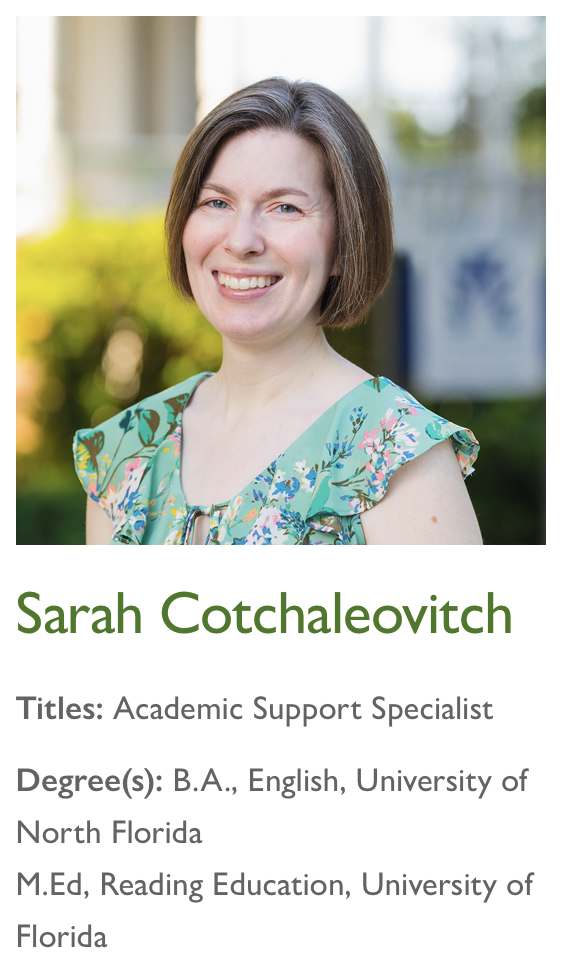
I could also have titled this “I Will Never Go Back to School.” And guess what? I’m a teacher, and went back to school. Hmm. I will never have a million dollars. Let’s see if that works.
Many little girls admire their teachers and like to play teacher, so becoming a teacher is a natural next step to take. That wasn’t my childhood dream. Almost from the time I could hold a crayon, I wanted to be a writer. The University of North Florida didn’t have a creative writing program, so I settled for the next best thing, a degree in English. When I told people my major, most assumed that I would teach high school English or literature. “I would never be a teacher,” I told them. In my arrogance, I thought I would be the one writer to break through, immediately land an agent, get published, have my books in bookstores all over the world, and be the breadwinner for my family—happily ever after, the end.
Yes, I was the editor in chief of a literary rag when I was 19, where I learned about the slush pile, the rejections, editing, printing, distributing, and so on. And that was just for a little start up. I dabbled in freelance writing and editing for a few years, which was a whole lot of work for very little pay. I even self-published a couple books over 10 years ago. I have been humbled and realize that my dream might remain just that.
When it was time for my elder son to start school, I convinced Thomas to put Peter in the elementary school I had attended, a small Christian school that went from preschool through the 6th grade. At the beginning of the year, Peter’s teacher solicited for parent volunteers. I liked the idea of being involved with what Peter did on a day-to-day basis, so I volunteered once a week, doing whatever Peter’s teacher asked me to do. Sometimes I was cutting laminated pieces or taking down and putting up bulletin boards. I played games with three- and four-year-olds. I painted with them. I ran stations. I continued going every week because I enjoyed every aspect of it.
The next year, a plea went out for substitute teachers. I thought that substituting couldn’t be much different than volunteering—with the added benefit of being paid for it. I took the plunge, wondering if any of the teachers would take me seriously, would entrust me with their classes… and I was soon working 20 to 30 hours or more per week as a substitute teacher. I taught all grades, all subjects, although I was particularly busy in the younger grades.
I began to think that, since I would have two children at the school before long, it would only make sense for me to work there full-time. I decided to pursue a teaching certificate, and since I didn’t have a degree in education, I had to go the competencies route. I’m not sure what this looks like in other states, but in Florida, it’s the alternative to going back to school. Aspiring teachers have to prove that they are competent enough to plan a lesson, assess students, teach students with different needs and in different modalities, and so on. If memory serves, there were about 17 different competencies. I had to take some online courses, type papers, complete projects, and present everything to a member of our administration, who helped me submit my materials to the Department of Education. I also had to take a number of tests, including one in the subject area of my choice. I chose to be certified to teach prekindergarten through 3rd grade students (and added a K-6thgrade certification a few years later). I took the first available job opening, which was as a PreK 4 assistant teacher.
That’s how I got my start. How I got where I am now has to do with Peter. Since I was in his classroom so much in the early days, I had the advantage that many parents don’t have: I was able to see how my child did in school firsthand. He was a people pleaser, not a behavior problem at all. He made friends easily, especially with kids who didn’t particularly fit in. These were all things that made my parent heart happy. One day toward the end of his first year of school, the kids were playing a game in which they marched around the outside of the classroom rug that was bordered with the letters of the alphabet. The teacher played music, and when the music stopped, the kids would stop and say whatever letter they landed on. As I watched Peter, I noticed that he got a little antsy every time he passed the P. Whenever the music stopped, he somehow managed to land on it. Finally, he landed on a different letter nowhere near the P. He tried to sneak his way over to the P, and his teacher called him out on it.
Although that wasn’t a lot of evidence, I had this feeling… so I looked up dyslexia markers, one of the biggest signs of which is delayed speech. Not only had Peter’s speech not been delayed, but he had spoken early and well—no speech impediment and full sentences with good grammar. I expressed my worries to Peter’s assistant teacher because the idea that he might have trouble reading broke my heart. He loved listening to me read to him, but I am not just a bookworm—I’m a bookdragon—and I wanted to pass my love of reading onto my boys. The assistant teacher reassured me, saying one of her sons was dyslexic and was doing fine in college, with the help of academic accommodations. While this was reassuring, all I knew about dyslexia was the little I’d heard from others, most of which was wrong. I started to drill Peter on his letters, to no avail. I remember one frustrating exercise, in which I recited the alphabet and then stopped, asking him to tell me which letter came next. He could not come up with it. I got upset, thinking he was intentionally messing up. We had other frustrating moments, not related to reading, when I would give Peter a simple task, like asking him to take dirty clothes, put them in the laundry basket, and turn out the light on his way back. He would get halfway down the hall and wonder why he was holding dirty clothes.
In Peter’s second year of school (PreK 4), I was in his classroom one day, and the kids were each assigned a different zoo animal to paint. Each child had to sound out the name of their animal and write it on a label under their painting. The youngest boy in the class, who was six months younger than Peter, wrote “BRD.” Today, I know that means that he heard all three phonemes (sounds) of the word bird. I can’t even remember what Peter’s animal was, but I do remember that he was only able to identify the first sound. It’s like the rest of the word didn’t even exist.

By the beginning of kindergarten, Peter knew most of his letters and their sounds. The ones he still confused were B/D and M/W. But what really tripped him up were sight words. The students always had to do some sort of activity as they entered the class, and one week, the teachers had a sight word garage (as pictured) taped to the door. The students would lift a flap, read the sight word written underneath, and enter the class. Peter’s strategy was to listen to the kid in front of him, pick the same flap, and repeat the word he’d just heard. One morning, Peter arrived, and no one was in front of him. He was on his own. I prayed he would choose the flap that had Iunder it, but Peter didn’t remember which words were where. He chose one—not I—and didn’t know what the word was (I think it was either me or we). He had no idea where to start, and I was helpless to do anything for him. It was humiliating for both of us.
About a week later was the parent-teacher conference, and I felt like an abject failure. Peter had co-teachers that year, and I assured them that I read to Peter every night. I had no idea why he couldn’t read; it wasn’t like he was a first-time student. Both of his teachers teared up; they cared about my child and read my desperation, my confusion about what was going on with him. One of the teachers told me that when she got her children’s report cards, she would fold under the part with the grades and read the comments from the teacher because that’s what mattered. She assured me that Peter was a great citizen. Both teachers also told me they knew I was a good mom, which was a relief—I hadn’t done anything wrong. They were prepared with a list of child psychologists, and I immediately got on the phone to have Peter evaluated. In the end, Peter is dyslexic. He is also kinesthetically gifted, has an auditory deficit (which is unusual for dyslexic people), and his working memory is in the toilet.
My boy has gone through many testing sessions over the years. He spent two days a week with a tutor his 1st grade year, and when he was in 2nd grade, the school finally had a full-time dyslexia specialist on staff who pulled Peter every day. Although I finally learned what dyslexia is (thanks to Overcoming Dyslexia by Sally Shaywitz), I still had no idea how to help him read. The summer before 1st grade, he was supposed to read Froggy Goes to School. Although I usually read everything to him, I believed that he should be able to read the one book the school had assigned to him. While the book was short enough to be read in one sitting, Peter struggled to read one page every day. It took weeks to finish that book. At the time, we didn’t know that Peter also had severe anxiety, so struggling to read, compounded with his feelings about himself, made for a miserable experience that we both still remember.
While Peter was going through his reading struggles, we were also trying to figure out what was going on with our younger son, Ian, who was language delayed (he would parrot a word he’d heard and never say it again) but at the age of two read every single letter on my husband’s t-shirt. Due to Peter’s reading struggles, we hadn’t pushed it with Ian, so this came out of left field. This was a kid who could read but couldn’t tell us what color his eyes were (we weren’t sure he even knew he had eyes), and he floundered behaviorally. So started our journey to get Ian diagnosed, as well. Although it took many doctors (some of whom were quacks) and years to get all the diagnoses, I can now tell you that we have two neurodiverse children. Ian is the poster child for ADHD (with a big ol’ H!), high on the autism spectrum (what they used to call Asperger’s), and has social pragmatic language disorder, OCD, and dyspraxia (the last of which I’d never even heard of when he was diagnosed). Every therapy known to man was recommended for him, and we finally settled on speech therapy, occupational therapy, and ABA, starting at age four and continuing through the 5th grade. For both of my children, I read every book and article I could get my hands on to give myself the tools to help them. But when it came right down to it, since I was already a teacher, I took the path that would help kids like Peter—the educational route—and at age 36, I gritted my teeth, swallowed my pride, and went to grad school to get a master’s degree in reading education.
When explaining to my adviser why I was going back to school, she told me about University of Florida’s Dyslexia Certificate program. Instead of the reading block that was a part of the Reading Education degree, I would detour and take five courses through the College of Special Education, ending with a 40-hour practicum, a master certificate in dyslexia, and a reading endorsement. I have done a lot of professional development, but the dyslexia certificate is by far the most valuable continuing education I have ever received. It changed my life, and finally, I felt like I not only had to tools to screen and assess for reading disabilities, but I had a game plan to remediate them. I finally made it onto my school’s student support team, and that’s where I’ve been for the past five years.
If you had told me what I would be doing now 20 years ago, I wouldn’t have believed you. In fact, I think I would have been sad to hear that I wouldn’t have a single novel published. I would still love to be an author—don’t get me wrong—but I feel like there is so much I have learned on this journey. Not only do I get to watch the light bulb go on for struggling learners all the time, but an unspoken part of my job is helping parents. These students need an advocate. One of the most unintentionally hurtful things said to me about Peter was, “But I thought he was so smart.” Well, guess what? Peter is smart, and dyslexia doesn’t change that. We need to stop treating As and Bs like they are the definition of a worthwhile student. This isn’t to say that people with good grades don’t work hard or don’t deserve praise, but grades aren’t everything and certainly don’t tell the full story. This is something that needs to be addressed in the American educational system, but that’s for another post.
If you have read this far, thank you. I am in the running for America’s Favorite Teacher. I am shocked that I made it through the first round as a Top 20 teacher. It would mean the world to me to win this, although I know it’s a very long shot. I wanted to write this to give my amazing supporters some idea what they’re supporting. Let me tell you, early morning wake-ups are hard, and many of the days are long. I always knew I wanted my kids to have the same great early educational experience I had—and they did. I did not expect to go back to school myself—both as a teacher and a student—and it’s been one of the most joyful and rewarding experiences of my life.
Please vote for me daily at the following link: https://americasfavteacher.org/2025/sarah-cotchaleovitch
 Full-Time Writer Mom