To-Done!

Embed from Getty Images

If you read my post last week, you know that I had great hopes for this week. My to-do list needed to get a lot shorter, and guess what? I am happy to report that my first full week of summer break has been a success.

On Sunday, I finally finished Christopher Paolini’s Inheritance Cycle, the last book of which I’d been waiting for read for four years. I have to say, whatever my complaints about Paolini’s style in his early books, the last one more than made up for it. The only problem, of course, was that I was sad to be finished.

Reading Dilemma

With my recreational reading done, I plunged into work on Monday. And I even involved the kids. They sat at their table and had work time while I cleaned the kitchen. I have to tell you this because a day during which I clean an entire room (actually more than that because I cleaned the laundry room and one bathroom, too) is a day for the record books. (Please tell me I’m not crazy to be proud of this.)

I also spent my younger son’s entire naptime working on my biggest freelance project, a memoir that I’ve been working on for a year now. Thank goodness my client isn’t in a hurry. Although she still has some copy to turn in to me, my hope was to finish arranging and editing the material she’s given me so far and return it to her by the end of the week. I must have spent anywhere from three to six hours on this project every day this week, and although Microsoft Word had me practically pulling my hair out by the end, I did finally get a draft to her. (I would give details, but just know it had to do with pagination – if I try to be any more specific, I’ll most likely be reduced to gibberish and &%*!@ in order to keep this a family friendly blog.)

With one project out of the way (at least until that client gets back with me), I have one last freelance project (a much simpler one) to finish before our family vacation. I understand that I will come home from our vacation with work still to do, but my clients will have that time to decide what changes they would like for me to make, and I will only have to worry about finishing touches.

And then I will be done. As of this week, I am no longer offering my freelance writing services. And it’s not just Word that’s made me fed up enough to quit. Although I won’t go into details now, I am going to join the work force again soon, and if I’ve learned anything in life, it’s that I can make myself and my loved ones very miserable if my plate is too full. So while I will be glad to help friends with blogs or editing projects that don’t have critical deadlines, I am no longer pursuing freelance work.

It’s a relief, actually. Anyone who is self-employed understands the pressures of finding enough work to pay the bills. Last summer, I was able to land enough steady projects to earn a paycheck while I wasn’t substitute teaching, but it meant that when I was at home with my kids, we weren’t able to do much fun stuff; I was stuck at my computer working very hard for very little monetary compensation. This summer, I will be able to spend more time with them, and the time that I do spend at the computer will mostly be writing my own fiction.

Speaking of my fiction, now that I have one freelance project behind me, I have time to concentrate on editing last year’s NaNoWriMo book. I am determined to get my two free copies from CreateSpace. Beta readers, I will be reaching out to you sometime in July, so get ready!

Lastly, while I am reducing the stresses in my life, one of them will be this blog. No, I’m not quitting! Believe me, I still have a lot to say, but I won’t be pushing myself to reach my own personal deadline (which is once a week) anymore. Many weeks, I get to Sunday and panic because I don’t know what to write about. Or I have a lot to say but am too brain dead to arrange much of a coherent thought.

I have a friend who used to blog weekly, and she made the announcement earlier this year that she will now only post when she feels inspired to do so. At the time, I was saddened because I loved reading her blogs, but I could certainly understand – and I kept her idea in the back of my mind. To remove another stress that I put on myself sounded like bliss. I told myself that if I ever went back to work, changing from a weekly blog post to a “when I’m inspired to write” blog post would be the way to go.

Don’t worry. Even if you don’t hear from me next week, I still have plenty to say. I’ll likely update my book list sometime soon, and I’m sure I’ll have a lot to say about NaNoWriMo 2015. But when you don’t hear from me, know that I’m enjoying my family or a good book… and, as always, striving make more of my to-do list items to-done.

Playing Catch Up

Embed from Getty Images

During spring break, I was excited about the possibility of being able to cross off many much-neglected items on my to-do list. During that week, however, I was disappointed (as I often am) with the amount I was actually able to accomplish. Sure, I was home more than usual, but then so were the kids, and they had expectations, as well.

Since spring break, life has not become any less hectic. I’m not going to summarize all my busy-ness here – you can read any number of my recent blogs to get the idea. Just suffice it to say that, with the end of the school year drawing near, I was excited to see the proverbial light at the end of the tunnel.

Last weekend, I planned to partially unplug – which I did! My husband and I spent the night away from home sans kids, TV, and wifi. It was somewhat of a surreal experience, and we couldn’t help but say “The kids would love this” or “We’ll have to bring the boys here” at the beach and the fort and a little fudge shop near our bed and breakfast. But we survived and even managed to enjoy ourselves.

One of the things I’d hoped to do was catch up on my reading. If you follow my yearly list of books that I hope to read, Christopher Paolini’s Inheritance Cycle has been on there since 2013 – and I’m finally almost done! I had hoped to finish by the time my son finished school on Thursday, but I knew that was a very ambitious goal. Still, I only have a little over 200 pages to go, so I’ll definitely be through in the next couple days.

The reason I am so eager to finish (other than wanting to know what happens – this is a great series!) is because I have so much work that I need to do. While many other moms are posting selfies from the beach and running around like crazy people trying to keep their kids occupied, I plan to spend a lot of time at home. (Don’t worry – I still have plenty of fun activities planned for my kids!) This is partially because I’m tired of my commute, and our gas bill needs a little bit of a break, but it’s also because my to-do list includes clients’ projects, and these clients have been very patient. They know that I substitute teach during the year and, therefore, have an erratic schedule, but now they’re expecting results. I mean, what excuses do I have anymore?

I held off writing this post for a couple days, hoping that I’d be able to report that I spent the first full day of summer break plowing through my jobs and striking off to-do list items left and right. And I did make some progress, but it’s been slow. The children are still underfoot, although they’ve been great so far. My little one even likes my implementation of “work time” (where I have them sit at their table and color, write, or do quiet projects for a few minutes), thus giving them some structure and me some peace while I do my own work.

My goal (you know how I love goals) is to keep forging ahead, even if I only have two or three hours a day to devote to my projects. Although I’m not going to totally unplug during our upcoming family vacation (a girl still has to blog and write fiction when the mood strikes, right?), I don’t want to leave projects hanging over my head – or clients calling, only to be disappointed that I’ve put their work on hold for two weeks.

Okay, goals set. Deep breath. Next week, my to-do list is going to get a lot shorter.

Unplugging (At Least a Little Bit)

Embed from Getty Images

I’ve seen many an article in which the writer talks about how he or she has gotten rid of smart phones permanently, and I’ll have to say that I’m not one of those people. Believe me, I fought even getting an iPhone much longer than is normal for a so-called millennial, but I finally got one three years ago. I don’t play games on it (although I did at first), and I’m not the type of person who has to have the latest version. I like it for the convenience of being able to take snapshots and videos of my kids and check my email on the run and make phone calls and look up obscure trivia all in one device. But that also doesn’t mean that I’m glued to my phone all day. My rule is that I simply don’t use it at all if ever I wake up in the middle of the night (unless, of course, I get an emergency call or text). It’s easy for me to ignore it. In fact, there are some times when I am so busy that I’ll got 12 hours without doing more than checking the time.

But then there are those other people who can’t pull themselves away from whichever device is their vice of choice (and see how “vice” is already there in “device” – it’s like it was planned that way). These people check their email if they happen to wake up at three A.M. They play Farmville at their children’s band concerts or ballet recitals. They talk through the checkout line at the grocery store and text while driving. A lot of this comes down to a lack of common sense as well as courtesy – blog topics for another day.

The iPhone isn’t my problem, anyway. We have a semi-joke in our house about “my” MacBook. We bought this computer almost four years ago when my husband went back to school. At the time, I thought it would be great to have after he graduated, in addition to our desktop model. And for the longest time, I didn’t do much with it. He took it to class, typed term papers on it – was even typing one in the hospital room when our second son was born – but then… well, I kind of took it over after he graduated. (Don’t worry – I did get him an iPad mini to make up for stealing his tech.) By that point, our desktop computer was on it’s last legs, but I wasn’t worried about replacing it – the MacBook was more than adequate. It’s where I do everything from this blog to typing my NaNoWriMo novels to doing my freelance work to editing photos and creating photo books (for me and for clients). I’ve taken it on every vacation since we bought it, including Disney World, and I’ll even carry it in the car to work on projects if it’s a ride of 30 minutes or more (and when I’m not driving, obviously).

But this weekend I’m going to leave it at home.

That’s right – I’m letting go! My in-laws are taking the kids Friday after school through Monday – the longest I’ve gone childless since November 5, 2007. And this time, instead of my husband working half the nights they’re away, we’ve actually booked a room at my friend’s bed and breakfast – a first for us. My elder son was shocked to hear that we’re going to be doing fun stuff, too. And here’s something really different for me, the planner: we don’t have a plan. We’re going to go and just do nothing – or anything. And I’m not taking the laptop. I’m not going to write at all. Now, it’s only going to be for one night, but these are baby steps, folks. While I love writing, my husband can tell you that sitting down to innocently write a scene turns into balancing the budget for an hour and editing for Fiction Fix and any number of other computer-related distractions. We’ll take our phones (and probably the iPad) so we can FaceTime our kids and watch Netflix to our hearts’ content. I’ve been so busy lately that I refuse to go on a vacation only to do more of the same while paying extra for the room. (And see – I’m even posting this blog early just to make sure I’m distraction-free.)

We’ll have our books and a new-to-us area to explore. It’s going to be the perfect pair-of-introverts weekend.

Overcoming Dyslexia: 10 Things You Should Know

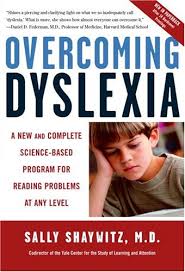
Overcoming Dyslexia by Sally Shaywitz, M.D.

Overcoming Dyslexia by Sally Shaywitz, M.D.

Right around two years ago, I realized there was a serious disconnect with my then-five-year-old son Peter. He was at the end of his second year of preschool, but this intelligent child could not learn his letters or their sounds. Today, I know that he has moderate dyslexia, and it’s been quite a journey. For my sweet boy, it’s a journey that he will continue to take for the rest of his life.

The teacher who tested Peter and helped formulate the blueprint of what the next few years will bring for him lent me her copy of Overcoming Dyslexia by Sally Shaywitz, M.D. I recommend this book to all parents and teachers. Even after I knew that Peter had dyslexia, I still didn’t fully understand what it is – certainly more than mixing up letters, which is a common misconception.

There’s no way I can boil down every point, so I’ve chosen the ten that I found most important:

  1. Dyslexia Affects More People than You Think

In a 20-year study that followed 445 children from Connecticut, Shaywitz discovered “that reading disability affects approximately one child in five” (30). Some of the personal accounts that Shaywitz shares in her book are of bright kids who were left behind because they didn’t “qualify” as students who needed help reading. One was even unfortunate enough to attend a school in which the administration didn’t believe in dyslexia. There are many more children who can benefit from reading resources than are currently receiving help. If you think you don’t know anyone with dyslexia – think again. Especially if you’re a teacher, you likely have a child who desperately needs help right in your classroom.

  1. There’s a Reason Some Smart People Can’t Read

In her chapter entitled “Why Some Smart People Can’t Read,” Shaywitz introduces the Phonologic Model. In subsequent chapters, she breaks down why this model doesn’t work for dyslexics. They have what she repeatedly refers to as a “sea of strengths” – lots of pros surrounding one big con, the inability to decode phonemes (the smallest unit of speech). While good readers can quickly decode phonemes to make the sounds k, aaaa, and t become cat, dyslexics’ brains are not wired to do this efficiently. The frustrating part is that phonology is the lowest level of the language system, followed by semantics, syntax, and discourse. While semantics, syntax, and discourse are all intact in a dyslexic person’s brain, these higher-level abilities are trapped behind the wall of un-decodable phonemes because…

  1. Dyslexics’ Brains Are Wired Differently

There are now scientific tests that show just how a dyslexic’s person’s brain is wired. Starting in the chapter “Reading the Brain,” Shaywitz goes into great detail about how our brains decode words. A dyslexic person’s brain uses a different path – one that is not automatic and therefore much slower. The functional MRI (fMRI) is the test that shows exactly how dyslexic versus non-dyslexic people read. These tests aren’t necessary to diagnose dyslexia, but they prove that dyslexics aren’t missing a part of their brain, and they’re not brain damaged; they simply read in a different way than “good” readers.

  1. Training Kids Before School Age Helps

Unfortunately, dyslexia often goes undetected in children until they reach the third grade. At this point, they are very far behind because they are still struggling to sound out words, while their peers are transitioning from learning to read to reading to learn.

One way that we can save these kids so many years of frustration is by catching it sooner. Kids enrolled in preschool are ahead of the game (which is how we were able to catch Peter’s dyslexia so early), but even if you keep your children at home, helping them differentiate beginning, middle, and ending sounds of simple words (pig and pan, hen and pet, and hen and pin are the examples Shaywitz uses) will not only help them when they learn to read, but it will also help to identify if there is a problem.

With Peter, while I could say a word like “bird” to his four- and five-year-old classmates, and they would hear b, rrr, and d, he might only be able to pick out the beginning or the ending sound – forget the middle. Peter’s dyslexia wouldn’t let him distinguish the different sounds.

  1. The Severity of Dyslexia Differs from Person to Person

While “one-quarter [to] one-half of the children born to a dyslexic parent will also be dyslexic,” the way in which dyslexia manifests itself differs from person to person (99). Shaywitz writes that “the ultimate expression of dyslexia depends on an interaction between a child’s genetic endowment and his environment.” So if your child is dyslexic, don’t throw your hands in the air and give up. Continue to read aloud to him at home; expose her to as much language as you can. This particularly helps dyslexic children develop larger vocabularies because they will not read and pick up new words as quickly as their classmates who can read fluently.

  1. Dyslexics Have High IQs

High IQ’s and difficulty in reading just don’t seem to correlate, but that’s exactly what happens with a dyslexic person. In fact, dyslexic people are often amazing problem solvers; their dyslexia forces them to be creative in order to read, and they carry this skill into other areas of life.

Dyslexia should never discourage someone from pursuing his or her dream. The last chapter of Overcoming Dyslexia is devoted to the personal accounts of highly successful people, such as author John Irving, American businessman and finance expert Charles Schwab, former West Virginia governor Gaston Caperton, and a number of others. These men and women struggled in school and failed entrance exams that could have kept them from getting higher education – yet they persevered and proved that a reading problem would not force them to give up on their dreams.

  1. Retention Does Not Help Dyslexic Children

While retention is sometimes helpful for other reasons, dyslexia should not be one of them. Not only does holding a child back a year in school avoid the problem (which is decoding words), but it can also be a psychological and emotional hindrance.

Ignoring the problem is just as bad. Waiting a month or a year to see if the problem straightens itself out only robs your child of much-needed help. When I first thought that Peter might have a problem, I hoped that a little tutoring over the summer would solve it. But that tutoring didn’t address his specific issue, and the frustration we both faced the first few weeks of his kindergarten year were enough to make me wish I’d had him tested sooner.

  1. Common Indicators of Dyslexia
  • Delay in Speech While children typically start saying words by one year and phrases by 18 to 24 months, a delay could indicate dyslexia.
  • Trouble with Pronunciation This can manifest itself as baby talk, the right syllables pronounced in the wrong order, or whole syllables (such as the beginning of words) not being pronounced at all.
  • Inability to Rhyme Because they have a hard time separating phonemes, dyslexics may not be able to ascertain what rhymes and what doesn’t because they are not able to distinguish what the last sound of a word is.
  • Talking Around a Word If your child is a regular Mrs. Malaprop, that’s another indicator. Two examples that Shaywitz uses are lotion used in place of ocean and tornado used in place of volcano. The children who made these mistakes knew exactly what they were trying to say, but they simply could not recall the proper word. (This can be very embarrassing in dyslexic adults when speaking publicly.)
  • Difficulty in Learning the Alphabet They may be able to sing their ABC’s, but when shown the actual symbols that match the sounds, dyslexics may not be able to identify them.
  • Inability to Learn by Rote While dyslexics generally have strong math skills, when it comes to rote memorization of times tables, they may suddenly have trouble. The same goes for memorizing words that don’t follow the rules, people’s names, place names, and even phone numbers. I wondered, since dyslexia is a phoneme problem, why dyslexic people often dial the wrong phone number – especially since they’re often so good at math. It’s not because they can’t see the difference between the numbers but because those seven numbers seem random. There was no logical way to arrive at them (as in the answer to a math problem).
  • Inability to Focus While Reading Especially in a noisy classroom or study hall, a dyslexic person may not be able to complete a homework task because she needs quiet to be able to concentrate. Dyslexics use a lot more brain power to get the job done, so it’s harder for them to focus.
  • Discomfort When Reading Aloud Some kids will act out or fake being sick when asked to read aloud because it’s so uncomfortable for them. They may even be misjudged as ADHD by a parent or teacher, but the problem here isn’t inattention but discomfort. Be sensitive to dyslexic people when they ask not to read aloud.
  • Misspelling Even if a dyslexic person is able to read difficult words, do not expect him to spell those same words from memory. In the same manner, if shown a new word out of context, he may not be able to read it, even if it seems simple to a non-dyslexic person.
  • Terrible Handwriting This is another tell-tale characteristic of many dyslexics. The word processor is the dyslexic person’s best friend.

A dyslexic person may exhibit only a few of the above – or may have other indicators not mentioned. But if your child or someone you know shows a number of these, it would be prudent to have him or her tested for dyslexia.

  1. Common Strengths of Dyslexic People

In addition to the individual “sea of strengths” that dyslexic people have, there are common strengths that most dyslexic people share. Many dyslexic children fly under the radar because they are extraordinary auditory learners. They can hear a passage read aloud and memorize it, therefore making their teachers believe they’re reading. They are also usually skilled at math, and they are very creative. (Now, don’t worry if your child doesn’t fit this model 100%. Peter is a poor auditory learner, but kinesthetically, he’s off the charts. And I know some dyslexics who also aren’t skilled at math.)

What marks dyslexics as different than other poor readers is their reading comprehension skills, which are intact. Let them hear a book (instead of making them struggle with decoding all those words), and then open a discussion with them, and you will find that they understand the text just as well (or better) than a fluent reader. When dyslexics are not hindered by people who misjudge them, they are able to prove themselves just as capable as fluent readers, and many successful dyslexics wouldn’t have it any other way because they can easily think outside the box, unlike colleagues who never had to struggle to read.

  1. How to Help Dyslexic People in School and Beyond

The Orton-Gillingham approach of scientifically-based instruction is what Shaywitz recommends for dyslexic children. Although she lists many different ways in which parents can help their dyslexic children at home, having one-on-one instruction with a tutor who is trained in this systematic and structured method is what really helps. (Peter’s tutor uses Barton, which utilizes Orton-Gillingham and has been very beneficial to him.)

There’s also good news for dyslexic adults who have gone undiagnosed: there are programs for adult literacy, and although they do require a commitment of time, they produce dividends that improve quality of life. Many undiagnosed adults either flunked or dropped out of school and, thus, have few options for employment because of their inability to read. It’s not that they’re unintelligent, just that they were never given the proper instruction for the way that their brains are wired.

Recording for the Blind and Dyslexic (RFB&D) of Princeton, New Jersey provides audio copies of books, so dyslexics can listen to their material and follow along with the hard copy. Requesting more time and a quiet room for multiple choice exams is also a must, although oral or essay tests are preferable. (As Shaywitz and so many others have pointed out, these multiple choice tests really only prove how proficient people are at test-taking.) Shaywitz lists a number of computer programs that help dyslexics, as well as study tips. In a world that is not very friendly to dyslexics, there are still ways in which they can excel.

In Conclusion

There are so many more points that I wish I could list, but this post is already very long. Please, if any of this rings true for your child or someone you know, get the book! It’s scientifically-based, and one of the many case studies included may remind you of someone you know. I know the first one I read almost made me cry because it sounded so much like my son and reminded me of his early struggles.

The great news is that there is help. As I said, Peter is being tutored in an Orton-Gillingham program, Barton. After not quite five months, his reading has improved more than my husband and I ever thought possible. Over the summer, I saw that one of his friends was reading at a level two, and Peter struggled to get through “My First” books. Now, he can pick up a level two or even books that aren’t leveled readers.

Last week, we took turns reading a Magic Tree House book aloud – Peter was even the one who volunteered to read. About halfway through a chapter, he said, “Chapter books are fun!” I couldn’t agree more, buddy.

Spring “Cleaning”

Inheritance Cycle

Inheritance Cycle (Photo credit: Wikipedia)

I really wish I could tell you that I spent a good chunk of spring break getting rid of toys and clothes and giving my house the overhaul that it needs. Sadly, while I did the usual laundry and daily upkeep, I didn’t spend a lot of much-needed time cleaning.

My hope for our spring break, after returning from a few days at Disney World, was to catch up on my freelance projects and recreational reading. Any cleaning that happened in addition to that was gravy.

But would you believe it? My kids actually expected to do fun stuff for spring break. I know – can you believe the nerve? Really, they were little troupers. I had a lot of not-fun-for-kids stuff packed into those five weekdays. Now, they did get to stay up later than usual and watch movies and play outside, but there was still tutoring and the dentist and grocery shopping. I finally took them to the park last Friday, where they could just be kids.

It didn’t leave a whole lot of time for all that catching up I’d planned to do. I should have known better, but when spring break is on the horizon, it looks so sweet, has so much promise.

I did make some good progress on my biggest book project (and absolutely zero on another). I edited a bunch of my novel and only had a little left when school went back into session. In all honesty, I was happy to get any of that done.

But what I didn’t do much of was read for fun. Granted, I’m reading Eldest (sequel to Eragon). Not only is it close to 700 pages, but they’re a very cumbersome almost-700 pages. There’s a reason these books are on my book list for the third year in a row – and there’s also a reason I’m tackling them early.

For the first couple months of the year, I stuck to my 2015 book list, but to get more titles under my belt and break up the pace a little, I decided to read shorter books in between the Inheritance Cycle books. Aaaaand… well, I may have fallen off my book list wagon and bought a new book.

It was a shorty, I promise, and it was a really good one – a new-to-me author with a unique style that I admire, even if I can’t emulate it. (It was Daniel Woodrell’s Winter’s Bone, in case you’re wondering.) The only problem was that I made a sort-of promise to myself that I wouldn’t buy any new books until I read through all the other new books that I already own, and this was a new book.

But after that little detour, I’m back on track again. Except…

One of the other things the kids and I did on spring break was to stop by my favorite local bookstore, and because the owner knows what a sucker I am for books, she reminded me that their 40% off spring cleaning sale was coming up.

You should be proud of me. I only bought four, two of them chosen by my elder son. But I have to say it makes me happy to know that there are more books for next year’s list if I don’t get to them this year.

New Books!

New Books!

Plus, I also have to say that sometimes you get a nice surprise where you don’t expect it. That book on the top left – The Fantastic Flying Books of Mr. Morris Lessmore – is amazing. I highly recommend it if you love books; you don’t even have to have kids to appreciate it. I likely would not have bought it on my own, but Peter was excited to see it because he’d heard it before in his school’s library. I’ll have to say I’m pretty proud of my little bibliophile.

Despite not checking one thing off on my to-do list, I’m pretty happy with my spring break. It’s the little things.

It’s Query Time


Embed from Getty Images

Sometime between 2004 (when I first started querying literary agents) and now, there have been drastic changes in the publishing industry. When I first started, e-queries were a no-no. In fact, they were hardly mentioned on agents’ websites (if they had websites). I snail mailed every query with an SASE, which I wasn’t guaranteed to see for months, if at all (which always drove me nuts – I paid for the stamp, so please send it back). Very few agents accepted simultaneous submissions, and every query how-to that I read stressed the author bio part. Like the more creditability you have, the better your chance of landing an agent. So if you’re unpublished, good luck.

For a while, I didn’t change anything about the way I queried. I took time off to have a baby. Then I wasted almost two years with a scam artist for an agent (read about that here). After that, I didn’t much care for agents for a while and quit looking.

Then I immersed myself in the world of e-publishing – writing articles online for people I’ll never meet in person, publishing e-books that will never be printed. I felt up to braving the sea of rejections again and began researching query letters, figuring that I had to do something different than before.

Lo and behold, many of the “standards” of query submission from ten-plus years ago are now the exception rather than the rule. Most agents prefer e-mail submissions, and only a handful ask for exclusive submissions. In fact, more than one agent I’ve read about has said exclusive submissions are ridiculous because you could easily spend years and never get anywhere. Well, I’ve been there and done that.

With all this talk about querying, you can guess what I’ve been up to lately. Yep, I finished editing my 2013 NaNoWriMo novel (again), and I began looking into agents this week. Querying is one of the most challenging aspects of the writing process. Don’t get me wrong, I love reading about the agents and imagining how great it would be to work with this or that one. Except that imagining is as far as it’s ever gone. (The scammer that I had met exactly zero of my expectations, but I was so enthralled with the idea that I HAVE AN AGENT that I kind of pushed all that aside.)

As I’ve heard various agents say numerous times, it’s not the query that wins the contract but the book. The problem is, of course, that if you bomb on the query, your book may never even get a cursory glance. So I’ve always felt that pressure to write the perfect query letter. I’ve done my best to make them personal. But not only did I have exactly zero positive responses last time I queried (no surprise), I didn’t even get responses from the majority of them. One was an agent with whom I’d worked before. I queried her twice. Nada.

So this time, after stressing more than I should have about what to write and how to write it (and coming up with a great hook but forgetting to write it down), I went online to brush up on Query Writing 101. There are more good resources out there than I can count. Many of them agree on the basics (like the order of the paragraphs doesn’t matter, but when you do talk about your story, it better have a great hook), and they usually give examples of both good and bad queries. The bad ones are great (read one here). Not only will you laugh at the sheer stupidity of some writers, but the number of real, terrible queries gives me hope that one of these days, I may stand out from the masses.

The problem is that it doesn’t matter how many good queries you read, you can’t just switch out the words that apply to your book and call it good. Every writer and every story is different. I remember feeling hopeful when I read Stephen King’s On Writing because he uses a great query example, but I could never make that format work for me.

The absolute best resource I have found for writing queries is in literary agent Mary Kole’s book Writing Irresistible Kidlit. As the title suggests, it’s mostly about the writing process for middle grade and young adult writers. But as an agent herself, Kole does her readers a favor and devotes an entire chapter to query do’s and don’t’s. She also gives an example of a real query letter that worked, with lots of commentary about why.

The part that helped me the most is the section in which she boils down how to write the novel summary by answering five questions. I’ve done this exercise with two novels now, and not only does it show where your story has holes (if you can’t answer the questions easily), but it also gives you an easy way to summarize and not go on for pages and pages. Even if you don’t write kidlit, I would recommend this book just for the query chapter.

So I wrote a basic query for my novel that I will customize according to the agents I choose. I cannot stress enough that reading submission guidelines is an absolute must. Not only do you want to make sure you send exactly what the agent wants, but sometimes one agency may want you to include something in your query that you haven’t used before. This happened on my latest query. The agency wants to know why I’m the best writer for this book. It gave me the opportunity (although a very brief one) to explain how my story came to me.

It also seems that literary agents are less concerned with your credentials (for instance, some say that you should minimize publications that aren’t related to what you’re querying). Of course, if you’ve won an award, that’s always good information to have on your side. What they would rather hear is that you have a good grasp of your market. Although they don’t come out and say it, I believe this is because writers are expected to do more marketing than ever before. And if you don’t know your audience and what they like to read, you have little chance of selling your novel.

At the same time, it’s an absolute no-no to write a wizard book and then send a query saying you’re the J.K. Rowling of the next generation. I scanned my bookshelves and was surprised to find a number of non-Harry Potter books that had elements similar to my own story. My husband even made a great suggestion about a book with a character who shares some of my protagonist’s strengths. More than ever, the idea that you need to read voraciously in order to write is very important.

So that’s what I’m going to do: read, write, edit… and query. Wish me luck!

“He Has a Tutor? But I Thought He Was an Honors Student!”

This is a line that I heard in a commercial for a local tutoring center earlier this week. I’d seen the commercial before, but I guess it had been a while. Since, let’s say, my own son, Peter, started going to a tutor after school. Whereas I never gave this commercial a second thought before, it really bothers me now.

Of course, I’m glad that the tutoring center is there, doing what it’s doing to help kids. What bothers me is that it has to fight the assumption that smart kids couldn’t possibly need to be tutored.


Embed from Getty Images

And I have to admit, I used to be one of the parents this statement targets. I’m an overachiever. I skipped the 8th grade. I got my BA when I was 20. While I’m not one of these geniuses who gets a PhD at 15, if I ever got a B, that meant I was doing poorly. I was always embarrassed for the kids who tripped over words when we had to read aloud. I often thought they were stupid. I mean, how hard is it to read?

After Thomas and I admitted that, despite all our efforts, Peter needed help, we saw a child psychologist. We answered all of the usual questions, like if I had a normal pregnancy, if he often gets distracted, if he can keep eye contact, etc., etc. I could see that the answers to many of these questions could point to children with attention deficit problems, but our answers did not lead down that path at all. When we got done, the doctor asked us why we’d come to see him.

It was because Peter was almost six, and he still couldn’t identify all of his letters. He’d been in preschool two days a week for one year and five days a week for another. Yet kids who’d never had any kind of schooling before kindergarten were already running circles around him. They knew the alphabet and all the sounds that the different letters made. What was wrong with my child? I felt like I’d completely failed as a mother.

It was after Peter’s diagnosis that, with a shock, Thomas and I realized that his was an inherited problem. Neither of us has a learning disability, but the more we asked around, the more we realized that people in Thomas’s family have the same problem – and have been trying to cope with it all of their lives. Many hate to read because the task of decoding words is just so difficult.

I’m a reader. I carry at least one book with me everywhere. I didn’t want my child to grow up to hate books. It didn’t help that other well-meaning parents would say, “Did you hear about So-and-So? She’s being tested today. I knew something was wrong with her.” Oh the horror of being tested! I was embarrassed to say that Peter had been through the same battery of tests.

But I got over it soon enough. The problem wasn’t anything to do with how we’d parented our child. It’s all genetics. But even if it weren’t something he’d been born with, I still couldn’t just ignore the problem. When you’re a parent, your ultimate job is to help your child, and sometimes that means – gasp! – hiring a tutor.

Unfortunately, many parents of dyslexic children continue to ignore the problem, or sometimes they don’t even know it exists. This is because most dyslexic children have an extraordinary auditory capacity and are able to memorize, skating by for years when they could really use some one-on-one help.

In Peter’s case, his weakest area of learning is auditory, and he also has a deficient working memory. For years, I got mad at him for only completing one task, when I would ask him to do two or three. Imagine how terrible I felt when I realized he simply couldn’t complete more than one task because couldn’t remember what I’d asked. But this additional problem carried with it a huge advantage: I knew something was wrong much earlier than most parents, and we were able to get him help.

As soon as Peter was diagnosed, some people told us how shocked they were that he has a problem. He talked early and well. He’s a great problem solver and extremely creative. And while letters are his nemesis, he excels at math. Many of these are common traits among dyslexic people, some of them developed in order to survive in a world that is not very dyslexia-friendly.

One good thing, though, was that I was no longer afraid to talk about it. I started asking around about tutors and tutoring centers, and parents came out of the woodwork. Parents who do not have the mistaken idea that tutoring equals stupidity.


Embed from Getty Images

The improvement, the confidence in my child, has been amazing to watch. I am so grateful for the people in my life who have helped Peter, who continue to point out his great strengths (math and anything art-related). I am a little confused, however, by the people who continue to insist that I shouldn’t talk about Peter’s learning disabilities. Like it’s a shameful venereal disease or something. The more Peter understands about what we’re doing for him, the more compliant he is. He loves books and wants to be able to read them fluently. He knows that his tutoring will help him achieve this, and he also knows how to defend himself, if ever a kid (like I used to be) dares to make fun of him.

Sadly, many children are not diagnosed until the third grade or beyond. Many people slide through until adulthood and struggle all their lives with no help. If you are a parent or a teacher, pay attention. I hope your kids don’t have any problems, but if they do, don’t do them the disservice of acting like they can’t achieve great things if they need a tutor.

For further resources, check out Overcoming Dyslexia by Sally Shaywitz, M.D. and Barton Reading & Spelling System.

Happy 2015 Book List!

Score! Christmas Books

Score! Christmas Books

The past two years, I’ve created lists of books that I hoped to read in the upcoming year, and here I am, doing it again. 2014’s list was much more ambitious than 2013’s (23 books versus 14), and I am proud to say that I finished 17 of them. And I even got way sidetracked for a while. (Some of the books that sidetracked me I won’t ever read again, but at least they gave me blog fodder.)

I enjoy making this list just after Christmas because this is the time of year when people get generous and give me books, gift cards to bookstores, or both. This year being no exception, I am prepared to meet 2015 with lots of new fiction.

New Books!

New Books!

First of all, I am going to vow right now that 2015 will be the year that I finish Christopher Paolini’s Inheritance Cycle. It’s been on my list two years now, and I just can’t leave those books hanging any longer. The first three are slow-paced, but my husband assures me that the last one really picks up, so I’m just going to knuckle down and read them.

A wonderful thing that’s happened in the past few months is that my first grader has gotten into chapter books. It wasn’t until he was almost six that we realized that he has several learning disabilities, and he’s a poor audio learner, so reading books without pictures went right over his head. But since we’ve been helping him with his working memory and dyslexia, I’ve noticed a huge improvement in his reading ability and comprehension. This summer, I plan to start reading Harry Potter to Peter, and I hope he gets as much joy out of that series as I do.

If you’re interested in reading my previous years’ fiction lists, here are 2013 and 2014, and here are the books that I actually finished in 2014:

The Rim of the Prairie by Bess Streeter Aldrich

The Hunger Games by Suzanne Collins

Catching Fire by Suzanne Collins

Mockingjay by Suzanne Collins

The Maze Runner by James Dashner

The Scorch Trials by James Dashner

The Death Cure by James Dashner

The Kill Order by James Dashner

An Echo in the Bone by Diana Gabaldon

Outlander by Diana Gabaldon

The Graveyard Book by Neil Gaiman

An Abundance of Katherines by John Green

The Fault in Our Stars by John Green

Looking for Alaska by John Green

11/22/63 by Stephen King

The Girl with the Dragon Tattoo by Stieg Larsson

The Girl Who Played with Fire by Stieg Larsson

The Girl Who Kicked the Hornet’s Nest by Stieg Larsson

The Host by Stephenie Meyer

The Lost Hero (Heroes of Olympus, Book 1) by Rick Riordan

The Son of Neptune (Heroes of Olympus, Book 2) by Rick Riordan

The Mark of Athena (Heroes of Olympus, Book Three)
by Rick Riordan

Insurgent by Veronica Roth

Allegiant by Veronica Roth

The Casual Vacancy by J.K Rowling

Mark My Words: Mark Twain on Writing by Mark Twain

And here are the books I plan to read this year:

And Another Thing… Douglas Adams`s Hitchhiker`s Guide to the Galaxy Part Six of Three by Eoin Colfer

The Hunger Games by Suzanne Collins

Catching Fire by Suzanne Collins

Mockingjay by Suzanne Collins

Written in My Own Heart’s Blood by Diana Gabaldon

The Cuckoo’s Calling by Robert Galbraith (aka J.K. Rowling)

Let It Snow: Three Holiday Romances by John Green, Maureen Johnson, and Lauren Myracle

Paper Towns by John Green

Will Grayson, Will Grayson by John Green and David Levithan

Lisey’s Story by Stephen King

The Giver by Lois Lowry

Gathering Blue by Lois Lowry

Messenger by Lois Lowry

Son by Lois Lowry

Eragon (Inheritance, Book 1)by Christopher Paolini

Eldest (Inheritance Cycle, Book 2) by Christoopher Paolini

Brisingr (Inheritance Cycle, Book 3) by Christopher Paolini

Inheritance (Inheritance Cycle, Book 4) by Christoopher Paolini

The House of Hades (Heroes of Olympus, Book 4) by Rick Riordan

The Blood of Olympus (Heroes of Olympus, Book 5) by Rick Riordan

Divergent by Veronica Roth

Insurgent by Veronica Roth

Allegiant by Veronica Roth

Four: A Divergent Collection by Veronica Roth

Harry Potter and the Philosopher’s Stone by J.K. Rowling

The Hobbit by J.R.R. Tolkien

The Book Thief by Markus Zusak

I know it’s a long list, but I have lots of hope to finish a good number of these. Some are brand new, some beloved repeats. And I hope to be interrupted by books as yet undiscovered. (I’m always up for suggestions!)

Happy reading in 2015!

When Books Disappoint

English: Open book icon

English: Open book icon (Photo credit: Wikipedia)

I was so proud of myself earlier this year: I’d created my 2014 book list, and I stuck to it. I read nine of the 23 books on that list in the first quarter of the year. That’s pretty good, right? I could even afford to get a little sidetracked. Which I did as soon as my birthday hit in April. Yes, I kept plugging away at my book list, but I figured it wouldn’t hurt to treat myself to some new fiction.

I love books, but I also love my goals – to a fault. I’ll drive myself (and my family) crazy with them. At war with myself over the new books that I want to read and the books that I already own that I should read, usually the new fiction wins. I mean, it has the whole excitement factor with it. And in April, I discovered two new-to-me authors, both young adult. I can blame a movie trailer for one, and the other came recommended by several people. If you read this post in April, you may even know which books I’m talking about.

Being the dutiful goal-reacher that I am, I continued reading whatever it was I was in the middle of at the time, and I let my husband go ahead and read the new books. We were particularly excited about the newly-purchased series, whose first book-to-movie adaptation was due to be released in theatres over the summer.

As soon as Thomas finished the first book and moved on to the second, I had to know: “Was it as good as we thought?”

Poor dude. He didn’t want to burst my bubble. His answer was, “Well, it’s not The Hunger Games or Divergent.”

But of course, what is? I set my standards pretty high, but at the end of the day, I don’t want to read books that are just like the ones that I already like. I want variety, originality. But I also want excellence.

So I eventually got around to the series and plunged right in. It wasn’t a challenging read, but that’s okay. It was more action-oriented, which I already expected, after seeing the movie trailer. It also raised a lot of questions, which I love. But…

I was getting toward the end of the book, pretty much after the big plot reveal. Of course, the plot was still moving forward because there are sequels, but things were winding down. Then something gruesome happened, something that was written purely for its shock value. This one scene was written 1) to freak out the characters and 2) to appeal to the adolescent male readership. Marketing is important; I get it. There was still hope for the overall story. On to Book 2.

The weirdness continued. Gruesome and sometimes unexplainable (or explained on a very rickety foundation) things happened. The characters were baffled, so we were in the same boat. The story ended. The loose ends that got tied up didn’t make much sense. But there was still hope for Book 3.

Can you guess what happened? I was very dissatisfied with the ending of Book 3. And since it’s adolescent lit, I’ll put it in adolescent terms: it sucked.

Now, Sarah, you may be thinking, aren’t you being a little hypocritical? Aren’t you okay with not-happy endings?

Oh, there’s a big difference. If the not-happy ending is justified, if it’s realistic, if it fits with the character of the story, I’ll buy it. I may be very broken up about it, but I’ll bow to the author’s decision. But you know what? I still had an inkling of hope. Because there was a fourth book. Although it’s a prequel and wouldn’t change the crappy ending, I was hoping for some kind of explanation or justification. And the prequel gave an answer – sort of. It was still a very unbelievable premise for why things happened the way they did throughout the series, but I guess for 13-year-old boys, they’d buy it. I mean, people die and get shot up, so it’s all cool, right? I mean, as long as the hero gets the girl (doesn’t matter which girl), we can all go home happy.

I grasped for anything that could save these books in my very discriminating eyes, but a scene in that final book kind of killed the whole series for me. I won’t spoil what actually happened, but I’ll give you a for-instance:

Say we have a novel with zombies. They’re so in right now, so why not? So let’s have our protagonists being chased down a residential street by zombies. The only way they will survive is if they can get inside one of these deserted houses and lock the door. So what do they do? They outrun the zombies and make it into a house, and the zombies are so far behind that they feel pretty good about their hiding place.

Except.

Except the last idiot in through the door neglects to lock it. Not only that – she doesn’t even shut it! So when the zombies catch up, brainless as they are, they’re eventually going to try the wide-open door, right? But that’s okay because it makes for great tension, and when the girl realizes her idiotic mistake and has to kill a zombie in the process of slamming and locking the door, it will bring up all kinds of questions about life and death that she can now explore, and – BOOM! – we have an opportunity for character development.

Wait – you’re not cool with that? It ticks you off that she left the door open because no person in the world would possibly do that? Well, in this book that I read, although there aren’t zombies, something very similar happened, and it ticked me off that an editor would ever let something that flagrantly unrealistic pass. It was a device, and neither a subtle nor a good one, at that.

But, Sarah, these are kids’ books. Don’t be so hard on the author.

Whoa, whoa, whoa. Yes, kids’ books are written differently because the audience is different, but a terrible device is a terrible device, no matter the target age. And since the advent of Harry Potter, it’s not only become acceptable but expected that parents will read this fiction, too. Not because they’re screening it for their kids (although they do that, too) but for their own enjoyment. And it’s not just the parents. People of all ages, with and without kids, read YA lit now. And they’ve come to expect excellence, just like I do, because audiences of all ages deserve as much, right? So what if 13-year-old boys don’t appreciate all the nuances yet? Give them excellence, and they’ll appreciate it, even if they can’t articulate why. It’s like a taste test. You may not realize how awful that cardboard-tasting cake is until you taste the real thing, but once you’ve had that taste, don’t ever try to pass cardboard for the good stuff again.

I’m glad that people write lit that will excite young boys. What a difficult demographic to please! But after finishing that last book and reading some of the reviews, I saw that I wasn’t the only reader who was underwhelmed. Several expressed the hopes that a fifth book might be published, in order to right all the wrongs of the previous four. Others were outright disgusted in what they’d originally thought was the greatest series they’d ever read. And what’s sad is that it could have been a “greatest series.” I know the author has the talent. There would have been lots of changes, sure, lots of work, but he could have pulled it off.

Oh well, you win some, you lose some, right? It’s not like this is the first time I’ve ever been disappointed. And as my mom tells me whenever I come across something I don’t like, I can at least take notes and know what not to do, myself. So it wasn’t an entirely wasted experience. The author made me care for most of the characters, and the story had some cool elements. It just… wasn’t executed all that well. And I suppose that’s the most annoying part. When something has potential, when it’s grasping but doesn’t quite reach, I’m so much more disappointed than I would be if I had no hope for the book to begin with.

It kind of gives me hope that if those novels can be so successful, maybe someone will look at mine.

Or maybe the author just had a favorite uncle in the publishing industry. Gosh, I’m cynical tonight.

On the bright side, the other novelist I discovered at the time was John Green. And boy, does he ever deliver. So my birthday books weren’t a total bust, after all.

I’ve Got Too Much to Read, Dude

This (the title) is what I told my husband mere minutes ago, after watching the new trailer for The Hunger Games: Mockingjay Part I. Even though I just re-read the entire Hunger Games trilogy earlier this year, seeing the trailer made me eager to do it again.

So let’s see, if the movie comes out in November, and it’s late September now, and I haven’t nearly caught up with my 2014 reading list, and I’ve bought more new books since creating the list, and I received a bunch of books for Christmas that I have yet to crack (more on that at the end), and I have a 1000+ page history book I’m supposed to be reading right now…

I’ve got too much to read, dude.

Now, this is a good problem to have. It’s just the kind of problem that I like. Not always easily solved, but it’s fun to try, anyway. There was a point in my life when I was disciplined enough to read every book in the house before buying anything new, but that was in 2007, and let’s be honest: a lot of good books have been published since then.

Ian ReadingWe are a reading family. There’s me, of course, the crazy-avid reader. There’s my husband, who currently has three or four books that he’s reading. There’s my first grader, who gets an ice cream party at the end of the year if he reads 100 books, so we make sure to squeeze one in every night. And there’s even my two-year-old, who took an interest late in the game (compared to his elder brother, who was re-enacting his favorite books at 18 months) and wants a new book every time we go to our local bookstore’s story time. I particularly love reading with my kids, watching them absorb so much information and the excitement when they get a new book. They are quickly becoming like their mama, getting excited every time we take a trip to a library or bookstore.

And if you follow my blog, you know that one of my biggest problems when it comes to books (aside from wanting to spend all of our money on them and then not having time to read them, in any case) is where to put them. When I ran out of room in our china-cabinet-turned-bookshelf, I started using the top of the piano. I stored large, hardback volumes in cabinets, and the little corner shelf in my bedroom was overflowing. I started looking for people who might want to borrow books, just so I could make more room.

Then something wonderful happened. My grandfather’s widow finally decided she was tired of keeping his old bookcase kicking around in her garage. This isn’t some other piece of furniture that can be converted for book shelving purposes – it was made to hold books. My parents didn’t have room for it, so that meant that it could be mine – AAAALL MIIIIINE! If only I could find a place to put it.

Now, you know that I would be cool with getting rid of our toys and even some furniture, as long as I still have a good chair to sit in. But since I don’t live alone (and I don’t want to any time soon), I have to consider the other people who live with me. We ended up scooting our little photo album shelf over a few feet and moving my mother’s lovely painting up, and – voilà! – instant bookcase space.

Bookcase


What do you think? It’s a little banged up, but after all, it is antique. And to see all (well, not quite all, but most) of our books in one place makes me realize how many we have. Yikes, that’s a lot.

But you know, there’s no such thing as too many books.

Look at our poor china cabinet. The only thing left in there is Tolkien. And photo albums. I put some in there to keep it from looking empty. Oh, and family photos. Hello, family. Love you. Just wish there were some more books behind you.

Of course, as I told my husband, we might want to consider actually pulling our china out (wherever it is) and put it in the china cabinet. I mean, it has little display lights and everything. It would be a shame not to use it for its intended purpose.

Okay, you know I’m just joking. The reason the china is packed up is because I do not intend to use it, but I do intend to buy more books. Oh yes. Picture me rubbing my hands together in glee.

Which brings me to something amazing that happened this weekend. This is the kind of thing that happens to people in books and movies, but never to us.

Remember when I said that we got books for Christmas that we haven’t bothered to crack yet? Yeah, well believe me, that’s never going to happen again. The problem is, as stated in the title, I just have too much to read. And darn it, people keep publishing new books that I want to read all the time. Or someone will tell me about an author I have yet to discover, and I have to read everything that author ever wrote – like right now. So it’s not that I won’t read those books. It’s just that it could take two or three years. I mean, my husband bought me books that I asked for in 2011, and I just read them a couple months ago. (That’s part of the reason I started compiling a list of books that I want to read every year. Even if I get sidetracked, I can at least be somewhat accountable.)

Books Vogon MugSo here’s the cute little shelf in our bedroom. Now, it’s all non-fiction, but before the big bookcase, I had even more stuff crammed in here. So when I pulled those books out to sort them onto the new (to me) bookshelves, I decided I might as well dust while I was at it because, let’s be honest, it doesn’t happen very often.

I pulled all the books out, and when I removed the ones to the right of the Vogon mug (yes, that is a Vogon mug you’re looking at on the top shelf, Hitchhiker fans), I saw some paper sticking out of one of the books we received last Christmas. And I began to have a horrible-slash-wonderful feeling. I pulled the paper out, and it was a sweet note from the relative who gave us said book. And in the note was a pile of money. I think, were I ten years older, I might have had a heart attack on the spot.

I carried the note and the money into the living room, where my husband sat oblivious to this miracle. I showed him the money. I probably said some crazy stuff. I’m really not sure because I was in shock right then. Like I said, this kind of thing never happens to us.

Maybe it’s time to start looking for agents again, if my luck continues like this.

It did not take long for me to conclude that a good portion of this money needs to stimulate our local bookstore and help fill the poor, empty china cabinet shelves. You could say that this was meant to be.

Bookshelves and dusting can lead to marvelous things. I still haven’t found more time in my day to read, but you know me: I like a challenge. And if you like morals, the moral to this story is that if someone gives you a book for a gift, open it up and make sure nothing’s lurking inside. And then, of course, add it to your book list.