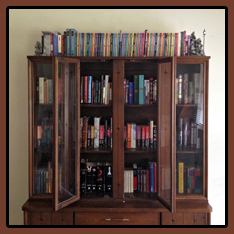
Ditch the Prologue (For Now)

Writing

Writing (Photo credit: jjpacres)

In January, I wrote about my quandary over whether I should keep the prologue of my middle grade novel or scrap it. (Read that post here.) At the time, I decided it could stay. After all, the very literary agent and author who brought this issue to my attention read the opening of my book and said it was a strong start. I figured it would be silly to mess with a sure thing.

Content with my decision, I honed my query letter to a quirky perfection and sent it out to the masses. I received rejections, which I expected. What discouraged me, however, was the number of agents who did not respond at all. It’s normal to a point, even for agents to throw away SASE’s, but even the agents who invited writers to query again if there was no response didn’t respond to my reminders.

It’s hard to face the truth sometimes, especially when it meant that the book I’d poured myself into for ten-plus years didn’t even merit a “no, thank you.” And I did everything I was supposed to, following submission guidelines to a T, never sending attachments, the whole bit. The only thing that left was the story itself: something had to be wrong with it.

I mulled over this issue a lot but felt too discouraged to sit down and make any more changes. And I’ve been busy, too. But while I’ve gone about my life, the whole prologue or not issue has continued to percolate. You see, when I first wrote the book, there was no prologue, so I should be able to go back and just cut it out, right?   But the thing my readers liked when I added the prologue was that is answered some of their questions while still keeping the characters in the dark. My problem became: if I go back to starting with Chapter One, how will I keep my readers happy? I don’t want to bog the story down with too much background information up front. Prologues are great for plunging readers into the world of the story. On the flip side, they’re notorious for hiding very tedious first chapters.

I’ve considered my favorite books and the methods their authors employ. Michael Crichton’s books often have introductions as well as prologues, sometimes involving characters that don’t appear at all in the greater book. They do pack an early punch, but he had a knack for introducing facts in a way that don’t interrupt the story. Now, I am no Michael Crichton, so I should probably not write a prologue just because he did.

Stephenie Meyer, author of The Twilight Saga Collection, also uses prologues, and although I love her books, I can see how her prologues are literary devices, meant to pull readers in. To be honest, I read them but immediately forgot about them. They are poor teasers that really do not add to the story.

When put in that light, I suppose prologues are somewhat expendable. Or even if they’re not, people may read them as such. I don’t want to turn off an agent by having the word “Prologue” at the beginning of my novel.   Which is where Harry Potter and the Sorcerer’s Stone (Book 1) comes in. Often, prologues pre-date the story with an important bit of backstory, so when this particular book opens ten years before the rest of the book, it could easily be labeled a prologue – yet author J.K. Rowling calls it “Chapter One” instead. This makes a difference, although it’s a subtle one: by calling it the first chapter, I think that Rowling makes a statement about how readers should approach the story. In essence, she says, “Listen up! The story is starting.”

Hmm… I wonder if this works on literary agents, too.

Of course, it doesn’t mean I’m going to simply change “Prologue” to “Chapter One” in my own book and have done with it. There are still some prologue-y things about it that need to change, which include making a smooth transition into the next chapter, along with spreading out any possible info dumping to make it more palatable. I have my work cut out for me. But after letting my novel sit so long, I think I am ready to make these difficult changes and send it out again. Maybe it will grab someone’s attention this time.

My Favorite Kind of Problem

Novels in a Polish bookstore

Books (Photo credit: Wikipedia)

My kindergartener brought home Scholastic’s December 2013 book list this week, and oh my goodness, I’m in heaven. I love giving (and getting) books more than any other kind of gift. Does that make me a boring gift giver? Well, I’m afraid so. Unless, of course, you love books, too, and you’re on the receiving end.

I was excited when I spotted a set of books that follows the ones my son is reading right now, but I couldn’t stop there. With books for two and three dollars, how could I? I’m singling out all the kids in my family and seeing if anything on this book list is appropriate for them. My love for books runs so deep that I just have to share.

This, of course, led to me wonder what books I would like. While I feel guilty other times of the year when I add to my already seam-bursting collection, when it comes to Christmas, I might as well get something I really like.

Now, I know that I posted the list of books that I hoped to read this year, and I’ve fallen woefully short of my goal (read it here). But I had to make myself accountable, even though I knew it was nearly impossible. It’s kind of a wonderful problem, having more books than I can possibly finish in 365 days. The thing is, had I stuck to the plan, I might have come close to finishing, but then new books kept barging into my life, and here I am, with a fair few titles under my belt, just not all the ones I originally planned. (Anyhow, I still have a few more weeks, so maybe things won’t look so bleak at the end of December.)

I don’t know why I can’t give up this habit. It alternates between despair (Will I ever finish all these books?) to excitement (I have so many books to read! I can’t wait for the next one!). This week, when I’ve barely had time to read two pages every day, I’ve felt a lot of the former. Why do I keep torturing myself? Well, because someone will tell me I need to check out a book, and I will – and I’ll love it. If I keep sticking to the same authors and the same styles, I’ll miss out on so much. So in the spirit of egging myself on, I have to ask: what books should I get this year? If I’m going to further interrupt the list of books I originally planned to read, they have to be worth it. Any suggestions?

Are You Happy with Your Child’s Education?

education

education (Photo credit: Sean MacEntee)

The three R’s: reading, writing, and arithmetic. Well, okay, only one of them starts with an “R,” but you get it. These are the basic skills that every child should carry away after twelve-plus years in school, right? But I’m not so sure that they’re touted or taught as much as they should be anymore. Okay, you know what? I know they’re not.

I have a friend who is a retired English teacher, and her grandson needed a little help on his essay for his college application. I don’t know what prompted him to ask her for help. After all, he’d already had a conference with his English teacher about his essay, and she signed off on it. Thank goodness something told him it wasn’t quite right. My friend was shocked when she read it. “Now, it’s not an AP English class,” she said, as if that should excuse it.

I don’t care what kind of English class it is: if you’re preparing high school seniors for entrance into college, they should at least be able to write a solid essay. His was full of platitudes and clichés. After the opening sentence, there was nothing original in it, certainly nothing that would make him stand out as exceptional. He’s a bright kid, full of excitement and energy, which he should have been able to impart – and which his teacher should have encouraged. Yet it was his grandmother’s guidance that finally helped him write a great essay.

So I’ve been mulling over that, wondering where the problem lies. I remember my first college writing course, where everyone was a freshman, and at seventeen, I was the youngest by at least a year. A week or so in, my teacher grew so frustrated with how ignorant most of the class was that she gave us a quiz on basic things that every American high school graduate should know, and not just limited to writing. Questions from the names of certain presidents to the years of the Civil War to what the color white symbolizes in our culture and on and on – and the majority of students failed. I looked around, wondering what in the world was wrong with my classmates. What made me different?

I majored in English, and many people assumed that that meant I was going to teach English. That never made sense to me; if I wanted to teach, I would have gotten a degree in education because there’s a lot more to running a classroom than knowing how to punctuate properly. In any case, I had many fellow English major classmates who planned to do just that. One girl, who was very sweet and wrote compelling stories, could not spell or punctuate her way out of a paper bag. And she told me proudly in her last semester that she had already been hired as an English teacher for the next year in a local high school. I cringed and told myself that I would never send whatever future children I had to that school.

Now, if you are a teacher, before you get your panties in a wad, I do understand that there are a great many of you who are excellent at what you do. Your vocation truly is a calling, and many children are blessed to have you in their lives. Some of you are in my family, and I know you have great gifts. You can’t help it that some of your peers have no business working alongside you.

Nor do I think this problem is only in public schools in troubled neighborhoods. There are plenty of charter or private schools or public schools with very active PTAs who turn kids out into a world for which they are grossly under-prepared. My son attends an excellent independent school, where he gets lots of individual attention, but some of the other parents assume that if they’re paying so much for their children’s educations, they don’t need to do anything at home.

It’s complacency that we’re fighting here, folks. Although the schools that hire the unqualified teachers and the schools that gave them their sub-par education to begin with share a lot of the blame, education has to start at home. Think about the days before school was compulsory. Read some of the writings of people in our nation’s infancy. These were people who had to help their parents run a farm or a general store, but those same parents knew that, if nothing else, their children had to be able to read, write, and know at least the basics of math to get by in the world. Think about Abraham Lincoln, who had little opportunity for a formal education. Yet every child in the US now has access to full-time education, and more of them than ever are leaving the system ill-prepared for the most basic tasks.

As a writer, it is painful for me to see how poorly other people write. Shouldn’t this be one of the first things we learn? Why are we bothering with all these ridiculous standardized tests, when the focus should be elsewhere? I take on a number of paid projects (which I appreciate, don’t get me wrong) that anyone with a high school diploma should be able to accomplish. And as a bookkeeper, the math end of it bothers me, too. When I go to the store and owe $19.26, then pay $20.26 so I can get a one-dollar bill back, you would be surprised at how many cashiers scratch their heads. Really? This is about as easy as it gets. What would they do if their cash registers broke?

So this has turned into a rant. Sorry about that, but I am passionate about raising a nation of competent people. You may be wondering if I’m going to go on all day or if I might actually have some practical solutions. Well, I do. If you care as much as I do, read on.

• Read to your kids. This isn’t hard. Even for busy, working parents, picking a short book to read before bed every night is an easy habit to get into and one that brings the whole family together, even if only for five minutes.

• Read road signs. Even if your child just knows the basics of the alphabet, it will be a fun game to find every letter A or B or Q on the way to and from wherever it is you have to go.

• Write with your children. It is never too early to teach grammar, punctuation, and syntax. My kindergartener can write simple sentences. He has a few sight words that he already knows. For instance, he can write “I see a” and then sound out the rest. Last night he wrote, “I see a truck,” and we sounded out “truck” together. Once little things like these click, you will be surprised how quickly they pick up the rest. And when they succeed at something, they enjoy doing it.

• Teach your kids how to count money. I do this with my son when he has his own money and wants to buy something. It’s also a great lesson for when your kids have a little spending money and need to learn limits. Show them how to read price tags and figure out what they can afford.

• Volunteer in a local school. This is a great one because anyone can do it. You may not have kids, or your kids may be grown and out of the house. Wherever you live, I am sure there is a local school full of kids who are hungry for that one-on-one attention. Just giving emotional support can help boost their performance in class, and then you can move on to the academics.

•Check out Starfall.com. I absolutely love this site, and your kids will think they’re just playing computer games. It has everything: colors, numbers, letters, vowels, spelling games, and all sorts of activities that teachers use in the classroom. And unlike a lot of pre-school sites, you don’t have to pay to use it. If you buy a year-long subscription, you will have access to more, but there’s plenty to do there for free.

• For older kids, encourage them to start a writer’s group. And this isn’t just for future writers. I grew up with a kid who thought it was fun to research and write about different countries. That was his thing. He was interested in different cultures, so although he wasn’t writing for the sake of writing, he wrote because it was about something that interested him. They could focus on reptiles or earth science or even sports. Then have a parent or older friend read over the reports or stories to give constructive criticism. And guess what? There are excellent publications written for and by kids out there. They can submit their writings or art Highlights (any age) or CRICKET Magazine (age 14 and up). Think of the boost it would give your child to see his or her hard work printed in an actual magazine.

See? It’s not all negative after all. But if we don’t take these small steps to encourage our kids, we’re letting them down, and they’ll miss so much. Don’t sit back and wait for school to do its magic – the magic begins with a little push from you.

Why I Will Never Outgrow My Love for Physical Books

Books 2008

Books 2008 (Photo credit: // Denise //)

I recently recommended a book to a friend, then offered to let him borrow my copy. I half expected him to refuse, not because he wasn’t interested in the book but because he is a tech-savvy guy: I figured he would rather read it on an e-device. So I was surprised when he accepted my offer, saying, as if surprised himself, that he has read so many books on his Kindle lately that he was craving the experience of reading and feel of a paper book. I think he’ll be really pleased when he reads this one (the one on top picture below, Bess Streeter Aldrich‘s Miss Bishop). Just the texture of the cover puts me partly into the world of the story.
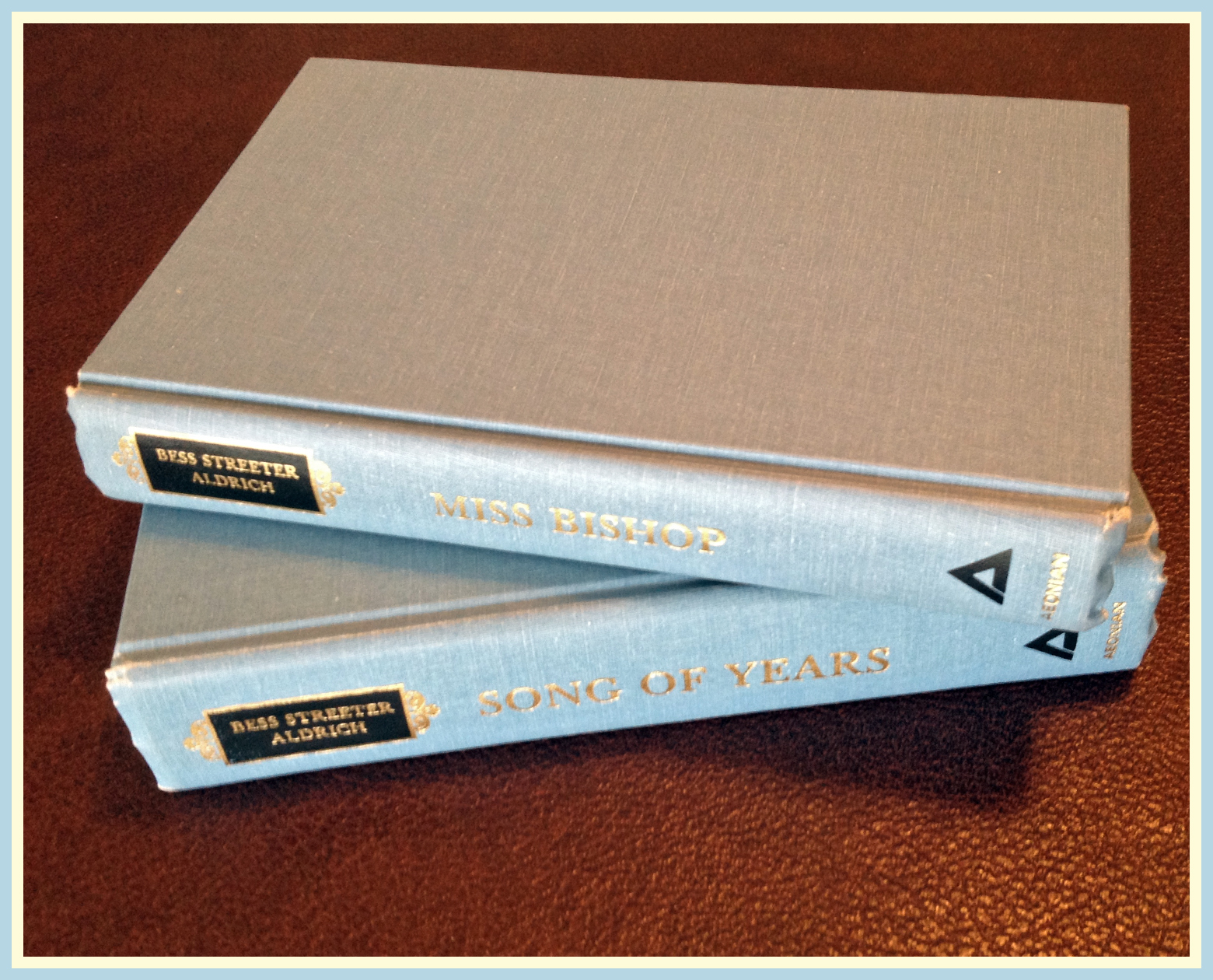
Books by Bess Streeter Aldrich

Books by Bess Streeter Aldrich

There is a giant push in the publishing industry, as well as a movement in modern readership, toward e-publication. And as someone who edits for an online literary journal and makes much of her living online (including one e-published short story at Smashwords.com), I am grateful for this technology.

At the same time, I still nurture that dream of some day walking into a bookstore and seeing my book on the shelf. (Or even better – seeing it purchased by an eager reader.) I cannot imagine any author not wanting this. But with the chances of landing an agent or publisher being so slim and the cost of self-publishing prohibitive for many, e-publishing is quite attractive.

When I was in the seventh grade, I was part of a small research group that researched and proposed a new kind of virtual book. It was the mid-1990s, and we didn’t even have the internet available for us to do our research, so this was quite a far-reaching idea for the time. We hoped that we would win an award – and maybe even enough grant money to create a prototype. But while I was honored to be chosen to work on such a project, the idea of the product really bothered me. Everyone else in the group was excited to create some virtual experience that would make people never want to go back to the traditional books again. I quietly kept my qualms to myself.

I doubt it was just my feelings about the project, but it never went anywhere. That doesn’t mean, of course, that the industry didn’t move forward without us. And there is a great use for e-books – don’t misread what may sound like a lack of enthusiasm on my part. I have a friend who travels all over the world and is also an avid reader. Her Kindle is her best friend. She can load eight or nine books on it for her trip and never have to worry about all that extra bulk in her luggage.

Tablets have so much going for them, and they only get more sophisticated as time goes on. Some books are only available via e-reader, and it’s much more convenient reading them on a tablet or a smartphone then having to sit at your desktop every time you want to read. I’ve purchased several books and read them this way, and what’s great is that I can read and fold laundry at the same time, not having to worry about the book flipping itself closed. If I ever end up some place with only my phone to keep me company, I have any number of public domain books available with one swipe.

So why would I ever need a physical book again? I mean, aside from wanting to publish one, of course. It would do me no good to see one on a bookstore’s shelf if people suddenly decided they didn’t want books anymore. But they still do. Even though they cost more. Even though they take up space.

I would have to argue that there is something viscerally satisfying – and I’m not talking about eating the pages. It’s something in the feel of a physical book that trumps the convenience of e-books. Especially if, like my friend, you haven’t read one in a while. It just feels good to run your fingers over the pages, to hear that rustle of paper. Sometimes the texture is fine. Sometimes the pages are thick. And when you’ve been with a book for a while, you wear it in like a good pair of shoes. You know the feel of it in your hands, and it’s not just the story you miss when it’s gone. I also like to see my progress, especially on a really thick book (my favorite kind). I feel like I’ve accomplished something as my bookmark moves from the front to the back.

Georgene's Bookmark

Georgene’s Bookmark

Oh, and bookmarks. How could I forget bookmarks? My friend Georgene, artist extraordinaire, made this one for me – isn’t it gorgeous? I confess that while some people have a shoe fetish or an obsession with jewelry, I have a thing for bookmarks. It’s best that I avoid the accessory section in general at bookstores because I’m liable to spend just as much on those little things as the books themselves. Oh wait – e-books come with bookmarks already in the program. Which is good because your kids can’t pull the bookmarks out and make you lose your spot. But then you also don’t have your friend’s art or Edward Cullen or Harry Potter looking at you every time you mark a page.

You might have many more reasons why you still keep books on your shelves – or why you continue to buy them. Or maybe you take issue with my whole argument. But if you do, I have one more thing I would like for you to consider: remember my friend and the book I’m lending him? Well, that wouldn’t be possible if another friend hadn’t bought the book for me to begin with. This, I think, has to be my favorite thing about owning actual, paper books. I love giving and receiving them as gifts. (There’s something so personal about giving a book you know will speak to someone.) I love lending them to others, and I’ve discovered so many wonderful books that I never would have known about if friends hadn’t lent them to me. My parents still have books that belonged to my dad when he was a kid, and the third generation is enjoying them now. We enjoy a person-to-person library system with no due dates, and as long as you’re careful about who you share with, it always pays off.

I am absolutely not advocating that we boycott e-books and e-readers. Just the opposite: I am grateful that we have the choice. What I am saying is that you don’t have to buy into the commercials that try to convince you that anything without an “e” in front of it is going the way of the T-Rex. After all, people still run outside, even though we have treadmills. And we bake cakes from scratch, even though we have cake mixes. We do what works for us, given our individual situations, and when a friend decides to share a book that might take up some space on your table or in your purse, it’s still an offer well-worth accepting.

Why Didn’t I Think of This Before?

My Books (some of them)

My Books (some of them)

If you’ve ever seen Disney’s Beauty and the Beast and you’re a book-oholic like I am, your dream house might include a library like the one in the Beast’s castle. You know the kind – book-filled shelves stretching into the stratosphere, complete with those rolling ladder thingies that are absolute necessities if you want reach the upper shelves.

Of course, my fantasy house doesn’t stop there. I want books everywhere. I’ve seen houses where the stairs are shelves with books underneath or where unconventionally-shaped bookcases are built into the walls and nooks of every room.

Since, however, reality is quite a different thing than my dreams, my books reside in my china cabinet (the china is in boxes who knows where), on top of my spinet piano, in a small, three-shelf corner bookcase in my room, and the cookbooks are above the cabinets in the kitchen (let’s be honest: they’re all over the kitchen). The only reason my five-year-old’s bookshelf still has room on it is because his little brother strews the board books throughout the house, so I can’t even claim eminent domain and stash my stuff there. If I decide to buy one more book for myself. . . well, I guess I haven’t put any knickknacks on top of the buffet for a reason.

Space isn’t the only problem. Believe me, I will find room, if I have to balance them on top of fan blades or do something less creative like stack them in the corners. I do have several books in “the cloud” (either Kindle or iBook editions), but I prefer to read physical books with actual pages (although I do publish online – but that’s for another blog). So recently, when I realized that I was going to finish Drums of Autumn (Outlander), the fourth book in Diana Gabaldon’s Outlander series, I just couldn’t stomach shelling out another thirty bucks on a book that I want but don’t need. (Read this post to see how much catching up I have to do to reach 2013’s reading goal.)

Now, some of you have already figured out the obvious solution, which saves both space and money, and you’ll think I’m an idiot for not coming to the same conclusion earlier: just check out the book from the library. Well, duh, why didn’t I think of that?

Time to ‘fess. The last time I checked out a book from a local public library was when I was fourteen. And yes, that was over half my life ago. It’s rather shameful, I admit. I mean, my dad worked in libraries as a teenager, my mother worked in our former church’s media center, and one of my favorite places to volunteer at my son’s school is in the library. So why the decade-plus hiatus?

When I was fourteen, I started reading really long books – thousand-plus pagers. They took longer to read than libraries’ allotted two-week borrowing period, and I wanted to spend my time reading them rather than going back to renew all the time. Plus, once I started earning a little spending money, I could afford my own books and immediately grew my collection. I went from bugging my dad to search the various libraries for new Agatha Christies once a week or so to buying almost every Stephen King title available. It also didn’t hurt that we lived near an awesome used bookstore. (Chamblin Bookmine rocks!) Lastly, whereas I couldn’t care less about many other material things, books are the key to my heart – I want to possess them. (My husband figured that one out pretty quickly.)

Now, I did spend quite a bit of time in my university’s library back in my college days, but I didn’t go for the fun of it. When you associate going to the library with study groups and research papers, it kind of loses its appeal.

Then, early in our marriage, my husband and I moved to a different county, thus making my poor, unused library card obsolete anyway. We lived about ten minutes from a very nice library – which was right over the county line. And these two counties do not share benefits. I could enter that library, sure. But check a book out? No way, Jose. The closest library within our own county was over twenty minutes away, and since I was out of the habit. . . Well, you get the idea.

After I had kids, I heard people talk about story times at the various libraries around town, but it never occurred to me to take them. I’m a busy mom, I work, and I am somewhat anti-social. If another mom had invited me, I probably would have considered it. But I should have gone anyway, regardless. I recently had to meet a friend during the week, and the most convenient time was just after story time. So I figured I’d tag along with her, and at least my younger son would enjoy it. Peter was the oldest kid there by far, but I was glad that he was entranced by all the books. Unfortunately, it was, yet again, a library in the wrong county. Peter sometimes checks out books from our church’s library, but after seeing the real thing, he begged me to get a card. We now live less than ten minutes away from a library with an excellent children’s department, so I finally broke down and went. Not only could Peter have access to far more than I could ever afford, but it was clear that if I wanted to read The Fiery Cross (Outlander), I would have to go to the library or dip into the diaper fund. Sorry, books. When you have a twenty-month-old, diapers win.

Hey, I could get used to this. Now Peter has a new reason to be excited to read. And the two-week deadline gives me new incentive to read, read, read.

But just to make sure, when I checked out Gabaldon’s next 900-plus page doorstop, I asked the librarian how my chances were of renewing it.

She looked at me, taking in the baby on one hip and the energetic five-year-old next to me. I’m sure she was thinking, Good luck finishing this in the next two months, lady. Then she smiled and said, “They’re good.”

My Summer Writing List

"Writing", 22 November 2008

Writing (Photo credit: ed_needs_a_bicycle)

In late 2012, I created a rather ambitious list of twelve books that I hoped to read this year (see it here), and I am happy to say that I’ve already read six of them and am close to being halfway through a seventh, not to mention the six additional books I’ve read that aren’t on the list at all. So since it’s summer, and all the school kids have their summer reading assignments, it only seems the appropriate time to really crack down and catch up.

And while I do hope to read more while I’m not teaching and have more time at home, I decided to create some additional assignments for myself this summer. It’s the first time in years – maybe since high school – that I’ve had a definable summer. With my elder son in school five days a week and with me substituting, this break is refreshing. No more four thirty A.M. alarm, a more relaxed dress code – and time.

It’s not infinite time. I still work with my parents part-time, and I spend half my day chasing my toddler. But mornings aren’t nearly as rushed. I’ve been able to eat breakfast while reading or writing instead of stuffing my mouth while making everyone’s lunch, getting the kids dressed, and searching for my keys in a last-minute panic.

With my few extra stolen minutes, what I really want to do is write. Of course, I want to read more, too, but I felt the pinch more when I didn’t have enough time to write during the school year. I remember back in November, when it seemed every writer in the country except me participated in NaNoWriMo, I thought how nice it would be to have the time to write 2000 words per day. Although I wasn’t that ambitious when it came to my summer writing goals, I thought 300 words a day of both new blog content and fiction would be manageable, and at least I could keep a steady pace. I know it doesn’t sound like much, but I didn’t want to overwhelm myself with unattainable goals. I mainly just wanted to get more on paper (or MacBook) while I could.

Thus far, I’ve been able to keep a post or three ahead on this blog, so I haven’t scrambled for content at the last minute (something I did too often in April and May), and even if I can’t write fiction every day, when I do I’m generally writing 1000 to 2000-plus words. As a goal-oriented person, it helped to create something constructive for me to do during the long stretch of what could easily have been non-productive days.

Sometimes my enthusiasm makes me go a little overboard, and although it’s a great feeling to ride the wave of a story over my creative horizon, it’s not so fun for the people who live with me. A few nights ago, I sat up in bed, typing well past my bedtime. My husband had been reading but had already gone to sleep. Or so I thought. “Are you going to type all night?” he finally asked. I winced when I saw what time it was and assured him that I was almost done. The next morning he told me he was sure I’d invented a new form of Chinese torture to keep him awake. I think I might be banished to the other room if I want to type late into the night again.

In addition to writing daily, I do have one concrete goal: I want to publish a new short story at Smashwords.com before school starts back again. I have about six weeks, and it’s is almost ready. Right now I’m meeting with my cover artist (AKA my mom) and polishing the story itself. If only I could figure out the perfect title, I’d be a little more confident about its release.

The only problem with all this writing that I foresee is: how am I going to be able to cut back once school starts again? My summer writing might just turn into my year-round writing. But you know, I could think of worse things to keep me up late at night.

If I Die Before I Wake

English: Sloughan Glen A great place to spend ...

A quiet Sunday afternoon with the family (Photo credit: Wikipedia)

It seems that I’ve read more and more posts and memes lately about people—artists and innovators, particularly—pursuing their dreams so they won’t have any regrets at the ends of their lives. One was from Anne Lammot, and I gave her a resounding, “Yes!” After all, I was raised by parents who believe that it is more important to do something fulfilling than pocket-filling. My father has always been baffled by people who suffer through a miserable work week to make it to a weekend during which they will spend half their time bemoaning that it’s almost over. It is a wonderful ideal, to wake up excited about work every day. But what if it doesn’t pay the bills? There is a reason we’re called “starving artists.”

The question for the artist in me is: If I give up on a writing career, will I regret it when I’m eighty? But an even more important question is: If I die tomorrow, what regrets will I have? Put another way, if I knew I only had twenty-four hours left to live, what would I do?

This is a question that was posed to my mother’s Sunday school class twenty-nine or thirty years ago, when I was a baby. Her answer (in part, at least) was that she would still have the same number of diapers to change during that twenty-four hour period as during any other; even if she was leaving a number of unfulfilled dreams, she was still the mother of a dependent baby.

For myself, I would probably spend too much time writing instructions or creating spreadsheets of online usernames and passwords for my husband. What I cannot imagine saying is, “Gosh, I’m not published yet; I’d better get on it.” Mainly, I hope, I would want to be with my family. There are people every day who go home from hospitals, unable to be treated, and their only goal is to spend what time they have left with their families. Those who are left behind will have to survive on the memories made during that time.

As a healthy young woman, I could easily live another forty to fifty years. I could also easily pull out onto a busy street tomorrow and get hit by a careless driver. I apologize if this seems like a downer, and I certainly don’t want to live with my last will and testament in my back pocket, but I also don’t want to forget that life is so short and precious.

My husband and I pretty much follow Dave Ramsey’s guide to debt-free living (see The Total Money Makeover Workbook), and we’re well on our way. Ramsey promotes a lifestyle of delayed gratitude, which I think is healthy (the real world won’t give me a cookie just because I kick and scream for it), but in a way, it’s also sad that many people will never make it there. I don’t mean that a debt-free life is unattainable, just that it could possibly be attained and then not enjoyed. Several years ago, I met a woman who told me that she and her husband had everything they wanted after he retired. They finally had the means and time to travel, and they bought their dream house. It was there that he died, less than a year later, the victim of cancer. Sometimes, she said, they laughed hysterically at the irony of it all: they finally had the house in which they had always wanted to spend the rest of their lives together, yet the rest of their lives wasn’t long enough to enjoy everything for which they had saved.

I still follow the Dave Ramsey method to a point, but Thomas and I also decided that living on beans now so we can enjoy steak and lobster some thirty years down the road is not exactly how we want to live and raise our kids. If our vacations are modest road trips that only last a few days at a time, at least we hope to make good memories with our boys as long as we are able. And if we can achieve a more comfortable lifestyle in the future, so much the better.

With money and careers in mind, there is a part of me that has always said, “When I publish, I’ll finally prove that I’ve done something. The last piece of the puzzle will be in place.” But another part of me knows that I’ve already done a lot, and publishing does not guarantee authorial success, nor does it guarantee mansions or good health or unanimous acclaim.

About five years ago, I met an out-of-state friend for coffee. While we summarized everything we’d done and all we’d hoped we would do by that point in our lives, I lamented that a writing career seemed impossible to attain. I’d gone to a good school that turned out lawyers and doctors, and what was I doing? She pointed out that I was happily married and a mother. She couldn’t say either of those things for herself. Although she had achieved a level of success that I never hoped to claim for myself, she graded me according to different standards. I never thought someone would look at my life and think it enviable.

Similarly, in Bess Streeter Aldrich’s A Lantern in Her Hand, Abbie Deal gives up a possible musical career to marry the love of her life and raise a family. Her children never appreciate her true potential, how great she could have been. They don’t really understand her at all, in fact. Two of her daughters make conscious decisions to never have children and never marry, respectively, in order to pursue careers instead. Only the one who doesn’t marry regrets her decision later in life, when it’s too late to go back to the man who once loved her.

Abbie Deal made a choice that many people wouldn’t—and don’t—make. She chose something for herself—love—but something so much more than herself: she chose relationships, in this case, a relationship with her family. Abbie Deal lived a (fictional) life that I consider was without regret, even though it wasn’t what she initially wanted.

When I think about the people who are going home to spend their remaining time with their families, I realize how important yet how difficult it is to live in the present. What if the present is stressful? As much as I want to spend time with my little boys, my husband and I still have to earn enough money to keep them fed and clothed. And sometimes spending time with them isn’t what I want. I want something for me; I want to read or write or simply have a few moments’ peace.

There must be a balance. Whenever the end of my life is, if I have the luxury of any kind of reflection, I don’t want to wish that I’d spent more time with my family; I want to be thankful for all the time we did spend together. I don’t want them to say, “Well, we didn’t get to see her much, but thank goodness she had such a successful writing career.” (At this point, they won’t be saying that anyway, but they might lament that I spent too much time chasing said career.)

While I won’t for a minute say that I’m totally selfless, that I never make decisions based on what I want to make myself happy, I hope that I can share my life and my time with the people I love. Since I won’t be able to take anything with me anyway, I can leave a legacy of many meaningful memories. Besides, watching my two little boogers dive face-first into Nutella and recite Mother’s Day poems provide good fodder for creative writing, anyway.

A Book Affair

Books

Books (Photo credit: henry)

I’ve never been one to blow through my paycheck on a shopping spree. I do buy clothes more often than my husband but not nearly as often as most women. I never buy jewelry. I don’t have a lot of knickknacks or art, although, with a mother who is an artist, I certainly appreciate great artistic talent. I don’t care about TVs, home theatres, or electronics gadgets. I am only occasionally tempted by purses or things with multiple pockets and compartments (and the bigger the better). Really, the only item in existence that is a potential budget buster for this girl is a book.

This past week I helped set up the Scholastic book fair at my son’s school. Book lovers can imagine my agony as I unpacked and shelved all sorts of treasures. The few books whose covers were torn during transport went back into the original boxes, never to be displayed; every time I found one, I wanted to offer it a home, even if I’d never heard of it before. And every time I found one I had already read, I wanted to say, “Oh, oh! I read this—has anyone else? You have to read this!”

I often avoid bookstores if I don’t have extra spending money because the temptation to buy is so great. At the end of 2012, I wrote a post about the books I hoped to read this year. Of course, I haven’t yet been able to read nearly as much as I hoped, but I’ve already gone through several that I adore and can see myself going back to again and again (including one title that was at the book fair, Erin Morgenstern’s The Night Circus). But within days of publishing that list, what do you think I did? I went out and bought more books. Now, I know there’s no way in the world that I’ll be able to read all of those books this year. I suppose I could shut myself in my room with a box of tissues (just in case), but it’s not like I have a maid to take care of the house, a nanny to watch my kids, or a trust fund to pay for it all.

Why do I keep plaguing myself with these books? Why can’t I stop? There are much more harmful vices, I know, but even if I’m not destroying my relationships or running up credit card debt with my habit, I’m certainly running out of places to put each new purchase. I converted my china cabinet into a bookcase, and now I’ve taken over most of the top of my spinet piano, as well. Whenever I want to have fun and internet browse for my dream home, houses with built-in bookshelves automatically jump to the top of my list.

Part of me wonders why I never became a librarian. I didn’t want to spend any more time in college than I absolutely had to, however, so forget the master’s in library science. But I could still work in a school library somewhere. Whenever I volunteer in my son’s school’s media center, I bask in the atmosphere of so many well-loved published works. And since I went to school there, too, and received much joy browsing those shelves as a girl, it’s even more of a magical experience. I listen in wonder as kids come in, excited to find a new book, and the media specialist rattles off titles that she thinks will interest boys and girls of all different ages. She’s my hero.

My husband has always been a great gift giver. At birthdays and Christmas, he’ll ask what I want, and often I list a number of books that I’d like or say, “You know what I like to read. Just surprise me.” He’s responsible for many of the tomes that crowd our shelves and spill over into the rest of our house, including the Harry Potter, Artemis Fowl, and The Hunger Games series. He discovered early on that I couldn’t care less about jewelry, perfumes, flowers, spa days—in other words, things that would delight most other women. The first gift he ever bought for me (and the only piece of jewelry he’s given me, except for the wedding rings we exchanged) was a watch. I’d been going on for a while about how I needed a new one, and I still wear it today, almost fourteen years later. My mom jokes that it’s my engagement watch. But what she forgets is that Thomas followed the watch with a book, The Girl Who Loved Tom Gordon, by one of my favorite authors, Stephen King. I think I know which gift really won my heart.

It Shouldn’t Be a Popularity Contest

Eric Whitacre

Eric Whitacre (Photo credit: Wikipedia)

I don’t think anyone would ever call me a rebel. When I hear people talk about all the stupid stuff they did, writing it off as, “Well, I was just a teenager,” I wonder why I never did those same things. The whole balking against my upbringing thing never happened.

But when someone says, “pop culture,” I absolutely cringe. When Titantic was really big in high school (I had friends who had time and money to waste and saw it in the theatre more than ten times), I refused to see it. To this day, it remains one of those movies on my personal “banned” list. It could be a masterpiece, but it seemed popular for all the wrong reasons.

So maybe I’m a pop culture rebel. Well, not entirely. I mean, I did go nuts over the Harry Potter books, and I do have Facebook and Twitter accounts, as well as an iPhone, on which I can check my statuses. But take fashion, for instance. Skinny jeans are in, right? Kids, adults, male, female, skinny people, not-so-skinny people–they all wear skinny jeans. I watched kids getting off a school bus one day, twenty or so. Out of all of them, only one kid wasn’t wearing them. And I just prayed that I wouldn’t be forced into buying them because this girl does not have skinny legs. Yes, I’m small, but the brand jeans that I buy come in “curvy,” and they actually fit. (If you’ve ever been clothes shopping with me, you’ll know how monumental that is.) I’m not going to go out of my way to not buy trendy clothes, but if they don’t look good on me, forget it. If they do look good, however, I’ll continue wearing them long after they’ve gone out of style. (This is a trait I came by honestly. I used to cringe at the skirts that my mom wore, you know, the semi-A-line ones with huge pockets? Yeah, they’re back now. Who knew she was a fashion maven ahead of her time.)

But fashion is just a small part and not really the important part of how pop culture snakes its way into our lives. This popularity business is starting to make us kind of dumb, quite frankly.

Now, I know I’m about to sound old and preachy, but this issue is close to my heart. About twenty years ago, I fell in love with my school’s media center and checked out every book I could, from Ramona to Greek mythology to Little Women. Some of my best memories from that time center around those books or time in the library. Of the six guys I used to hang out with, the bigger the book you read, the cooler you were. And no, they weren’t nerds with pocket protectors (although all of them made the honor roll). They played baseball and football, took piano and violin lessons, sang in our choir, took Tae Kwon Do, drew amazing cartoon-like illustrations in the margins of their homework, had rock collections and pet reptiles. In other words, they were well-rounded guys, not pigeon-holed into one particular sport or other area of interest. And though I fit in well enough with them, I didn’t feel nearly as cool. I was not athletically-oriented at all, and although I started taking piano lessons younger than just about anyone else I knew, I was no good. So what could I do? Read. And the two-to-three hundred page books I routinely read just didn’t cut it anymore. That’s when I found Little Women, a five hundred-pager. To this day, the longer the book, the happier I am to read it. Series? Even better.

Today, my son goes to the same school, and I volunteer in the media center. There is now a computer program that assigns reading levels to books, and when kids read them, they receive a certain number of points, according to whichever level it is. One day, my job was to look up each book and find out the level and how many points each book was worth. The books were all new to me, either too advanced for my five-year-old to read yet or too young for me to read for my own pleasure. I asked the media specialist how high the reading levels went, and she said about the eighth grade. The next thing I asked: Did they still have Little Women? Yes, but kids don’t read it all that often (and it’s one of those eighth graders). I waxed eloquent about the books I used to read and asked if she’d noticed a decline in literacy. (She started working at the school my last year there, so she’s seen the entire progression.) Her answer saddened but did not surprise me. Kids these days are more interested in graphic novels, which are fine, but instead of just attracting kids who, otherwise, wouldn’t ever touch a book, they’ve lowered the standard for everyone else.

And then there’s music. My dad raised me on Styx, Alan Parsons, Blue Oyster Cult, Tchaikovsky, and Saint-Saens. I grew up singing in choirs and participated in a few musicals as a teenager. I still love all of the above, plus Sweeney Todd, Mumford and Sons, System of a Down (yes, I know), Metallica, and current British composer extraordinaire John Rutter. When people talk about Usher and Adele, I’m kind of lost because I don’t listen to any of that kind of thing, unless I catch it in a commercial or movie. And people my age look at me like I’m crazy. Just like I shouldn’t wear flare jeans (they were so ten years ago), I should get with the times, right? My poor kids won’t ever know what’s popular, unless they hear it with someone else. The music we listen to in the car is either from the above mentioned groups and composers, or one of Peter’s faves of late is the sixth movement from Brahms’s A German Requiem. I actually got the bug to write this particular post as I listened to him singing his heart out, going right along with the tenor line, then asking for me to play it again. Now, you can’t tell me that that “dead white guy’s” music didn’t connect with him.

I was moved and encouraged recently when my mom showed me Eric Whitacre on TED Talks. This is a long video, but if you’re familiar with TED, you know it’s worth it. If you need some arm-twisting, Eric is a tech-savvy, good-looking, youngish, self-proclaimed classical composer. And he created a virtual choir in 2011 that comprised over 2000 people from around the world—young, old, black, white, male, female, nerds, cool people—every kind of person imaginable. So that tells me that there’s hope after all, if only we can open enough minds to thinking outside the so-called popularity box. People will learn to connect with music like this if they’re taught that it’s okay, if they think they won’t be teased. And some people like me will love it anyway, not really caring what others think.

I’m not trying to create a new kind of popularity, just open people up to more possibilities than what typically top the charts and grace the covers of the magazines at the check-out lines. For parents or teachers who have already given up because their kids just don’t like to read, or who don’t like classical music themselves so never played it for their babies, what kind of message are we sending by this lack of effort? I think it’s unacceptable to give up and say that if we can’t beat them, we might as well join them. Progress isn’t worth it if it plows right over and buries the good along with the out-moded VHS tapes, legwarmers, and suitcase-size mobile phones. Don’t lose the things you love; share them, and watch the wonder and growth at these new-old discoveries.