Having Myself a Martha Little Christmas

Let It Snow quote

I’ve been putting off writing this particular post for a couple weeks. I even decided, just a few minutes before I read the above quote, that I wouldn’t write it. After all, it was going to be a post about how busy I’ve been, and writing a new post would just add to that busyness.

But then I did happen to read that line from Jubilee, and it sort of seemed to be speaking to me.

If you know me well, you know that I’m organized to the nth degree. I’m disciplined, an overachiever – okay, maybe I’m slightly OCD, which can be a problem – but the point is that I’m always busy doing something. The week of Christmas is no exception.

Somehow, it crept up on me this year. It was a couple weeks ago that I realized that the last week of school was approaching, and if I was going to do my usual make-some-goodies-for-my-coworkers thing, I’d have to get my act together, like now. And I didn’t even know what kinds of goodies I was going to make.

Christmas Tree Fruit

Christmas Tree Fruit

Years ago, I used to bake like a crazy person in the lead-up to Christmas. It got so stressful – putting the pressure on myself to make cookies for any- and everyone I might possibly see – that my husband asked me to please slow down. Even then, it took a couple years for me to actually follow through. I still make goodies (this year dark chocolate truffles, English toffee, muffins, cookies, and even Christmas tree fruit platters – cute, right?), but not nearly to the degree that I used to.

I could, of course, go to one of the many excellent chocolatiers in town and just buy treats that I know my friends will love, but that gets expensive, and here’s the thing: even though I don’t particularly love baking, I love giving what I bake.

I am the classic Martha – you know, from the story of the sisters Mary and Martha in the Bible? In case you’re not familiar, Martha is so busy serving Jesus that she doesn’t have time to listen to Him. Meanwhile, her sister Mary sits at Jesus’ feet, and when Martha asks for Mary’s help, she gets rebuked by Jesus.

Okay, now I’m not trying to insert myself into a Bible story, but women often get categorized as Marys or Marthas, and I’m a Martha if ever there was one – except.

Except that I like being busy. There are very few times that I become Mary – sit and enjoy. My husband half-jokes, half-jabs at me that I can’t watch TV without reading a book at the same time. Multi-tasking is, of course, necessary if you’re going to work full-time, get the laundry done, fix lunches, and do all the other mom stuff.

But that doesn’t mean that I resent Mary. Right now, the Marys in my life are my two kids (who are boys, by the way, so this isn’t a perfect analogy). They’re busy, too – my elder son does karate, takes piano lessons, plays baseball, and has his school responsibilities. But right now, he has a two-week break from school, and he pretty much gets to be a kid.

While my four-year-old napped this afternoon, my eight-year-old bounced on our new trampoline. Meanwhile, I was cleaning the kitchen, preparing for guests on Christmas morning. He asked me to jump with him, and while I had plenty of good excuses not to, I decided to be Mary for a little while.

A few hours later, both kids spread out paper and markers on the floor and started making Christmas books. (Said Christmas books had pictures of Christmas trees, rattlesnakes, and worms – hey, they’re boys.) I was touched, not just because I’m a writer, but because they worked so well together, and they were totally into their project. And they wanted me to help, too. Again, I had any number of other things that I could have done, but these books, while not Caldecott candidates, are very important to them. So I let them trace my hand, and I added a choo-choo train to the snake-and-worm collage.

Because I spent time with my kids, I was left with plenty of things to do: dishes to wash, laundry to fold, and presents to wrap. I even had this post to write. But to be a Martha – a true Martha – I believe there comes a point when you have to understand why you’re so busy. Yes, I have to wash clothes so we’ll have clean things to wear. But why keep the house clean, why make goodies for my friends, why post this blog if it doesn’t in some way fulfill both me and the person or people for whom I’m doing each particular thing? And the answer is that if I’m being busy just to be busy, I’m doing it for the wrong reason.

Now that I’ve come to terms with this truth about myself, I hope I can live up to the good side of my inner Martha. And no matter which sister describes you, my readers, I hope that you all will tap the positive aspects of your personalities and fully enjoy this holiday season.

A Lesson in Humanity

Humanity Quote 2

My church employs a chef whose family came to the States from Bosnia in the mid-1990s. When they arrived here, our chef’s husband needed a prosthetic leg, which cost $24,000. Knowing that they could not afford the prosthesis, several families within the church pooled their money to purchase the leg. “That’s not something you forget,” our chef told me earlier this week.

I’d run into her in the church kitchen, where I smelled something wonderful. There wasn’t a church event planned at that time of the week, and I wondered what she was cooking. She told me she was preparing a meal for a widow from our congregation, one of those families who helped purchase the $24,000 leg. This widow has lots of dietary restrictions, yet our chef is glad to prepare tasty meals that follow the dietary code. And she always refuses payment.

“That’s so sweet,” I said.

“It’s not being sweet,” she told me. “‘Hi, how are you?’ That’s sweet. This is just being human.”

I didn’t know what to say. My friend, the Bosnian chef, does not mince words, and she’d put me in my place.

I’ve thought about what she said quite a bit over the past week, being human versus being sweet. And she’s right; there is a difference. I had to think about all the times I’ve thought of someone as sweet, and I haven’t been giving them enough credit. My son is sweet when he gives me a hug, but he’s human when he shows his great capacity for compassion, when he immediately thinks to pray for someone in need.

Many people call this being Christian, and if you call yourself Christian, you certainly should pray for others, feed the hungry, house the homeless, and visit those in prison, just to name a few. But I think it also short-changes those people who don’t share my beliefs, yet are compelled to act in ways that are selfless, in ways that humble themselves while serving others.

Perhaps these people are simply being human. Perhaps it’s the way we’re all born, but then the pressures of life get in the way and cloud this original purpose.

Humanity Quote 1I often see the ugly side of people, the kind that gets reported in the news: mindless mobs, riots, senseless violence. But even though they are humans committing these acts, I don’t think its our humanity that is to blame. Think of how we are born: innocent. It’s not until we grow older, when we can choose how we act, that the problems arise.

Our brains set humans apart from the rest of the animals. But not only that. While some animals are able to feel compassion – think of service dogs or perhaps the gorillas that have learned sign language – it is our humanity that leads us to reach out to other people in need and help them. Our humanity is our goodness, not the ugliness. It leads us to give when we expect nothing in return, to show our gratitude in the best ways that we are able.

I don’t think it’s a mistake that this simple message came to me at the start of my favorite season – but also the season when so many people become cynical. Consumerism is about to rear its ugly head in many ways in the next couple months. People will have their feelings hurt when they don’t receive what they expect they deserve for Christmas, or they’ll spend all their energy trying to give the perfect gift, plan the perfect event. But all of us – all of us, no matter what we believe or celebrate – have the capacity to be human with one another. In today’s society, it may even take a little rebellion to get back to our humanity, but I’m willing to try. And I think it’s something we should practice all the time.

No Back to School Blues This Year

Two years ago, I posted a blog about the stress that surrounds the end of summer break and going back to school – and I wasn’t even the one going to school. Still, as a parent of a then-five-year-old, I was fully responsible for getting him there on time every day and felt that pressure. I don’t even remember if I had the same feeling last year – I was probably too busy to notice.

This summer, I’ve done more summery things than probably any other summer of my life, including a two-week vacation with my family. It would seem that a summer like this would stir that familiar anticipation, that early-morning-wake-up dread. But for once, I look forward to the days ahead, when I will have a set routine (even if it means a 4:15 alarm). Funny how things change.

Although I am a little anxious about what the fall will bring, with my little guy transitioning from loosely structured days with me or other family members, I’m thrilled that he’ll finally be in the classroom his brother first entered four years ago. I’ve spent much of the summer preparing my three-year-old by teaching him the songs he’ll sing in pre-school, as well as the concept that it’s not cool to walk out of the bathroom sans pants. It’s a work in progress, but he’s actually getting it. For the past month, he’s told me almost on a daily basis that he wants to go to school – and it’s not just Peter’s school anymore but Ian’s, too. And Peter, who will be entering the second grade, is excited to meet his teacher and see what friends will be in his class.

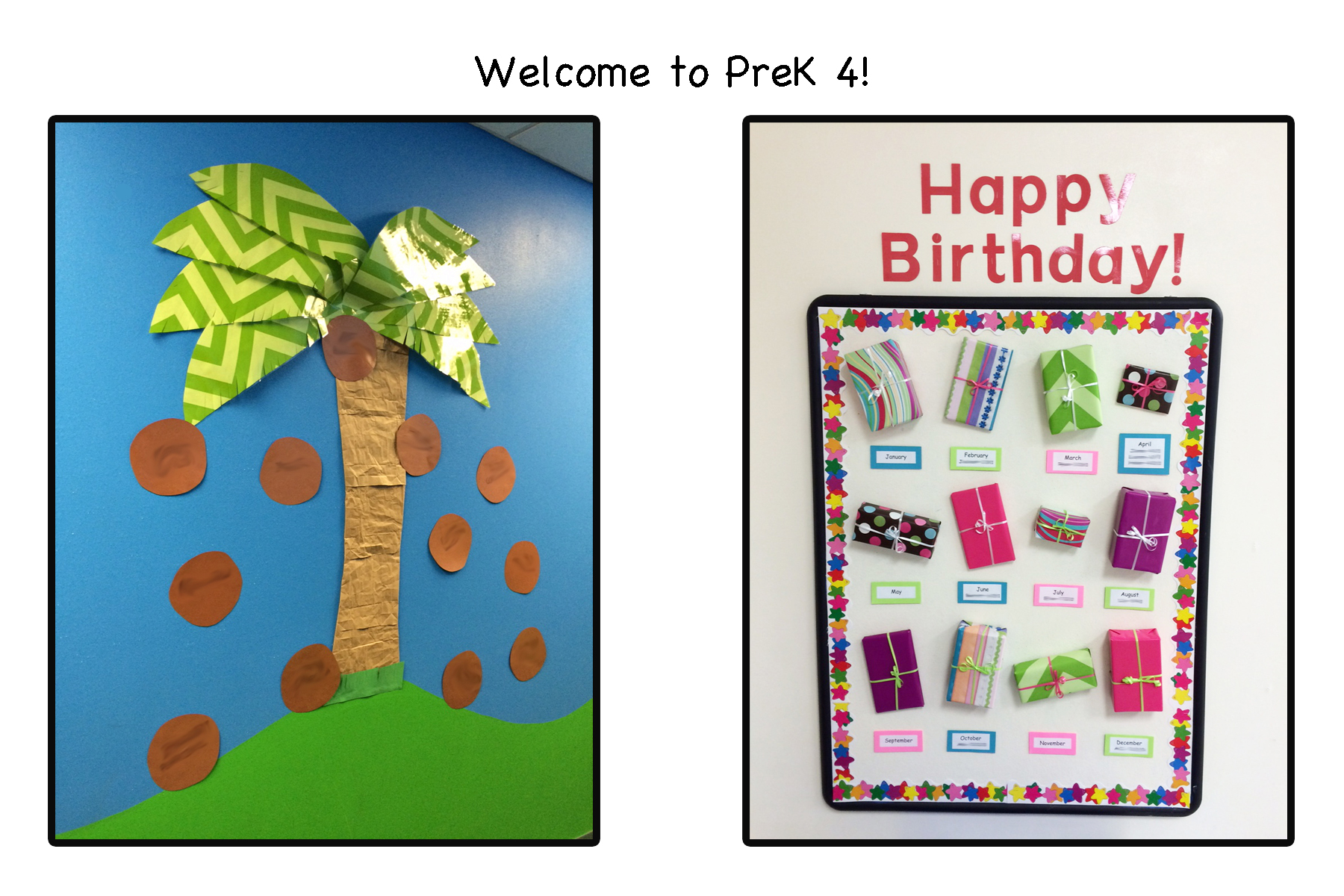
But the kids aren’t the only ones who are excited. A couple months ago, I received the call from one of their school’s administrators, asking if I would be interested in a PreK 4 assistant position. I jumped on it, probably sounding rather giddy. It was one of those pinch-myself kinds of moments. Summer break had just begun, though, so it didn’t sink in fully for a while. Every once in a while, when thinking about the upcoming year, I would have to remind myself that this year will be different. I will have an assigned parking spot. Instead of walking the kids up, they will come with me to my classroom. No more phone calls while I’m in the shower, asking if I can sub. All welcome changes.

Toward the end of July, I did have a little bit of an overwhelmed feeling, knowing that I had a couple weeks of training and pre-planning ahead of me. Before most of my teacher friends were even back, I was at school, learning how to administer and interpret the assessment we use for pre-schoolers and kindergarteners. Then this past week, while many of my friends posted pictures of their end-of-summer vacations on social media, I’ve been hard at work. I have my badge, which makes me official, and people keep welcoming me to the faculty, but I can’t help but feel like I’m still the same old volunteer-slash-substitute mom that I’ve been since 2011. I belong here, I have to remind myself. Not only do my colleagues help cement that feeling, but my delight in my position tells me it’s true. As I confided in another teacher, I’m having more fun than I feel like I should be allowed to have – and someone’s paying me for it!

Regular readers, fear not – I’m still writing. I’m not about to give up on that dream. But now I’m able to help support my family in a way that freelancing didn’t allow, and my kids and I will be at the same place every day (although in different classrooms). I’ve die-cut, laminated, copied, stapled, cut, sorted, and painted my way through a number of projects this week, and while it sometimes felt like the room would never be finished, I’m proud of the results. I’m working with an amazing teacher, and since I subbed a lot in PreK 3 last year, I know eight of our ten kids already.

PreK 4 collage

I’m sure there are days ahead when I will be tired and irritable. There will be kids who grate on my frayed nerves. There will be days and weeks that never seem to end. I’m not deluded about what’s to come. Even so, I am very excited. So much so that I don’t have back to school blues at all. Instead, I feel like I do when a much-anticipated vacation is just around the corner. In fact, I feel much like I did over twenty years ago, when I was a girl attending this very school.

The night before the first day back will likely be a sleepless one. I’m just the kind of person who gets too excited to succumb to unconsciousness. So if you see me Tuesday, I’ll likely be carrying matching grey baggage under my eyes. But don’t worry, this is exactly the kind of thing I don’t mind losing sleep over.

Summer 2015 Reading

Magical books

Magical books (Photo credit: Wikipedia)

My last blog was all about the writing I’ve done this summer (and since then, I’ve achieved my Camp NaNoWriMo goal – yay!), but as any worthwhile author will tell you, you can’t write if you’re not reading. So I’ve been doing what a good writer should do, naturally.

The reading list that I set for myself this year is an ambitious one. (Read it here.) On it are 27 books, including several series. Christopher Paolini’s The Inheritance Cycle has been on my to-read list for three years now, and I finally finished it. But those books are dense and ate up a lot of my reading time. As I approached the halfway point through the year, I wondered how I was doing.

I’m happy to report that as of mid-July, I’ve finished 13 of the 27 books. Maybe Inheritance didn’t set me back too far, after all. Of course, I read a lot during our two-week vacation. I worried I was being overly ambitious when I packed the entire Divergent series, as well as a book that a friend lent to me a few months ago. But I read the whole borrowed book on the plane trip from east coast to west coast (Talk to the Hand by Lynne Truss – I highly recommend it, particularly if you’re a fan of British humor), and I plowed through all but a couple hundred pages of the Divergent series over the two weeks.

Ahead of me, I still have at least one doozy (Diana Gabaldon’s Written in My Heart’s Own Blood – all of the books in her Outlander series are formidable), plus Suzanne Collins’s The Hunger Games series. I know I re-read it last year, but I want it to be fresh when the final movie comes out this fall. Also, I’ll start reading Harry Potter and the Philosopher’s Stone to my seven-year-old in the next week. I’m excited that he’s finally old enough to comprehend the story – we may have another Potter geek in the making.

Other than my non-fiction books (which I rarely list here, unless it’s what I consider entertaining non-fiction, such as Talk to the Hand), I’ve stuck to my book list pretty well. Early on, I decided to read Daniel Woodrell’s Winter’s Bone because I’d seen the movie and was interested in seeing what kind of extra character developments happened in the book. I’m glad I did. Woodrell’s use of language is unique, and as a writer, it’s always helpful to mix it up with a different style from time to time.

The only other detour I’ve made was Lisa Genova’s Still Alice (also a book-turned-movie). This was a book I had to read. I’m going back to teach full-time in the fall, and the faculty at my school has a summer reading list. Still Alice was the only novel on our list of choices. I’ve jotted down the titles of several non-fiction books that interest me, but I wanted a good story – and I got it. But frequent criers, keep your tissues handy.

I’m sticking to my list and loving it. I hope to finish Lois Lowry’s The Giver series by the time the kids go back to school (I’m halfway through the second book, Gathering Blue), and then I’ll keep plowing ahead.

And never fear – if I actually make it through this whole list, I already have several new books waiting. (She rubs her hands together and cackles with glee.)

Playing Catch Up

Embed from Getty Images

During spring break, I was excited about the possibility of being able to cross off many much-neglected items on my to-do list. During that week, however, I was disappointed (as I often am) with the amount I was actually able to accomplish. Sure, I was home more than usual, but then so were the kids, and they had expectations, as well.

Since spring break, life has not become any less hectic. I’m not going to summarize all my busy-ness here – you can read any number of my recent blogs to get the idea. Just suffice it to say that, with the end of the school year drawing near, I was excited to see the proverbial light at the end of the tunnel.

Last weekend, I planned to partially unplug – which I did! My husband and I spent the night away from home sans kids, TV, and wifi. It was somewhat of a surreal experience, and we couldn’t help but say “The kids would love this” or “We’ll have to bring the boys here” at the beach and the fort and a little fudge shop near our bed and breakfast. But we survived and even managed to enjoy ourselves.

One of the things I’d hoped to do was catch up on my reading. If you follow my yearly list of books that I hope to read, Christopher Paolini’s Inheritance Cycle has been on there since 2013 – and I’m finally almost done! I had hoped to finish by the time my son finished school on Thursday, but I knew that was a very ambitious goal. Still, I only have a little over 200 pages to go, so I’ll definitely be through in the next couple days.

The reason I am so eager to finish (other than wanting to know what happens – this is a great series!) is because I have so much work that I need to do. While many other moms are posting selfies from the beach and running around like crazy people trying to keep their kids occupied, I plan to spend a lot of time at home. (Don’t worry – I still have plenty of fun activities planned for my kids!) This is partially because I’m tired of my commute, and our gas bill needs a little bit of a break, but it’s also because my to-do list includes clients’ projects, and these clients have been very patient. They know that I substitute teach during the year and, therefore, have an erratic schedule, but now they’re expecting results. I mean, what excuses do I have anymore?

I held off writing this post for a couple days, hoping that I’d be able to report that I spent the first full day of summer break plowing through my jobs and striking off to-do list items left and right. And I did make some progress, but it’s been slow. The children are still underfoot, although they’ve been great so far. My little one even likes my implementation of “work time” (where I have them sit at their table and color, write, or do quiet projects for a few minutes), thus giving them some structure and me some peace while I do my own work.

My goal (you know how I love goals) is to keep forging ahead, even if I only have two or three hours a day to devote to my projects. Although I’m not going to totally unplug during our upcoming family vacation (a girl still has to blog and write fiction when the mood strikes, right?), I don’t want to leave projects hanging over my head – or clients calling, only to be disappointed that I’ve put their work on hold for two weeks.

Okay, goals set. Deep breath. Next week, my to-do list is going to get a lot shorter.

Unplugging (At Least a Little Bit)

Embed from Getty Images

I’ve seen many an article in which the writer talks about how he or she has gotten rid of smart phones permanently, and I’ll have to say that I’m not one of those people. Believe me, I fought even getting an iPhone much longer than is normal for a so-called millennial, but I finally got one three years ago. I don’t play games on it (although I did at first), and I’m not the type of person who has to have the latest version. I like it for the convenience of being able to take snapshots and videos of my kids and check my email on the run and make phone calls and look up obscure trivia all in one device. But that also doesn’t mean that I’m glued to my phone all day. My rule is that I simply don’t use it at all if ever I wake up in the middle of the night (unless, of course, I get an emergency call or text). It’s easy for me to ignore it. In fact, there are some times when I am so busy that I’ll got 12 hours without doing more than checking the time.

But then there are those other people who can’t pull themselves away from whichever device is their vice of choice (and see how “vice” is already there in “device” – it’s like it was planned that way). These people check their email if they happen to wake up at three A.M. They play Farmville at their children’s band concerts or ballet recitals. They talk through the checkout line at the grocery store and text while driving. A lot of this comes down to a lack of common sense as well as courtesy – blog topics for another day.

The iPhone isn’t my problem, anyway. We have a semi-joke in our house about “my” MacBook. We bought this computer almost four years ago when my husband went back to school. At the time, I thought it would be great to have after he graduated, in addition to our desktop model. And for the longest time, I didn’t do much with it. He took it to class, typed term papers on it – was even typing one in the hospital room when our second son was born – but then… well, I kind of took it over after he graduated. (Don’t worry – I did get him an iPad mini to make up for stealing his tech.) By that point, our desktop computer was on it’s last legs, but I wasn’t worried about replacing it – the MacBook was more than adequate. It’s where I do everything from this blog to typing my NaNoWriMo novels to doing my freelance work to editing photos and creating photo books (for me and for clients). I’ve taken it on every vacation since we bought it, including Disney World, and I’ll even carry it in the car to work on projects if it’s a ride of 30 minutes or more (and when I’m not driving, obviously).

But this weekend I’m going to leave it at home.

That’s right – I’m letting go! My in-laws are taking the kids Friday after school through Monday – the longest I’ve gone childless since November 5, 2007. And this time, instead of my husband working half the nights they’re away, we’ve actually booked a room at my friend’s bed and breakfast – a first for us. My elder son was shocked to hear that we’re going to be doing fun stuff, too. And here’s something really different for me, the planner: we don’t have a plan. We’re going to go and just do nothing – or anything. And I’m not taking the laptop. I’m not going to write at all. Now, it’s only going to be for one night, but these are baby steps, folks. While I love writing, my husband can tell you that sitting down to innocently write a scene turns into balancing the budget for an hour and editing for Fiction Fix and any number of other computer-related distractions. We’ll take our phones (and probably the iPad) so we can FaceTime our kids and watch Netflix to our hearts’ content. I’ve been so busy lately that I refuse to go on a vacation only to do more of the same while paying extra for the room. (And see – I’m even posting this blog early just to make sure I’m distraction-free.)

We’ll have our books and a new-to-us area to explore. It’s going to be the perfect pair-of-introverts weekend.

Is May the New December?

I’ve noticed a pattern over the past several years, especially since I started substitute teaching: the school year speeds up exponentially after spring break. It’s like a race to the end of the year, to fit in all the end-of-year projects and parties and field trips. Everyone, especially the children, can feel that summer break is fast approaching, and life takes on a frenetic pace.

Maybe that’s why I’ve heard more than one person complain that May is the new December, as if December is a bad month. I quietly took issue with this notion. My favorite time of year is Advent, preparing for the birth of the Christ child. I love the Christmas music, Christmas shopping, wrapping Christmas presents at night while watching Christmas movies, doing the Advent calendar with my kids, and – yes – my seasonal socks. Yet for many people it’s a nightmare of obligations and deadlines and buying presents for people they don’t really like. I get it – December can be stressful. Not to mention that if you’re in college, you have exams, while all you can think about is the long break that’s so close you can almost touch it. I can certainly commiserate because I was a December college graduate. And that year, while I thought it would be such a relief to finally be done with school forever-and-ever-amen, I found myself immersed in not only editing but also typesetting the second volume of Fiction Fix when our previous typesetter bailed. People were counting on me, and I wasn’t able to enjoy December – or even being done with college – like I’d expected.

Maybe this is how my friends feel this month.

For me this year, May is more than teacher’s gifts and good-byes and summer planning. I took the Florida Teacher Certification Examination this past Monday, which meant cramming for almost two weeks. As soon as I got through with that, I took on the end-of-year books for my first grader’s class. These books hold the kids’ projects from August through the end of the year – over 20 pages of 12×18 construction paper – but what I didn’t realize was that about half of these projects still had to be glued to the paper before the books could be assembled. Another mom and I thought we could knock it out on Tuesday, only to find out we were in way over our heads. I’ve taken pages home every night, still have five or six to go, and need to finish by Tuesday.

First Grade Book-in-Progress

So my May has been busy. I’ve put off the usual things that fill up my to-do list, things that are still waiting for my attention, and I can feel them getting ready to pile back on. Like two freelance projects that I hope to finish in the next month, before our family vacation. Like a friend’s novel that I’ve been slowly beta reading since January. Like my own fiction projects, which I blogged about as recently as last week.

But I’ve been living with a kind of giddy feeling, anticipating the (temporary, at least) cessation of certain obligations. This weekend alone, three culminated: yesterday was my son’s last baseball game of the season; this morning was the last Sunday school class I have to teach until September; and this afternoon was my community chorale’s last concert of our spring season. Not to mention that this week will be the last meeting of my third-year Education for Ministry group (which means I’m almost finished with the 1000+-page history book we’ve been discussing since last fall). After Memorial Day weekend, my son has a partial week of school, and then first grade will be over.

What this means is that, even though we have school for a few more days, when we’re home for the evening, we’re home. I’ll have time to cook and actually enjoy supper. By the end of the month, I won’t have to wake up at 4:30 for a blessed two-and-a-half months. This doesn’t mean that I’m just going to sit around and twiddle my thumbs all summer – the kids and I will be plenty busy – but it does mean that I will be able to stop and breathe for a minute.

I love summers because I get a break. I’m grateful for this because so many parents aren’t able to have the time off with their kids. But if I’m not careful, I can allow myself to dread the end of summer break. I have to remind myself that I always love the beginning of a new school year, and I have ever since I was a kid. This year, my little guy will start preschool, so it’s going to be even more exciting. As my kids grow, everything seems to speed up, and I have to be careful not to stress too much over all the activities and responsibilities that go with being a mom-slash-chauffeur. What I do, I do for them and for us as a family. School and tutoring and daily chores are part of our life, but if we begin to allow the fun stuff – the baseball and the play dates and the trips to the park – become obligations instead of fun, it will be time to reassess. I don’t ever want to let a particular month turn into a time of dread, and I hope everyone else embroiled in the busyness of these times will do the same.

Customer No Service

Embed from Getty Images

It’s the stuff frustration is made of: You have trouble with your internet, and try as you might to troubleshoot the problem, you have to make the inevitable call for service.

So you listen to the all the options because the menu has recently changed. You risk dialing zero in the hopes of talking to a real person, but the phone system kicks you out, and you have to call back and listen to all the menu options again. When someone finally answers, you discover you really need to talk to someone in a different department, and you’re on hold for 20 minutes while you should be cooking supper and washing a load if towels and ten thousand other things. When you finally talk to someone qualified to send a refresh signal to your router, nothing happens. Still no internet. So they schedule a technician to come out between noon and 5:00 P.M. the next day (when you already have a doctor’s appointment, but you also have to have the internet, so what can you do?). You stay home all day. The technician calls at 5:00 to say he’s running late (you could have gone to the doctor after all), and when he finally shows up, he tells you your modem was hooked up in a place that never should have gotten service (even though it worked fine for two years), but he, the almighty technician, can fix it, so he does, and after he leaves, you have spotty service, at best, and – surprise! – you get charged an extra $80 on your next bill.

Granted, it’s not just internet, phone, cable, and satellite providers who suffer from what Clark Howard calls customer no service, although they often seem the biggest culprits. Ever since I’ve been thinking about making this a blog topic, an inordinate number of examples have popped up, from me discovering my cable company misinformed me about the cost of our new service, to a friend missing her flight because the gate was closed 18 minutes early, to another friend visiting a doctor with great hopes of finally figuring out what’s wrong with her body, only for her new doctor to treat her like she’s crazy.

It’s sad that although we dread these customer no service encounters, we’ve come to expect them. It’s almost as if it’s a prerequisite for the big companies – which makes the companies with good service stand out as the exceptions. Companies are so big that there are no individuals anymore. And I would imagine that this can be just as demeaning for the people who work there as the ones who need service.

But since when did this extend to doctors – the people we trust to take care of us? Where will it stop? I could joke and say that one day parents will start ignoring their kids – until they get annoying enough that the parents finally give in and say, “What do you want?” But wait – it’s already like that. Not for everyone, of course, but anywhere you find people, you will see that service and care no longer come first on the list.

Like my friend, I’ve also had a negative experience with a doctor. (Well, I’ve had several, but I’ll just talk about the most recent.) After an annual exam, my physician asked the standard, “Do you have any other concerns?” I have the feeling it’s a question like, “How are you?” – we ask out of politeness, expecting the answer to be, “Just fine” or “Doing great.” If it’s anything that causes concern, we really don’t want to hear it. And this time, I told my doctor that I did have concerns. She couldn’t make sense of any of my symptoms, told me I might be gaining weight while exercising and cutting back on carbs because of my age (I was 31 at the time), and finally dismissed me by ordering bloodwork (make it the lab’s problem). I received a cheerful phone call from a nurse a few weeks later. Wasn’t it great? My bloodwork was totally normal. Then why don’t I feel normal? I wondered. But I knew of a doctor of Oriental medicine from my church, and I had the hope that she would listen, that she wouldn’t just order some bloodwork and send me out of her office.

As soon as I walked in the door for my first appointment, she had my bloodwork in hand and told me that I did, in fact, have a problem. She wanted to hear about all of my symptoms, even the ones that seemed unrelated. When I asked her how my doctor could have missed all the signs, she said that most doctors work within a much larger range. For my particular problem – hypothyroidism – many people who should be treated aren’t because they fall within an artificially wide “normal” range. Most practitioners simply don’t have the time to sit down and discuss symptoms and solutions with their patients. They wait until the symptoms are much more severe, then prescribe whatever pill will solve the problem and get their patients out the door.

This is where I wax nostalgic about the good old days when towns had one doctor who knew everyone by his or her first name and, therefore, actually cared. Now, of course, I know I’m being unfair. Those doctors had hard lives. And so did the merchants and farmers and everyone else, but it seems that they took more pride in what they did. It wasn’t just a paycheck but a calling. They cared about their reputations, yes, but they also cared about the people they served. I think this could be a big reason why the “go local” movement has become popular. We can have one-on-one interactions directly with the people who make the goods or provide the services. They have a stake in their occupations, and they actually care about the end users, not just the profit.

It all comes down, I think, to relationships. There are too many people with problems, whether they be slow internet or a malfunctioning thyroid, and too few people who care about solving them. I think both sides can share some of the blame, but it’s especially sad when we no longer treat each other like humans. It’s called customer service, not customer hassling, right? One of Merriam Webster’s many definitions of “serve” is “to give the service and respect due.” Wouldn’t it be nice if we could all receive just a little respect? Maybe what’s wrong with so many people is that they’ve lived so long without respect that they care more about a paycheck or whatever game they’re playing in their lonely cubicle than the person who just needs help, who maybe also needs a little TLC.

In this digital age, where we keep up with friends via internet or text, and we’ve lost a lot of the human touch, I think that some of these “archaic” values are more important than ever. Instant connectivity is certainly convenient, but it can also isolate us. In my own interactions, it helps to remember that people aren’t just lists of names and phone numbers. They have problems and dreams just like me. It’s a good thing to remember when we interact with complete strangers, especially when we’re tempted to slip and forget what it means to be of service.

Don’t Live for Another Day

Embed from Getty Images

I can’t count how many times I’ve heard or read that we should live in the present moment, and being a planner, a goal-oriented person, it can be easy to scoff at such a notion. I’m always preparing for the next thing, which is good, for instance, when I’m crunched for time and I already packed my lunch the night before. But it can also make it easy to ignore what’s going on around me when I’m always focused on the future.

My morning commute is 30 to 40 minutes, time that I use to think about whatever’s next in my personal inbox – doctor’s appointments, writing projects, the household budget, all the activities that I have planned for the day or week. Couple that with the fact that I’m usually very tired, and I make for a poor conversationalist. This, naturally, is when my seven-year-old gets chatty. I’m liable to snap at him (he always pipes up right when I’m trying to listen to the traffic report or extended forecast), only to chastise myself moments later. The very last thing I want is to stifle my child and make him feel like he can’t tell me what’s on his mind – or his heart. One time recently, I nearly bit his head off, and as soon as he heard that the weather report was over, he asked in a quiet voice, “Can I talk now, Mommy?”

It’s during these moments that he opens up to me about his theological quandaries or epiphanies, some of which are very deep, or he’ll tell me about something he’s excited about at school. These are precious conversations, ones that I don’t want to miss. There’s nothing earth-shattering about them. These aren’t Kodak moments that I can post on Facebook, so all my friends can go “ooh” and “ahh” over them. But they’re special, the small moments that mean nothing to anyone except us, and they’re what build our relationship as a family.

That’s not to say that there aren’t other, special times. We all enjoyed our recent trip to Disney World. We looked forward to that trip for weeks, and we’ll always remember it as a great family vacation. Life is made up of these memorable occasions, balanced with hard times – sudden losses and deep sadness. But we can’t forget the moments in between that hold them all together, the conversations in the car, the nights reading books together on the couch, the activities that are so routine that we don’t give them much thought.

It is these in-between moments that make up our lives, even if they don’t stand out. They are the background that can be easily ignored. Unfortunately, many people allow the foreground to get so crowded with mountaintops and valleys that they leave no room for anything else.

I notice this in people who trudge through their weeks, hardly able to stomach the normal routine, living completely for the distant promise of a two-week break from it all, only to become depressed at the end of the vacation with the knowledge that an unsatisfactory “real life” awaits upon their return.

I met a woman some years ago, who shared the story of the hopes and dreams she and her husband had for after his retirement. His retirement came, along with a diagnosis of terminal cancer. They spent his last weeks laughing at the dark joke of it all – he struggled and worked hard for 30 years, only to die before he was able to enjoy the fruits of decades of labor.

I’m not advocating that we throw responsibility to the wind and do whatever makes us happy right now. Nor am I saying that we should give up on long-term plans. Rather, we need to find a balance between the two, but more importantly, we need to learn to be grateful and satisfied with what we have, even as we strive for better.

To put this in perspective, a dear friend of mine recently decided that she’s done battling cancer, and she’s now under Hospice care. This friend has been on disability and unable to hold a job for a number of years, but that hasn’t kept her from making her life a blessing to others. While her means aren’t great, her heart is. She embodies the ideal of a Christian servant, yet shies from receiving service for herself. Even in great pain and with ever-waning strength, she has never ceased being faithful, thoughtful, and an inspiration, even from her hospital bed. She could easily choose to let her situation weigh her down and fill her with despair, but she refuses.

How does she do it? How must it feel to know that there may be some good days, some bad, but there will never be a recovery? Her life is in that hospital room… yet her influence still extends beyond it and into the lives of her friends and loved ones. I have a lot to learn from my friend, not the least of which is that my complaints are pretty trivial.

I will never give up creating goals for myself or trying to improve my skills or situation. I want the world for my kids, and I look forward to our vacations and special times together, like any normal person. I understand there will be disappointments and stretches of days when I’m too tired to eek much joy from the moment, but that’s not going to stop me from trying. Who was it that said it’s the not the destination but the journey? (The answer is that lots of people have said it, and it’s only because it continues to be true.) So even though the destination may be wonderful when I get there, I’m going to be more conscious of the road I take to get there and the people traveling with me.

What’s in a Title?

http://www.gettyimages.com/detail/88295374

Recently, when speaking with a group of kids about being an author, one of the questions was how to come up with the perfect title. Good lord, I wish I’d been able to give an adequate answer. Instead, I pointed out titles of books I knew they’d read, like John Green’s The Fault in Our Stars. It started the conversation, at least, but it didn’t give them a fool-proof formula. Such a thing doesn’t exist.

I used to keep a list of what I considered brilliant titles. The problem, of course, is that they have nothing to do with anything I’ve ever written. And even tougher than coming up with book titles was deciding what to call all those pesky chapters lurking between the covers. (It never occurred to me until recently that I could just use “Chapter One” or simply “1.”)

It’s not just the little people like me who deal with this. I’m re-reading Christopher Paolini’s Inheritance Cycle, and while the book titles are decent, the chapter titles are inconsistent and often the pits. Yes, this is opinion speaking, but whenever I read some of them, I think, This guy was trying way too hard. Other times it seems like he just gave up. The first couple times I read these books, I didn’t give the chapter titles much thought, but this time around, I’m in a pickier mood. (Recently, I heard of a scholar who criticized the Bible for using subtitles for the various sections. It gives away what’s about to happen, she says. While I discounted her argument at the start, it’s niggled me enough to make me write this post.)

Unless you’re writing cookbooks or some other form of non-fiction, in which you need chapter titles and subtitles for quick reference’s sake, why bother with fiction? At first I thought it might just be a young adult thing, but then I remembered an adult series, Diana Gabaldon’s Outlander, which uses chapter titles throughout. While these are great books, the chapter titles leave a lot to be desired. Sometimes they’re melodramatic (“I Shall Go Down to the Sea”), and sometimes they kind of act as mini spoilers (“In Which Jamie Smells a Rat”). Other chapter titles read like throw-away lines that simply reminded the author what she was writing about in this particular chunk.

What I find most helpful are chapter titles that place the reader. For instance, in Rick Riordan’s The Heroes of Olympus series (great books, by the way), the chapter titles are simply characters’ names. Although narrated completely in third person, this tells the reader whose perspective is represented in each chapter. (The only problem I see with this is when you accidentally open to the last chapter and see that it’s narrated by a character that the author wants you to believe is dead. Whoops.)

Both Stephenie Meyer and Veronica Roth used this character-name approach in books later in their series (Twilight and Divergent, respectively). This is especially helpful, considering these books are both narrated first person. Paolini tries it once in Eldest. It’s the first time he switches to a perspective other than Eragon’s. Instead, it’s his cousin Roran, and the oh-so-imaginative title of Roran’s first chapter? Right, it’s “Roran.” Which I would be fine with if other chapters weren’t titled “Requiem” or “The Beginning of Wisdom.” Like I said, sometimes he tried too hard, and others, he didn’t try hard enough.

I know, for someone who admittedly can’t write a good title unless she just lucks into it, why am I complaining? I guess I’m really not. I’m just wondering aloud (or in print). Chapter titles are convenient if you have a table of contents. And there are some brilliant ones out there. “The Boy Who Lived” comes to mind. (Please tell me you understand that reference – but just in case you don’t, it’s from Harry Potter and the Philosopher’s Stone. What a great chapter title to pull you right into an amazing series.) So I guess they can’t all be bad. I’d just like some consistency, please.

Until reading Outlander and re-reading Eragon, I never gave chapter titles much thought. Some books have them, and others don’t. But now that I’ve started thinking about them so much, I know I’m going to scrutinize everything I read. Do I make predictions when there are titles, or do I forget the titles as soon as I finish reading them? Out of curiosity, I’ve picked a few books, different genres, different time periods, a diverse range of authors, and here’s what I’ve found:

Books with Chapter Titles:

Books with Only Numbered Chapters:

Books with Part Titles but No Chapter Titles:

There are other books that defy these kinds of categorizations, such as John Green’s Looking for Alaska and Daniel Woodrell’s Winter’s Bone. To see their unique chapter distinctions, I guess you’ll just have to check them out.

After looking back at all these books, some of which I’ve enjoyed multiple times, I realize that the chapter titles (or not) aren’t what I usually take away. Only when they get in the way are they problematic, such as with Outlander and Eragon. Yet with The Heroes of Olympus and Harry Potter, they actually helped orient me in the fictional worlds I was visiting – and sometimes even encouraged me to keep turning the pages. (She’s finally going to tell us about horcruxes! Oh wait, she isn’t. Darn, I guess I’ll just have to read another chapter…)

There isn’t a right or wrong way – or even one type of book that must follow one particular format. If I could, this is what I’d tell that middle school girl who asked me about titles: write what feels natural. If coming up with a creative name for each chapter feels contrived, don’t do it. But if titles are your thing, give them a try. At the end of the day, writing your story is the most important thing; fiction titles really should be secondary.

It seems that authors pick what they deem right for whichever books they’re writing at the time. After going over all the different types of chapter designations on my shelves, it’s obvious that I can’t just throw out one or another; there are some pretty awesome books that I don’t want to miss out on just because their chapter titles might put an idea in my head about some possible outcome.

Besides, you never know when an author is trying to trick you. Sometimes they can be pretty sneaky.