Famous Last Words: “I Would Never Be a Teacher”

I could also have titled this “I Will Never Go Back to School.” And guess what? I’m a teacher, and went back to school. Hmm. I will never have a million dollars. Let’s see if that works.

Many little girls admire their teachers and like to play teacher, so becoming a teacher is a natural next step to take. That wasn’t my childhood dream. Almost from the time I could hold a crayon, I wanted to be a writer. The University of North Florida didn’t have a creative writing program, so I settled for the next best thing, a degree in English. When I told people my major, most assumed that I would teach high school English or literature. “I would never be a teacher,” I told them. In my arrogance, I thought I would be the one writer to break through, immediately land an agent, get published, have my books in bookstores all over the world, and be the breadwinner for my family—happily ever after, the end.

Yes, I was the editor in chief of a literary rag when I was 19, where I learned about the slush pile, the rejections, editing, printing, distributing, and so on. And that was just for a little start up. I dabbled in freelance writing and editing for a few years, which was a whole lot of work for very little pay. I even self-published a couple books over 10 years ago. I have been humbled and realize that my dream might remain just that.

When it was time for my elder son to start school, I convinced Thomas to put Peter in the elementary school I had attended, a small Christian school that went from preschool through the 6th grade. At the beginning of the year, Peter’s teacher solicited for parent volunteers. I liked the idea of being involved with what Peter did on a day-to-day basis, so I volunteered once a week, doing whatever Peter’s teacher asked me to do. Sometimes I was cutting laminated pieces or taking down and putting up bulletin boards. I played games with three- and four-year-olds. I painted with them. I ran stations. I continued going every week because I enjoyed every aspect of it.

The next year, a plea went out for substitute teachers. I thought that substituting couldn’t be much different than volunteering—with the added benefit of being paid for it. I took the plunge, wondering if any of the teachers would take me seriously, would entrust me with their classes… and I was soon working 20 to 30 hours or more per week as a substitute teacher. I taught all grades, all subjects, although I was particularly busy in the younger grades.

I began to think that, since I would have two children at the school before long, it would only make sense for me to work there full-time. I decided to pursue a teaching certificate, and since I didn’t have a degree in education, I had to go the competencies route. I’m not sure what this looks like in other states, but in Florida, it’s the alternative to going back to school. Aspiring teachers have to prove that they are competent enough to plan a lesson, assess students, teach students with different needs and in different modalities, and so on. If memory serves, there were about 17 different competencies. I had to take some online courses, type papers, complete projects, and present everything to a member of our administration, who helped me submit my materials to the Department of Education. I also had to take a number of tests, including one in the subject area of my choice. I chose to be certified to teach prekindergarten through 3rd grade students (and added a K-6thgrade certification a few years later). I took the first available job opening, which was as a PreK 4 assistant teacher.

That’s how I got my start. How I got where I am now has to do with Peter. Since I was in his classroom so much in the early days, I had the advantage that many parents don’t have: I was able to see how my child did in school firsthand. He was a people pleaser, not a behavior problem at all. He made friends easily, especially with kids who didn’t particularly fit in. These were all things that made my parent heart happy. One day toward the end of his first year of school, the kids were playing a game in which they marched around the outside of the classroom rug that was bordered with the letters of the alphabet. The teacher played music, and when the music stopped, the kids would stop and say whatever letter they landed on. As I watched Peter, I noticed that he got a little antsy every time he passed the P. Whenever the music stopped, he somehow managed to land on it. Finally, he landed on a different letter nowhere near the P. He tried to sneak his way over to the P, and his teacher called him out on it.

Although that wasn’t a lot of evidence, I had this feeling… so I looked up dyslexia markers, one of the biggest signs of which is delayed speech. Not only had Peter’s speech not been delayed, but he had spoken early and well—no speech impediment and full sentences with good grammar. I expressed my worries to Peter’s assistant teacher because the idea that he might have trouble reading broke my heart. He loved listening to me read to him, but I am not just a bookworm—I’m a bookdragon—and I wanted to pass my love of reading onto my boys. The assistant teacher reassured me, saying one of her sons was dyslexic and was doing fine in college, with the help of academic accommodations. While this was reassuring, all I knew about dyslexia was the little I’d heard from others, most of which was wrong. I started to drill Peter on his letters, to no avail. I remember one frustrating exercise, in which I recited the alphabet and then stopped, asking him to tell me which letter came next. He could not come up with it. I got upset, thinking he was intentionally messing up. We had other frustrating moments, not related to reading, when I would give Peter a simple task, like asking him to take dirty clothes, put them in the laundry basket, and turn out the light on his way back. He would get halfway down the hall and wonder why he was holding dirty clothes.

In Peter’s second year of school (PreK 4), I was in his classroom one day, and the kids were each assigned a different zoo animal to paint. Each child had to sound out the name of their animal and write it on a label under their painting. The youngest boy in the class, who was six months younger than Peter, wrote “BRD.” Today, I know that means that he heard all three phonemes (sounds) of the word bird. I can’t even remember what Peter’s animal was, but I do remember that he was only able to identify the first sound. It’s like the rest of the word didn’t even exist.

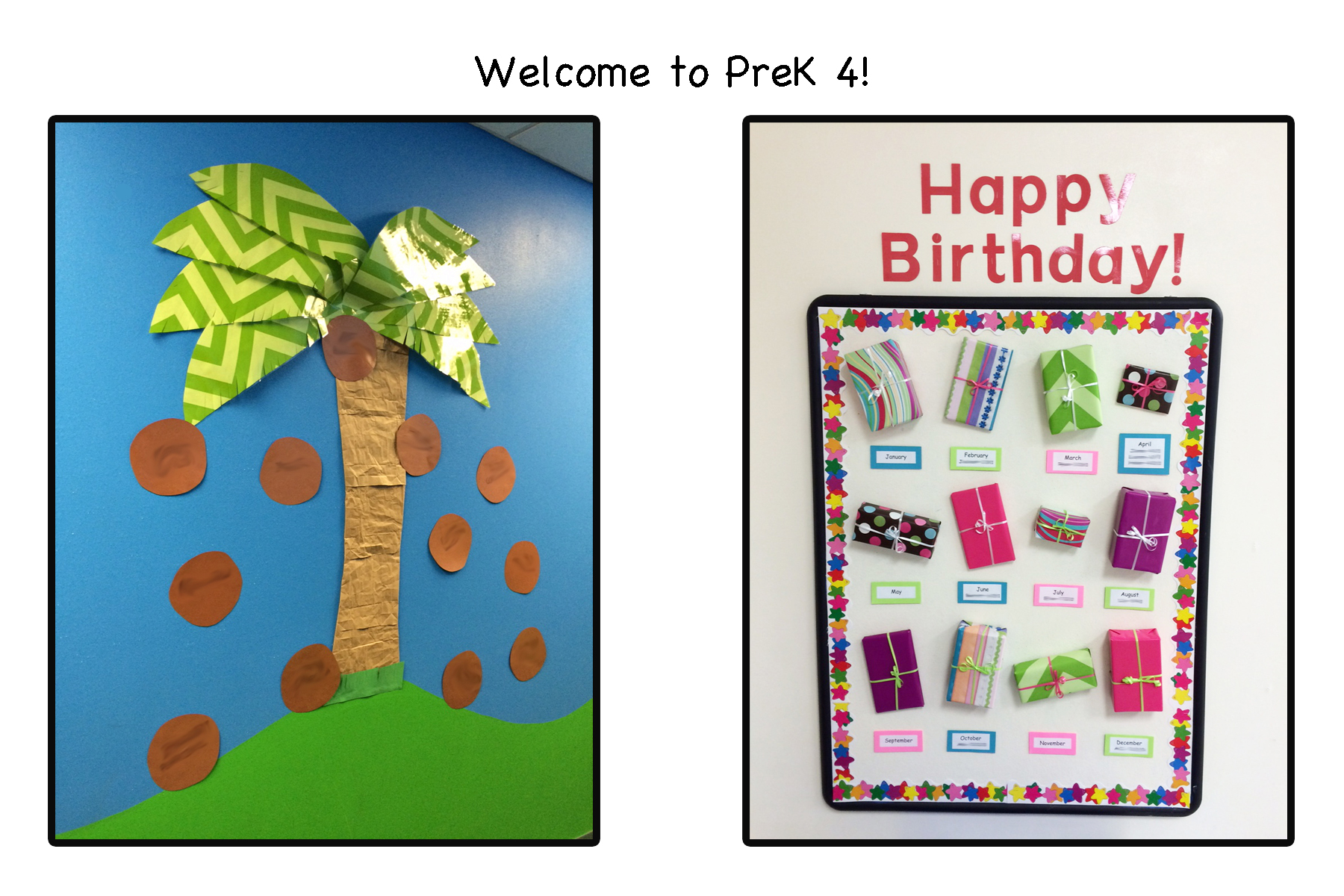
Sight word garage

By the beginning of kindergarten, Peter knew most of his letters and their sounds. The ones he still confused were B/D and M/W. But what really tripped him up were sight words. The students always had to do some sort of activity as they entered the class, and one week, the teachers had a sight word garage (as pictured) taped to the door. The students would lift a flap, read the sight word written underneath, and enter the class. Peter’s strategy was to listen to the kid in front of him, pick the same flap, and repeat the word he’d just heard. One morning, Peter arrived, and no one was in front of him. He was on his own. I prayed he would choose the flap that had Iunder it, but Peter didn’t remember which words were where. He chose one—not I—and didn’t know what the word was (I think it was either me or we). He had no idea where to start, and I was helpless to do anything for him. It was humiliating for both of us.

About a week later was the parent-teacher conference, and I felt like an abject failure. Peter had co-teachers that year, and I assured them that I read to Peter every night. I had no idea why he couldn’t read; it wasn’t like he was a first-time student. Both of his teachers teared up; they cared about my child and read my desperation, my confusion about what was going on with him. One of the teachers told me that when she got her children’s report cards, she would fold under the part with the grades and read the comments from the teacher because that’s what mattered. She assured me that Peter was a great citizen. Both teachers also told me they knew I was a good mom, which was a relief—I hadn’t done anything wrong. They were prepared with a list of child psychologists, and I immediately got on the phone to have Peter evaluated. In the end, Peter is dyslexic. He is also kinesthetically gifted, has an auditory deficit (which is unusual for dyslexic people), and his working memory is in the toilet. 

My boy has gone through many testing sessions over the years. He spent two days a week with a tutor his 1st grade year, and when he was in 2nd grade, the school finally had a full-time dyslexia specialist on staff who pulled Peter every day. Although I finally learned what dyslexia is (thanks to Overcoming Dyslexia by Sally Shaywitz), I still had no idea how to help him read. The summer before 1st grade, he was supposed to read Froggy Goes to School. Although I usually read everything to him, I believed that he should be able to read the one book the school had assigned to him. While the book was short enough to be read in one sitting, Peter struggled to read one page every day. It took weeks to finish that book. At the time, we didn’t know that Peter also had severe anxiety, so struggling to read, compounded with his feelings about himself, made for a miserable experience that we both still remember.

While Peter was going through his reading struggles, we were also trying to figure out what was going on with our younger son, Ian, who was language delayed (he would parrot a word he’d heard and never say it again) but at the age of two read every single letter on my husband’s t-shirt. Due to Peter’s reading struggles, we hadn’t pushed it with Ian, so this came out of left field. This was a kid who could read but couldn’t tell us what color his eyes were (we weren’t sure he even knew he had eyes), and he floundered behaviorally. So started our journey to get Ian diagnosed, as well. Although it took many doctors (some of whom were quacks) and years to get all the diagnoses, I can now tell you that we have two neurodiverse children. Ian is the poster child for ADHD (with a big ol’ H!), high on the autism spectrum (what they used to call Asperger’s), and has social pragmatic language disorder, OCD, and dyspraxia (the last of which I’d never even heard of when he was diagnosed). Every therapy known to man was recommended for him, and we finally settled on speech therapy, occupational therapy, and ABA, starting at age four and continuing through the 5th grade. For both of my children, I read every book and article I could get my hands on to give myself the tools to help them. But when it came right down to it, since I was already a teacher, I took the path that would help kids like Peter—the educational route—and at age 36, I gritted my teeth, swallowed my pride, and went to grad school to get a master’s degree in reading education.

When explaining to my adviser why I was going back to school, she told me about University of Florida’s Dyslexia Certificate program. Instead of the reading block that was a part of the Reading Education degree, I would detour and take five courses through the College of Special Education, ending with a 40-hour practicum, a master certificate in dyslexia, and a reading endorsement. I have done a lot of professional development, but the dyslexia certificate is by far the most valuable continuing education I have ever received. It changed my life, and finally, I felt like I not only had to tools to screen and assess for reading disabilities, but I had a game plan to remediate them. I finally made it onto my school’s student support team, and that’s where I’ve been for the past five years.

If you had told me what I would be doing now 20 years ago, I wouldn’t have believed you. In fact, I think I would have been sad to hear that I wouldn’t have a single novel published. I would still love to be an author—don’t get me wrong—but I feel like there is so much I have learned on this journey. Not only do I get to watch the light bulb go on for struggling learners all the time, but an unspoken part of my job is helping parents. These students need an advocate. One of the most unintentionally hurtful things said to me about Peter was, “But I thought he was so smart.” Well, guess what? Peter is smart, and dyslexia doesn’t change that. We need to stop treating As and Bs like they are the definition of a worthwhile student. This isn’t to say that people with good grades don’t work hard or don’t deserve praise, but grades aren’t everything and certainly don’t tell the full story. This is something that needs to be addressed in the American educational system, but that’s for another post.

If you have read this far, thank you. I am in the running for America’s Favorite Teacher. I am shocked that I made it through the first round as a Top 20 teacher. It would mean the world to me to win this, although I know it’s a very long shot. I wanted to write this to give my amazing supporters some idea what they’re supporting. Let me tell you, early morning wake-ups are hard, and many of the days are long. I always knew I wanted my kids to have the same great early educational experience I had—and they did. I did not expect to go back to school myself—both as a teacher and a student—and it’s been one of the most joyful and rewarding experiences of my life.

Please vote for me daily at the following link: https://americasfavteacher.org/2025/sarah-cotchaleovitch
We’re Screening out Our Visual Thinkers

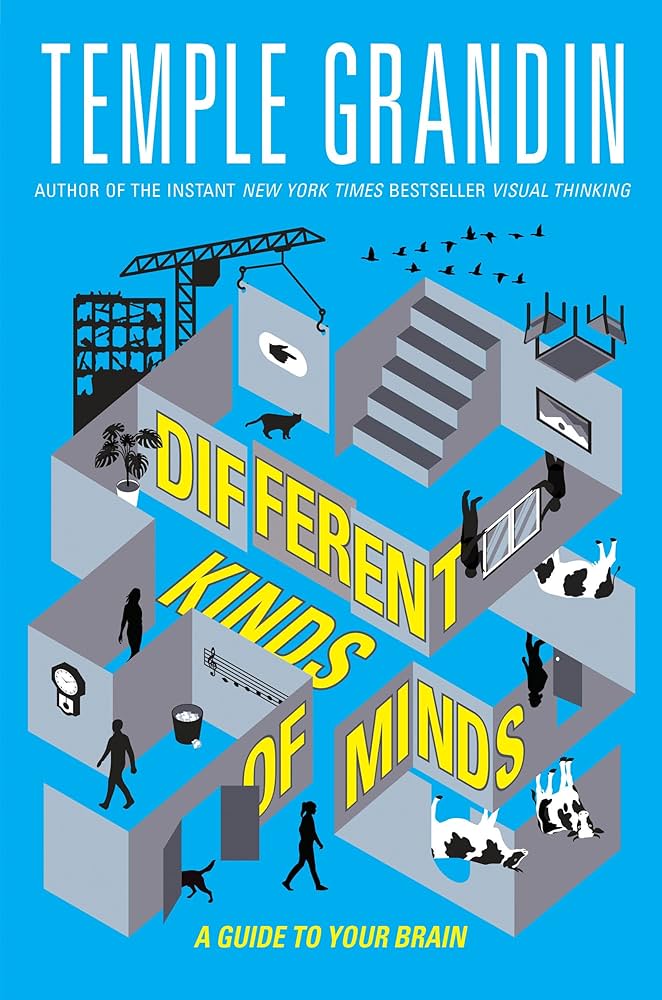
Earlier this year, my husband and I found ourselves in a little independent bookstore, and we did what I love to do in these establishments: we bought a book. (Note that it was just one book; I’m very proud of my restraint.) The book that caught our eyes—actually, the author who caught our eyes—was Temple Grandin. Years ago, we watched her eponymous movie (starring Claire Danes), and we knew that she is both brilliant and autistic. Our younger son is autistic, and we thought that Grandin’s Different Kinds of Minds would help us understand how he thinks. But how Ian thinks continues to be a bit of a puzzle because what Thomas and I discovered upon reading Different Kinds of Minds was a greater insight into the brain of our dyslexic son, Peter.

If you know me or have followed my educational posts, you’ve heard of Peter, and you might even know that I went back to grad school to help him and other struggling readers. I love reading so much that it broke my heart when Peter couldn’t learn his letters, much less blend them together to make actual words. I am now a reading specialist, certified to help students with dyslexia and other reading disabilities. For learners like Peter, the road to reading is blocked by dyslexia, but after much intervention, he was able to detour around this permanent roadblock so that, by the time he was a preadolescent, he could read a text aloud, and no one would know all the hard work that was going on in his brain to help the words flow freely. Still, though his reading sounds good now, he has to be extremely focused and has learned things about himself—such as that he needs to take notes and engage in discussion—in order to retain and comprehend what he reads. It’s tedious and by no means instantaneous; it makes reading even a short text a chore. Give him a graphic novel, photographs, charts, or videos, though, and information becomes much more accessible.

There are a couple different deficits that could affect a dyslexic person. One is a deficit in rapid naming (for example, showing them a series of easily identifiable shapes, which they know but have difficulty naming quickly). The second deficit is phonological in nature, which could include the inability to match letter sounds (phonemes) to their corresponding letter shapes (graphemes) or the inability to rhyme. A person with both of these deficits has double deficit dyslexia, and that’s Peter. Before we knew he had dyslexia, he was diagnosed with a working memory deficit, which unfortunately, has no permanent remediation. Testing also revealed that of the four kinds of learners, (visual, auditory, reading/writing, or kinesthetic), Peter was weakest in auditory, which is unusual; many dyslexic learners are auditorily adept, allowing them to memorize or at least easily comprehend what they hear. Not so for Peter. All of these put together make the American educational system a nightmare for him to negotiate. But it wasn’t until reading Temple Grandin’s book that I achieved a new level of clarity: not only are there different kinds of learners, but there are different kind of thinkers.

Grandin describes two kinds of thinkers, verbal and visual. The former “think more in words than in pictures,” are well-organized, have good executive functioning skills, and “learn best by reading books and listening” (p. 10). On the other hand, Grandin describes visual thinkers as those who “think in pictures more than words,” have messy backpacks and desktops but know exactly where to find things, excel at puzzles and chess, and “learn best from images, charts, and diagrams” (p. 11). She describes a verbal-to-visual spectrum, in which most people fall somewhere between these extremes. For Peter, though, and other visual thinkers like him, they are so far to the visual side that it is very difficult for them to succeed in a world built by and for verbal thinkers. Grandin provides an 18-question quiz that my whole family took. I was very surprised with my own results. If you answer 10 or more with “yes,” you are probably a visual thinker. Where do you fit?

Temple Grandin’s Visual Thinker Quiz from Different Kinds of Minds (pp. 38-39):

  1. Do you think mainly in pictures instead of words?
  2. Do you know things without being able to explain how or why?
  3. Do you solve problems in unusual ways?
  4. Do you have a vivid imagination?
  5. Do you remember what you see and forget what you hear?
  6. Are you terrible at spelling?
  7. Can you visualize objects from different perspectives?
  8. Do you have trouble organizing?
  9. Do you often lose track of time?
  10. Would you rather read a map than follow verbal directions?
  11. Do you remember how to get places you’ve visited only once?
  12. Is your handwriting slow and difficult for others to read?
  13. Can you feel what others are feeling?
  14. Are you musically, artistically, or mechanically inclined?
  15. Do you know more than others think you know?
  16. Do you hate speaking in front of a group?
  17. Did you feel smarter as you got older?
  18. Are you addicted to your computer?

For some of these questions, I wish I could ask what she means. Like #2, #15, and #17. I answered yes to all three. I suppose #2 refers to when you just “know” something (although I was a philosophy minor, so if I don’t know how or why, I tend to go to great lengths to figure out the answer and will create even longer explanations, like this very parenthetical aside). For #15, I know a lot of trivia and have a great memory for dates and names, a great skill to have in trivia games. But is that what the question is referring to? And for #17, I feel like pretty much everyone should be able to answer yes to this, so it doesn’t seem like it should count. Even without these, I answered “yes” to 11. The only ones that got a “no”: #1, I think in both words and pictures equally (and often simultaneously—my life is like a movie that I narrate in my head as I live it—often with a soundtrack that I may or may not be singing out loud); #6, I’m an excellent speller; #8, I’m an even better organizer (my super power, if you will); and #12, I have good, legible handwriting. Although I answered #18 with a “yes,” I suppose it may not count because, although my family would definitely say I’m addicted to my computer, what I’m usually working on is either a spreadsheet or a word document. But even if you don’t count that or #2, #15, and #17, that’s 10 with a “yes” answer. I was shocked. According to Grandin’s definition, I fit in with verbal thinkers because, hello, I’m verbose and write much better than I speak (BIG “YES” to #16). I also did very well in school and on tests, although I will forever hate standardized testing. I was not surprised that my husband was the least visual thinker (he answered “yes” to eight), and Ian had the next most, with 12. Peter, however, only answered “no” to one. He is almost entirely visual. And our schools are doing their best to hammer my visual boy into a verbal-shaped hole.

With her book and much of her life’s work, Grandin’s “goal is to get hands-on education back into schools so that we don’t screen out the people we need” (p. 7). Remember home-ec? Shop? They were a thing of the past by the time I got to high school. Although I live in a county that has some rural areas that still offer 4-H programs, not all students have opportunities like this. And who cares if you don’t want to be a farmer or rancher when you grow up? I think these are valuable things to learn, just to have an appreciation of them, if nothing else. I am a proponent of a well-rounded education, but the way our school system is nowadays, it shows what it values by testing students on the core subjects, period. And regarding standardized tests, if “the student doesn’t fit the mold? Too bad” (Grandin, p. 56).

This is a shame for people whose minds work in pictures instead of words. Who are these people? Grandin has a pet name for them that I love. She calls them “the clever engineers,” and they include artists, designers, inventors, electricians, architects, plumbers, and more (p. 7). Want some examples of real people? Think Steve Jobs, Albert Einstein, and Thomas Edison. Where would we be without these innovators? Peter also falls in this category of thinker. For years, we have trusted him to eye a space and tell us what should go where. For fun, he built our previous house in Minecraft. He’s in an architectural and engineering club in which they sometimes take on different challenges, and when the students were told to make a cantilever out of several pieces of paper, tape, and a paperclip, he was the only student to successfully MacGyver one out of the materials given. Yet he struggles with every midterm and final exam. He bombed both the ACT and SAT. If he has all the skills to become an architect but can’t pass the test to get into the college or university, what recourse does he have? Life skills seem to have no merit anymore. Grandin nails it when she writes, “It’s clear that doing well on tests can get you into good colleges; it’s not clear that doing well on tests leads to success in life” (p. 59).

At the elementary school where I teach, we strive to differentiate because we understand that there are as many types of learners as there are students in the classroom. At a professional development session a few years ago, our administration gave the faculty a group task that got us up and moving (which is great for our ADHD learners) and also allowed us to take on the tasks that spoke to our differing skill sets. At the end of it, everyone agreed that it was a great exercise that would work well with our students. One of my colleagues was worried, though—how would we assess their learning? And that’s the problem: there is so much emphasis on assessing that we lose all the great lessons learned in the process—including failure, which equals growth. I have no problem assessing skills to guide instruction, but I wish we would throw out letter grades. Yet, to keep our accreditation, to keep our doors open, we have to prove that our students are being taught and retaining certain skills. What is the answer?

First, I think that, if we say we honor “diversity” and “inclusion,” then we need to recognize that diversity goes much deeper than what we can see, and we need to include those who think differently than the test-writers. It has to do with what we can do and how we think, as well as what we bring from our individual experiences and cultures. Both of my kids are what we call “neurodiverse,” but even so, they are each differently neurodiverse, even though they have the same background and genetic makeup.

Second, for kids like Peter, who have artistic leanings but might get screened out of certain higher learning programs—which also means getting screened out of a career at which he could excel—we need more options. One option that Grandin touts is that of the apprenticeship, which is dying out in America. She writes that “we are facing an unprecedented skills gap. European and Asian countries have trained and encouraged their clever engineers. We have screened ours out” (p. 78). And if college degrees are still a requirement for such careers, then apprenticeships, internships, and experience should count toward college credit.

Lastly, more colleges—no, all colleges—need to quit requiring testing for acceptance. Does this make more work for the committees that decide who to admit and who to decline? Absolutely. But does it guarantee a fairer process? Yes. We have a friend who is an engineer, but he did so poorly on the math section of his SAT that the last college on his application list was the only one that would accept him, and even after entering their program, the academic rigors almost made him quit. Thank goodness he didn’t because he has had an amazing career and is very successful. His story gives me hope for Peter and learners like him, but… I wish that it didn’t have to be his story. How many others like him gave up and aren’t following their passion? I wish everyone’s story fit their learning profile and not what our school system decided to value. If you’re good at taking tests, hey, I am, too. But if not, you should be able to prove your knowledge some other way.

Grandin’s book covers many more issues, including parenting, a whole chapter on animals and how they think and feel, and the importance of different kinds of thinkers working in collaboration. I highly recommend it. (It’s also written for young readers, so it’s not full of dense jargon.) I bet you’ll start to identify visual thinkers in your life. The more we know about them and how they think, the more we can advocate for them and for changes that will help them have a positive educational experience. When our visual thinkers thrive, innovations happen, art and design are created, and we have outside-the-box problem solvers who can come to the rescue when there isn’t an instructional manual available.


Check out my Teachers Pay Teachers store for instructional videos and resources, Mrs C Loves to Read

Is AI Making Us Dumber?

In February 2023, I attended a conference for academic support teachers, and one of the workshops addressed ChatGPT. As an elementary school teacher, it wasn’t on my radar at all. The stance that the workshop leaders took wasn’t exactly “if you can’t beat them, join them,” but it wasn’t far off. If kids are going to be exploring ChatGPT anyway, they reasoned, we teachers need to make it our job to learn about it and any benefits it might have in the classroom.

I didn’t give ChatGPT another thought until last year’s preplanning, when one of our admin gave a ChatGPT demonstration by having it write her presentation. Were there some gaffes? Yes, but it did a decent job of covering her topic.

That was my only taste of ChatGPT until one day a few months later when I was completely burnt out and needed to write a lesson plan for my 3rd graders. One of my colleagues said, “Have ChatGPT write it for you.” So I thought, why not? I pulled it up and asked it to write my lesson plan. At the beginning of ChatGPT’s lesson plan, it gave instructions for whichever spelling pattern I was teaching (I wish I’d saved it—I can’t remember what pattern it was now), and while the structure of the lesson plan was fine, the explanation of the spelling pattern was incorrect. In ChatGPT’s defense, it is difficult to give printed instructions for a lesson that is dependent on sounds and articulation. I can imagine it being just as difficult to read a speech therapist’s lesson plan. Even so, the fundamental principals were just wrong. It concerned me that other teachers who are lost and looking to ChatGPT to help them might assume that it’s correct and teach it verbatim. You may think it doesn’t matter if kids don’t learn how to spell (after all, they can just have AI write it for them—yeesh), but what if it writes an incorrect chemistry or algebra lesson?

One thing I will give ChatGPT is that it asks for feedback, and I did not hold back. I told it that I couldn’t use the lesson plan because there were errors, and it asked me what those errors were because, as AI, it has the ability to learn. I told it what was wrong, but again, if I didn’t know what I was talking about, I could fill ChatGPT with all kinds of nonsense that it would internalize and use in the next lesson plan that some unsuspecting teacher asks for. In that way, it reminds me of Wikipedia—which, by the way, my school teaches students not to use as a trusted source. Sure, you may find facts there, but it’s also been known to have bogus information, such as that Sinbad died in 2007 (he’s still alive and well 17 years later).

ChatGPT isn’t the only AI out there. It seems like there’s something new every day. I see commercials for Grammarly constantly. Do we really need AI to help us with our emails? (Okay, I’ll admit, some people need to get help from somewhere. Apparently, it’s too much to ask people to proofread a two-liner before hitting send.) Even WordPress is trying to get me to use AI to “improve” this blog. I’m sorry, if I reach a smaller audience because I’m not using AI, at least that audience is reading my words.

And AI doesn’t just write and edit for you—it can also take a candid photo and make it look like a professional headshot. While this is a nice alternative to having to spend big bucks on a photographer, it’s also a hop, skip, and a jump away from fudging reality. If AI can make a snapshot of me at Disney World look like a professional headshot, couldn’t it also make it look like I’m best friends with J.K. Rowling? Or like I spent two weeks at a fancy resort that I’ve never actually visited? If seeing is believing… what if we can’t believe what we see anymore?

Thinking I’m a dinosaur who needs to get with the times, I asked my 16-year-old what he thinks about ChatGPT. To my surprise, I know more about it than he does. The extent of his knowledge is that it’s AI, therefore he has no interest in it. I asked him why—after all, he’s my dyslexic kiddo who has legitimate access to all the assistive technology he could ever want. What Peter said is that AI is allowing people to get dumber because they don’t have to think. There you have it from a high schooler, folks.

And as if the universe was giving me extra incentive to tackle this topic, I read this the other day: “Calculating machines could provide swift answers to complex sums, but what happened when the human mind atrophied and forgot how to calculate?” (Sisterhood of Dune by Brian Herbert and Kevin J. Anderson—yep, this lecture brought to you by a sci-fi geek).

I am all for assistive technology. After all, I’m the same person who made this vision board in grad school:

Just as I have students with dyscalculia (a math disorder) who are allowed to use calculators on math tests, there are assistive technologies that help people with just about any learning disability you can imagine. The more research that comes out about different learners, the more we’re able to differentiate and allow people to learn according to how they are wired. But before assistive technology can be used, the people using it need to know why they’re using these tools and how to use them properly. Putting a calculator into a child’s hands does no good if she doesn’t know which functions to use or the order of operations. Only once she understands the basic principles of math can she use the calculator to free up some of her working memory so she can think through problems and solve them correctly. In other words, we still have to teach people how to think.

Before writing this post, I did go back to ChatGPT to have it write a lesson plan on r-controlled vowels. The activities that it outlined were okay, but it lumped areriror, and ur into one lesson without any explicit instruction about the different sounds or how to differentiate between erir, and ur, which all sound the same. I’m sure I care more about this than most because I’m a specialist, but that’s the point: I’m the specialist, not ChatGPT. The next time I’m feeling overwhelmed, I’ll just take a breather and remember that, even on my worst days, I’m a better teacher than AI.

Here’s the thing: generative AI should only be used to supplement what we already know. It should not be the only source we turn to for anything, and when it’s used at all, it should be with extreme caution and—dare I say?—skepticism. In a time when it’s so easy to let our minds atrophy in front of screens, AI gives us another excuse to let our thinking “muscles” go slack. It’s such an issue that, when submitting a piece of writing for publication, I have to check a box saying it’s my own creation and that no part of it was written by artificial intelligence. Plagiarism, while still an issue, is no longer the main way that people claim works that aren’t their own.

I’ll leave you with this:

I love creating teaching materials or having brainwaves that make me lose myself in a piece of writing for long stretches of time. Don’t let AI steal what you love to do and turn it into a cheap imitation of your original, hard work.


For worksheets, activities, reading passages, lesson plans, and more (that I created), please check out my Teachers Pay Teachers store, Mrs C loves to read: https://www.teacherspayteachers.com/store/mrs-c-loves-to-read

What’s My Twitter Handle Again?

Twitter for Teachers

I’m doing something I said I would never do: I’m going back to school. Grad school, that is. I can’t make a judgment call yet because I’m at the beginning of this long journey. It’s possible that my second grader will get his Masters degree before I do. But. I started.

I’m taking a course called Literacy and Technology, which I find both fascinating and helpful because tech intimidates me. I am certainly no pioneer, eager to try every new thing put out by Apple or Samsung or Microsoft. Once I get comfortable with a particular technology, platform, or device, I’ll stick with it until it dies or I do.

I understand that I’m admitting to be a paradoxical, Millennial dinosaur. If you’re a regular reader of my blog, you may remember that I love physical books—you know, made of this archaic material called paper. But I happen to have a son who is dyslexic, and paper books are a trial for him. This does not mean, however, that he has to hate books. He’s almost 12, but I still read aloud to him, sharing some of my favorite stories that I don’t want him to miss out on. Fortunately, current technology has progressed so that he doesn’t have to put me in his backpack and take me everywhere when he needs to read. As the saying goes, there’s an app for that, and he has a handy one called Learning Ally that can read texts for him, both fiction and non-fiction. And that’s just one example of many that can help people like Peter.

How appropriate that my first class is introducing me to all kinds of tech and new ideas about how to best utilize it in the classroom. This week’s focus: creating educational content via blogs, microblogs, and video. In a time when schools either have some sort of computer device in most classrooms or actually require students to bring their own, this is a hot and often controversial topic. Cyber ethics and safety and online research are normal parts of children’s curriculum now. It’s not just Solitaire and Oregon Trail anymore, which were the main reasons I used computers when I was a tween.

The advantages of creating and using online content are many. If you’re curious about an educational topic, someone else has probably already posted something about it. All you have to do is search. And then comment. Or retweet. Or subscribe and share. Then give it your own personal twist; use it; post the results. The information accumulates, is shared again, and this is the beauty of live content, versus a full set of Encyclopedia Britannica that cost a pile of money in the 1970s and hasn’t been updated since then because of said pile of money.

Instead of debating whether this kind of technology would be allowed at my school, let’s go by the assumption that it would, and I have a classroom of students who are old enough to use blogs, microblogs, and videos. In this scenario, which medium would I prefer, and why? After studying all three methods, my answer today is a little different than it was this time last week.

Going in to this topic, I was very familiar with blogs. I mean, here I am, writing one. And despite being less active this year than I’ve been since starting Full-Time Writer Mom in 2012, I am still most comfortable with this medium. I pride myself on thinking carefully about each topic; that’s why I no longer write weekly. For a while, coming up with a topic felt forced. I decided to only write something when I felt moved to do so. The problem, of course, was that when I got out of the habit, it was easy to make excuses, to continue to not post.

But what if I were able to use this platform in the classroom? I discovered a couple new blogs this week that spoke to the book lover in me, A Mighty Girl and School Library Journal. I am seriously considering going back and re-certifying so I can teach 4th, 5th, or 6th grade language arts (I’m currently only certified through 3rd grade). Not only would these blogs and ones like them be a great resource for me in the classroom, but what if I could expand this blog to help other teachers? This is very appealing to me, something I feel I could do well and with relative ease.

Next: Twitter and microblogging. As the name suggests, microblogging is blogging, but on a tiny scale. And I’ll admit that, although I do have a Twitter account, I never use it. Why? I guess because I’m unfamiliar with it, intimidated. Please refer to when I said that I get comfortable with something and like to stick with it. I’m comfortable with Facebook. Not Instagram, not LinkedIn, not Twitter. I have accounts with them all, but I’m sadly MIA in most. My fault. I know they’re all good resources, so I need to make myself become more familiar, push myself out of my comfort zone. But Twitter specifically really gets me because I’m verbose. If the rule were to keep tweets down to 140 words, I’d still have a problem. But 140 characters?

This is a challenge I need to tackle, and I became convinced of this when I read about English teacher and author Kate Messner and how she got her class involved with Twitter. By creating an account for her class, she was able to have them join in on a conversation about one of the books they were reading with the book’s author and editor. While an argument can be made that social media isolates people, when used correctly, Twitter can connect people who, otherwise, might never meet. While I think it’s cool for the occasional author to comment on one of my reviews on Goodreads, that’s nothing to having a real-time conversation like Messner’s class had. This would have been a dream come true when I was a kid. (Okay, it still is. I really need to get busy on Twitter.)

The last medium, video, is the one with which I am least comfortable, although I certainly appreciate its uses. My children have a few people they follow on YouTube, mainly adult gamers who play Minecraft or Roblox (MC Naveed and Pat and Jen are the biggies). My seven-year-old has learned how to create some amazing structures on Minecraft just from watching their videos. Are they entertaining? Undoubtedly. Do they also happen to be instructional? Actually, yes. I think a downside is, however, there’s so much inappropriate video content out there. Sometimes Ian will be in the middle of watching someone build something (not from the two mentioned above), and then a swear word comes out. And Mom Police immediately shuts it down.

Still, could I preview content and share what I deem appropriate in the classroom? I could, as well as use it for professional development. But could I create my own YouTube channel, my own content? Well… that’s where I’m unsure. I can do live videos on Facebook within a closed group, where my audience is small, familiar. Do I want to put myself out there, have my face on everything I produce? Because that’s what I see whenever I view someone else’s YouTube channel: faces. It seems kind of narcissistic. I know this bias shouldn’t make me leery of this medium, but it does. For now, let’s just say that I am more willing to be a consumer than a producer. But do I dare say “never”? Well, look at what happened when I said I wouldn’t ever go back to school…

No Back to School Blues This Year

Two years ago, I posted a blog about the stress that surrounds the end of summer break and going back to school – and I wasn’t even the one going to school. Still, as a parent of a then-five-year-old, I was fully responsible for getting him there on time every day and felt that pressure. I don’t even remember if I had the same feeling last year – I was probably too busy to notice.

This summer, I’ve done more summery things than probably any other summer of my life, including a two-week vacation with my family. It would seem that a summer like this would stir that familiar anticipation, that early-morning-wake-up dread. But for once, I look forward to the days ahead, when I will have a set routine (even if it means a 4:15 alarm). Funny how things change.

Although I am a little anxious about what the fall will bring, with my little guy transitioning from loosely structured days with me or other family members, I’m thrilled that he’ll finally be in the classroom his brother first entered four years ago. I’ve spent much of the summer preparing my three-year-old by teaching him the songs he’ll sing in pre-school, as well as the concept that it’s not cool to walk out of the bathroom sans pants. It’s a work in progress, but he’s actually getting it. For the past month, he’s told me almost on a daily basis that he wants to go to school – and it’s not just Peter’s school anymore but Ian’s, too. And Peter, who will be entering the second grade, is excited to meet his teacher and see what friends will be in his class.

But the kids aren’t the only ones who are excited. A couple months ago, I received the call from one of their school’s administrators, asking if I would be interested in a PreK 4 assistant position. I jumped on it, probably sounding rather giddy. It was one of those pinch-myself kinds of moments. Summer break had just begun, though, so it didn’t sink in fully for a while. Every once in a while, when thinking about the upcoming year, I would have to remind myself that this year will be different. I will have an assigned parking spot. Instead of walking the kids up, they will come with me to my classroom. No more phone calls while I’m in the shower, asking if I can sub. All welcome changes.

Toward the end of July, I did have a little bit of an overwhelmed feeling, knowing that I had a couple weeks of training and pre-planning ahead of me. Before most of my teacher friends were even back, I was at school, learning how to administer and interpret the assessment we use for pre-schoolers and kindergarteners. Then this past week, while many of my friends posted pictures of their end-of-summer vacations on social media, I’ve been hard at work. I have my badge, which makes me official, and people keep welcoming me to the faculty, but I can’t help but feel like I’m still the same old volunteer-slash-substitute mom that I’ve been since 2011. I belong here, I have to remind myself. Not only do my colleagues help cement that feeling, but my delight in my position tells me it’s true. As I confided in another teacher, I’m having more fun than I feel like I should be allowed to have – and someone’s paying me for it!

Regular readers, fear not – I’m still writing. I’m not about to give up on that dream. But now I’m able to help support my family in a way that freelancing didn’t allow, and my kids and I will be at the same place every day (although in different classrooms). I’ve die-cut, laminated, copied, stapled, cut, sorted, and painted my way through a number of projects this week, and while it sometimes felt like the room would never be finished, I’m proud of the results. I’m working with an amazing teacher, and since I subbed a lot in PreK 3 last year, I know eight of our ten kids already.

PreK 4 collage

I’m sure there are days ahead when I will be tired and irritable. There will be kids who grate on my frayed nerves. There will be days and weeks that never seem to end. I’m not deluded about what’s to come. Even so, I am very excited. So much so that I don’t have back to school blues at all. Instead, I feel like I do when a much-anticipated vacation is just around the corner. In fact, I feel much like I did over twenty years ago, when I was a girl attending this very school.

The night before the first day back will likely be a sleepless one. I’m just the kind of person who gets too excited to succumb to unconsciousness. So if you see me Tuesday, I’ll likely be carrying matching grey baggage under my eyes. But don’t worry, this is exactly the kind of thing I don’t mind losing sleep over.

Parental Pressure

Embed from Getty Images

This past week, I was fortunate to be trained to give an assessment, the Gesell Developmental Observation-Revised. My school administers it to all PreK3 students and any applicants for PreK4 and kindergarten. Although I may not ever be the examiner, I will need to know how to interpret this assessment’s results and share them with parents.

During the Gesell Institute‘s training, I realized that the information I gained about child development is crucial – not just for teachers, but for parents, as well. After being a mother for nearly eight years and being in the classroom almost three, I’ve figured out a lot of things, but some facts came as quite a surprise.

For instance, did you know you can do your child a disservice by teaching her to read too early? And the reason isn’t what you might initially think. Like everyone, I’ve been told that young brains are sponges, and this is absolutely true. But young bodies are still developing, and while a child’s brain might get that A is A and B is B, his eye muscles aren’t able to track from left to right (which we Westerners do when we read) until, on average, age five-and-a-half. In fact, you can usually tell a child who has learned to read too early because he turns his whole head in order to read across the page.

I can already hear outraged parents saying that their children learned to read on their own or that reading is a wonderful thing – we should promote it in any way possible. Number one, I know it’s possible that some kids just figure it out – my younger son certainly did, surprising us when he started reading the letters off my husband’s shirt a few months ago. It was not something we’d taught him at all. Number two, I absolutely agree that reading is wonderful and should be encouraged.

But could it also be possible that, underlying the desire to do what’s right for our kids by stimulating their little intellects and filling their minds with lots of valuable information, there’s something else at play here? Something a little selfish that you don’t want to admit?

I’m talking about peer pressure morphed into parental pressure. Peer pressure is an ugly thing when you’re thirteen, and your best friend makes a stupid decision and wants you along for the ride. It can either make you also do said stupid thing, or it can ostracize you from that friend when you say no. Either way, no fun, right?

But it doesn’t end when your zits disappear and your braces come off. It continues in fraternities and sororities, in the work place and across your neighbor’s fence. It’s the whole “keeping up with the Joneses” mess, which can turn expensive if you’re susceptible to it. It can wreck marriages or throw a kink into what you thought was a lifelong friendship.

And if you’re a parent, you can drag your innocent children into it. You have the best of intentions, but you’re actually doing damage to the precious people that you love so dearly.

I’m not saying that I’m immune. Far from it. When my son Peter was a toddler, I was talking to a mom whose child was a little older. This other child knew the entire alphabet and most of the sounds the letters made. While impressed, I also felt guilty. My son could sort of sing the alphabet, but that was the extent of it. Knowing little about early education at the time, I thought that I was remiss as a parent because my own child’s brain wasn’t brimming with this knowledge. So I came up with a brilliant plan.

Peter had a cute, wooden train, each car holding a different letter. I decided that every time he mastered a new letter, I would put the next car on. He loved trains. It would be a fun reward for him. We never got past B. I tried computer games, but the only ones he liked had nothing to do with letters. I was frustrated when nothing seemed to work, and I assumed that there was something wrong with how I was trying to teach him. But there was hope: in preschool, the problem would be solved because he would be with a person who was qualified to teach him.

Except letters didn’t come any easier in preschool. By the end of his first year, he could almost always tell you how to spell his name (and when he couldn’t, it was because he mixed up the order of the middle letters), and sometimes he could even recognize those four letters when they weren’t in his name. Otherwise, he knew the letter O.

Although it took until he was almost seven to get the formal diagnosis, we now know that Peter is dyslexic. When he couldn’t learn his letters, it wasn’t his fault, wasn’t my fault, and wasn’t his teacher’s fault. I could have saved myself a lot of frustration if I hadn’t tried to push him to do something at an age that was young for a normal child, not to mention unachievable for a dyslexic.

And reading isn’t the only place this happens.

Moms of babies, how often do you compare milestones with friends?

My child is seven months old and pulling up, but poor Susan – her baby is eight months old and hasn’t even crawled yet.

It’s hard not to feel that pride when your child does something that you think is Facebook status-worthy. I was thrilled that both of my boys walked at ten months, and I wasn’t shy about spreading the news. But that didn’t stop my elder son from having dyslexia. It didn’t teach my younger son how to behave.

One excellent resource that the Gesell Institute puts out is a booklet entitled “Ready or Not: Is My Child Ready for Kindergarten?” It points out that while the average child is able to walk at twelve months, the normal range is anywhere from eight-and-three-quarters to seventeen months. By two, all normal children can walk. Where is the relevance of my ten-month walkers now, when they’re seven and three?

Just as you don’t expect your newborn to get up and walk, you shouldn’t have ridiculous expectations for your child when it comes to reading. That’s not to say that exposure to words is bad or that certain children won’t start reading spontaneously. But it does mean that when it comes time to fill out college applications, the child who was seated in front of an encyclopedia at age two won’t have the upper hand over a child who learned to read in kindergarten.

So what are we parents to do? Are we not supposed to be proud of our children? Are we not supposed to encourage them when they show potential? A dad sees his four-year-old son chuck an acorn at a tree, and Dad immediately signs the kid up for the t-ball team (where he has just as much trouble tracking the ball flying toward him as he does reading without turning his head). A mom hears her two-year-old daughter singing along with the radio and starts looking for private music instruction.

Sometimes wonderful things happen. Star baseball players are discovered. Young musical prodigies attend Julliard and become famous concert pianists.

But sometimes Bobby complains that he doesn’t like t-ball, and then what do you do? It seems that parents are either reluctant to let him quit, thinking that he’ll get there one day if they keep pushing him, or they’re quick to involve him in another sport or activity because he’s got to be brilliant at something, right?

Maybe – and I know that I’m really going out on a limb here – maybe children need to be children. Maybe they are brilliant, yes, but that in no way means that they’ll miss their true calling unless they’re turned into little professionals right now. When they’re one or three or five or even ten, their true calling is to be a child. It’s to run around outside and catch lizards. Or to learn to ride a bike and even scrape their knees in the process. Or to have weekends that aren’t packed with activities, where they can bake cookies with their moms, help their dads wash the cars. Where the whole family can sit around and read a book together.

Through play, believe it or not, children learn. Play is their work. Putting puzzles together is a pre-cursor to reading. Building with large blocks can help them with math. Smooshing clay into pancakes or working it into balls with their little fingers develops fine muscles. Finger painting encourages hand-eye coordination, and cutting scrap paper with a pair of safety scissors teaches organization. (And I know, as a pre-school teacher, I might sound like I’m bashing my own job, but it’s nurturing and guided play that happens all day long with us.)

And reading… This one has a special place in my heart. Reading lessens discipline and self-esteem problems. It keeps kids in school, keeps them out of trouble (of course, good parenting is a big contributor, too, but then good parents often read to their children).

Since I’m such a big proponent of reading yet am getting onto parents for pressuring their kids to learn to read too early, what’s the solution? Read to your kids, of course. And not just moms – dads should be involved, too. Most nights, my husband reads a book like Goodnight Moon or Brown Bear, Brown Bear to our younger son, and I read a chapter book with our elder son. Right now, that chapter book happens to be Harry Potter and the Philosopher’s Stone, but at other times, it’s something easier, like Magic Tree House, that Peter can read to me.

Parents, quit pressuring your kids to be little adults. Quit expecting your schools to turn out mini physicists and doctors and poets by age four. And quit the boastful comparisons with other parents.

I don’t mean for everyone to immediately pull their kids from all ballet and music lessons, all gymnastics classes and tutoring sessions. As ever, you have to find the balance that’s right for your family. But that balance needs to include time to breathe, time to make a pile of leaves and jump on it, time to say yes to a trip to the park because you have plenty of time and aren’t stressed out about your packed schedule.

And when they’re tired and ready to rest, sit together and read a good book.

In closing, I’ll leave you with a list because, why not? Lists are cool. I wish I could take credit for it, but I’ll give credit where it’s due: my trainer from Gesell passed it out to everyone in our workshop, and I’m passing it on to you.

10 Reasons to Read to Your Child

  1. Because when you hold children and give them this attention, they know you love them.
  2. Because reading to children will encourage them to become readers.
  3. Because children’s books today are so good that they are fun even for adults.
  4. Because children’s books’ illustrations often rank with the best, giving children a life-long feeling for good art.
  5. Because books are one way of passing on your moral values to children. Readers know how to put themselves in others’ shoes.
  6. Because until they learn to read for themselves, they will think you are magic.
  7. Because every teacher and librarian they encounter will thank you.
  8. Because it’s nostalgic.
  9. Because for that short space of time, they will stay clean and quiet.
  10. Because, if you do, they may then let you read in peace.

And I’ll add my own #11: Because when the time is right (and it will be), they will read to you.