Call Me the Grammar Nazi

English: Abraham Lincoln, the sixteenth Presid...

Abraham Lincoln, the sixteenth President of the United States. (Photo credit: Wikipedia)

Better to remain silent and be thought a fool than to speak and remove all doubt.

Opinions differ about who originally said the above maxim. Many think it was Abraham Lincoln, and there’s a slightly different version attributed to Mark Twain. Whoever it was, I think he (or she) would throw his hands up in despair if he saw what’s happening in social media these days. And in this instance, I’m speaking particularly of grammar.

Here’s the thing: a properly spelled and punctuated status update could very well contain nothing but idiocy; however, it appears better informed than a good argument that expresses itself poorly with terrible grammar. The ones that really drive me nuts are the school teachers who post things with really bad (and obvious) spelling errors. And you’re teaching our kids? I think. No wonder everyone complains about American education.

Not only do I take speaking and writing properly as a personal responsibility, but I also consider a thing of pride. And pride goeth before a fall; yes, I know. But I don’t want to be a poor representative of my education or my upbringing. English is my first language; it’s my job to know it.

Maybe I’m taking this a little too seriously. It could be that spelling comes to me naturally or that I have a gift with tongues. I fondly remember our spelling bee games in elementary school, which not only weeded out the bad spellers but prepared those of us who were going on to the real thing. In the fifth grade, the word that stumped me was “souvenir,” and although I spelled it wrong (I think I put an “i” instead of the “e”), I asked for the correct spelling and have known it ever since.

I wonder, though, about the other kids that didn’t make it. When they misspelled whichever words got them out, were they relieved that they didn’t have to do it anymore? Did they shrug it off and never give it another thought? Or did they do what I did and learn the proper spelling?

I know there is probably a certain percent of the population who don’t care one bit but still spell correctly because they’ve unconsciously absorbed and retained the information. So where does that leave the bad spellers who really want to get the words right but can’t ever seem to quite make it? I think that this minority is shrinking and being taken over by the shruggers, the people who think that it doesn’t much matter anyway.

Those of us who call ourselves writers should know better. More than that, we should do better. Especially considering the ease with which our words make it into one form of media or another, we should set ourselves apart by making our prose as clean and intelligible as possible.

I know of some famous authors who, without the aid of excellent editors, could never spell their way out of a paper bag. And I suppose I can believe that a bestselling author does not a good speller make. After all, there was a time before writing, when traditions were kept orally, through storytelling. There must have been countless storytellers in our world’s history who never needed to know teem and team are spelled differently.

On the other hand, this should not be a cop out. We do have a system of writing now, proper sentence structures and various forms of punctuation that have developed over the centuries as it became more common for people to read, and reading material became more accessible.

From road signs to advertisements, from books to newspapers, Internet columns to menus to instruction manuals. . . and the plethora of other ways we use words to get meanings across to others, I’m here to say it does matter. And no, I’m not going to pass by a restaurant for advertising “from scratch pizza’s” (I’ll pass by for dietary reasons instead), but I’ll be embarrassed for the person that created the menus. . . and even more embarrassed for the majority of the patrons who simply don’t notice. But as someone who reads cover letters on an almost daily basis, I always mentally move a candidate down a notch when he says he hopes his writing exceeds expectations, and the first sentence greets me with a big ol’ typo.

What in the world is the solution? Education is a big part. Caring is another, and I’m not quite sure how to make people care. In a culture where idiocy is applauded and can make you famous (just visit YouTube, and you’ll see what I mean), it’s a tough fight.

But while I’m preaching and feeling pessimistic, there is someone out there who put a little bit of a humorous spin on the whole “Grammar Nazi” thing. So check it out Why It’s Hard Being a Grammar Nazi, have a laugh, and then use a dictionary the next time you’re even the tiniest bit unsure about how to spell the plural of “hero.”
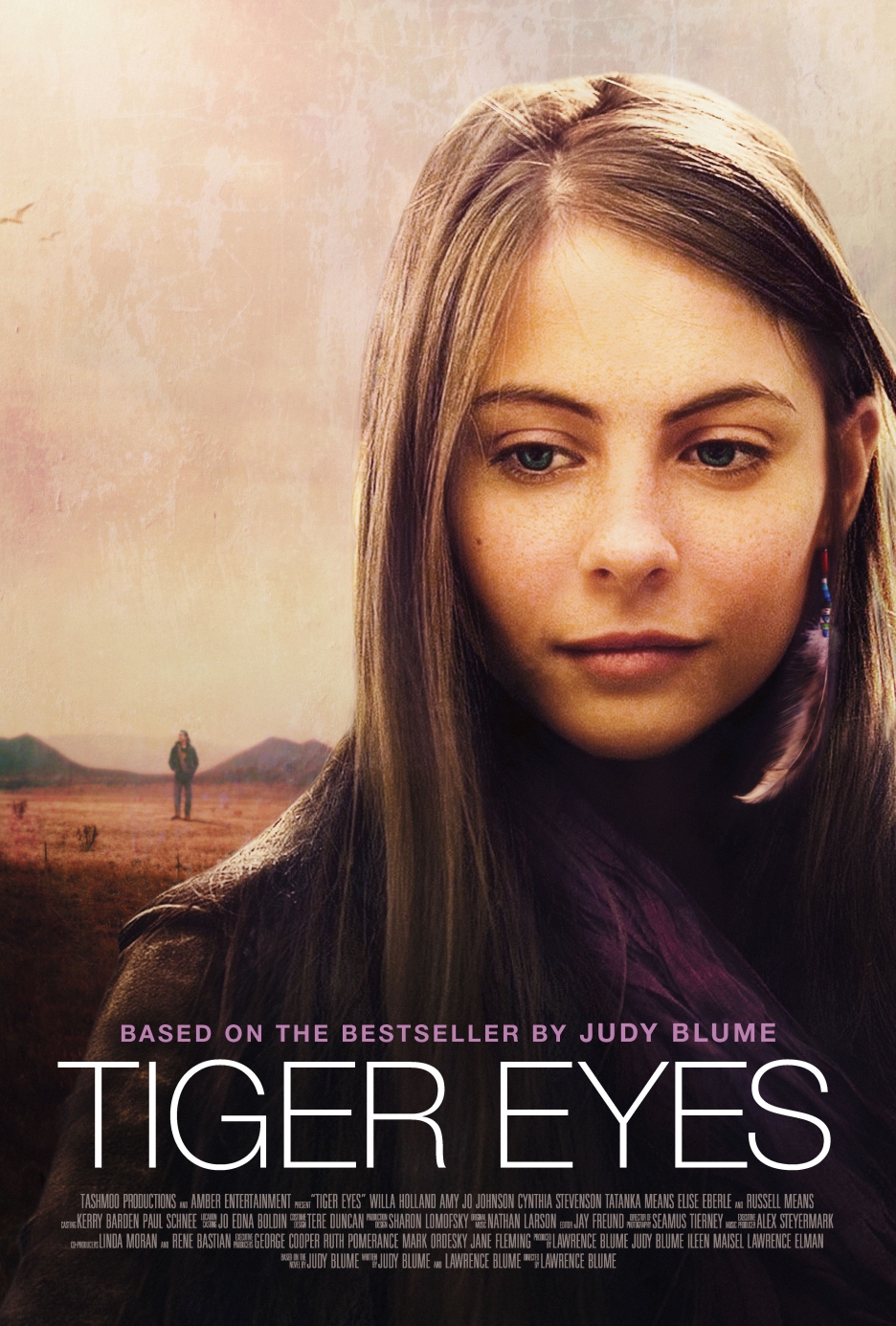
Calling All Judy Blume Lovers!

Tiger-Eyes-Poster

How cool would it be to not just publish a number of successful children’s and adolescent novels but then turn one into a major motion picture with your son as the director? No, it’s not me; I’ve got to work on publishing first, not to mention raise my kids. I’m talking about author Judy Blume and her novel-turned-movie Tiger Eyes.

When I heard about this movie, I automatically remembered Tales of a Fourth Grade Nothing, the first of Blume’s Fudge series and the book that introduced me to the fictional world of Judy Blume. And although I get very nostalgic when I think about it (my second grade teacher read it to my class, and the fourth grade was in the very distant future at that point), I’m ashamed to say I never bothered to return to Blume as a teenager. I had no idea that she wrote for adolescents, too.

When I took a course on adolescent lit a million years ago, I learned that this genre is important because it connects with teens on issues that matter to them. And while teens might enjoy adult lit (I certainly did) and adults certainly do love a lot of the adolescent books that are out there (yep), it’s important for there to be books that directly relate and speak to that age group. A regrettably under-addressed issue for teens is how to deal with the death of a loved one. We prepare kids to “Just Say No,” but who wants to talk about death, anyway? It’s so morbid. But that is just what Judy Blume does with the protagonist of Tiger Eyes, Davey Wexler. I won’t be spoiling anything by telling you that Davey’s father is murdered in his 7-Eleven store; you can read as much on the back of the book. The story is about what happens afterward, how Davey and her family deal with his death, how they figure out how to live without him.

Judy Blume told this story over thirty years ago; the book was actually published before I was even born. From the preview, I can’t tell if the movie will be set in the early ’80s or not. It’s one of those things that doesn’t matter all that much in reading the book; the only clue is the occasional mention of The Grateful Dead or other popular ’80s musicians. (And, I suppose, the lack of iPhones, texting, and Facebook.) The point is, though, that Davey’s story could be the story of any young girl, and it could be set in any time. I’m looking forward to seeing how it will be portrayed on-screen.

The book is narrated first-person present. I’m not sure if Willa Holland, as Davey, will provide narration throughout the movie to convey that same intimacy, but I do know, from Blume’s account in the Special Edition publication of Tiger Eyes that Davey is in every scene. I also know that there will be extra scenes not included in the book and that there were scenes that they shot that just didn’t work. That’s the nature of filmmaking, as it also is with novel-writing. If I were fortunate enough to be able to have a movie made of one of my books a number of years after publication, I imagine that I would take that opportunity to work in whatever I might have thought of in the intervening years, the extra little tidbits that hadn’t occurred to me until after publication. And Blume was fortunate enough to be able to be on set every day, working right next to her son Larry, the director.

The problem with so much popular adolescent fantasy fiction-turned-movies is that excellent stories like this one kind of get shoved to the back burner. As an independent film with a small marketing budget, the filmmakers have reached out to sympathetic writers like me to spread the word. So if you haven’t already, read the book. Then, on June 7th, see the movie. It’s showing in select theatres, and it’s also being simultaneously released on DirecTV, iTunes (pre-order here), and On Demand. Meanwhile, you can watch the trailer, read Entertainment Weekly’s write-up, like the official Tiger Eyes movie page on Facebook, and follow it on Twitter.

Unplugged

Image representing iPhone as depicted in Crunc...

Image via CrunchBase

I have the love-hate relationship with technology that almost everyone seems to have nowadays. I kept my dumb phone for the longest time because I didn’t want to get sucked into the world of iPhone lovers, yet now I am one of their ranks. I didn’t want to internet bank, didn’t want to read ebooks, yet I no longer mail checks to pay bills, and not only do I own a few ebooks, but I’ve even e-published a short story.

This week, a friend mentioned a village that houses a radio telescope that is so sensitive that there aren’t any cell phones within a certain number of miles. Intrigued, I did a little research. The National Radio Astronomy Observatory is located in Green Bank, West Virginia, and there is a 13,000-square mile area around this observatory in which technologies like cell phones, Wi-Fi, TV and radio broadcasts simply don’t work. I wonder how people can live in a place like this. Certainly there must be some technology, but I imagine it’s like stepping back in time, somewhat.

On a much less drastic scale, I remember my friend Amy’s blog post last year, regarding her struggle with turning off the TV. It was well and good for her, I thought at the time, but I was not willing to even consider giving up my TV. Of course, at the time, I had a new baby and counted on the TV to get me through the three A.M. feedings—and those many nights when Ian didn’t sleep at all. There were maybe three shows that I followed regularly (shows that I actually sat down and watched every time a new episode aired), but everything else was mindless viewing.

Fast forward to where I am now: I can’t remember the last time I followed a particular program. Downtown Abbey? Never seen an episode (didn’t even know how to pronounce it until someone corrected me). I don’t know when this phenomenon happened, maybe when I was in the middle of a good book and just chose not to watch. Also, as the baby got older, and then my elder son started going to school five days a week instead of two, my life got a whole lot busier. The few spare minutes I had to myself weren’t worth wasting by watching some other mom making a spectacle of herself on “reality” TV. I have enough of my own reality to deal with, thank you very much.

From time to time over the past year, I’ve thought of Amy’s post, often reflecting that, if it were just me, I could get by with the local news and Netflix. There is something strangely powerful about the TV; it is hypnotizing. One night after the kids went to bed, the TV was still on, and I suddenly realized that I was waiting until the commercial break before getting up to brush my teeth. It wasn’t even a show I care about. My husband and I laughed about how we got sucked into the program simply because it was on.

The technology is even more disruptive at work. As a bookkeeper for a small business, I am dependent on crappy accounting software that, unfortunately, is pretty universal, so it’s what our accountant requires us to use. At least once a week (and more often once a day), the software crashes, despite the fact that it’s the latest version, and I rail at the computer and how stupid it is. Then, while I’m waiting for it to restart, I pick up my iPhone and check my e-mail.

Yet I can’t be too mad at this technology, without which I couldn’t have this virtual monologue. But it does drive me nuts that we’re so dependent on it. When the power goes out, we forget how to function. God forbid a cash register goes down, and a clerk can’t count change without the register doing the math. A time traveler from the nineteenth century would most likely think us completely inept.

Speaking of time travel, I started a series of books last year, Outlander by Diana Gabaldon, in which the protagonist travels from the 1940s to the 1700s and decides to stay, despite the lack of technology. I mean, we’re talking cold baths, here. Not only that, but after returning to the twentieth century, she still chooses to go back in time again. And all for love. Now, I’m not advocating giving up hot showers (please, no), but I do think that there are some things that are more important than super fast download speeds and whatnot.

My five-year-old is at the age now where he has several television shows that he likes, and if I weren’t paying attention, I could easily let him rot in front of the TV all day. When he asks why I won’t let him watch as much as he wants, I remind him that we have a house full of toys and a backyard where he can play now. I’m fortunate that he often remembers on his own, and tonight, he won my heart again. He was excited that we have a new table, where he can do his schoolwork and drawings. Right now, he’s finishing a poster about black bears, which he’ll share with his class on Monday. And he asked if I would sit with him at his new table and have a “conpersation” about his poster. “And then we can just talk about other things or play games and stuff,” he said. You can believe that his request did this mama’s heart good.

So can you do it? Can you turn the TV off for any evening? Or can you put your smart phone down for an hour, resist the temptation to check your e-mail or play another round of Words with Friends? Cutting my TV consumption down was the first step; now I try to use my iPhone less when the kids are up. What can you do to allow all the wonderful technologies of the twenty-first century to aid but not impede on your life?

If I Die Before I Wake

English: Sloughan Glen A great place to spend ...

A quiet Sunday afternoon with the family (Photo credit: Wikipedia)

It seems that I’ve read more and more posts and memes lately about people—artists and innovators, particularly—pursuing their dreams so they won’t have any regrets at the ends of their lives. One was from Anne Lammot, and I gave her a resounding, “Yes!” After all, I was raised by parents who believe that it is more important to do something fulfilling than pocket-filling. My father has always been baffled by people who suffer through a miserable work week to make it to a weekend during which they will spend half their time bemoaning that it’s almost over. It is a wonderful ideal, to wake up excited about work every day. But what if it doesn’t pay the bills? There is a reason we’re called “starving artists.”

The question for the artist in me is: If I give up on a writing career, will I regret it when I’m eighty? But an even more important question is: If I die tomorrow, what regrets will I have? Put another way, if I knew I only had twenty-four hours left to live, what would I do?

This is a question that was posed to my mother’s Sunday school class twenty-nine or thirty years ago, when I was a baby. Her answer (in part, at least) was that she would still have the same number of diapers to change during that twenty-four hour period as during any other; even if she was leaving a number of unfulfilled dreams, she was still the mother of a dependent baby.

For myself, I would probably spend too much time writing instructions or creating spreadsheets of online usernames and passwords for my husband. What I cannot imagine saying is, “Gosh, I’m not published yet; I’d better get on it.” Mainly, I hope, I would want to be with my family. There are people every day who go home from hospitals, unable to be treated, and their only goal is to spend what time they have left with their families. Those who are left behind will have to survive on the memories made during that time.

As a healthy young woman, I could easily live another forty to fifty years. I could also easily pull out onto a busy street tomorrow and get hit by a careless driver. I apologize if this seems like a downer, and I certainly don’t want to live with my last will and testament in my back pocket, but I also don’t want to forget that life is so short and precious.

My husband and I pretty much follow Dave Ramsey’s guide to debt-free living (see The Total Money Makeover Workbook), and we’re well on our way. Ramsey promotes a lifestyle of delayed gratitude, which I think is healthy (the real world won’t give me a cookie just because I kick and scream for it), but in a way, it’s also sad that many people will never make it there. I don’t mean that a debt-free life is unattainable, just that it could possibly be attained and then not enjoyed. Several years ago, I met a woman who told me that she and her husband had everything they wanted after he retired. They finally had the means and time to travel, and they bought their dream house. It was there that he died, less than a year later, the victim of cancer. Sometimes, she said, they laughed hysterically at the irony of it all: they finally had the house in which they had always wanted to spend the rest of their lives together, yet the rest of their lives wasn’t long enough to enjoy everything for which they had saved.

I still follow the Dave Ramsey method to a point, but Thomas and I also decided that living on beans now so we can enjoy steak and lobster some thirty years down the road is not exactly how we want to live and raise our kids. If our vacations are modest road trips that only last a few days at a time, at least we hope to make good memories with our boys as long as we are able. And if we can achieve a more comfortable lifestyle in the future, so much the better.

With money and careers in mind, there is a part of me that has always said, “When I publish, I’ll finally prove that I’ve done something. The last piece of the puzzle will be in place.” But another part of me knows that I’ve already done a lot, and publishing does not guarantee authorial success, nor does it guarantee mansions or good health or unanimous acclaim.

About five years ago, I met an out-of-state friend for coffee. While we summarized everything we’d done and all we’d hoped we would do by that point in our lives, I lamented that a writing career seemed impossible to attain. I’d gone to a good school that turned out lawyers and doctors, and what was I doing? She pointed out that I was happily married and a mother. She couldn’t say either of those things for herself. Although she had achieved a level of success that I never hoped to claim for myself, she graded me according to different standards. I never thought someone would look at my life and think it enviable.

Similarly, in Bess Streeter Aldrich’s A Lantern in Her Hand, Abbie Deal gives up a possible musical career to marry the love of her life and raise a family. Her children never appreciate her true potential, how great she could have been. They don’t really understand her at all, in fact. Two of her daughters make conscious decisions to never have children and never marry, respectively, in order to pursue careers instead. Only the one who doesn’t marry regrets her decision later in life, when it’s too late to go back to the man who once loved her.

Abbie Deal made a choice that many people wouldn’t—and don’t—make. She chose something for herself—love—but something so much more than herself: she chose relationships, in this case, a relationship with her family. Abbie Deal lived a (fictional) life that I consider was without regret, even though it wasn’t what she initially wanted.

When I think about the people who are going home to spend their remaining time with their families, I realize how important yet how difficult it is to live in the present. What if the present is stressful? As much as I want to spend time with my little boys, my husband and I still have to earn enough money to keep them fed and clothed. And sometimes spending time with them isn’t what I want. I want something for me; I want to read or write or simply have a few moments’ peace.

There must be a balance. Whenever the end of my life is, if I have the luxury of any kind of reflection, I don’t want to wish that I’d spent more time with my family; I want to be thankful for all the time we did spend together. I don’t want them to say, “Well, we didn’t get to see her much, but thank goodness she had such a successful writing career.” (At this point, they won’t be saying that anyway, but they might lament that I spent too much time chasing said career.)

While I won’t for a minute say that I’m totally selfless, that I never make decisions based on what I want to make myself happy, I hope that I can share my life and my time with the people I love. Since I won’t be able to take anything with me anyway, I can leave a legacy of many meaningful memories. Besides, watching my two little boogers dive face-first into Nutella and recite Mother’s Day poems provide good fodder for creative writing, anyway.