The Sock Graveyard

An argyle sock, knit using intarsia

Argyle Sock (Photo credit: Wikipedia)

I know your secret. Oh, yes, I do. You don’t tell other people because they’ll think you’re crazy. I know you’ve been doing your laundry as usual, folding the clean clothes, but that one stubborn sock is missing its twin. Where is the stupid thing? Why, it’s one of a myriad of socks in the great sock mountain, probably underground, with a little hairless sock goblin perched on top. He’s got bulbous eyes, a wide mouth, and he’s currently rubbing his hands together in glee, croaking, “Mwuhahahaha.”

If you live in a house like mine, where there is a place for everything, even if everything isn’t always in that place, you’ll understand that odd socks just don’t belong. The sock drawers in our house have the socks neatly organized in pairs, or in my kids’ rooms, I just roll pairs together because I know that, otherwise, they’ll become hopelessly separated.

These odd socks, the ones that don’t belong, live in a sock graveyard. And where is the sock graveyard? Well, in my house, it’s in the laundry room. That’s right, those socks don’t ever have a chance of getting onto a foot, not while I’m on the case. I currently have four, one that belongs to my husband and three to my elder son. Now, I have a pretty good idea where those three little socks are, but that one poor, black dress sock? It’s been hanging out for months, wishing I would put it out of its misery already. Perhaps waiting for me to turn my back, and the little sock goblin will take it away to be with its brother.

But I’m smarter than that. I know that if I throw it away, either the matching sock will suddenly decide to come back from wherever it’s been, or another of Thomas’s black dress socks will have a hole or something, and then the joke’s on me.

Now, why is the full-time writer mom pining away about a few odd socks? Well, “mom” is a part of my title, right? And my job description does include laundry. But you know I’m going to tie it back to writing, like I always (well, like I frequently) do. If nothing else, the sock goblin makes a good story, right? It takes the socks and replaces them with those totally useless wire hangers that only serve to ruin my shirts.

But there’s more to it than that. Sometimes I get an idea on the road or while wrestling my toddler or when I’m desperately trying to fall asleep, and the only thing to do to get that idea to leave me alone is to jot it down. I have an entire folder on my hard drive that is full of these unfinished (or barely started) documents. Sometimes I’ll simply write a title, knowing that it will be enough to get me started when I finally have time to write the content. Sometimes I have a bullet list of points I don’t want to forget. They’re incomplete and would make absolutely no sense to anyone else. They’re so much clutter when I have more fruitful projects on the line. Yet they still belong. Throw them out, and I may lose something important. Wait long enough, and the story or article may bloom some day when I least expect it.

Little sock/idea goblin, I’m watching. I know you’re there, and I’m holding onto what I have for dear life.

Back to School (Not So) Blues

Stress

Stress (Photo credit: Alan Cleaver)

My son went back to school on Tuesday, and I actually allowed my worries about getting back into the school routine to taint my last few days of summer break with unease. I wasn’t walking around in a funk, but I certainly did stress some. Part of that could be remembering the meltdown I had the day before Peter went back to school last year. And then there are all the questions. Can I get everything done in the mornings? How will my younger son behave without the distraction of his elder brother? Will my house ever be clean again? When will I read and write? Instead of looking forward to autumn, which is my favorite season, I focused on the little things that get under my skin.

I guess the problem is that my summer was just too good. I really enjoyed the freedom afforded me this year. I don’t remember a time when I’ve ever been so productive, as far as writing goes. I wanted to publish my latest story on Smashwords (I have another story, “Stranded,” published there already), and I did finish editing it right on schedule. But I decided to try my hand with the children’s literary magazine market instead. This is a new venture for me – and a new way to get rejected. Still, I figured it’s worth a shot. Maybe the story will end up on Smashwords anyway, just not as soon as planned. I also wrote blog content weeks in advance, something that I’ve missed this week. Plus, I loved the slightly later bedtime for everyone in the house. I found a nice rhythm of getting laundry done, cleaning the house, and cooking the majority of our meals from scratch. With things going so smoothly, the looming prospect of shaking everything up was daunting. “Disciplined” should be my middle name because I almost always have a plan for everything and generally stick to it. My problem is that when things don’t go as planned, I’m liable to have a conniption.

What I discovered this week, however, is that it’s kind of like what they say about riding a bike. And I haven’t even fallen off yet, which is a plus. Peter and I went to visit his kindergarten classroom on Monday, and I was immediately swept up by the school bug that made me want to volunteer and substitute teach there to begin with. It’s like Disney World for elementary school (and if there’s anything I love, it’s Disney). After only two days back on the get-up-at-4:30-and-out-of-the-house-before-7:00 schedule, I wondered why I was so worried. Yes, I have less time to clean the house, less time to relax, less time to write because, during the school year, when I’m either substituting or spending my days at my parents’ business. But since I’ve been at work every day, I’ve gotten to see my parents more, and work hasn’t piled up like it did over the summer, when I only came in a few hours every week. My younger son’s nap time has adjusted about two hours earlier, so my productivity during his nap is simply at a different time and station. I carry my laptop with me everywhere, typing and researching in my spare moments. And it’s working.

I wish I could say it will always be smooth sailing, but there have already been days when I’ve gone to bed with too much left to do. If I have a new goal, it’s not to stress out too much about it. And another nice perk is that the guys (well, my husband and five-year-old – not so much the toddler) are pitching in, too. The things that I often did myself over the summer, like cleaning and cooking, are shared responsibilities now. Why in the world do I have to be supermom? I can adjust, if only I’m willing to be flexible, and if I can just let go of my usual I’ll-do-it-myself attitude and allow myself to be satisfied with things that aren’t one hundred percent my way, I’ll make it through just fine.

You Don’t Have to Take My Word for It

Research

Research (Photo credit: astronomy_blog)

Anybody remember Reading Rainbow with Levar Burton? I watched it when I was a kid, and the line I always recall is, “But you don’t have to take my word for it.” Burton was encouraging kids to read the books he told them about and discover the wonder of their stories themselves.

Nowadays, I think we need to hear more of that, whereas what we seem to get is just the opposite. We’re supposed to believe that whatever we see in a commercial, read on our favorite social network site, or see in a news report is the gospel truth. Because, of course, no one would ever promote false advertising or report something without fact checking first – right?

I was watching the news several years ago when an eager reporter, who was about to fly out on his vacation, had a flight delay. Lucky for the uninformed public, he was the first guy on the scene, ready to tell us exactly what was going down. A bomb, he said. I have no idea where he got his intel, but apparently it didn’t need to be vetted, and suddenly this supposed bomb was headline news. Several hours later, his network sheepishly admitted that the “story” they’d covered all morning was just a reporter getting excited to break some news. No bomb threat. Nothing suspicious at all.

The mainstream media, modern marketing, and your general idiot on the street who doesn’t know what he’s talking about are all eager to spread the word, no matter if it’s true or not.

Some say that with the likes of YouTube and the Internet in general, people will do anything they can to get attention. If you subscribe to a social media site like Facebook, how many pictures do you see every day with someone holding a poster board that says, “My dad will get me a bike if I get 100,000 likes” or “My mom will stop smoking if she gets a million likes”? I could go off on a whole new tangent about this, but my point is that so many people are vying for attention that they’ll say – and consequently believe – anything that garners attention.

Maybe I’m missing something, but I like actual empirical evidence. For instance, I read product reviews. Sometime between my first and second pregnancies, my favorite maternity clothiers decided to vacate the brick and mortar stores and sell almost exclusively online. Now, if it’s hard to find clothes that fit a normal body, that problem is only magnified when you add a pregnant belly to the equation. Many reviews clued me in on the problems with the fit of a dress or shirt, and I steered clear. Others sang the praises of the durability of the fabric of a pair of pants. Still more had both positive and negative reviews, so I had to really think carefully about my buying options.

Hmm. . . Thinking carefully or critically, even. I hope that’s not a foreign concept to you, dear readers, although I’m losing more and more hope for people in general every day.

If you’ve read my personal account of signing on with a scammer agent a few years ago, you’ll know that I can get sucked in, too. One too many rejections can even make the thickest-skinned of us turn stupid. Someone likes my story? Really? I’ve never heard of this agency, but it must be the real deal because they like me!

To make a long story not quite as long, a funny feeling and Google search that reinforced that feeling showed me what I chose not to see when signing the (as it turns out) not-so-quite-legally-binding contract. Now, I always check out prospective agents on Preditors & Editors. But you know what? There’s dirt out there on that site, too. Fortunately, I was able to corroborate Pred & Ed’s lack of trust in my own agent with my personal experience, and other research has given me confidence that it continues to be a good resource.

Recently, I decided to take the plunge into the wheat-free/gluten-free realm. It wasn’t a decision I came to lightly, nor an easy one. It actually came more than a year after I first heard of the idea of dropping wheat specifically. I finally consulted Wheat Belly: Lose the Wheat, Lose the Weight, and Find Your Path Back to Health, at the same time knowing that a lot of people have negative things to say about it. One blogger (and a gluten-free guy, I might add) posted his refutations to three points that author and doctor William Davis made.

I researched enough references in Wheat Belly to make my head spin, and all that I can figure is that Davis fudged some of his statistics to further convince readers that no wheat is the way to go. I could be like the anti-Wheat Belly blogger and say the whole book is bogus. . . except that I know what he says about diabetes is true because of research that my dad did years ago, when he thought he might be pre-diabetic. I’ve heard anecdotes from people I know who have read the book – including an endorsement from my own doctor – and have read an array of articles by other doctors who point out enough similar evidence to come to my own conclusion: some of Wheat Belly may be merely well-informed opinion and against conventional wisdom, but much of it makes absolute sense. Still, I know many people will think I’m crazy and argue with me about my new lifestyle choice. Just know that I didn’t make this decision because some Hollywood starlet said it would turn me into a supermodel.

There is little that bothers me more than watching or reading something that was not researched properly. What works on the silver screen or in a book doesn’t necessary equal reality. That’s why I so admire those people who go the extra mile and do mounds of research. If you’ve ever read a Michael Crichton book, you’ll know what I mean. Back in the days when I thought that writerly skill could save me from having to do all that work (if it’s good enough, they’ll believe anything, right?), I wrote a story that opened up with a passenger train wreck. And I just assumed that, having taken a trip via Amtrak in the sixth grade, I was an expert. It never occurred to me that I might need to go to the library and look up passenger trains, accidents, policy about what law enforcement does in the clean up and investigation. I thought that if I gave my story a sci-fi twist, I could fudge all that stuff. Please forgive me, I was only thirteen.

How many parts of our lives would be improved if we did due diligence? For one, I know that my husband and I wouldn’t have jumped feet-first into a thirty-year fixed loan on a condo that would lose over sixty percent of its value before you could say “housing market crash.” Maybe people in general wouldn’t fall for as many bad car deals. Maybe we wouldn’t hit “send” too soon, lacing cyberspace with rumors that are difficult to track, even harder to take back.

Shopping for a TV today? Or an agent? Whoever it is doing the selling, you don’t have to take their word for it.

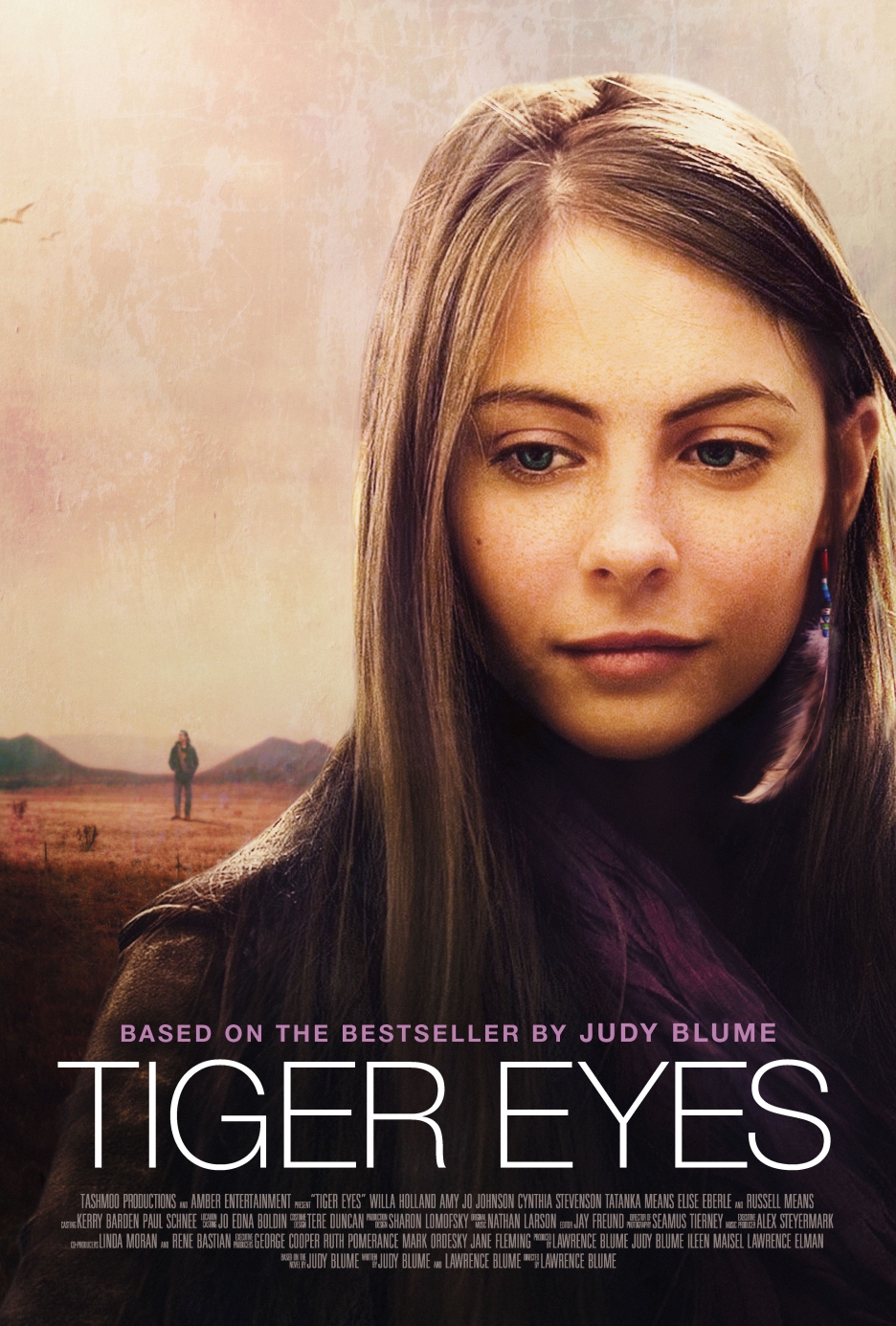
Calling All Judy Blume Lovers!

Tiger-Eyes-Poster

How cool would it be to not just publish a number of successful children’s and adolescent novels but then turn one into a major motion picture with your son as the director? No, it’s not me; I’ve got to work on publishing first, not to mention raise my kids. I’m talking about author Judy Blume and her novel-turned-movie Tiger Eyes.

When I heard about this movie, I automatically remembered Tales of a Fourth Grade Nothing, the first of Blume’s Fudge series and the book that introduced me to the fictional world of Judy Blume. And although I get very nostalgic when I think about it (my second grade teacher read it to my class, and the fourth grade was in the very distant future at that point), I’m ashamed to say I never bothered to return to Blume as a teenager. I had no idea that she wrote for adolescents, too.

When I took a course on adolescent lit a million years ago, I learned that this genre is important because it connects with teens on issues that matter to them. And while teens might enjoy adult lit (I certainly did) and adults certainly do love a lot of the adolescent books that are out there (yep), it’s important for there to be books that directly relate and speak to that age group. A regrettably under-addressed issue for teens is how to deal with the death of a loved one. We prepare kids to “Just Say No,” but who wants to talk about death, anyway? It’s so morbid. But that is just what Judy Blume does with the protagonist of Tiger Eyes, Davey Wexler. I won’t be spoiling anything by telling you that Davey’s father is murdered in his 7-Eleven store; you can read as much on the back of the book. The story is about what happens afterward, how Davey and her family deal with his death, how they figure out how to live without him.

Judy Blume told this story over thirty years ago; the book was actually published before I was even born. From the preview, I can’t tell if the movie will be set in the early ’80s or not. It’s one of those things that doesn’t matter all that much in reading the book; the only clue is the occasional mention of The Grateful Dead or other popular ’80s musicians. (And, I suppose, the lack of iPhones, texting, and Facebook.) The point is, though, that Davey’s story could be the story of any young girl, and it could be set in any time. I’m looking forward to seeing how it will be portrayed on-screen.

The book is narrated first-person present. I’m not sure if Willa Holland, as Davey, will provide narration throughout the movie to convey that same intimacy, but I do know, from Blume’s account in the Special Edition publication of Tiger Eyes that Davey is in every scene. I also know that there will be extra scenes not included in the book and that there were scenes that they shot that just didn’t work. That’s the nature of filmmaking, as it also is with novel-writing. If I were fortunate enough to be able to have a movie made of one of my books a number of years after publication, I imagine that I would take that opportunity to work in whatever I might have thought of in the intervening years, the extra little tidbits that hadn’t occurred to me until after publication. And Blume was fortunate enough to be able to be on set every day, working right next to her son Larry, the director.

The problem with so much popular adolescent fantasy fiction-turned-movies is that excellent stories like this one kind of get shoved to the back burner. As an independent film with a small marketing budget, the filmmakers have reached out to sympathetic writers like me to spread the word. So if you haven’t already, read the book. Then, on June 7th, see the movie. It’s showing in select theatres, and it’s also being simultaneously released on DirecTV, iTunes (pre-order here), and On Demand. Meanwhile, you can watch the trailer, read Entertainment Weekly’s write-up, like the official Tiger Eyes movie page on Facebook, and follow it on Twitter.

Unplugged

Image representing iPhone as depicted in Crunc...

Image via CrunchBase

I have the love-hate relationship with technology that almost everyone seems to have nowadays. I kept my dumb phone for the longest time because I didn’t want to get sucked into the world of iPhone lovers, yet now I am one of their ranks. I didn’t want to internet bank, didn’t want to read ebooks, yet I no longer mail checks to pay bills, and not only do I own a few ebooks, but I’ve even e-published a short story.

This week, a friend mentioned a village that houses a radio telescope that is so sensitive that there aren’t any cell phones within a certain number of miles. Intrigued, I did a little research. The National Radio Astronomy Observatory is located in Green Bank, West Virginia, and there is a 13,000-square mile area around this observatory in which technologies like cell phones, Wi-Fi, TV and radio broadcasts simply don’t work. I wonder how people can live in a place like this. Certainly there must be some technology, but I imagine it’s like stepping back in time, somewhat.

On a much less drastic scale, I remember my friend Amy’s blog post last year, regarding her struggle with turning off the TV. It was well and good for her, I thought at the time, but I was not willing to even consider giving up my TV. Of course, at the time, I had a new baby and counted on the TV to get me through the three A.M. feedings—and those many nights when Ian didn’t sleep at all. There were maybe three shows that I followed regularly (shows that I actually sat down and watched every time a new episode aired), but everything else was mindless viewing.

Fast forward to where I am now: I can’t remember the last time I followed a particular program. Downtown Abbey? Never seen an episode (didn’t even know how to pronounce it until someone corrected me). I don’t know when this phenomenon happened, maybe when I was in the middle of a good book and just chose not to watch. Also, as the baby got older, and then my elder son started going to school five days a week instead of two, my life got a whole lot busier. The few spare minutes I had to myself weren’t worth wasting by watching some other mom making a spectacle of herself on “reality” TV. I have enough of my own reality to deal with, thank you very much.

From time to time over the past year, I’ve thought of Amy’s post, often reflecting that, if it were just me, I could get by with the local news and Netflix. There is something strangely powerful about the TV; it is hypnotizing. One night after the kids went to bed, the TV was still on, and I suddenly realized that I was waiting until the commercial break before getting up to brush my teeth. It wasn’t even a show I care about. My husband and I laughed about how we got sucked into the program simply because it was on.

The technology is even more disruptive at work. As a bookkeeper for a small business, I am dependent on crappy accounting software that, unfortunately, is pretty universal, so it’s what our accountant requires us to use. At least once a week (and more often once a day), the software crashes, despite the fact that it’s the latest version, and I rail at the computer and how stupid it is. Then, while I’m waiting for it to restart, I pick up my iPhone and check my e-mail.

Yet I can’t be too mad at this technology, without which I couldn’t have this virtual monologue. But it does drive me nuts that we’re so dependent on it. When the power goes out, we forget how to function. God forbid a cash register goes down, and a clerk can’t count change without the register doing the math. A time traveler from the nineteenth century would most likely think us completely inept.

Speaking of time travel, I started a series of books last year, Outlander by Diana Gabaldon, in which the protagonist travels from the 1940s to the 1700s and decides to stay, despite the lack of technology. I mean, we’re talking cold baths, here. Not only that, but after returning to the twentieth century, she still chooses to go back in time again. And all for love. Now, I’m not advocating giving up hot showers (please, no), but I do think that there are some things that are more important than super fast download speeds and whatnot.

My five-year-old is at the age now where he has several television shows that he likes, and if I weren’t paying attention, I could easily let him rot in front of the TV all day. When he asks why I won’t let him watch as much as he wants, I remind him that we have a house full of toys and a backyard where he can play now. I’m fortunate that he often remembers on his own, and tonight, he won my heart again. He was excited that we have a new table, where he can do his schoolwork and drawings. Right now, he’s finishing a poster about black bears, which he’ll share with his class on Monday. And he asked if I would sit with him at his new table and have a “conpersation” about his poster. “And then we can just talk about other things or play games and stuff,” he said. You can believe that his request did this mama’s heart good.

So can you do it? Can you turn the TV off for any evening? Or can you put your smart phone down for an hour, resist the temptation to check your e-mail or play another round of Words with Friends? Cutting my TV consumption down was the first step; now I try to use my iPhone less when the kids are up. What can you do to allow all the wonderful technologies of the twenty-first century to aid but not impede on your life?

What Do Writers Wear, Anyway?

English: A pair of high heeled shoe with 12cm ...

Shoes (Photo credit: Wikipedia)

There are a couple cliches about dressing professionally that basically boil down to the same thing: “dress for success” and “dress for the job you want, not the one you have” are supposed to motivate, to get people into the proper mentality for their desired careers. My five-year-old runs around in a surgical mask and latex gloves and plays with his homemade doctor’s kit, so at least one of us is on the right track.

I’ve pondered this work attire notion lately. There is something to dressing for a particular occupation. Think about a man on the street in the three-piece suit. He’s probably a lawyer, right? Or an executive at a bank or big corporation. If you’re a corporate headhunter, he might get your attention, and that’s the point, I suppose. One time, I paired a red sweater with some khakis, took one look in the mirror, and immediately changed because I felt like I was going to work at Target. In my case, I decided not to dress for the job I didn’t want.

As with the above examples, there are certain stereotypes. If I say “rockstar,” “priest,” or “Best Buy geek,” you probably get an automatic picture in your head. At my parents’ business, we have a lot of customers who are artists, and it’s not unusual to see eclectic or bohemian clothes, colorful hair, and tattoo sleeves.

Well, what about me? As a writer, what in the world am I supposed to wear to let others know what I do? I don’t fit in with the artists, nor do I wear a beret and tiny circular sunglasses, sipping coffee with my pinkie up at outdoor cafes, poetry journal in hand. Until recently, I pretty much dressed the way I had all through college: jeans and t-shirts or casual blouses. Then I started substitute teaching and found that my limited business casual wardrobe (which contained mostly pants and a few black dresses that I only ever wore to church) would never get me through a week of teaching. Now that I’ve been forced to expand my wardrobe, I own more clothes than ever before. And I find that wearing the occasional dress isn’t terrible, it’s just not what I would choose, in a perfect world. But at least I blend in.

The real me lives for stay-at-home Saturdays, maybe lazy, maybe catching up chores I couldn’t get to during the week. At the ends of days like this, I haven’t offended anyone by wearing workout clothes all day, or my bedroom slippers. Back when I envisioned myself as a successful, stay-at-home writer mom, that’s kind of how I thought every day would be. Let’s be silly and imagine, for a moment, that this really did happen. I’m the next American J.K. Rowling, and now someone wants to do a movie about me. The on-screen version of me would have to be sexed up a little for anyone to want to watch it. Okay, she’d have to be sexed up a lot. I can’t imagine someone wanting to watch an actress wearing baggy pajama pants and a non-matching, fifteen-year-old t-shirt, typing away on a MacBook, face devoid of make-up, hair long and limp. But that’s me.

Here’s another fantasy scenario: I have to go to a Hollywood movie premier, say a movie version of one of my novels. And the next day, when the entertainment shows dole out the awards for best and worst dressed, I get completely panned because I showed up in a Dillard’s special. Accessorized by my trusty Tigger watch.

I suppose the conclusion is that, for this writer at least, there is no dress code. Dressing in a way that someone else thinks is right is not going to make me write a better novel or get noticed by a big New York publishing house. In fact, as far as professionalism in writing is concerned, a simple, serious email address and clean query letter make more of a positive impression than a pants suit and stilettos. Writers who don’t dress their stories for success first are wasting their time if they’re mostly concerned with how they dress their bodies.

Are You Listening?

A near-ending game board, tiles and racks of t...

Scrabble (International, Mattel, Inc.,photo credit: Wikipedia)

Recently, someone asked my father for a favor. Daddy, being the dependable guy he is, immediately complied. He then sent a rather long follow-up e-mail to the person in question, detailing what he did and what needed to happen next. But the person didn’t read the whole e-mail, didn’t act on my father’s instructions, and when Daddy finally took matters into his own hands, the person wondered why my dad was exasperated—he didn’t even remember making the original request to begin with. The problem, Daddy concluded, is that all people do anymore is listen (or read) in sound bites.

I hate to say that, fight it as I do, I too easily fall into the same pattern. Here I write what I would consider lengthy posts if I had to read them, yet I watch the scroll bar and groan if a blog that I normally read takes me more than a couple minutes.

With this in mind, in Noah Lukeman’s A Dash of Style: The Art and Mastery of Punctuation, one of the first things he talks about is the use of the period and the stylistic differences between writing short and long sentences. Granted, I do ramble, but I try not to write run-on sentences that lose the original thread from beginning to end. In reading many of Lukeman’s examples, I realized why I write the way I do. Considering some of the books I had to read in college and absolutely hated (or classics I forced myself to read because I knew they would be worth it if only I made it to the end), I realized that one of my problems was this whole long, circuitous sentence thing. And you know what Lukeman points out? Long sentences can be risky because of the less-than-adequate attention span of the modern reader. Writers beware! Too-long sentences could very well cause readers to put your books down for good.

Blaming society’s shortened attentions spans on modern media is a nice distraction—and a lot easier than examining myself and asking how I’ve let it happen to me, too. Ugh. Does this mean that I’m going to embrace the half-a-page sentence and start rambling worse than ever in self defense? Never fear; it’s not my style. Besides, I don’t think forcing people to read longer streams of drivel solves the problem. What I must do, however, is pay attention, focus on this fault of mine and try my hardest to remedy it.

There must be a happy medium between jumping from topic to topic as soon as interest fades and becoming focused to the exclusion of everything else in the world. If you’ve ever watched cooking competitions, the people who can’t multi-task in the kitchen are usually the first to go, so it’s got its advantages. But I don’t want to be so busy that I ignore a long e-mail that has some very important information. I don’t want to be in too much of a hurry to communicate properly (and politely).

I know that I’m not the only person plagued by this impatience. It just gets worse with every succeeding generation, I’m afraid. When my kids are old enough to text (or whatever the craze is, at that time), will they even know what OMG means? Will they translate it to “oh my gosh” every time they see it or just think that OMG is some normal (albeit meaningless) exclamation?

And since we’re on the topic, do you remember the “reality” show “Survivor”? I’m proud to say that I’ve only ever seen one partial episode. I thought it was pretty stupid because the show in no way puts the contestants in situations in which they would actually have to adapt to survive. But if you consider a true survival situation, would the people of today be able to do it? Survive without cell phones, GPS, Kindles, computers, processed food? I know moms who get fed up with their kids being absorbed in the TV, so they go cold turkey, and the kids have the hardest time figuring out how to be kids—and in homes full of toys, no less.

The first autumn that Thomas and I were married, we went through more than a week, combined, with no electricity because of the number of hurricanes and tropical storms that hit Florida. We spent many a night playing Scrabble (yes, an actual board game) by candlelight, eating the “comfort” (junk) food that we’d stockpiled for just that kind of situation. And you know what? Except for the stifling heat, I remember those stormy stretches of no electricity with fondness.

I suggest, to cultivate this elusive patience, to help new generations of techno-children, who learn immediate gratification but have little concept of the delayed kind, going out of your way to do things the so-called dinosaur way. Show someone you care enough to snail mail a “thinking of you” card once in a while. What does it cost you—a few minutes of your time and a stamp? Turn off the TV and play board games with your kids. Try to sit with a lengthy article or a book for more than five minutes at a time. Cook a meal from scratch. If you’re really brave and aren’t afraid of failure, start a garden.

I’m just as guilty of loving technology as the next person, but I don’t want to depend on it to the exclusion of my intellect. And, although I know it sounds extreme, that’s a lot of what’s at stake here. If we count on technology and short cuts to do everything for us, forget losing deep thinkers, we’re losing thinkers, period. Instead of spoon-feeding people bites of information—the least amount they need to get by—why not try provoking some actual thought processes? Are we so lazy that we can’t do a little mental work anymore? (And don’t even get me started on the physical kind.) If I want people to read long blogs like this one, I need to be able to do so myself. So I’m going to start with me and branch out to my kids. And my audience, all three of you.

It Shouldn’t Be a Popularity Contest

Eric Whitacre

Eric Whitacre (Photo credit: Wikipedia)

I don’t think anyone would ever call me a rebel. When I hear people talk about all the stupid stuff they did, writing it off as, “Well, I was just a teenager,” I wonder why I never did those same things. The whole balking against my upbringing thing never happened.

But when someone says, “pop culture,” I absolutely cringe. When Titantic was really big in high school (I had friends who had time and money to waste and saw it in the theatre more than ten times), I refused to see it. To this day, it remains one of those movies on my personal “banned” list. It could be a masterpiece, but it seemed popular for all the wrong reasons.

So maybe I’m a pop culture rebel. Well, not entirely. I mean, I did go nuts over the Harry Potter books, and I do have Facebook and Twitter accounts, as well as an iPhone, on which I can check my statuses. But take fashion, for instance. Skinny jeans are in, right? Kids, adults, male, female, skinny people, not-so-skinny people–they all wear skinny jeans. I watched kids getting off a school bus one day, twenty or so. Out of all of them, only one kid wasn’t wearing them. And I just prayed that I wouldn’t be forced into buying them because this girl does not have skinny legs. Yes, I’m small, but the brand jeans that I buy come in “curvy,” and they actually fit. (If you’ve ever been clothes shopping with me, you’ll know how monumental that is.) I’m not going to go out of my way to not buy trendy clothes, but if they don’t look good on me, forget it. If they do look good, however, I’ll continue wearing them long after they’ve gone out of style. (This is a trait I came by honestly. I used to cringe at the skirts that my mom wore, you know, the semi-A-line ones with huge pockets? Yeah, they’re back now. Who knew she was a fashion maven ahead of her time.)

But fashion is just a small part and not really the important part of how pop culture snakes its way into our lives. This popularity business is starting to make us kind of dumb, quite frankly.

Now, I know I’m about to sound old and preachy, but this issue is close to my heart. About twenty years ago, I fell in love with my school’s media center and checked out every book I could, from Ramona to Greek mythology to Little Women. Some of my best memories from that time center around those books or time in the library. Of the six guys I used to hang out with, the bigger the book you read, the cooler you were. And no, they weren’t nerds with pocket protectors (although all of them made the honor roll). They played baseball and football, took piano and violin lessons, sang in our choir, took Tae Kwon Do, drew amazing cartoon-like illustrations in the margins of their homework, had rock collections and pet reptiles. In other words, they were well-rounded guys, not pigeon-holed into one particular sport or other area of interest. And though I fit in well enough with them, I didn’t feel nearly as cool. I was not athletically-oriented at all, and although I started taking piano lessons younger than just about anyone else I knew, I was no good. So what could I do? Read. And the two-to-three hundred page books I routinely read just didn’t cut it anymore. That’s when I found Little Women, a five hundred-pager. To this day, the longer the book, the happier I am to read it. Series? Even better.

Today, my son goes to the same school, and I volunteer in the media center. There is now a computer program that assigns reading levels to books, and when kids read them, they receive a certain number of points, according to whichever level it is. One day, my job was to look up each book and find out the level and how many points each book was worth. The books were all new to me, either too advanced for my five-year-old to read yet or too young for me to read for my own pleasure. I asked the media specialist how high the reading levels went, and she said about the eighth grade. The next thing I asked: Did they still have Little Women? Yes, but kids don’t read it all that often (and it’s one of those eighth graders). I waxed eloquent about the books I used to read and asked if she’d noticed a decline in literacy. (She started working at the school my last year there, so she’s seen the entire progression.) Her answer saddened but did not surprise me. Kids these days are more interested in graphic novels, which are fine, but instead of just attracting kids who, otherwise, wouldn’t ever touch a book, they’ve lowered the standard for everyone else.

And then there’s music. My dad raised me on Styx, Alan Parsons, Blue Oyster Cult, Tchaikovsky, and Saint-Saens. I grew up singing in choirs and participated in a few musicals as a teenager. I still love all of the above, plus Sweeney Todd, Mumford and Sons, System of a Down (yes, I know), Metallica, and current British composer extraordinaire John Rutter. When people talk about Usher and Adele, I’m kind of lost because I don’t listen to any of that kind of thing, unless I catch it in a commercial or movie. And people my age look at me like I’m crazy. Just like I shouldn’t wear flare jeans (they were so ten years ago), I should get with the times, right? My poor kids won’t ever know what’s popular, unless they hear it with someone else. The music we listen to in the car is either from the above mentioned groups and composers, or one of Peter’s faves of late is the sixth movement from Brahms’s A German Requiem. I actually got the bug to write this particular post as I listened to him singing his heart out, going right along with the tenor line, then asking for me to play it again. Now, you can’t tell me that that “dead white guy’s” music didn’t connect with him.

I was moved and encouraged recently when my mom showed me Eric Whitacre on TED Talks. This is a long video, but if you’re familiar with TED, you know it’s worth it. If you need some arm-twisting, Eric is a tech-savvy, good-looking, youngish, self-proclaimed classical composer. And he created a virtual choir in 2011 that comprised over 2000 people from around the world—young, old, black, white, male, female, nerds, cool people—every kind of person imaginable. So that tells me that there’s hope after all, if only we can open enough minds to thinking outside the so-called popularity box. People will learn to connect with music like this if they’re taught that it’s okay, if they think they won’t be teased. And some people like me will love it anyway, not really caring what others think.

I’m not trying to create a new kind of popularity, just open people up to more possibilities than what typically top the charts and grace the covers of the magazines at the check-out lines. For parents or teachers who have already given up because their kids just don’t like to read, or who don’t like classical music themselves so never played it for their babies, what kind of message are we sending by this lack of effort? I think it’s unacceptable to give up and say that if we can’t beat them, we might as well join them. Progress isn’t worth it if it plows right over and buries the good along with the out-moded VHS tapes, legwarmers, and suitcase-size mobile phones. Don’t lose the things you love; share them, and watch the wonder and growth at these new-old discoveries.

Weeding

biltmore garden peace rose

Biltmore Garden Peace Rose (Photo credit: zen)

For the first time in our married lives, Thomas and I have a house, and we love it. I could write a blog just about all benefits of living in a house versus living in a condo, one of the biggest being that my kids now have a fenced yard where they can play in safety. But with that yard comes one drawback: yard work. Of course, Thomas says that’s why we have two boys, but since one of them still tries to cram dirt into his mouth every time he goes outside, it’ll be a while before we can turn that duty over to them.

My least favorite part about lawn upkeep is weeding. I did enough of that as a teenager to make me swear off the practice for the rest of my life. If ever I had a house, I promised myself that a yard man would be included in the budget. As I often do, I spoke too soon. And it seems that our lawn, more than any other, is mostly composed of weeds. My husband set aside an afternoon for working in the yard last week and said he filled two of those big, black garbage bags with weeds, and when he surveyed his handiwork, he didn’t know if anyone else would be able to tell he’d done anything. Part of me thinks, Just mow it. Mow those suckers down, and get it over with. This, however, is only a temporary solution. The roots are all still there, and they’ll pop up again in no time.

As I struggled with one of those nasty weeds—you know, the kind you have to dig down about seven feet to really get—it struck me that I actually weed all the time. It’s something I’ve been doing for years. I’m an editor.

This weekend I’m finishing weeding my own book. It’s almost ready for the presses! Ha. I know if I’m lucky enough to find an agent, the next step will be another thorough edit. It doesn’t matter how well I think I’ve done, there will always be something that can be tweaked just a little bit. I know the yard analogy isn’t one hundred percent accurate, but think about it this way: how many people plant a garden, stand back, and never lift a finger again? Same thing goes for writing. If someone had been foolish enough to publish my book after I finished the first draft, not only would my publishing career have died right there, but the book would have looked like a kindergartner’s half-tended bean sprout with a compost heap in the middle of it, not the Biltmore gardens. (Not saying that it’s reached Biltmore quality yet, either, but it’s a heck of a lot closer.)

And just as there are people who love to get outside and dig their fingers into the dirt, stir up earthworms, and toil the day away, there are those like me who would rather pay someone else to do it. I can say that I feel a sense of accomplishment and pride when the job is done, but I am also not brave enough to start a flower garden or do anything artistic, for that matter. We have grass. End of story.

With writing, however, I do like to get my hands dirty. I don’t mind mentally sweating. I love the initial outpouring of the story, too, don’t get me wrong. There’s nothing like having a brainwave, sitting down, and getting it on paper. But it’s a different kind of fun to go back through it, pruning and weeding and clipping a choice blossom to display in a prominent place, where others can see my accomplishments. Some people hate this part. They would rather mow. This scene isn’t working? Just get rid of it. But in the process, while many problems might be solved by such a drastic approach, some of the good stuff is lost, some really small but glaring mistakes are left to grow up between the cracks, and it’s obvious that the writer hasn’t learned much. The only growth is of the wrong kind: overused artistic license, misplaced apostrophes, passive voice popping up at the worst possible times.

Editing isn’t glamorous, whether you’re an editor by trade or just revising your own work. While authors often thank their editors, the readers don’t know who these people are. They’re largely invisible, but if they do their job right, the work is invisible, too. Or, I suppose a better way to say it is that their work is seamless. A badly edited piece is, on the other hand, painfully conspicuous. I’ve read many wonderful books that were full of some of the worst typos I’ve ever seen. Typos that would not be forgiven if I were to submit a manuscript in such a state. And these are big-name authors with bestselling books. I would be embarrassed to work for those publishing houses that put out books like that. (In fact, I’ve often thought, Note to self, don’t ever go with that publisher.)

Take the time to edit. Take the time to learn the rules before you submit, and then go back and make sure you followed them. Or, if you don’t have the time or really need help polishing your writing, we editors are waiting for you to call on us. Your name will still be on the cover of the book, and it really is your garden, anyway. We’ll just make sure that when others stop by to admire it, there aren’t any weeds choking your roses.

What Ever Happened to Pen Pals?

“There are a lot of us, some published, some not, who think the literary life is the loveliest one possible, this life of reading and writing and corresponding.”

Anne Lamott, Bird by Bird: Some Instructions on Writing and Life

stationery box

Stationery Box (Photo credit: Spyderella)

When I read the above quote recently and got to the part about corresponding, it really made me stop and think. Granted, Anne Lamott wrote Bird by Bird in the mid-1990’s, so a lot has changed since then. Still, if writers don’t keep the art of correspondence alive, who will? There aren’t many great epistle writers anymore simply because there isn’t the necessity these days (one exception is my father—ask anyone who’s read one of his emails).

It is a sad reality that the art of letter-writing is becoming rather dinosaur-ish. An elderly woman I know who has bravely moved into the world of technology starts every email to me with “Dear Sarah,” and she ends with “Love,” followed by her name. She types it exactly as she would a letter, complete sentences and all. The first time I received one of these emails, I chuckled to myself, but I also appreciated the thoughtfulness behind her message. She sat down and carefully chose every word, and I’m sure she proofread it at least once. I am also sure that she hand-writes letters, too, probably on monogrammed stationery, and everyone who receives one of these feels special because of the time she takes. (Granted, she is a retired English teacher, but that means little these days. I can’t tell you how many of my college English professors sent emails full of typos, yet took points away if I so much as misplaced a comma in an in-class essay.)

Here’s what Aibeleen from Kathryn Stockett’s The Help has to say about writing:

I been writing my prayers since I was in junior high. When I tell my seventh-grade teacher I ain’t coming back to school cause I got to help out my mama, Miss Ross just about cried.

“You’re the smartest one in the class, Aibileen,” she say. “And the only way you’re going to keep sharp is to read and write every day.”

So I started writing my prayers down instead a saying em.

When I read this, I was struck by the novelty of writing prayers. The whole “use it or lose it” cliche applies here, and cliche or not, it’s absolutely true.

Of course, I do write a lot, always have. And I must confess that one of my weaknesses is stationery. As a girl—well, even now—I loved to go into bookstores and lose myself in the writer’s gift section. I’ve turned into a little bit of a Moleskine snob, but I still love looking at all the leather-bound journals, just waiting to be filled, or the fountain pens, fancy notebooks, writing cases, and all the different note cards. I used to scrape together what precious spending money I had to buy these little goodies, and when I was much younger, I used that stationery like it was going out of style, starting with my first pen pal. I guess I was in the second or third grade—old enough to write complete sentences and get annoyed when my pen pal couldn’t copy my address correctly (ever), much less get my name right. But I digress. I had a reason to use that stationery, and use it I did. It also gave me reason to practice writing cursive, which I loved, or as I got older, I experimented with different styles, changing the way I wrote A, E, S, and Z. When I separated from many friends after eight years at the same school, I spent the whole summer writing to a handful of them; I still got the occasional letter from one of them until well after I was married.

As for my sons, I wonder if they will enjoy this same activity. Or will they Facebook or text message each other? I admit, I love using Facebook to keep up with old friends without having to be too social. It’s a great way to keep tabs. But it’s also not very personal (or sometimes a little too personal, and that’s when that “Unsubscribe” option comes into play). Peter, who is five, loves getting things in the mail, though. And at his age, anything with his name on it is always positive. He doesn’t get bills or reminders for his annual eye exam. I can’t tell you how many times he walks with me to the mailbox, hopeful that something in there has his name on it. So is the art of correspondence going to survive his generation? When he’s old enough to fill out an address on the front of an envelope, will he have someone to write to? I fear that one of the reasons our country’s literacy rate is so low is because many people have given up. They don’t care, don’t see the value in it, especially when spell check (they think) will find all the errors for them.

I’m here to say that I care; I want to continue buying and using stationery. Besides, it’s not just the children who appreciate receiving letters in the mail, nor are they the only ones who need to be reminded how to write. I’m not going to let progress and this technological age turn my brain into a smooth glob of mush that only absorbs what it’s fed in one hundred forty character bites or only understands three-letter abbreviations. Oh my gosh, yes, I went there.